Can You Use Human Shampoo On Dogs – Safety, Risks, And Vet Advice
You shouldn’t use human shampoo on dogs because its pH level, designed for human skin, can disrupt your dog’s more neutral skin balance. This can lead to irritation, dryness, and infections. Human shampoos might also strip away your dog’s natural protective oils and acid mantle, making them more vulnerable to bacteria.
Instead, go for shampoos made just for dogs. These have a balanced pH and gentle ingredients that are better suited for your furry friend’s skin. Keep an eye out for any signs of irritation after washing your dog.
If you’re ever concerned, don’t hesitate to check with your vet. They can guide you on the safest products and the best care for your dog’s skin. More details on safe products and care follow.
Why You Shouldn’t Use Human Shampoo on Dogs
Although it might seem convenient to use your own shampoo on your dog, you shouldn’t because human shampoos disrupt the natural pH balance of a dog’s skin, which ranges from 6.2 to 7.4.
Human shampoo is formulated for a more acidic pH, which can strip away the dog’s acid mantle, a protective layer that guards against bacteria and moisture loss.
When this barrier is compromised, your dog’s skin becomes prone to irritation, dryness, and infections.
Using human shampoo regularly can lead to chronic skin problems, including flaking and discomfort.
Since dog skin is more sensitive, maintaining its pH balance is essential.
To protect your pet, always opt for veterinary-approved shampoos designed specifically to support healthy dog skin and preserve its natural acid mantle.
It’s a small step that makes a big difference for your furry friend’s comfort and health.
How Dog Skin Differs From Human Skin
When you compare dog skin to human skin, you’ll notice several key differences that impact how each responds to cleansing products.
Dog skin has a more neutral pH level, ranging from 6.2 to 7.4, whereas human skin is slightly acidic, around 5.5 to 5.6. This difference affects the integrity of the acid mantle, a protective barrier on dog skin that guards against germs and contaminants.
Dog skin’s neutral pH differs from human skin’s acidity, impacting its protective acid mantle.
Moreover, dog skin has fewer layers, only 3 to 5 compared to 10 to 15 in humans. Because of this, it’s more sensitive and prone to irritation.
Dogs also shed skin cells more frequently, which makes them more vulnerable to harsh chemicals found in human shampoos.
Understanding these distinctions helps explain why products formulated for human skin may disrupt your dog’s sensitive skin and acid mantle.
Why pH Balance Matters for Your Dog’s Skin
Since your dog’s skin has a more neutral pH than yours, using human shampoos can easily disrupt its delicate balance. The dog’s acid mantle depends on the proper pH to protect against bacteria and retain moisture.
Using a dog’s shampoo formulated for their skin helps maintain this vital balance and avoids skin irritation.
Here’s why pH balance matters for your dog’s skin:
- Dog skin pH ranges from 6.2 to 7.4, more neutral than human skin.
- Disrupting pH with human shampoo can dry out skin and strip oils.
- An imbalanced acid mantle weakens the skin’s defense, raising infection risk.
- Proper pH balance prevents rashes, discomfort, and promotes healthy skin.
Choose shampoos designed for dogs to preserve their skin’s integrity. It really makes a difference in keeping your furry friend comfortable and healthy.
What Happens When You Use Human Shampoo on Dogs
If you use human shampoo on your dog, you risk disrupting their natural acid mantle, which protects their skin from irritations and infections.
Human shampoo is formulated for a skin pH of about 5.5, but dogs have a higher skin pH, ranging from 6.2 to 7.4. This mismatch can strip away the protective oils on your dog’s skin, causing dryness, flaking, and increased vulnerability to bacterial infections.
Human shampoo’s lower pH can strip your dog’s protective oils, leading to dryness and skin infections.
Over time, this disruption can lead to persistent skin irritations. Your dog might start scratching excessively and could develop more serious skin issues.
While human shampoo may clean your dog’s fur temporarily, the damage it causes to their skin’s protective barrier outweighs any cosmetic benefits.
Can You Use Head and Shoulders® Shampoo on Dogs?
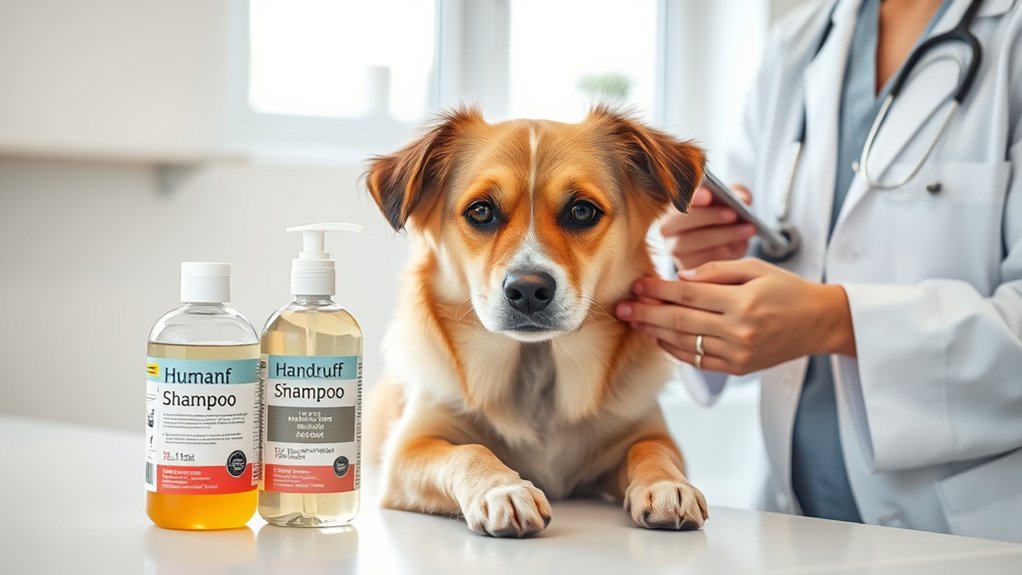
You might be wondering if you can use Head and Shoulders® shampoo on your dog’s skin. While it does work well for dandruff in people, the active ingredients mightn’t be the best for your furry friend.
See, dogs have a different skin pH than humans, and using human shampoos like Head and Shoulders® could mess with that balance.
This might lead to irritation or other skin issues for your dog. So, it’s really a good idea to stick with shampoos made just for dogs, especially ones recommended by your vet.
That way, you’re sure to keep your pup’s skin healthy and happy.
Ingredients And Benefits
Although Head and Shoulders® shampoo contains active ingredients like salicylic acid and coal tar that can improve the skin barrier in dogs with severe dandruff, it’s important to understand the potential risks of using human products on canine skin.
The shampoo’s ingredients may disrupt your dog’s natural pH balance, which can increase the risk of skin irritations or infections.
So, even though it might seem helpful, it’s not always the best choice.
Veterinary products designed specifically for dogs offer safer, more effective treatment options.
Consider these key points about Head and Shoulders® shampoo:
- Contains salicylic acid and coal tar, which are beneficial for severe dandruff.
- May alter your dog’s pH balance and increase the risk of skin irritations.
- Veterinary products are better suited for canine skin safety and needs.
- Always prioritize veterinary guidance before using human shampoos.
Veterinary Recommendations
Since canine skin has a different pH balance than human skin, using Head and Shoulders® shampoo on dogs can cause dryness and increase the risk of infections.
Although this shampoo contains ingredients like salicylic acid and coal tar that may benefit skin barrier function, it’s not formulated for dogs’ unique skin needs.
Veterinary professionals now recommend shampoos specifically designed for canine skin, such as Veterinary Formula® Clinical Care or DermaBenSs® Shampoo.
These options guarantee better safety and effectiveness.
To protect your dog’s skin health, always consult a veterinarian before choosing a shampoo.
They can guide you to the most appropriate product based on your dog’s specific skin condition, assuring both safety and ideal care.
Is Dawn Dish Soap Safe for Washing Dogs?
You can use Dawn dish soap safely on your dog in emergencies, especially if you need to treat fleas on young puppies.
That said, it’s not really meant for regular baths. Using it too often might irritate your dog’s skin and strip away those natural oils they need.
Dawn Soap Safety
When you need to clean your dog quickly, especially to address fleas on young puppies or kittens, Dawn dish soap can serve as an effective temporary solution. However, it’s important to understand its limitations and risks.
Unlike human shampoo or dog shampoo, Dawn isn’t formulated for your dog’s skin pH balance and can cause skin irritation if used frequently. Here’s what to keep in mind:
- Dawn is non-toxic but should only be used occasionally.
- Regular use can strip natural oils, leading to dryness and itching.
- Skin irritation and compromised skin barriers are common with frequent use.
- Always seek veterinary consultation to choose safe, dog-specific shampoos for routine bathing.
It’s best to prioritize products designed for dogs to maintain healthy skin and coat. That way, your furry friend stays comfortable and happy.
Temporary Cleaning Use
While Dawn dish soap can effectively remove fleas and clean your dog in urgent situations, it’s important to use it only as a temporary measure.
Dawn isn’t formulated for dog grooming and lacks the gentle ingredients found in dog-specific shampoos. Its frequent use can strip your dog’s natural oils, increasing the risk of skin irritation.
Unlike human shampoo, which can also be harsh on dogs, Dawn should never replace regular dog grooming products. If you need a quick clean, Dawn’s temporary cleaning use is acceptable, but always rinse thoroughly to avoid residue.
For ongoing care and to protect your pet’s skin health, consult your vet about suitable shampoos tailored to your dog’s coat and skin type.
It’s always best to stick with products designed for dogs to keep them happy and healthy.
Skin Irritation Risks
Although Dawn dish soap can effectively remove fleas and dirt in emergencies, it isn’t safe for regular use as a dog shampoo because it can cause skin irritation.
Unlike dog shampoo, Dawn’s formula isn’t designed to maintain your dog’s skin pH balances. This can disrupt the natural oils and lead to dryness.
Using human shampoo or dish soap frequently can aggravate sensitive skin and increase the risk of irritation and discomfort.
To protect your pet’s skin health, keep these points in mind:
- Dawn is non-toxic but not formulated for dogs’ skin.
- Regular use strips natural oils, causing dryness.
- Dog shampoo maintains proper pH balances for sensitive skin.
- Always rinse thoroughly to prevent residual irritation.
It’s a good idea to consult your vet before using any alternative cleaning products.
How to Choose the Best Dog Shampoo for Your Dog
Selecting the best shampoo for your dog means prioritizing products formulated specifically for canine skin. Look for shampoos that maintain a pH balance between 6.2 and 7.4 to prevent irritation.
When choosing dog shampoos, go for gentle formulas with natural ingredients. These cleanse effectively without harsh chemicals.
Also, pay attention to moisturizing components because they help preserve the skin’s acid mantle. This keeps the skin hydrated and protected against infections.
If your dog has specific skin conditions or sensitivities, it’s a good idea to consult your veterinarian. They can recommend medicated or hypoallergenic options tailored to your pet’s needs.
Always rinse thoroughly to remove all shampoo residue. This helps prevent potential irritation.
What Are Safe Alternatives to Dog Shampoo?
If you need alternatives to dog shampoo, it’s important to choose options that won’t disrupt your pet’s skin balance or cause irritation.
Using safe alternatives carefully can help protect your dog’s skin from irritation and dryness.
Here are some safe alternatives to evaluate:
- Baby shampoo – gentle for sensitive skin but use only temporarily as it’s not formulated for dogs.
- Dawn dish soap – suitable for emergency flea or dirt removal but avoid frequent use to prevent skin irritation.
- Unscented baby wipes – ideal for quick clean-ups on short-haired dogs without a full bath.
- Veterinary advice – always consult a vet before switching shampoos to verify the alternative won’t harm your dog’s skin.
How to Rinse and Care for Your Dog’s Skin After Bath
Rinse your dog thoroughly for at least twice the time you spent lathering to remove all shampoo residues that can cause irritation.
Use warm water to open pores and effectively rinse away dirt and leftover shampoo, paying close attention to sensitive skin areas like the ears, underbelly, and paws.
Removing all shampoo residues is vital to prevent discomfort and maintain healthy skin.
Ensuring all shampoo is rinsed away is key to your dog’s comfort and skin health.
After rinsing, consider applying a dog-safe conditioner to help preserve the skin’s natural barrier and lock in moisture.
This step really helps keep your pup’s skin soft and hydrated.
Finally, dry your dog thoroughly with a towel or a low-heat dryer to avoid dampness, which can lead to infections or skin problems.
Proper rinsing and care after bathing guarantee your dog’s skin stays healthy and irritation-free.
When Should You Consult a Veterinarian About Your Dog’s Skin?
If your dog keeps itching, has red spots, or dry patches that just won’t go away, it’s a good idea to check in with a veterinarian.
They can help figure out what’s really going on with your dog’s skin. A vet can also suggest safe, medicated shampoos that are made just for your dog’s specific needs.
Before you try any shampoo, it’s best to get professional advice to make sure it’s the right choice and will actually help your dog’s skin stay healthy.
Signs Of Skin Issues
Several clear signs indicate when you should consult a veterinarian about your dog’s skin health.
Using human shampoo can irritate your dog’s sensitive skin, so watch for these symptoms closely:
- Excessive scratching, licking, or biting, which suggests discomfort or irritation.
- Noticeable redness, swelling, or hot spots, often signs of skin infections or allergic reactions.
- Persistent dry and flaky skin, indicating potential underlying issues needing professional evaluation.
- Unusual odors from the coat or visible hair loss, both pointing to infections or other health concerns.
If you see any of these signs, don’t wait to get veterinary advice.
It’s better to catch problems early to avoid complications.
This way, you can help keep your dog’s skin healthy and happy.
Choosing Vet-Approved Shampoo
Noticing signs like excessive scratching or redness means it’s time to rethink your dog’s bathing routine and shampoo choice.
Always consult a veterinarian before selecting any shampoo, especially if your dog has sensitive skin or existing conditions.
Vet-approved dog shampoos maintain the proper pH balance of 6.2 to 7.4, which is essential for preventing skin irritations and infections.
When your dog shows persistent redness or irritation, it’s best to seek veterinary advice promptly. They can help identify the right medicated or specialized shampoos that target specific issues.
Regular vet consultations guarantee you choose shampoos tailored to your dog’s coat type and skin needs.
This promotes healthier skin overall.
Relying on veterinary guidance helps you avoid harmful products and supports your dog’s skin health effectively.
Frequently Asked Questions
Can Human Shampoo Cause Allergic Reactions in Dogs?
Yes, human shampoo can cause allergic reactions in dogs because their skin is more sensitive, and some shampoo ingredients mightn’t be safe for them.
You might notice symptoms like itching, redness, or irritation if your dog’s skin doesn’t react well.
To keep your pet safe, it’s best to use shampoos made specifically for dogs.
These products help maintain their skin’s natural balance and prevent discomfort or more serious skin problems.
Sticking to safe grooming practices really makes a difference in your dog’s health.
How Often Should I Bathe My Dog With Shampoo?
Imagine your dog’s coat gleaming under sunlight after a gentle wash. You should aim for a bathing frequency of every 4 to 6 weeks, balancing dog coat care with skin type considerations.
Seasonal bathing may require adjustments, with more baths in summer and fewer in winter.
If your dog’s skin is sensitive, consider shampoo alternatives like oatmeal baths or vet-recommended formulas.
Regular brushing also helps reduce the need for frequent shampooing, keeping your pup healthy and fresh.
It’s all about finding the right routine that suits your dog’s unique needs.
Are There Any Natural Ingredients Safe for Dog Shampoos?
Yes, you can use natural ingredients like oatmeal for its soothing benefits and aloe vera to hydrate and calm your dog’s skin.
Natural oils, such as those in coconut shampoo, help moisturize and enhance coat shine.
Be cautious with tea tree oil. It has antimicrobial properties but can be toxic if overused.
Always choose formulas designed for dogs to guarantee safety and effectiveness when using these natural components.
Can Using Human Shampoo Affect My Dog’s Fur Texture?
Yes, using human shampoo can affect your dog’s fur texture. The ingredients in human shampoos often disrupt your dog’s skin pH balance, which can lead to dryness and flakiness.
This can cause noticeable changes like roughness and brittleness in their fur.
It’s really best to stick to shampoos made specifically for dogs. These are formulated to suit their skin and coat needs.
When you use the right products, along with proper grooming, your dog’s coat stays shiny, soft, and easy to manage.
What Signs Indicate My Dog’s Skin Is Irritated After a Bath?
If your dog looks like it’s been through a sandstorm, scratching nonstop and acting restless, you’re likely seeing redness signs, excessive scratching, and itching behavior.
Dry patches or flaky skin signal disrupted natural oils, while hot spots can develop from constant biting or licking.
Watch for these clear indicators of skin irritation after a bath.
That way, you can quickly address discomfort and prevent further issues with proper care and vet advice.
Conclusion
Did you know that dogs’ skin has a pH of 6.2 to 7.4, while human skin is around 5.5? This difference means human shampoos can disrupt your dog’s skin barrier, causing irritation or infections.
To keep your furry friend healthy, always use shampoos formulated specifically for dogs. If you notice redness, itching, or dryness, consult your vet promptly.
Choosing the right shampoo and proper care protects your dog’s skin and coat effectively. It’s all about giving your dog the best care possible!