Do I Use Conditioner After Shampoo – Proper Hair Routine Guide
Yes, you should always use conditioner right after shampooing to restore your hair’s moisture and smooth the cuticles. This helps prevent dryness and breakage. Shampoo cleans your scalp and hair, but conditioner replenishes hydration and protects against damage.
Apply conditioner to the mid-lengths and ends for 1-3 minutes. Try to avoid the scalp to prevent buildup. Using the right conditioner for your hair type is key.
Keep following for tips on maximizing your hair care routine’s effectiveness.
Why Conditioner Matters After Shampooing
Although shampooing cleans your hair, it often strips away natural oils, leaving it dry and prone to damage. That’s why conditioner is essential in your hair care routine.
After shampoo, conditioner restores moisture and softness, sealing the hair cuticle to enhance shine and reduce frizz.
Conditioner replenishes moisture, softens hair, seals cuticles, boosts shine, and tames frizz after shampooing.
By doing so, it protects your strands from heat styling and environmental stressors, supporting overall hair health.
Applying conditioner also minimizes tangles and friction, which helps prevent breakage and strengthens your hair over time.
For the best results, leave conditioner on for 1-3 minutes to guarantee proper absorption and nourishment.
Incorporating conditioner consistently after shampoo ensures your hair stays hydrated, manageable, and resilient.
It really is an indispensable step in maintaining healthy, beautiful hair.
How Shampoo and Conditioner Work Together
You start by shampooing to cleanse your scalp and hair. This removes dirt and buildup, giving you a fresh foundation.
Then, when you apply conditioner, it restores moisture and smooths the hair cuticles. This creates a protective layer.
Cleansing And Moisturizing
Two essential steps in any effective hair care routine are cleansing with shampoo and moisturizing with conditioner. Shampoo removes dirt, oil, and buildup, creating a clean foundation for your hair. Conditioner then hydrates and softens, smoothing the cuticle and protecting your hair from damage.
No matter your hair type, combining these steps really promotes scalp and hair health.
To optimize results:
- Choose shampoo suited to your hair type to cleanse effectively.
- Apply conditioner primarily on mid-lengths and ends, avoiding the scalp.
- Allow conditioner to absorb fully for enhanced moisture and manageability.
- Rinse thoroughly to prevent residue buildup that can weigh hair down.
Balanced Haircare Benefits
When shampoo removes dirt, oil, and product residue from your scalp and hair, conditioner steps in to restore moisture and smooth the cuticles.
Using shampoo and conditioner together balances cleanliness with hydration, which is vital for maintaining your hair’s health.
Conditioner helps replenish moisture stripped during cleansing and seals the cuticle. This boosts shine and reduces tangles that cause breakage.
To get the best results, tailor your routine to your hair type. For example, apply conditioner mainly to the ends if your scalp tends to be oily to prevent product buildup.
This balance makes sure your hair stays clean without drying out. By combining these steps, you protect your hair’s natural moisture barrier and promote overall health.
Choosing the Right Conditioner for Your Hair
Choosing the right conditioner begins with knowing your hair type and what it really needs.
You’ll want to pick a formula that tackles your specific concerns—whether that’s adding moisture, repairing damage, or boosting volume.
When you apply conditioner, focus on the mid-lengths to the ends of your hair.
This way, you avoid weighing down your scalp and keep your hair as healthy as possible.
Hair Type Considerations
How do you select the right conditioner to match your hair type? Tailoring your conditioner choice guarantees your hair gets the care it needs without weighing it down or causing buildup.
Consider these key hair types:
- For fine or oily hair, use lightweight conditioners. Apply only to mid-lengths and ends to avoid greasiness and preserve volume.
- Curly or textured hair benefits from cream-based conditioners applied on soaking wet hair. This helps enhance hydration and curl definition.
- Thick or coarse hair requires richer, moisturizing conditioners. Apply generously to nourish all strands.
- If you have dry or damaged hair or color-treated hair, prioritize deep conditioning treatments or conditioners that protect color and restore moisture with every wash.
Understanding your hair type helps you choose the perfect conditioner to maintain healthy, vibrant hair.
It’s all about giving your hair exactly what it needs!
Formula Selection Tips
Matching your conditioner to your hair type is just the start. Selecting the right formula guarantees your hair gets targeted benefits.
For fine hair, choose a gel-based conditioner to avoid weighing strands down, while cream-based conditioners work best for thick or coarse hair.
If you have dry hair or curls, opt for rich, hydrating formulas that enhance moisture and definition.
Consider your hair texture and concerns. Look for conditioners addressing frizz, damage, or oiliness.
Avoid silicones if you co-wash to prevent buildup, and prioritize natural oils and proteins for nourishment.
Lightweight leave-in conditioners can offer added hydration without heaviness. Always test a small amount first to confirm the formula suits your hair’s moisture needs and texture.
Smart formula selection maximizes your conditioner’s effectiveness and supports healthy hair.
Application Techniques
Anyone aiming for healthy, well-nourished hair must apply conditioner thoughtfully to maximize its benefits. Proper application techniques guarantee conditioners should be applied effectively based on your hair type and needs.
For fine hair, opt for lightweight formulas and avoid the scalp to prevent greasiness, especially if you have oily hair.
Follow these guidelines:
- Apply conditioner mainly to mid-lengths and ends, steering clear of the scalp.
- For curly or textured hair, apply on soaking wet hair to lock in moisture and define curls.
- Leave standard rinse-off conditioners on for 1-3 minutes; deep conditioners require 5-10 minutes.
- Adjust frequency based on hair condition. Dry hair needs more regular conditioning than oily hair.
These steps optimize nourishment while preventing buildup or oiliness.
How to Apply Conditioner After Shampoo Correctly
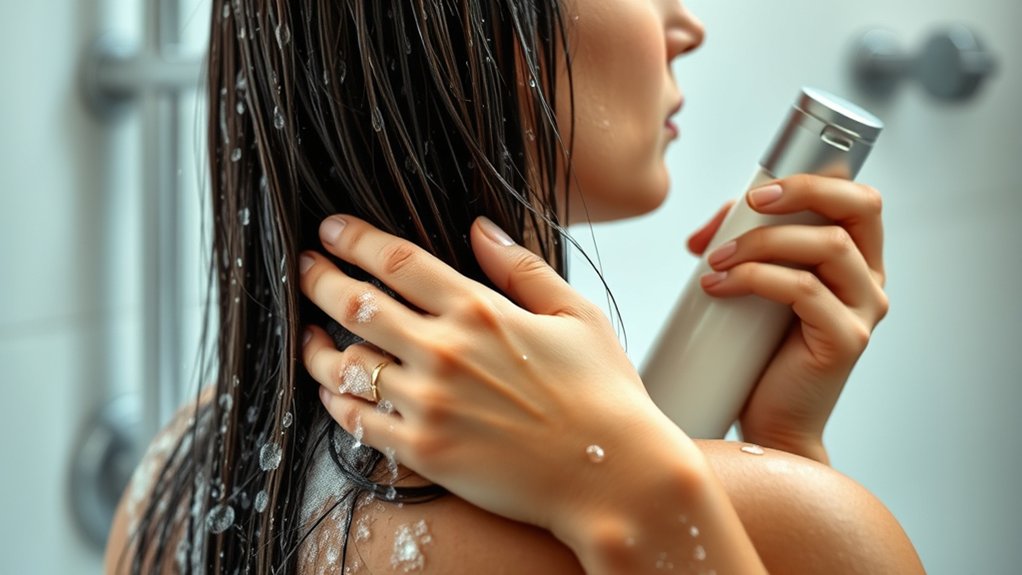
When should you apply conditioner for the best results? Right after thoroughly rinsing out shampoo, apply conditioner to damp hair. Focus on the mid-lengths and ends, where hydration is most needed and tangling often occurs.
Tailor the amount of conditioner based on your hair type. Use lighter formulas for fine hair and richer creams for thick or curly hair to avoid weighing it down.
Use a wide-tooth comb to distribute the conditioner evenly, ensuring every strand benefits and detangling your hair gently.
After leaving the conditioner on for the recommended time, rinse it out with cool water to seal the cuticles. This helps enhance shine and smoothness.
This precise routine helps maintain healthy, hydrated hair without buildup or heaviness. Give it a try and see the difference!
When Should You Leave Conditioner On After Shampoo?
How long should you leave conditioner on after shampoo to get the best results? The time you leave conditioner on your hair plays a big role in how well it works. Here’s a simple guide to help you use conditioner right in your hair routine:
- Standard rinse-off conditioners: Leave on for 1-3 minutes to nourish and detangle your hair effectively.
- Deep conditioners or masks: Leave on for 5-10 minutes or more to get the most absorption.
- Avoid leaving conditioner on for too short a time, or it won’t work as well.
- Don’t leave conditioner on too long either, or you might get product buildup or residue.
You can adjust the time based on your hair type. If your hair is dry or damaged, leaving conditioner on longer can boost the benefits.
Just remember to apply conditioner right after shampooing and rinsing for the best results.
What Happens If You Skip Conditioner After Shampoo?
Skipping conditioner after shampoo can leave your hair dry and brittle because it misses out on essential hydration and smoothing benefits.
When you skip conditioner, your hair cuticles stay open and rough, which increases frizz and makes your hair harder to manage and style. This rough texture leads to more tangles and breakage since unconditioned hair is more vulnerable to damage and friction.
Over time, regularly skipping conditioner disrupts your hair’s moisture balance, causing it to look dull and lifeless.
Plus, neglecting conditioner may contribute to scalp issues like irritation and dryness as your scalp lacks protection from environmental factors and product buildup.
For healthy, manageable hair, it’s really important not to skip conditioner after shampoo.
Can You Use Conditioner Without Shampoo?
You can definitely use conditioner without shampoo by trying something called co-washing. It’s especially great if you have dry or curly hair that needs a little extra moisture.
This method helps keep your hair hydrated and can really reduce frizz. Just make sure to use silicone-free conditioners because they help avoid any buildup on your scalp.
That said, co-washing mightn’t be enough to fully remove heavy styling products.
Benefits Of Co-Washing
Anyone looking to maintain moisture while cleansing their hair might find co-washing an effective alternative to traditional shampooing. Co-washing involves using conditioner to clean your hair, helping you retain natural oils and reduce dryness. This method supports scalp and hair health by providing gentle cleansing without stripping essential moisture.
To maximize benefits, keep these points in mind:
- Co-washing helps retain natural oils, preventing dryness and frizz.
- It’s ideal for maintaining hydrated, healthy hair, especially if you have dry or curly hair.
- Using a clarifying shampoo every few weeks is important to remove potential buildup from conditioners.
- Many co-washing conditioners are silicone-free, ensuring your scalp stays clean and manageable.
Suitable Hair Types
Although conditioner alone can cleanse your hair effectively through co-washing, this method suits certain hair types better than others.
If you have very dry, curly, or textured hair, co-washing helps retain moisture without stripping natural oils.
However, if your hair is fine or oily, conditioners used without shampoo mightn’t remove excess oil and buildup efficiently. For these hair types, traditional shampooing remains more effective.
When co-washing, choosing a silicone-free conditioner is essential to avoid product buildup that can weigh hair down.
Also, incorporating a clarifying shampoo every few weeks helps maintain scalp health and eliminate residue.
Tailoring your routine based on your specific hair type guarantees you get the best hydration and cleanliness from your conditioning and washing regimen.
Potential Drawbacks
While using conditioner without shampoo might seem like a simple shortcut, it often leads to product buildup that can weigh hair down and leave it feeling greasy.
Conditioner can make your hair smooth but doesn’t effectively remove dirt and oil like shampoo does. This can result in scalp issues and hinder ideal hair health.
Consider these potential drawbacks:
- Product buildup from conditioning agents can clog hair follicles.
- Conditioners may not penetrate properly without prior cleansing.
- Skipping shampoo risks scalp irritation and unpleasant odors.
- Over time, hair can feel heavy, greasy, and less manageable.
For most hair types, shampooing first guarantees your scalp is clean.
This allows conditioner to work effectively and helps maintain ideal hair health.
Leave-In vs. Rinse-Out Conditioners: Which to Use?
How do you decide between leave-in and rinse-out conditioners for your hair care routine?
Rinse-out conditioners hydrate and detangle your hair during washing. They typically need 1-3 minutes before rinsing to nourish your hair effectively.
Leave-in conditioner, on the other hand, stays in your damp hair. It provides continuous moisture, protection, and makes styling easier throughout the day. Your choice depends largely on your hair type and needs.
If you have dry or damaged hair, using both can be beneficial. Rinse-out conditioner gives initial hydration, while leave-in adds extra moisture and protection.
Fine hair usually benefits from lightweight leave-ins, while thick or curly hair often needs richer, cream-based leave-ins.
Ultimately, combining the right products helps maintain ideal moisture and manageability. It’s all about finding what works best for your unique hair condition.
Tips to Prevent Product Buildup After Conditioning
Choosing the right conditioner is a key step, but preventing product buildup after conditioning is what really keeps your hair healthy and manageable.
To avoid residue buildup, here’s what you should do:
- Rinse shampoo thoroughly before applying conditioner. This helps prevent any leftover product from sticking around.
- Use conditioners without heavy silicones or oils. Lightweight formulas keep your hair feeling fresh and light.
- Apply rich conditioners only to mid-lengths and ends. Try to avoid the scalp so your hair doesn’t get greasy.
- Add clarifying shampoos to your routine every 2-3 weeks. They help remove any accumulated product and keep your scalp healthy.
Following these simple tips will help you prevent residue buildup and keep your hair clean and easy to manage, without losing moisture or shine.
How to Get the Best Results From Your Conditioner
To get the best results from your conditioner, focus on applying it mainly to the mid-lengths and ends of your hair. Try to steer clear of the scalp to prevent heaviness and buildup.
Leave rinse-off conditioners on for 1-3 minutes. Deep conditioners, on the other hand, need 5-10 minutes to give your hair deeper nourishment.
Always rinse thoroughly to avoid residue that can dull your hair. For extra moisture, use leave-in conditioners on towel-dried hair before styling.
| Hair Type | Conditioner Type | Application Tips |
|---|---|---|
| Fine Hair | Lightweight | Apply sparingly to avoid weighing down |
| Thick/Curly | Rich Cream | Focus on mid-lengths and ends |
| All Hair Types | Leave-in Conditioners | Use on damp hair for frizz control |
Frequently Asked Questions
Can Conditioner Help With Dandruff or Scalp Issues?
Yes, conditioner can help with dandruff and scalp issues by promoting scalp hydration, which reduces dryness and flakiness.
Choosing products with effective ingredients like tea tree oil or salicylic acid boosts dandruff prevention and scalp exfoliation.
But you should pay attention to the product formulation. Apply conditioner mainly to hair lengths and ends to avoid buildup on your scalp.
Using specialized anti-dandruff conditioners after shampoo supports overall scalp health and balances moisture effectively.
It’s a simple step that can make a big difference!
Is It Necessary to Use Conditioner Daily?
You don’t need daily usage of conditioner unless your hair type demands it.
Dry, curly, or color-treated hair benefits from daily conditioning for moisture retention and scalp health.
However, if you have oily or fine hair, daily use can cause product buildup and weigh hair down.
Tailor your routine to your hair type and lifestyle to maintain balance.
This way, you keep your scalp healthy without overloading your strands with excess conditioner.
How Does Water Temperature Affect Conditioner Effectiveness?
Water temperature directly affects conditioner effectiveness by influencing your hair cuticle’s openness. Warm water helps open the hair cuticle, which improves product absorption and boosts moisture retention. This also supports scalp health by allowing nutrients to penetrate better.
After conditioning, rinsing with cooler water seals the cuticle. This locks in moisture and enhances shine. It’s a simple step that makes a big difference.
Try to avoid hot water because it can strip natural oils. That reduces your conditioner’s benefits and can potentially harm your scalp and hair.
Keeping the right water temperature really helps keep your hair healthy and looking great.
Can Conditioner Replace Hair Masks or Treatments?
Conditioner can’t replace hair masks or treatments because masks offer 2-3 times more active ingredients for deep repair and hydration.
While conditioner benefits include hair hydration and scalp health, it mainly smooths and detangles.
For best results, use conditioner daily and layer products wisely, incorporating masks weekly.
If you prefer natural alternatives, ingredients like avocado or honey masks can boost moisture beyond what conditioner alone provides.
This way, you’re ensuring healthier, stronger hair without skipping the extra care it needs.
Does Conditioner Protect Hair From Heat Styling Damage?
Yes, conditioner provides heat protection by creating a barrier that helps retain moisture and smooth the cuticle. This means your hair is better shielded from the damage caused by heat styling tools.
Using conditioner also helps control frizz, making your hair easier to manage and less likely to break. It works like a styling aid, boosting your hair’s resilience against thermal stress.
For ongoing protection, you might want to try leave-in conditioners made specifically to protect hair from heat damage. They can give you that extra layer of defense every time you style.
Conclusion
You absolutely need conditioner after shampoo. Skipping it is like washing your car with soap but never rinsing off the grime. Conditioner seals in moisture, smooths cuticles, and transforms your hair from a tangled mess into a silky masterpiece.
Apply it right, leave it on just long enough, and choose the perfect formula for your strands. Nail these steps, and your hair won’t just look good. It’ll shine like you’ve stepped out of a salon every single day.