

How To Properly Use Dry Shampoo – Step By Step Guide
To properly use dry shampoo, start with completely dry, detangled hair and shake the can well. Section your hair and hold the spray 6 to 10 inches from your scalp, focusing on oily roots. Let it sit for at least 30 seconds.
Then, gently massage it in with your fingertips before brushing through to remove residue and add volume. Use it sparingly to avoid buildup and balance with regular washing.
Keep following to discover tips for blending, choosing the right formula, and styling.
What Is Dry Shampoo and How Does It Work
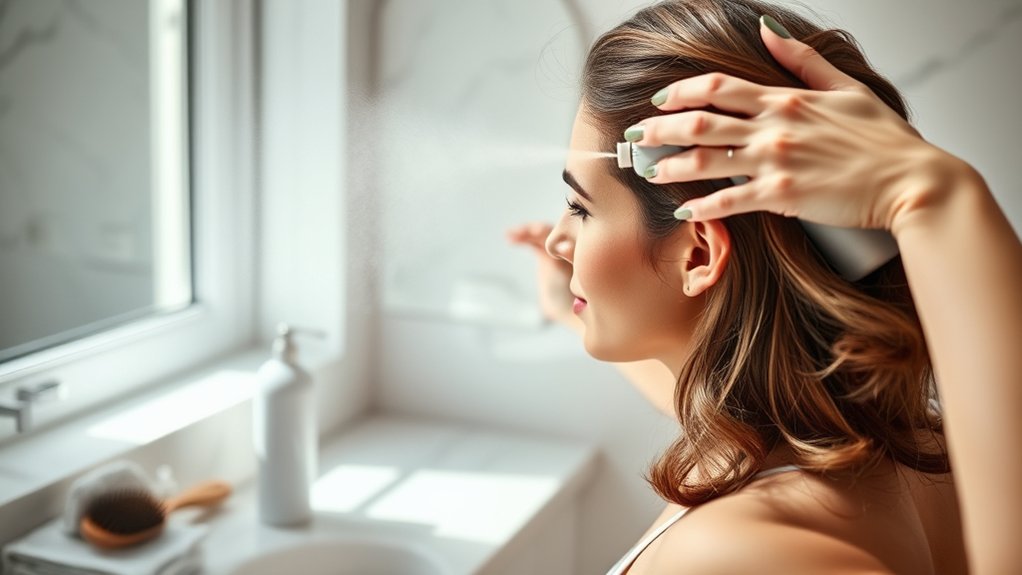
Dry shampoo is a convenient hair care product designed to cleanse your hair without using water. It works by using absorbents like starch or alcohol to soak up excess oil from your scalp and strands, helping you refresh hair quickly between washes.
When you apply dry shampoo, it targets oil, sweat, and odors, leaving your hair feeling cleaner and more voluminous. After spraying or applying it to dry hair, you let it sit briefly to absorb excess oil, then massage it into your scalp to enhance texture and remove any residue.
Keep in mind, dry shampoo isn’t a replacement for regular washing. It’s best used alongside your usual shampoo routine to maintain a healthy scalp and avoid buildup.
When Should You Use Dry Shampoo?
When should you reach for dry shampoo? It’s your go-to for revitalizing hair and extending the life of your style without a full wash.
Dry shampoo works wonders to maintain hair freshness, especially between washes.
Here’s when to use it:
- After workouts or outdoor activities to absorb sweat and grease.
- Between regular washes to extend the time and keep hair looking clean.
- On fine hair to add volume and body when you want a quick boost.
- When you need a fast revival on the go without water or shampoo.
- Whenever your hair feels oily but doesn’t need a full wash yet.
How to Get Your Hair Ready for Dry Shampoo

First, make sure your hair is completely dry before you start because any moisture can make the dry shampoo less effective.
Next, section your hair evenly—this helps you target the oiliest areas and get better coverage overall.
Oh, and don’t forget to detangle your hair first; that way, the product can reach your roots without any blockages.
Ensure Hair Is Dry
Before applying dry shampoo, you’ll want to confirm your hair is completely dry. Damp strands can cause clumping and reduce the product’s ability to absorb oil. So, it’s really important to make sure your hair is totally dry before you start.
To verify your hair is dry and ready, follow these simple steps:
Avoid applying dry shampoo on damp hair to prevent poor oil absorption. Make certain your hair is completely dry by air-drying or using a blow dryer.
Also, remove any styling products or residue that might block the dry shampoo’s effectiveness.
Comb through your hair to detangle and prepare for even product distribution.
And don’t forget to shake the dry shampoo canister well before you apply it for the best results.
Section Hair Evenly
Dividing your hair into several manageable sections is key to achieving an even dry shampoo application.
Start by sectioning your hair horizontally into 1-2 inch wide manageable sections. This helps guarantee even application and product distribution, preventing buildup in any one area.
Use clips or ties to secure each section, making it easier to focus on the roots without missing spots.
Begin at the bottom layers and work your way up, paying special attention to the oiliest areas like the crown and hairline for ideal coverage.
By sectioning hair evenly, you’ll make certain every part receives the right amount of dry shampoo.
This results in fresher-looking hair and a balanced, natural finish.
Detangle Before Application
Two essential steps help prepare your hair for dry shampoo: making sure it’s completely dry and gently detangling it.
Detangling removes knots, which lets the dry shampoo spread evenly during application. Start by using a wide-tooth comb or brush to gently work through your hair.
Pay special attention to oily or flat sections since these parts benefit most from dry shampoo’s absorbing properties. If your hair is thick or curly, a detangling spray can make the process easier and help reduce breakage.
Here’s how to detangle before applying dry shampoo:
- Confirm your hair is fully dry
- Use a wide-tooth comb or detangling brush
- Focus on oily, flat areas
- Apply detangling spray if needed
- Take your time to avoid stress or damage
This gets your hair ready for a smooth, effective dry shampoo application.
Choose the Right Dry Shampoo for Your Hair Type
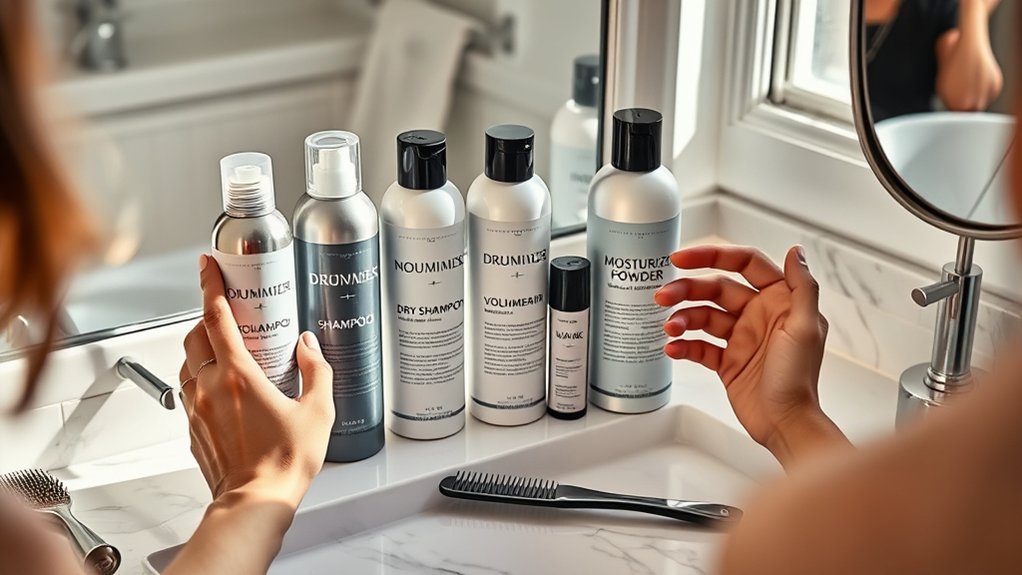
Choosing the right dry shampoo means matching the formula to your hair type for the best results.
So, whether your hair is fine, thick, oily, color-treated, or dark, there’s definitely a product out there designed just for you.
Knowing what to look for can really help you refresh your hair without weighing it down or leaving any residue behind.
It’s all about finding that perfect fit for your hair’s unique needs.
Hair Type Considerations
Although dry shampoo is a convenient solution for revitalizing your hair, picking the right formula for your hair type makes all the difference in getting the best results. Different hair types need specific oil-absorbing properties and application techniques to look fresh without buildup.
Fine hair benefits from volumizing dry shampoo with silica or starch to avoid weighing down strands.
Curly hair requires lightweight formulas, applied sparingly to preserve natural curl shape.
Dark hair looks best with tinted or translucent dry shampoo to prevent visible residue.
Oily scalps need stronger oil-absorbing ingredients like tapioca starch, focusing on root application.
Textured hair should be sectioned during application for even coverage and a thorough refresh.
Choose wisely to make sure your dry shampoo enhances your hair type perfectly.
Matching Formulas Effectively
When you match your dry shampoo formula to your hair type, you’ll get fresher, more natural-looking results every time.
If you have fine to medium hair, choose a powder formula to guarantee targeted oil absorption and added volume without weighing your hair down.
For thick or textured hair, an aerosol spray works best. It provides even distribution that penetrates dense strands effectively.
Dark hair benefits from a translucent dry shampoo to avoid visible residue and maintain a clean finish.
Look for products with natural ingredients like rice or tapioca starch. These gently absorb excess oil without harsh chemicals.
If you’re active or often on-the-go, opt for a fast-absorbing formula to quickly refresh your hair and eliminate odors, keeping you confident all day.
How to Apply Dry Shampoo Step-by-Step
Start by making certain your hair is completely dry, then shake the dry shampoo canister well to distribute the product evenly.
Ensure your hair is fully dry before shaking the dry shampoo canister to evenly distribute the product.
To apply dry shampoo effectively, follow these simple steps:
Divide your hair into sections, focusing on oily roots. Hold the canister 6-10 inches away from your scalp. Spray lightly in short bursts, targeting each section.
Let the dry shampoo sit for at least 30 seconds to absorb oil.
Massage your scalp gently with fingers or a brush, then brush through to remove residue.
This method guarantees the dry shampoo absorbs excess oil and refreshes your hair without leaving buildup.
Tips for Avoiding Common Dry Shampoo Mistakes
To get the best results from your dry shampoo, you need to avoid common mistakes that can leave your hair looking dull or powdery.
First, don’t spray too close. Keep the can 6-10 inches from your scalp to guarantee even coverage and prevent residue.
Only apply dry shampoo to completely dry hair. Damp strands cause clumping and reduce oil absorption. Use a light amount to avoid scalp buildup, focusing on key hair sections like the crown and sides where oil tends to accumulate.
After applying, let the product sit for at least 30 seconds to maximize oil absorption before styling.
Steering clear of these common mistakes helps your dry shampoo refresh your hair effectively without unwanted buildup or unevenness.
How to Blend and Remove Dry Shampoo Residue
After you let the dry shampoo sit for at least 30 seconds, go ahead and gently massage it into your scalp with your fingers or a paddle brush. This helps soak up any extra oil.
If you spot any powdery residue, just grab a clean brush and use it to evenly spread the product, blending it right into your hair.
Doing these simple steps makes sure you avoid buildup and keeps your hair looking fresh and natural.
Massaging Techniques
Gently massage the dry shampoo into your scalp using your fingertips, focusing on oily areas to guarantee even absorption. Allow the product to sit for at least 30 seconds to absorb oil effectively before you start massaging.
Use these blending techniques to ensure an even distribution and eliminate visible residue:
- Start at the roots and work toward the ends to prevent knots and spread the product evenly.
- Use gentle, circular motions to massage the dry shampoo into your scalp.
- Pay special attention to oily spots for maximum oil absorption.
- Continue massaging if you see any powdery residue until it disappears.
- Use your fingertips exclusively for this step to avoid disturbing the product placement.
This method helps you massage the dry shampoo thoroughly for a natural, fresh look. It’s easy to do and really makes a difference!
Brushing Out Residue
Once you’ve massaged the dry shampoo thoroughly into your scalp and allowed it to absorb oil, it’s time to brush out any remaining residue.
Use a paddle brush or wide-tooth comb to gently brush out the product. This helps ensure even distribution while minimizing visible white residue.
For extra volume, flip your hair upside down as you brush. This lifts the roots and blends the dry shampoo seamlessly.
If you still notice white residue, lightly massage it into your scalp with your fingers to break it down further.
Remember, regularly cleaning your brush is key to preventing buildup. It keeps your tools effective and hygienic.
Brushing out properly not only removes excess product but also boosts volume, leaving your hair refreshed and natural-looking.
How Often Should You Use Dry Shampoo?
- Use dry shampoo sparingly; it’s not a replacement for regular washing.
- Adjust frequency based on your hair’s thickness and oiliness.
- Avoid daily use to prevent scalp irritation.
Think about your activity level and how much you sweat too. That can change how often you might want to use it.
– Prioritize scalp health by balancing dry shampoo with proper cleansing.
How to Add Volume and Style With Dry Shampoo
Besides managing oiliness, dry shampoo can be your secret weapon for adding volume and texture to your hair.
To boost volume, apply dry shampoo by holding the can 6-10 inches away from your roots and spraying in short bursts. Focus on oily spots for even coverage and lift.
Hold the can 6-10 inches from roots, spray in bursts, and target oily areas for extra volume and lift.
Flip your hair upside down while applying to maximize root volume. Let the dry shampoo sit for about 30 seconds to absorb oil before massaging it through your scalp. This technique creates a natural lift and body, which is especially helpful for fine hair when used sparingly to avoid buildup.
For styling, apply dry shampoo before braids or updos to add grip and texture. This helps your style stay put longer with enhanced volume and hold.
It’s a simple trick that really makes a difference!
How to Make Dry Shampoo Part of Your Daily Routine
Although dry shampoo isn’t a substitute for regular washing, you can easily make it part of your daily routine to keep your hair looking fresh between washes.
To effectively use dry shampoo, follow these tips:
Apply dry shampoo on non-wash days to absorb excess oil and maintain freshness.
Use dry shampoo immediately after workouts or outdoor activities to prevent grease buildup.
Section your hair into manageable parts before application to target oily roots evenly.
Shake the canister well and apply dry shampoo before styling to boost volume and grip.
Try to limit use to two consecutive days between wash days to avoid buildup and protect scalp health.
This way, your hair stays fresh without overdoing it.
Frequently Asked Questions
Can Dry Shampoo Damage My Scalp or Hair?
Yes, dry shampoo can damage your scalp and hair if you don’t manage usage frequency and application technique carefully.
Overusing it causes product residue and hair buildup, which may irritate scalp sensitivity and disrupt scalp health.
To protect your scalp, limit use to two days max, apply sparingly, and wash regularly to remove residue.
Choosing gentle formulas also helps maintain a healthy scalp and avoid dryness or flakiness.
Just be mindful of how often and how much you use it!
Is Dry Shampoo Safe to Use on Colored Hair?
Yes, dry shampoo is safe for colored hair when you choose formulas designed for colored hair care. Its dry shampoo benefits include extending color vibrancy by reducing washes, but you need to follow frequency guidelines to avoid buildup.
Focus on ingredient safety. Avoid sulfates and parabens, and use proper application techniques to protect your scalp and strands.
This way, you’ll preserve your color while enjoying fresh, oil-free hair between washes.
How Long Does Dry Shampoo Typically Last in Hair?
Dry shampoo typically lasts 24-48 hours in your hair, depending on your hair type and product type. Proper application techniques help maximize its effect, but using it too frequently can cause residue buildup, which can harm your scalp health.
It’s a good idea to adjust how often you use it based on your oil production and hair texture. Just keep in mind that dry shampoo isn’t a replacement for washing your hair. It’s more of a quick fix when you’re short on time.
To keep your scalp healthy, make sure to wash your hair regularly and choose the right product for your hair type. That way, you get the best results without causing damage.
Can Dry Shampoo Replace Regular Hair Washing Entirely?
You can’t put all your eggs in one basket. Dry shampoo can’t replace regular hair washing entirely. While it helps you get quick freshness and absorbs oil, how you apply it and the product you choose really matter.
Use it sparingly, no more than two days in a row, to keep your scalp healthy.
How often you should use it depends on your hair type, so pay attention to what your scalp tells you.
Are There Natural or Homemade Dry Shampoo Alternatives?
Yes, you can make natural dry shampoo alternatives using DIY recipes with herbal ingredients and absorbent powders like cornstarch or arrowroot.
You can add cocoa powder for darker hair or oatmeal for a soothing touch.
If you want, mix in scented options like lavender or tea tree essential oils for fragrance and scalp benefits.
When applying, sprinkle lightly at the roots and then brush through.
Make sure to store your homemade powder in airtight containers to keep it fresh and effective.
It’s a simple way to refresh your hair naturally!
Conclusion
Think of dry shampoo as your secret garden. It’s quick, invigorating, and full of life when your hair feels tired. By choosing the right product and applying it with care, you breathe new energy into your strands without washing away their natural charm.
Use it wisely, blend it well, and let it lift your style like morning sunlight. With these steps, dry shampoo becomes more than a product. It’s your hair’s daily revival.