Can Baking Soda Be Used As Dry Shampoo – Pros, Cons, And Risks
You can use baking soda as dry shampoo to absorb oil and freshen your scalp, but its high pH and abrasive texture may disrupt your scalp’s natural balance and cause irritation or dryness. It’s best to use it sparingly and mix it with gentler powders like cornstarch.
If you have sensitive or color-treated hair, caution is advised. Understanding the benefits, risks, and safer alternatives can help you make an informed choice about this DIY option.
What Is Baking Soda Dry Shampoo And How Does It Work
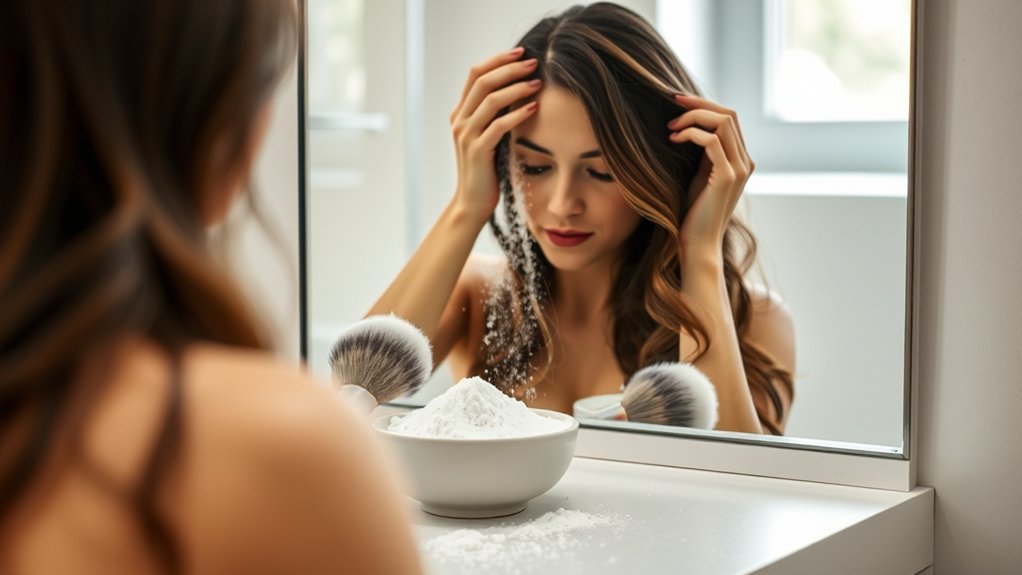
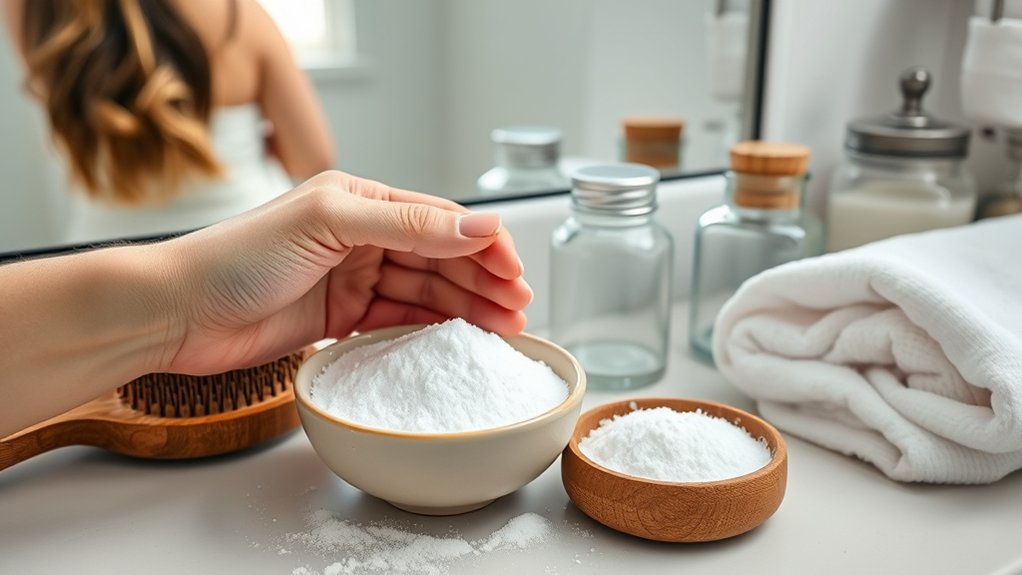
Baking soda dry shampoo works by absorbing excess oil from your scalp, which helps extend the time between traditional hair washes. This dry shampoo typically combines baking soda with powders like arrowroot or ground oats to better absorb oil and improve texture.
Baking soda, the key ingredient, acts as a natural deodorizer, leaving your hair smelling fresher after application.
When you sprinkle or massage the mixture onto your scalp, it absorbs the oil effectively, reducing greasiness. However, baking soda has a high pH, which can disrupt your scalp’s natural balance if used frequently.
While it’s an effective oil absorber and deodorizer, you should be mindful of its potential to irritate your scalp and damage hair with prolonged use.
How To Use Baking Soda Dry Shampoo Safely
While baking soda dry shampoo can effectively absorb oil and refresh your hair, using it correctly is key to preventing scalp irritation and damage.
Mix equal parts baking soda and cornstarch to lessen scalp sensitivity and improve absorption of excess oil.
Combine equal parts baking soda and cornstarch to gently absorb oil while minimizing scalp irritation.
Apply a small amount directly to your roots, then gently massage to target oily areas without overwhelming your scalp. Let the mixture sit for a few minutes before thoroughly brushing it out to avoid buildup and maintain ideal hair hygiene.
Use this dry shampoo sparingly, ideally once a week, to protect your scalp’s natural oils and prevent dryness.
Always follow up with a gentle shampoo and conditioner to support scalp care and restore moisture balance after using baking soda.
Benefits Of Using Baking Soda Dry Shampoo
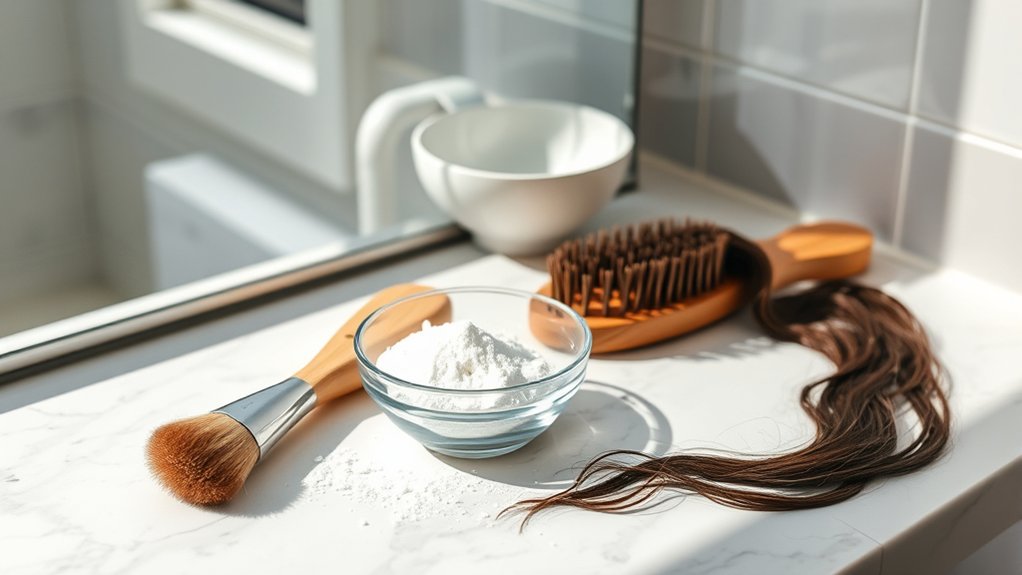
Several key benefits make baking soda dry shampoo an effective choice for managing oily hair between washes. Baking soda’s fine particles absorb excess oil and add volume, giving your hair a refreshed look without water. Its deodorizing properties neutralize odors, making it ideal for quick touch-ups.
Plus, you can create a homemade dry shampoo by mixing baking soda with ingredients like ground oats or arrowroot powder, which enhances oil absorption. This DIY approach is not only cost-effective but also super convenient.
| Benefit | Description | Application |
|---|---|---|
| Oil Absorption | Absorbs excess oil from scalp | Refresh oily roots |
| Deodorizing Properties | Neutralizes unwanted odors | Keeps hair smelling fresh |
| Homemade Convenience | Easy, cost-effective DIY solution | Mix with oats/arrowroot |
These benefits make baking soda dry shampoo a practical option for managing oily hair. Give it a try and see how it works for you!
Risks Of Baking Soda Dry Shampoo And Its High PH
You should be careful when using baking soda as a dry shampoo because its pH is pretty high—around 9. This can throw off your scalp’s natural balance and might cause some irritation.
Over time, it can also strip away the essential oils from your hair, leaving it dry and brittle. Plus, since it’s a bit abrasive, it can damage your hair cuticles, which means more frizz and breakage down the line.
Scalp pH Imbalance
Because baking soda has a high pH of around 9, it can easily disrupt your scalp’s natural acidity, which typically ranges from 4.5 to 5.5. This imbalance compromises the scalp’s acid mantle, leading to irritation and dryness.
Using baking soda frequently strips away natural oils, increasing flakiness and potentially triggering scalp conditions like eczema.
The high pH also causes hair cuticles to open excessively, which can increase moisture loss and elevate static electricity. This environment raises the risk of hair breakage and frizz due to added friction.
If you have sensitive skin or existing scalp issues, baking soda’s alkaline nature may worsen irritation.
Overall, the scalp pH imbalance caused by baking soda makes it a risky choice for dry shampoo use.
Hair Damage Risks
The high pH of baking soda doesn’t just disrupt your scalp’s balance; it also poses significant risks to your hair’s health. With a pH around 9, baking soda can strip away your hair’s natural oils, leaving it dry and fragile.
Over time, this can lead to pronounced hair damage, especially if you have sensitive scalps or conditions like eczema. The abrasive texture further harms hair cuticles, increasing frizz and breakage.
Using baking soda as a dry shampoo may also trigger dry scalp and irritation. So, it’s not the gentlest option out there.
You might experience:
- Increased hair breakage and frizz due to damaged cuticles
- Loss of natural oils resulting in dry scalp and brittle strands
- Irritation and discomfort for sensitive scalps
Considering these factors, baking soda’s high pH makes it a risky choice for hair care. It’s better to look for alternatives that are kinder to your scalp and hair.
Who Should Avoid Baking Soda Dry Shampoo?
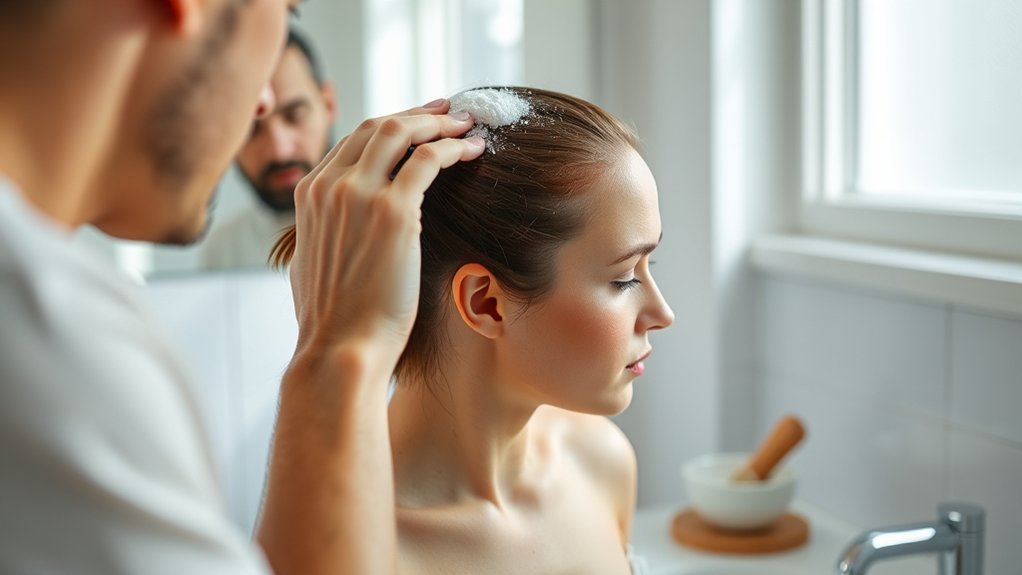
Although baking soda dry shampoo can be convenient for some, those with dry or color-treated hair should steer clear because of its high pH. It can strip moisture and fade color, which is definitely not what you want.
If you have a sensitive scalp or conditions like eczema, baking soda’s abrasive nature might cause irritation or discomfort.
Even if your hair is normal to oily, using it too often can lead to dryness and make scalp issues worse.
So, if you notice itching, burning, or other signs of irritation, stop using it right away and talk to a dermatologist.
For a gentler option, you might want to try commercial shampoos that are designed to keep your scalp healthy and minimize irritation.
These alternatives are usually safer and better at preserving your hair’s moisture balance and overall scalp condition.
How Baking Soda Dry Shampoo Compares To Commercial Options
When you compare baking soda dry shampoo to commercial options, you’ll notice some key differences in the ingredients.
These differences can really affect how well they work and how healthy your scalp stays. Baking soda has a high pH and can be a bit abrasive, which might lead to dryness and irritation.
On the other hand, commercial products are designed to balance oil absorption while taking care of your scalp. Knowing these differences can help you pick the best option for your hair type and what you need.
Ingredient Differences
Anyone exploring dry shampoo options will notice key ingredient differences between baking soda-based homemade versions and commercial products.
Baking soda dry shampoo relies solely on baking soda for oil absorption. It has a higher pH level around 9, which could disrupt your scalp’s natural balance and cause irritation.
In contrast, commercial dry shampoos blend powders like cornstarch or arrowroot for a gentler texture. They also maintain a balanced pH that’s better suited for scalp health.
Plus, they often include essential oils and fragrances to improve the user experience.
Homemade baking soda mixtures may clump, clog pores, and lack preservatives. This can increase the risk of scalp irritation and bacterial growth.
Application Effectiveness
A baking soda dry shampoo absorbs oil effectively thanks to its alkaline properties, offering a quick fix for oily hair. However, it can disrupt the scalp’s natural pH and cause dryness.
Commercial dry shampoos include starches and soothing agents that enhance oil absorption while protecting hair health. They also reduce risks like clumping and pore clogging, which are common with baking soda use.
Frequent baking soda use may lead to cumulative hair damage, unlike many commercial options designed for regular application. So, while baking soda works well in a pinch, it’s worth considering gentler, formulated alternatives for regular use.
| Feature | Baking Soda Dry Shampoo |
|---|---|
| Oil Absorption | Effective but alkaline |
| Scalp pH Impact | Disrupts natural pH |
| Hair Health Preservation | Limited; risk of cumulative damage |
Scalp Health Impact
While baking soda effectively soaks up excess oil, its high pH of 8.3 can disrupt your scalp’s natural acidity, which typically ranges between 4.5 and 5.5. This imbalance may lead to scalp irritation, dryness, and compromised scalp health.
Commercial products, however, are formulated to maintain pH balance, reducing these risks.
Moreover, baking soda’s abrasive nature can damage hair cuticles, causing dry hair and breakage. Commercial dry shampoos often include conditioning agents that protect your hair.
Using baking soda may also strip away natural oils essential for scalp moisture, unlike many commercial options designed to preserve them.
When considering scalp health, baking soda differs greatly from commercial products, which are dermatologically tested to guarantee safety and effectiveness.
Visualize the differences:
- pH balance disruption vs. pH-balanced formulas
- Abrasive texture vs. conditioning ingredients
- Stripping natural oils vs. moisture retention
Natural Dry Shampoo Alternatives To Baking Soda
Where can you turn if baking soda feels too harsh for your hair? Several natural ingredient alternatives can effectively absorb oil while being gentler on your scalp.
Cornstarch is a popular choice, known for absorbing excess oil and adding volume without disrupting your hair’s pH balance.
Arrowroot powder also refreshes the scalp and adds texture, making it a mild substitute.
Ground oats offer soothing properties alongside oil absorption, which is great for sensitive scalps.
Rice powder stands out for its lightweight feel, ideal for fine hair types because it prevents buildup.
Ultimately, kaolin clay absorbs oil and impurities gently and is often used in natural beauty products.
These options provide safer, evidence-based alternatives to baking soda for maintaining fresh, voluminous hair.
Tips For Applying Baking Soda Dry Shampoo Safely
If you decide to use baking soda as a dry shampoo despite it being harsher than alternatives like cornstarch or arrowroot powder, applying it correctly is key to protecting your hair and scalp. Baking soda effectively absorbs oil but can dry out your scalp if misused. So, you want to be careful with how much you use.
To apply it safely, follow these tips: Use sparingly on greasy scalp areas, starting with a small amount to avoid buildup and stiffness.
Apply baking soda sparingly on oily scalp spots, starting small to prevent buildup and stiffness.
Massage baking soda gently into the scalp, then let it sit for a few minutes to soak up the oil before brushing it out evenly.
You can also mix baking soda with gentler powders like arrowroot to reduce irritation while still keeping it effective.
Just remember, always wash your hair regularly with traditional shampoo to prevent residue and keep your scalp healthy.
When To See A Dermatologist About Scalp Issues
When should you consider seeing a dermatologist about scalp issues related to dry shampoo use?
If you notice persistent itching, burning, or discomfort after applying baking soda or any dry shampoo, stop use and consult a dermatologist promptly.
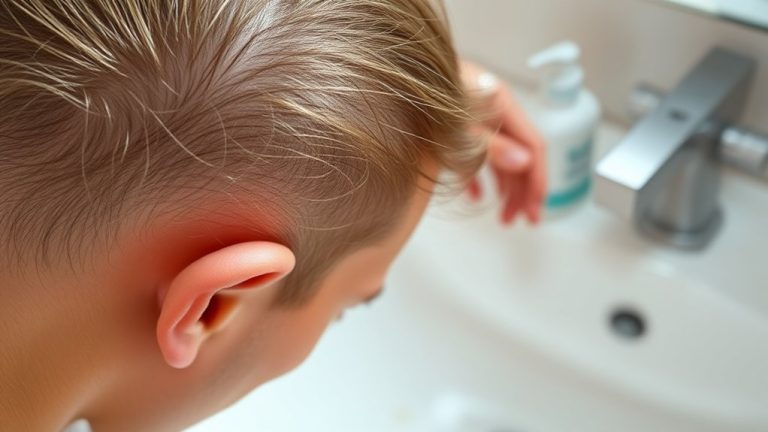
Redness, flakiness, or other signs of irritation might mean you’re having an allergic reaction or sensitivity, which definitely needs a professional check.
Also, if scalp conditions like seborrheic dermatitis get worse with dry shampoo use, it’s important to get expert advice.
If irritation sticks around for more than a few weeks after you stop using the product, a dermatologist can assess what’s going on and recommend the right treatment.
And if you have chronic scalp problems or hair loss, seeing a dermatologist is a smart move. They can help you find safe hair care alternatives and effective ways to manage your scalp health, preventing things from getting worse.
Final Thoughts On Using Baking Soda Dry Shampoo
You can definitely use baking soda to soak up extra oil and freshen your hair between washes.
However, it does have some clear limitations because of its high pH and abrasive nature. If you use it too often, it might throw off your scalp’s balance and could end up damaging your hair over time.
Effectiveness And Limitations
Although baking soda effectively absorbs oil and adds volume to hair, its high pH level can disrupt your scalp’s natural balance. This can cause dryness and irritation.
Using baking soda as a dry shampoo strips away your natural oils, which may lead to long-term damage such as breakage and frizz.
While it offers short-term oil absorption, the risks often outweigh the benefits. So, it’s good to consider these limitations before relying on baking soda regularly:
- High pH (around 9) disrupts scalp health
- Frequent use removes essential natural oils
- Potential for scalp irritation and hair damage
If you’re looking for safer options, try commercial dry shampoos or natural oil-absorbing powders. They’re designed to maintain scalp balance without harsh effects.
Hair Health Considerations
Since baking soda’s high pH can disrupt your scalp’s natural balance, it’s important to weigh its short-term oil-absorbing benefits against the potential long-term damage.
Using baking soda as dry shampoo can strip away your scalp’s natural oils, leading to dry hair and increased hair damage. Its abrasive nature may also harm the hair cuticle, causing brittleness and dullness over time.
Frequent use often results in scalp irritation, which can worsen hair health rather than improve it. While baking soda does absorb excess oil, the risks generally outweigh these temporary effects.
To maintain hair health, consider safer options like clarifying shampoos or natural oils. These cleanse effectively without compromising your scalp’s pH or causing undue dryness and damage.
Usage Recommendations
When considering baking soda as a dry shampoo, apply it sparingly and target only the oily sections of your scalp to minimize potential damage.
Baking soda’s high pH can disrupt your scalp’s natural pH, leading to dryness and irritation. To use it safely, keep these tips in mind:
Focus on greasy areas to avoid buildup that can strip your hair of natural oils.
Follow with a moisturizing conditioner to restore hydration and balance.
Avoid frequent use, especially if you have sensitive scalps or color-treated hair.
Just remember, a little goes a long way with baking soda.
Taking these steps can help keep your scalp healthy while managing oiliness.
Frequently Asked Questions
Can Baking Soda Dry Shampoo Change Hair Color Over Time?
Yes, baking soda dry shampoo can change your hair color over time because of its high pH balance. This can disrupt your scalp health and affect your hair texture.
Over time, you might notice your color fading and your hair becoming drier, especially if your hair is color-treated.
To keep your hair color vibrant and your scalp healthy, it’s a good idea to look for natural alternatives.
Choose options with balanced pH levels that gently absorb oil without messing with your hair’s texture or shine. That way, you protect your hair while still keeping it fresh between washes.
How Does Baking Soda Dry Shampoo Affect Dandruff?
Baking soda dry shampoo may offer some dandruff reduction by absorbing excess oil, but it can disrupt your scalp’s natural pH balance, leading to scalp irritation.
Its abrasive texture might worsen flakiness and negatively affect hair texture.
Over the long term, using baking soda can dry out your scalp, increasing dandruff rather than improving it.
To maintain scalp health, you should use gentle, pH-balanced products instead.
It’s usually better to stick with options that are kind to your scalp and hair.
Is Baking Soda Safe for Color-Treated or Chemically Treated Hair?
About 70% of color-treated hair users report damage from harsh products. Baking soda may offer some benefits like oil absorption, but it’s generally unsafe for color-treated or chemically treated hair.
It disrupts moisture balance, causes residue buildup, and harms hair texture. If you have scalp sensitivity, baking soda’s high pH can worsen irritation.
To protect hair health, choose gentler, sulfate-free shampoos designed for treated hair instead. They’re much kinder to your hair and scalp, helping maintain color and strength over time.
Can Baking Soda Dry Shampoo Be Mixed With Essential Oils?
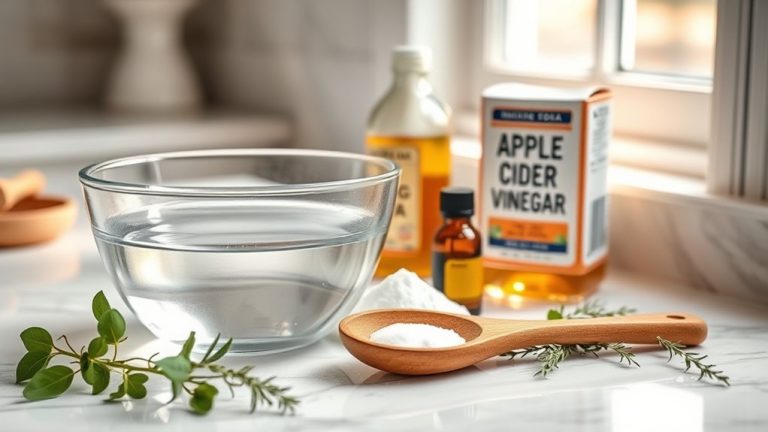
Yes, you can mix essential oils with baking soda dry shampoo to boost the scent and support scalp health. Just be sure to use the right baking soda ratios. Usually, a few drops of essential oil per tablespoon of baking soda works well and helps avoid irritation.
It’s a good idea to adjust how you apply it based on your hair type. This way, you can make sure it spreads evenly. Essential oils can soothe your scalp and even add antibacterial benefits.
Before using it all over, always test a small patch first. This helps you check for any bad reactions before going full-on with the mixture.
How Often Can Baking Soda Dry Shampoo Be Used Without Damage?
Think of baking soda dry shampoo like salt on a cast iron skillet. It’s great occasionally but can be damaging if overused. You should limit how often you use it to about once a month to protect your scalp and avoid dryness.
This is especially important if you have sensitive or dry hair. Users often mention irritation risks when they use it too frequently.
Compared to gentle store-bought options, baking soda can strip oils pretty harshly.
Conclusion
Using baking soda as dry shampoo can be like walking a tightrope. It’s effective if balanced carefully but risky if overdone. While it absorbs oil and refreshes your hair, its high pH may irritate your scalp and damage hair over time.
If you decide to try it, use it sparingly and follow safe application tips. Always watch for signs of irritation. And don’t hesitate to consult a dermatologist for persistent scalp issues or concerns.