
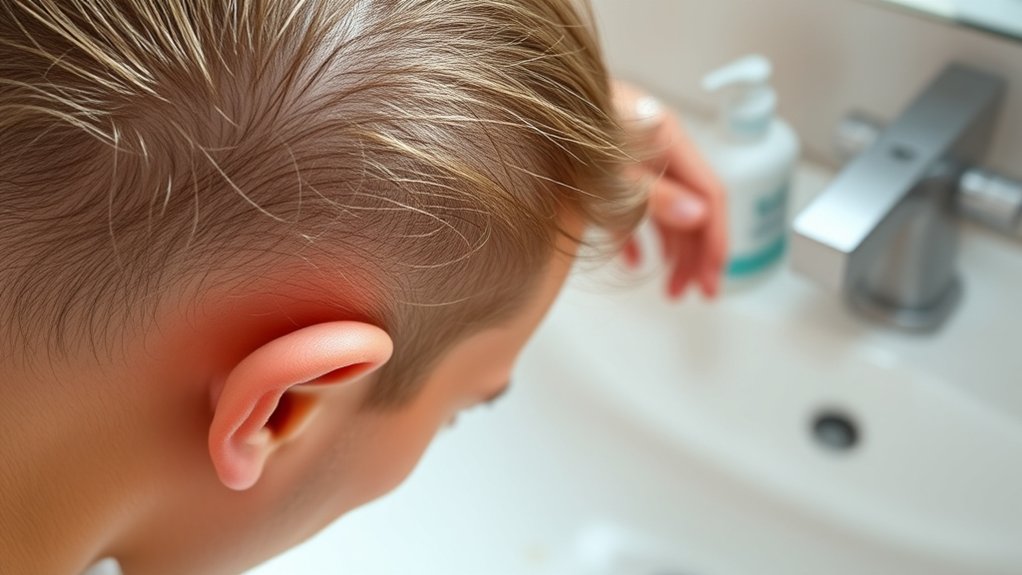
Can Shampoo Cause Hair Thinning – Causes And Facts
Yes, shampoo can contribute to hair thinning if it contains harsh ingredients like sodium lauryl sulfate, formaldehyde-releasing preservatives, or heavy silicones. These can irritate your scalp, weaken hair strands, and clog follicles.
Improper cleansing leads to buildup, which restricts hair growth and reduces volume. Choosing sulfate-free, gentle shampoos with nourishing ingredients supports scalp health and hair density.
Understanding how shampoo habits affect your scalp and identifying other causes of thinning can help you protect your hair effectively. It’s all about knowing what works best for your hair and scalp.
What’s the Difference Between Hair Shedding and Hair Thinning?
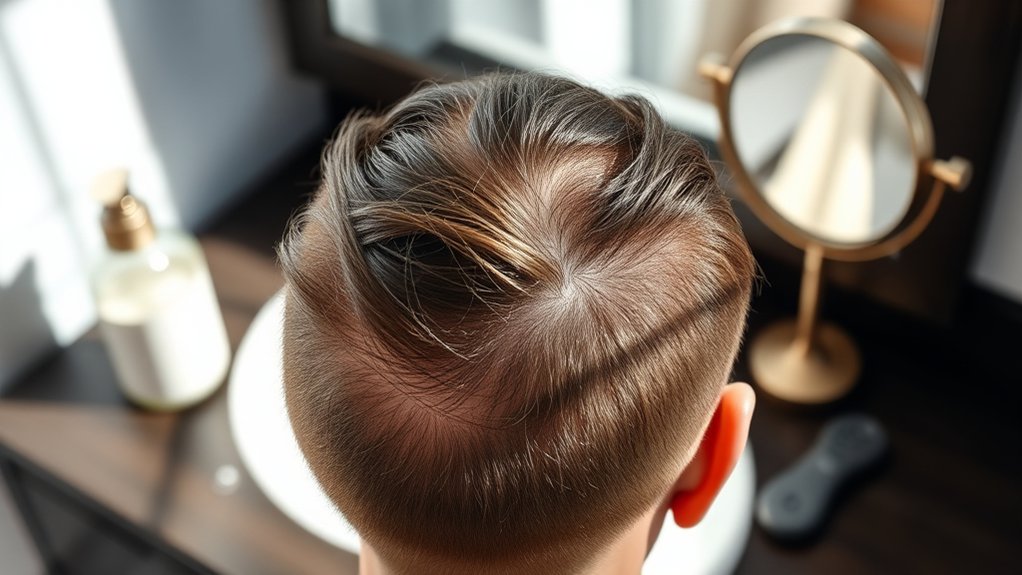
How can you tell the difference between hair shedding and hair thinning?
Hair shedding is a natural process where you lose about 50-100 hairs daily during the telogen phase. Excessive shedding may occur due to stress, hormonal changes, or scalp condition but is often temporary.
Hair thinning, however, involves a gradual reduction in hair density and volume, frequently linked to genetic predisposition or androgenetic alopecia.
Unlike shedding, thinning reflects a persistent loss that affects hair health over time.
It’s important to differentiate between these because shedding usually resolves on its own, whereas thinning may require medical evaluation and treatment.
Consulting a dermatologist can help you identify the underlying cause and tailor interventions accordingly.
This way, you can address either excessive shedding or progressive hair thinning effectively.
Which Shampoo Ingredients Damage Hair and Cause Thinning?
Which shampoo ingredients should you be cautious about to protect your hair from damage and thinning?
Sodium lauryl sulfate (SLS), a harsh surfactant, can cause scalp irritation and weaken hair strands. This can lead to hair breakage and eventual thinning.
Sodium lauryl sulfate can irritate the scalp and weaken hair, causing breakage and thinning over time.
Formaldehyde and formaldehyde-releasing preservatives like DMDM hydantoin also pose risks. They can cause scalp irritation and allergic reactions, which compromise scalp health and hair density.
Silicones, although they seem protective at first, can build up on the scalp over time. This buildup clogs follicles and hinders new hair growth, contributing to hair thinning.
Continuous exposure to these ingredients may make hair damage and thinning worse. Choosing shampoos free from these components can help keep your scalp healthy and preserve your hair’s strength over time.
How Do Sulfates Affect Hair Health and Thinning?
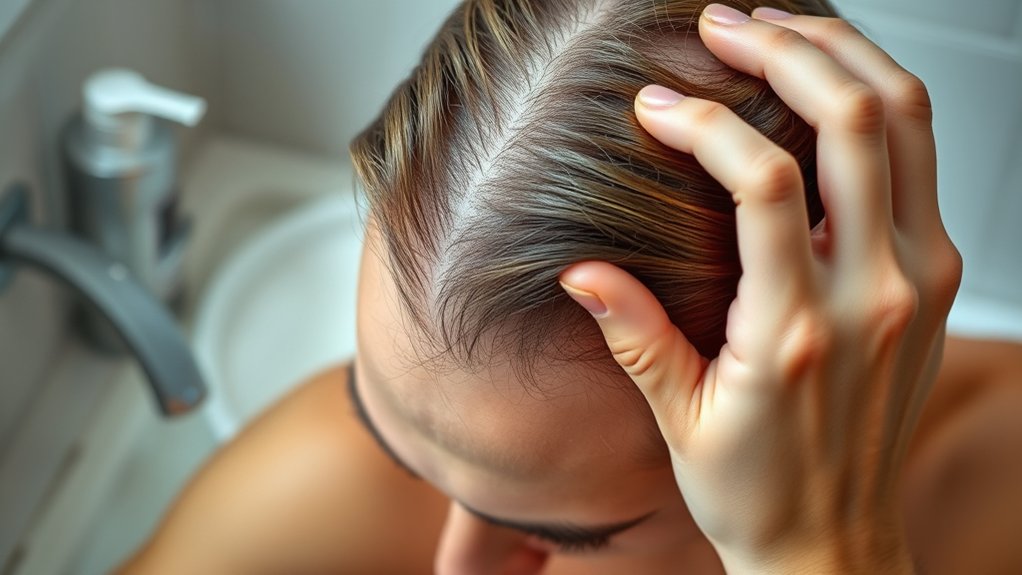
Sulfates, particularly sodium lauryl sulfate (SLS), are common in many shampoos because they clean really well. They’re great at removing oil and buildup from your hair.
But here’s the thing—they can also irritate your scalp and hair follicles. This irritation can make your hair dry and brittle. When that happens, your hair strands get weaker, which can lead to more thinning and breakage over time.
Using shampoos with sulfates a lot might strip away the moisture your hair needs, which isn’t great for overall hair health.
If your scalp is sensitive or you’re noticing more hair thinning, it might be a good idea to switch to sulfate-free shampoos. These are gentler, so they help reduce irritation and keep your scalp’s moisture balanced. That way, your hair can grow healthier and stronger.
Sulfates do help with cleansing, no doubt about that. But if you use them too much, they might actually work against your hair’s strength and longevity.
Can Formaldehyde and Preservatives Contribute to Hair Thinning?
You should know that formaldehyde, which is often found in some shampoos and hair treatments, can irritate your scalp and weaken your hair’s structure.
This can lead to thinning over time.
Also, preservatives like DMDM hydantoin release formaldehyde gradually, which means the risk of scalp irritation and hair damage can build up.
Knowing this can help you make better choices when it comes to protecting your hair health.
Formaldehyde Effects on Scalp
Although formaldehyde is widely used as a preservative in hair care products, its effects on the scalp can contribute to hair thinning over time. Formaldehyde exposure causes scalp irritation and allergic reactions, which can compromise scalp health. This irritation triggers oxidative stress, disrupting hair growth cycles and promoting thinning hair.
It’s important to check product labels for formaldehyde or its donors to avoid prolonged exposure. Over time, inflammation weakens hair strands and increases the risk of breakage.
| Effect | Mechanism | Outcome |
|---|---|---|
| Scalp irritation | Contact dermatitis | Hair thinning |
| Allergic reactions | Immune response | Compromised scalp |
| Oxidative stress | Cellular damage | Disrupted growth |
Being vigilant about ingredients helps protect your scalp and reduce the risks of hair thinning linked to formaldehyde. So, keep an eye on what’s in your products to keep your scalp healthy!
Preservative-Induced Hair Damage
When hair products contain preservatives that release formaldehyde, they can irritate your scalp and increase the risk of hair thinning.
Formaldehyde and preservatives like DMDM hydantoin release compounds that may trigger scalp irritation and contact dermatitis. This causes inflammation that weakens hair follicles.
This inflammation disrupts the scalp’s natural barrier, making your hair more vulnerable to damage. Long-term exposure to these preservatives in hair products can make hair thinning worse by continuously stressing follicular health.
Since formaldehyde is classified as a Group 1 human carcinogen, minimizing exposure is essential.
You should carefully check product labels for formaldehyde donors and choose safer alternatives. This helps protect your scalp and maintain healthy hair follicles, reducing the risk of preservative-induced hair damage.
Do Silicones and Shampoo Buildup Cause Hair Thinning?
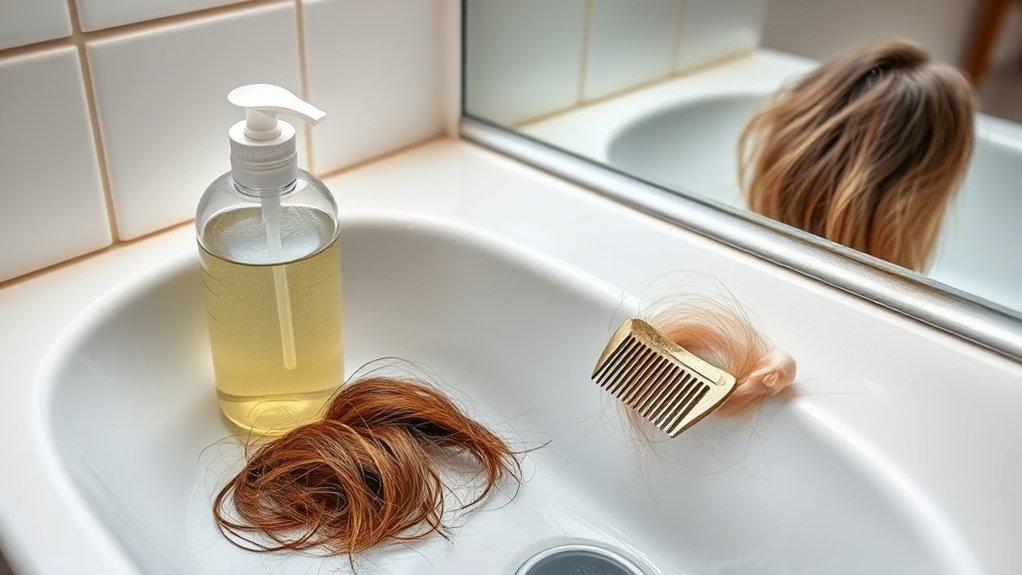
You mightn’t realize it, but silicone residue from shampoos can actually build up on your scalp and hair. This buildup can clog your hair follicles and might affect hair growth over time.
Plus, when your hair is weighed down by this residue, it often looks thinner than it really is.
It’s not just about appearance, either. This buildup creates a less healthy environment on your scalp, which isn’t great for maintaining thick, strong hair.
Silicone Residue Effects
Since silicone residues from hair products can build up on your strands, they often weigh hair down and reduce natural volume and bounce. This build-up forms a barrier on the hair shaft, stopping moisture and nutrients from getting through. And those are super important for scalp health and hair strength.
Over time, too much silicone residue might even lead to hair thinning by affecting follicles, but indirectly, through a poor scalp condition. So, it’s a good idea to focus on effective cleansing strategies to keep things in check.
Here are some key points to manage silicone build-up:
Use shampoos made specifically for thoroughly cleansing silicone residues.
Also, try incorporating clarifying washes every now and then to get rid of accumulated build-up.
Don’t forget to maintain scalp health by making sure follicles get enough moisture and nutrients. Proper cleansing helps prevent too much build-up, which supports healthier hair and lowers the risk of thinning.
Follicle Clogging Risks
Silicone buildup doesn’t just sit on your hair strands. It can also accumulate on the scalp and clog hair follicles. This follicle clogging is often caused by product buildup from thickening shampoos that contain resins and dimethicone.
This buildup can really mess with your scalp health and disrupt healthy hair growth. Dimethicone forms a barrier that reduces moisture retention and prevents essential nutrients from reaching hair roots. This leads to increased brittleness and breakage.
Over time, this creates an environment where new hair struggles to thrive, which can contribute to hair thinning. Using clarifying shampoos every now and then helps remove excess buildup. This keeps your scalp clean and supports ideal hair growth.
To minimize the risks of follicle clogging, it’s important to balance using silicone-containing products with effective cleansing routines. You want to promote scalp health without stripping away moisture. It’s all about finding that happy medium for your hair care.
Managing Shampoo Buildup
Although shampoos containing silicones can enhance hair’s smoothness and shine, improper cleansing allows residue to build up on both hair strands and the scalp.
This shampoo buildup, especially silicone buildup, can weigh hair down and clog follicles. That can hinder hair growth and contribute to hair thinning.
Plus, residue accumulation may cause scalp irritation, which disrupts a healthy scalp environment.
To manage buildup effectively, you should:
- Incorporate a clarifying shampoo occasionally to remove silicone buildup and residue.
- Maintain a balanced cleansing routine to prevent excessive accumulation.
- Monitor scalp health to avoid irritation that can make hair thinning worse.
How Does Scalp Health and Clogged Follicles Impact Hair Thinning?
How exactly does scalp health influence hair thinning? Your scalp’s condition directly affects hair follicle function. Clogged follicles, caused by product buildup, dead skin, and excess oil, restrict hair growth, contributing to hair thinning.
Regular shampooing is essential to clear these blockages and maintain a healthy scalp environment. Scalp issues like dandruff, often linked to clogged follicles, can worsen thinning and irritation.
Maintaining an ideal scalp pH between 4.5 and 5.5 through appropriate cleansing reduces itching and oiliness, supporting follicle health.
Shampoos containing zinc pyrithione and salicylic acid effectively clear clogged follicles, improving scalp health and potentially mitigating hair thinning.
By managing scalp health and preventing follicle obstruction, you create conditions that favor stronger, thicker hair growth.
It’s all about keeping the scalp clean and balanced to help your hair thrive.
How to Choose the Right Shampoo to Protect Hair Thickness?
When selecting a shampoo to protect hair thickness, you need to evaluate ingredients that support scalp health and minimize damage.
Opt for sulfate-free shampoos, which reduce irritation and dryness that can lead to thinning. Focus on beneficial ingredients like zinc pyrithione or caffeine, proven to promote scalp health and potentially reduce hair loss.
Choose sulfate-free shampoos with zinc pyrithione or caffeine to soothe your scalp and support thicker hair.
Avoid harsh chemicals such as formaldehyde and sodium lauryl sulfate, as they can damage hair and cause breakage.
Consider thickening shampoos containing resins and proteins that enhance volume without clogging follicles. To maintain ideal results, regularly assess the condition of your hair and scalp health, and adjust your shampoo choice as needed.
Here are some key points to remember: use sulfate-free shampoos to protect scalp integrity. Choose shampoos with beneficial ingredients for scalp health. And avoid harsh chemicals that damage hair and follicles.
It’s all about keeping your hair healthy and thick!
When Should You Switch Shampoos to Prevent Scalp Irritation?
Maintaining scalp health requires ongoing attention to how your skin and hair respond to your shampoo. If you notice persistent scalp irritation, redness, or itching, it’s time to switch shampoos to prevent hair thinning. Look for sulfate-free, non-irritating formulas to support healthy growth.
Also, regularly check shampoo ingredients. Avoid harmful chemicals that can make scalp irritation worse. Product buildup can weigh your hair down, which might mean you need a clarifying shampoo or a change in your routine.
| Sign of Issue | Recommended Action |
|---|---|
| Persistent irritation | Switch to sulfate-free shampoo |
| Redness or itching | Choose non-irritating ingredients |
| Greasy, weighed hair | Use clarifying shampoo |
| Harsh ingredients | Opt for gentle, safe formulations |
Switching shampoos at the right time helps keep your scalp balanced and prevents hair thinning.
How Do Shampoo Habits Influence Hair Thinning Risk?
Why does your shampoo routine matter for hair thinning? Your shampoo habits directly impact scalp health, which influences hair thinning risk. Frequent shampooing with harsh sulfates can cause irritation and damage follicles, increasing hair breakage.
On the other hand, shampoos containing heavy conditioners may cause product buildup. This buildup can clog follicles and hinder new hair growth. You also risk irritation by switching shampoos too often, which disrupts your scalp’s balance.
To minimize hair thinning risk, consider these points:
Use shampoos containing beneficial ingredients like zinc pyrithione or salicylic acid to promote scalp health.
Avoid frequent shampooing with harsh agents to reduce irritation.
Limit heavy conditioning shampoos to prevent product buildup.
Balancing shampoo frequency and product choice helps maintain a healthy scalp, reducing hair thinning risk effectively.
It’s all about finding what works best for your scalp and sticking to it.
What Other Causes Contribute to Hair Thinning Beyond Shampoo?
You should know that genetics and hormonal changes play a major role in hair thinning. For example, male pattern baldness and conditions like menopause can greatly affect hair density.
On top of that, lifestyle factors such as nutritional deficiencies and stress also contribute by disrupting normal hair growth cycles.
Plus, certain health conditions and hairstyling practices can speed up thinning.
Genetic And Hormonal Factors
Although shampoo plays a role in hair care, genetic and hormonal factors often have a more significant impact on hair thinning. Your genetic predisposition largely determines susceptibility to male pattern baldness (MPB), which affects about two-thirds of men by age 35.
Hormonal fluctuations, especially involving androgens, contribute to hair thinning in both sexes. Conditions like PCOS can intensify this effect in women.
Age-related decline in hair follicle size and number also reduces hair density.
Key contributors to hair thinning include genetic predisposition causing MPB and follicle sensitivity, hormonal fluctuations disrupting normal hair growth cycles, and nutritional deficiencies and stress impacting follicular health.
Understanding these factors helps clarify why shampoo alone rarely causes significant hair thinning.
Lifestyle And Health Conditions
Genetic and hormonal factors set the foundation for many cases of hair thinning, but lifestyle choices and underlying health conditions often play a significant role as well.
Beyond shampoo ingredients, stress can disrupt your hair’s natural growth cycles, causing temporary shedding known as telogen effluvium. Nutritional deficiencies in iron, zinc, or biotin impair healthy hair maintenance, increasing thinning risks.
Furthermore, medical conditions such as thyroid disorders or autoimmune diseases directly affect hair follicle function, making hair loss worse. Hormonal imbalances, especially during pregnancy or menopause, also alter growth cycles and hair density.
While shampoo ingredients matter, addressing these lifestyle and health factors is essential for maintaining healthy hair and minimizing thinning.
Understanding and managing these causes supports better hair care beyond just your shampoo choice.
Frequently Asked Questions
Can Conditioner or Other Hair Products Also Cause Hair Thinning?
Yes, conditioner and other hair products can impact your scalp health and potentially cause hair thinning. Ingredients like silicones and harsh chemicals may clog hair follicles or disrupt moisture balance, hindering hair growth.
Chemical exposure and allergic reactions can irritate your scalp, weakening follicles.
Frequent use of styling products can leave residue that blocks follicles, impairing scalp function.
To protect hair growth, choose products with gentle ingredients and maintain healthy styling practices. It’s all about being mindful of what you put on your hair and how often you use those products.
How Often Should I Wash My Hair to Avoid Thinning?
Think of your scalp as a garden: too much watering drowns the roots, too little leaves them thirsty. Your ideal hair washing frequency depends on your hair type, scalp health, and the environment you’re in.
Generally, washing 2-3 times a week strikes a good balance. It keeps your scalp hydrated and removes buildup but doesn’t strip away natural oils.
Try to choose shampoos with gentle ingredients. Tailor your hair care routine to how you style your hair, and adjust how often you wash it to keep your scalp healthy and help prevent thinning.
Are Natural or Organic Shampoos Safer for Preventing Hair Thinning?
Yes, natural or organic shampoos can be safer for preventing hair thinning because they reduce chemical exposure and support scalp health with natural ingredients like essential oils.
Look for organic certifications to guarantee product quality and fewer irritants. These shampoos often promote hair growth by minimizing product buildup and providing gentle nourishment.
That said, consumer awareness is really important. Some essential oils may still cause sensitivity, so always check ingredient lists carefully before trying a new product.
Can Diet and Nutrition Impact Shampoo Effectiveness on Hair Health?
Think of your hair like a garden. No matter how good the fertilizer (shampoo) is, poor soil limits growth.
Dietary deficiencies can impair nutrient absorption, which reduces protein intake and essential fatty acids that are critical for hair health.
Proper hydration and vitamin supplementation support hormonal balance, which helps shampoo work better.
Managing stress also plays a role in keeping your hair healthy.
Is Hair Thinning Reversible After Stopping Harmful Shampoos?
Yes, hair thinning can be reversible after stopping harmful shampoos containing harsh shampoo ingredients that damage scalp health.
By improving your hair care routine and reducing product buildup, you support natural hair growth.
However, hormonal factors and genetic predisposition may still influence outcomes.
Managing stress impact also plays an essential role in recovery.
Switching to gentle, scalp-friendly shampoos encourages follicle health, potentially restoring thickness within months with consistent care.
Conclusion
You might wonder if shampoo alone causes hair thinning, but evidence shows it’s rarely the sole culprit. Harsh ingredients like sulfates or formaldehyde can damage hair and scalp, increasing thinning risk, especially with frequent use.
However, genetics, diet, and health issues often play larger roles. Choosing gentle, sulfate-free shampoos and monitoring scalp reactions helps protect hair thickness.
Stay informed and adjust habits to support overall hair health effectively.