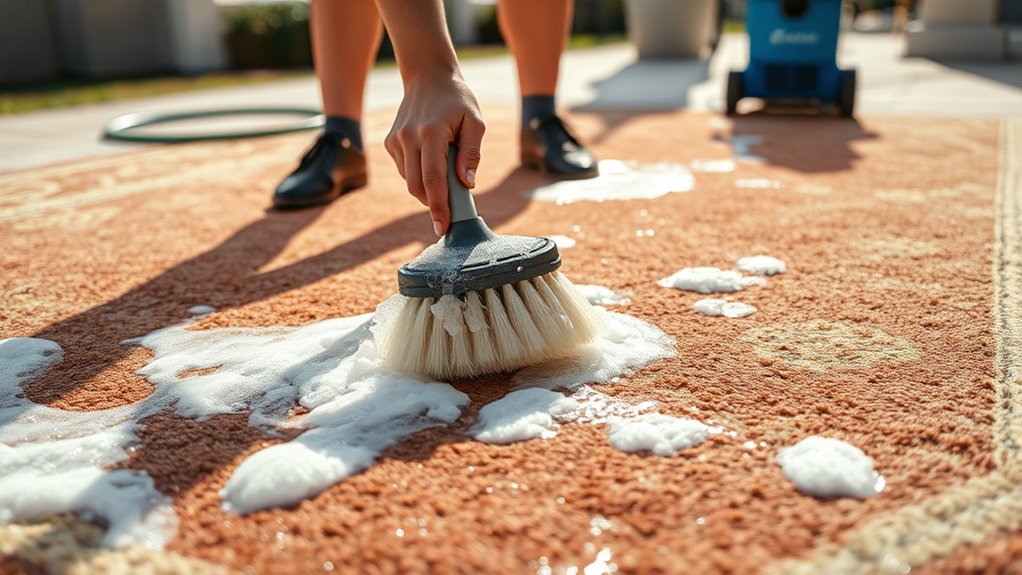
How To Shampoo A Rug – Deep Cleaning Guide
To shampoo a rug deeply, start by moving furniture out of the way and vacuuming both sides really well. Spot treat any stains with the right cleaners. Before you dive in, test your shampoo solution on a hidden patch to make sure the colors won’t run.
Use a fiber-appropriate, neutral pH shampoo, diluted just like the instructions say. Then, gently scrub with a soft brush. When you rinse, do it lightly so you don’t soak the rug, and be sure to let it dry completely.
Keeping up with regular vacuuming and taking care of stains as soon as they happen will help your rug stay fresh longer. Follow these steps, and you’ll get detailed guidance for every part of rug cleaning and care.
How to Prepare Your Rug for Shampooing
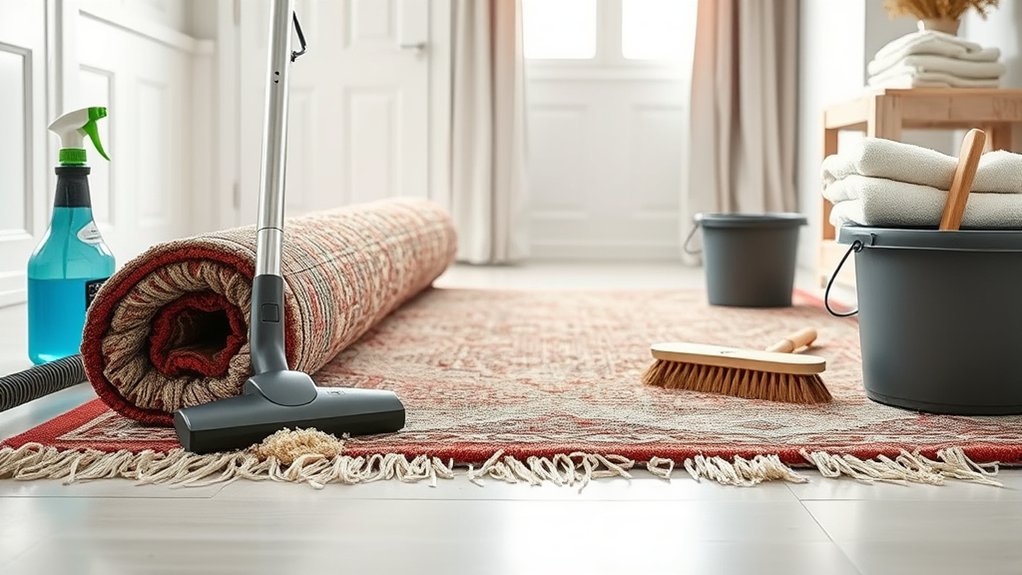
Before you start shampooing your rug, make sure to remove all furniture from the area. This way, you’ll have full access for cleaning.
Next, vacuum thoroughly on both sides of the rug to get rid of loose dirt, dust, and debris. This step helps stop dirt from embedding deeper during shampooing.
Vacuum both sides of your rug thoroughly to remove dirt and prevent deeper embedding during shampooing.
Take a good look at your rug and spot treat any stains. Use an appropriate remover and follow the product instructions carefully to avoid damage.
Once you’ve dealt with the stains, it’s time to prepare your shampoo solution by mixing carpet shampoo with water at a 1:10 ratio. Using too much detergent can leave residue and cause buildup.
Before you apply the solution all over, test for colorfastness on a small, hidden area. This will make sure the shampoo won’t fade or discolor your rug.
Once you’ve done all that, your rug will be perfectly ready for an effective, thorough shampooing.
How to Choose the Right Shampoo for Your Rug
You’ll want to choose a shampoo that’s made just for your rug’s material to avoid any damage and make sure it cleans well.
Different shampoos work best on different fibers—like wool-safe ones for wool rugs and special cleaners for synthetic fibers.
Shampoo Types Overview
Selecting the right shampoo for your rug is essential to preserving its texture, color, and longevity. Understanding the various shampoo types helps you avoid damage and achieve effective cleaning. Focus on these key factors:
Use carpet shampoos formulated specifically for your rug’s fiber type, whether it’s wool, synthetic, or natural. Choosing the right one makes a big difference.
Choose shampoos with a neutral pH, around 7, to prevent fiber deterioration and fading. This keeps your rug looking fresh longer.
Opt for stain-specific formulas when dealing with pet stains or heavy dirt. These target issues precisely, so you don’t have to worry about leftover marks.
Select concentrated shampoos and dilute them according to manufacturer guidelines for maximum cleaning power. It’s all about getting the best results without wasting product.
Consider eco-friendly options that are biodegradable and non-toxic. They ensure safe use and care for the environment while keeping your rug clean.
Material-Specific Shampoo Choices
Understanding the different fibers your rug is made from helps you choose the right shampoo to protect its appearance and durability.
For a wool rug, use a wool-safe shampoo designed to prevent dye bleeding and maintain fiber strength. Avoid harsh detergents because they can damage the wool.
Synthetic rugs can handle a wider range of cleaners. You can opt for a neutral pH carpet shampoo or mild dish soap solutions since these fibers resist stains pretty well.
When cleaning silk rugs, pick a specialized silk carpet cleaner. Traditional shampoos might weaken those delicate fibers and cause damage.
Each material needs specific care. Matching your shampoo to your rug’s fiber ensures effective cleaning without compromising its longevity.
How to Spot Test Shampoo Solutions Safely
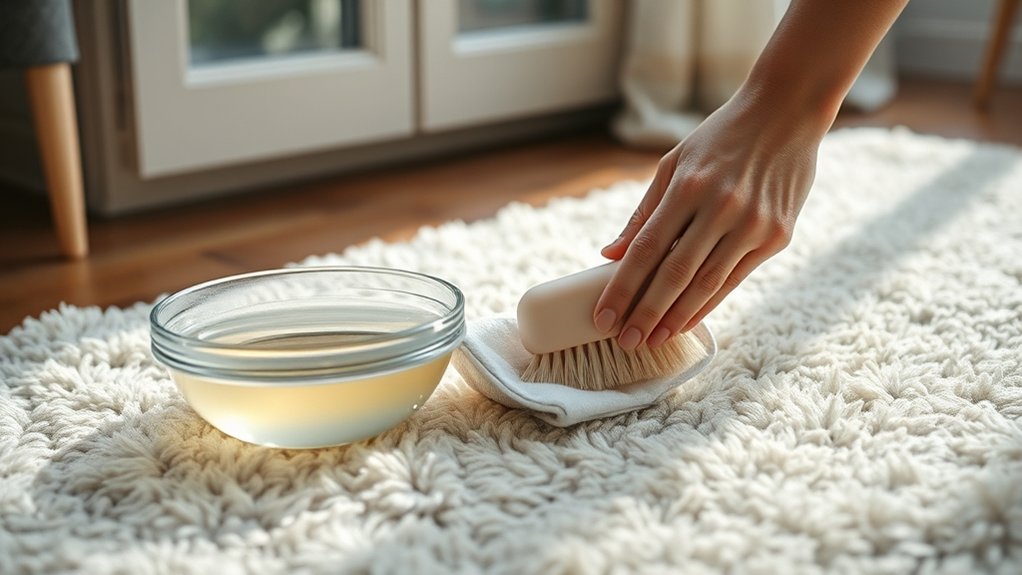
First, pick a small, hidden spot on your rug—this way, any potential damage won’t be noticeable.
Then, take a clean cloth and apply a little bit of shampoo to that spot.
After that, give it about 5 to 10 minutes to see if there are any color changes or bleeding.
Finally, blot the area with a white cloth and rinse it well to make sure the shampoo won’t harm your rug’s fibers.
Choosing Test Areas
Before applying any shampoo solution to the entire rug, you’ll want to choose a hidden area for testing to avoid visible damage. Selecting the right test areas guarantees your spot test is accurate and safe. Focus on inconspicuous spots like behind furniture or corners.
Follow these steps carefully: Identify a hidden area that won’t be obvious if damaged. Apply a small amount of shampoo solution with a clean cloth, dabbing gently.
Let the area dry completely, usually a few hours, before inspecting. Check for colorfastness by verifying no bleeding or fading occurs.
If the test shows any adverse effects, try a different solution on another hidden spot. These steps help confirm the shampoo’s safety and protect your rug’s integrity.
Applying Shampoo Samples
After you’ve identified a hidden area for testing, the next step is to apply shampoo samples carefully to confirm your rug won’t suffer any damage.
Always dilute the shampoo solution according to the recommended ratio, usually one part shampoo to ten parts water.
Using a clean cloth, gently blot a small amount of the solution onto the test area. Avoid rubbing to prevent fiber damage.
Let the spot test sit for 5 to 10 minutes, then check for discoloration or texture changes.
If you notice any fading or damage, stop immediately and choose a different shampoo.
This careful process makes sure the shampoo solution is safe for your rug material. It protects your rug’s appearance and longevity before you go ahead with a full cleaning.
Observing Color Changes
Although it might seem like a small step, observing color changes during a spot test is crucial to make sure your shampoo solution won’t damage your rug.
Before applying any cleaning product broadly, use a cotton ball or cloth to gently apply the shampoo solution on a small, hidden area.
Watch for at least five minutes to catch any color changes like bleeding or fading. If you notice any alteration, stop immediately and pick a different cleaning product.
To effectively spot test:
- Choose an inconspicuous rug section
- Apply shampoo solution gently
- Monitor for color changes for 5+ minutes
- Refer to the manufacturer’s care label
- Record test results for future reference
This process helps guarantee your rug’s colors stay vibrant and intact.
Removing Tough Stains Before You Shampoo
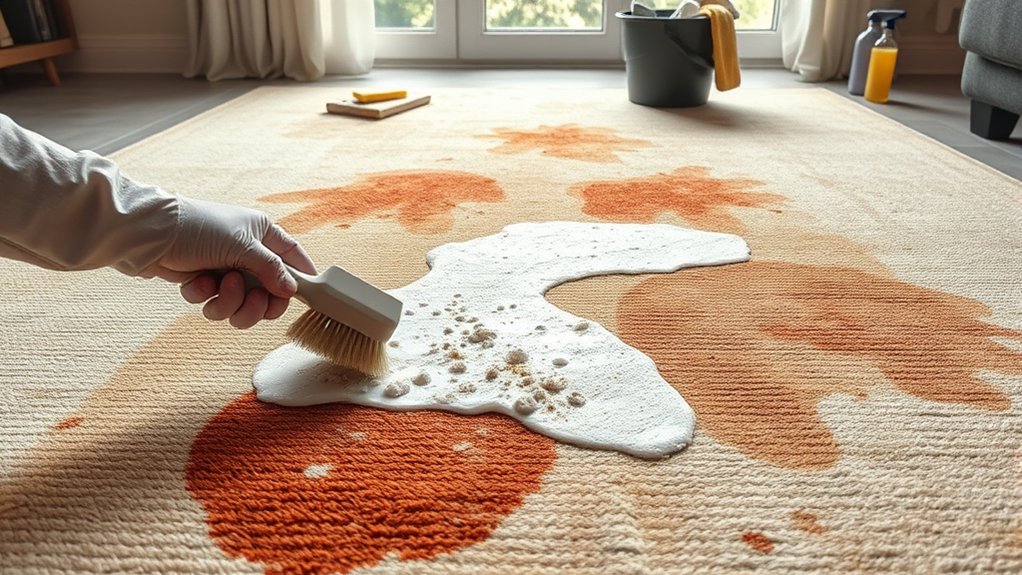
When you spot a tough stain on your rug, identifying its type, whether it’s pet urine, wine, or grease, helps you pick the best cleaning solution.
Knowing your stain type, like pet urine, wine, or grease, guides you to the right cleaning method.
Start with spot cleaning by gently blotting fresh stains using a clean cloth. Avoid rubbing because it can spread the stain.
For many stains, a stain remover made from equal parts white vinegar and water works well. Just apply it with a spray bottle and blot it dry.
Tougher stains like coffee or red wine respond best to a dish soap and warm water mixture. Let it sit for about five minutes before blotting.
Always do a spot test in an inconspicuous area first. This way, you make sure your cleaning solutions won’t damage the rug’s fibers or color.
Doing this confirms safe and targeted stain removal before you shampoo.
Step-by-Step Guide to Shampooing a Rug by Hand
Before you start scrubbing, go ahead and mix a mild detergent with water at about a 1:10 ratio.
It’s a good idea to test this mixture on a hidden spot first to make sure the colors won’t run.
Next, take a soft-bristle brush and gently work the shampoo into the rug’s fibers.
Do this section by section, but be careful not to over-saturate the rug.
When it’s time to rinse, keep it light.
Use a damp cloth to wipe away the soap instead of soaking the rug.
This helps prevent any damage or residue buildup.
Preparing Cleaning Solution
Since the effectiveness of your rug shampooing depends largely on the cleaning solution, you’ll want to start by mixing a mild detergent with warm water at a ratio of 1:10. This ratio guarantees gentle yet effective cleaning without damaging fibers.
Before proceeding, perform a spot test on a hidden area to check for colorfastness and potential damage.
For enhanced deodorizing, add a small amount of white vinegar to your cleaning solution. Here’s how to prepare it properly:
- Combine 1 part mild detergent with 10 parts warm water
- Optionally, add a splash of white vinegar for odor neutralization
- Stir gently to avoid excessive foam
- Test a small rug section for colorfastness
- Prepare enough solution to work in manageable sections
This careful preparation sets the stage for a thorough and safe rug cleaning.
It’s worth taking the time because it really makes a difference in the results.
Scrubbing And Rinsing
Start by thoroughly vacuuming your rug to eliminate loose dirt and debris. This guarantees the cleaning solution can penetrate effectively.
Next, apply your prepared cleaning solution evenly. Use a scrub brush with soft bristles to gently work the solution into the fibers using circular motions. Be sure to pay special attention to stains and high-traffic areas.
Once scrubbed, rinse the rug carefully using a damp cloth or sponge soaked in clean water to remove all soap residue. Proper rinsing prevents buildup and mildew.
| Step | Action |
|---|---|
| Apply solution | Spread cleaning solution evenly |
| Scrub | Use scrub brush in circular motions |
| Rinse the rug | Remove residue with damp cloth |
Using a Rug Shampooing Machine Effectively
When you use a rug shampooing machine, vacuum your rug thoroughly first to remove loose dirt and debris. This guarantees the cleaner can penetrate effectively. This step really sets you up for the best cleaning results.
Before you start, always test the rug cleaner on a small, hidden area. This helps prevent any damage or discoloration. It’s a quick check that’s definitely worth it.
Always test your rug cleaner on a hidden spot to avoid damage or discoloration—it’s a quick, worthwhile step.
Mix the shampoo solution precisely as per the manufacturer’s instructions, usually at a 1:10 ratio. When shampooing, work from one corner, moving in straight, overlapping lines to cover the rug thoroughly. This way, you won’t miss any spots.
After cleaning, allow ample drying time—typically 6 or more hours. Using fans can speed up the airflow and help your rug dry faster. Just make sure it’s completely dry before you walk on it again.
Key steps include:
- Vacuum the rug thoroughly
- Conduct a spot test
- Prepare shampoo solution accurately
- Shampoo in overlapping straight lines
- Guarantee complete drying with good airflow
How to Rinse and Remove Soap Residue From Rugs
Once you’ve shampooed your rug thoroughly, the next step is to carefully remove any soap residue to prevent dirt from sticking and fiber damage.
To rinse effectively, use clean water applied with a spray bottle or a lightly damp cloth. Avoid soaking the rug because excess moisture can cause mildew and harm fibers.
Gently blot the rug with a damp cloth or sponge to lift remaining soap without saturating the fibers. Keep rinsing with clean water until it runs clear, making sure all soap is gone.
This step is super important to stop residue build-up, which attracts dirt and dulls your rug’s look.
Best Practices for Drying Your Rug After Shampooing
Although it might be tempting to speed up the process, allowing your rug to air dry for at least six hours in a well-ventilated space is essential. This helps prevent mildew and keeps the fibers in good shape.
To guarantee ideal drying, follow these best practices:
Place your rug in a well-ventilated area to promote airflow and help it dry faster. Using fans around the rug can also boost air circulation and keep its shape intact.
Avoid placing furniture on the rug until it’s completely dry. This prevents unwanted indentations.
If possible, hang the rug outdoors in the shade. Try to avoid direct sunlight since it can cause fading.
Lastly, regularly check the underside to make sure the drying is even and to prevent moisture buildup.
Keeping Your Rug Clean Between Shampooings
Since regular shampooing can be time-consuming, maintaining your rug’s cleanliness between deep cleans is essential to preserve its appearance and extend its lifespan. You should vacuum your rug regularly, at least once a week, to remove loose dirt and debris that accumulate.
When spills or stains occur, spot clean them immediately using a mixture of warm water and mild dish soap to prevent setting. For rugs with longer fibers, using a lint roller or sticky tape helps pick up pet hair and fine dirt effectively.
Furthermore, rotate your rug every few months to promote even wear and sunlight exposure, maintaining its look.
Finally, place doormats at entryways to minimize dirt tracked inside, which reduces the frequency of deep cleaning needed.
When to Hire Professional Rug Shampooing
How do you know when it’s time to call in a professional for rug shampooing? If you’re dealing with delicate materials or extensive stains, professional cleaning offers expertise and equipment beyond DIY methods.
Consider hiring experts when your rug is made from delicate materials like silk or antique fibers that need special care.
Or if you have extensive stains or odors that just won’t come out with regular cleaning efforts.
You might also want to call a pro if you notice significant wear, fraying, or color bleeding, since these issues often require advanced solutions.
And when your rug is large or cumbersome, making deep cleaning at home impractical, it’s a good idea to get professional help.
Plus, if it’s been 1 to 2 years since the last professional cleaning—especially for rugs in high-traffic areas or homes with pets and kids—it’s probably time to schedule one.
Professional cleaners guarantee a thorough, safe treatment that helps preserve your rug’s beauty and longevity.
Frequently Asked Questions
Can I Use Homemade Shampoo Solutions Instead of Commercial Detergents?
Yes, you can use homemade shampoo solutions instead of commercial detergents. DIY cleaning methods with natural ingredients like vinegar, baking soda, or diluted dish soap offer effective, eco-friendly alternatives.
While commercial detergents might act faster or target tough stains, homemade options are gentler on fibers and safer for pets or kids. Just perform a spot test first to guarantee no discoloration.
How Often Should I Deep Clean My Rug With Shampoo?
You should deep clean your rug with shampoo at least once every 12 months to keep it fresh, much like a knight would regularly sharpen his sword.
For homes with pets or kids, increase the cleaning frequency to every 6 to 8 months.
Follow maintenance tips like regular vacuuming and spot cleaning to boost stain prevention and prolong the rug’s life.
Immediate attention to spills helps avoid stubborn stains and costly damage.
Are Certain Rug Fibers More Sensitive to Shampooing?
Yes, certain rug fiber types are definitely more sensitive to shampooing. Wool and silk need gentle cleaning techniques to avoid shrinking or damaging the fibers.
Natural fibers like jute and sisal shouldn’t be shampooed with water at all because it risks mold and breakdown.
Synthetic rugs tolerate shampooing better but still need proper detergents.
It’s a good idea to adjust your shampooing frequency accordingly.
Always perform spot tests first to protect your rug’s integrity and keep it looking great.
Can Shampooing Remove Pet Odors Completely?
You might think shampooing can obliterate every trace of pet odors instantly, and with effective shampooing methods, it almost can!
Pet odor removal becomes achievable when you pre-treat stains, vacuum thoroughly, and use enzymatic cleaners targeting organic compounds.
Remember, maintenance tips like complete drying prevent mold growth, which causes lingering smells.
While shampooing greatly reduces odors, combining these steps guarantees your rug smells fresh and clean, practically odor-free!
What Are the Signs That a Rug Is Too Fragile for Shampooing?
You’ll know a rug is too fragile for shampooing if it has frayed edges, thinning fibers, or feels brittle and crunchy. Rugs made from delicate materials like silk or antique fibers often aren’t colorfast, so dye bleeding during spot cleaning signals trouble.
For effective rug care tips, avoid aggressive shampooing techniques on these rugs, and adjust your cleaning frequency accordingly.
When in doubt, seek professional help to preserve your rug’s integrity. It’s better to be safe than sorry with these precious pieces.
Conclusion
Shampooing your rug starts with smart preparation and selecting suitable solutions, ensuring spotless success. Spot test safely, scrub stubborn stains, and shampoo step-by-step for supreme cleanliness.
Rinse rigorously to remove residue, then dry diligently to dodge damp damage. Don’t forget daily dusting and deep cleaning diligence to maintain magnificent mats.
When messes multiply beyond manageable measures, hiring helpful professionals is the perfect plan to preserve your prized pieces pristine and polished.