Is Purple Shampoo A Toner – How It Works Explained
Purple shampoo isn’t exactly a toner but acts as a gentle at-home treatment to neutralize brassy, yellow tones using violet pigments. It slowly deposits color while cleansing, working best for maintenance between salon visits.
Unlike salon toners that provide immediate, precise results with developers, purple shampoo works gradually and is ideal for subtle brassiness. If you want to know when to use each and how to get the best outcome, there’s more expert guidance ahead.
What Is Purple Shampoo? How Does It Work?
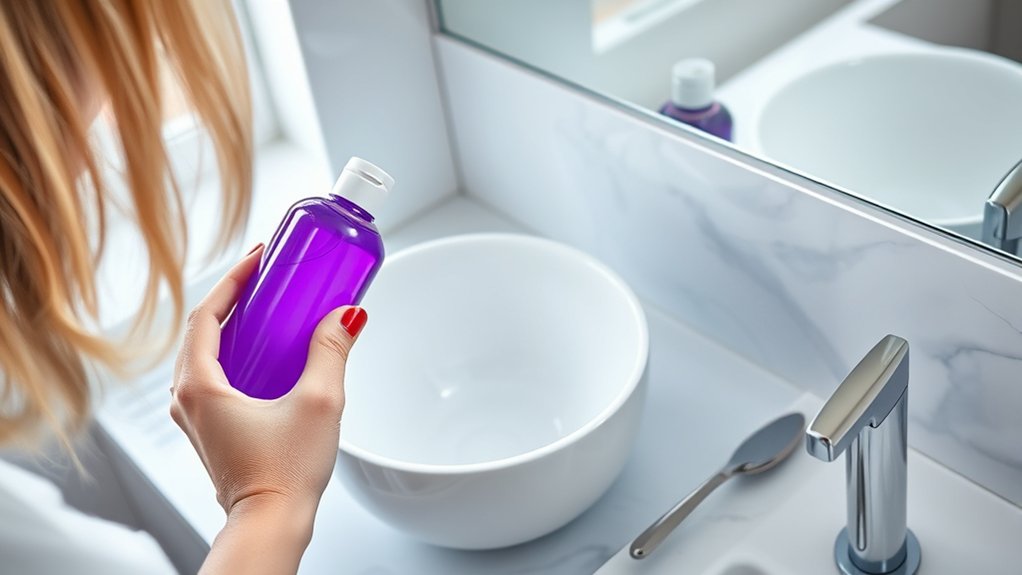
Purple shampoo is a specialized toning treatment designed to neutralize unwanted brassy or yellow tones in blonde, gray, or highlighted hair. It uses violet pigments, based on color theory, to counteract warm brassy tones effectively.
Purple shampoo uses violet pigments to neutralize brassy and yellow tones in blonde and gray hair.
When you apply purple shampoo, these pigments cling to your hair, neutralizing yellowness by balancing out the color spectrum.
Unlike traditional toners applied in salons, purple shampoo serves as a maintenance tool you can use at home between salon visits.
Typically, you’ll use it once or twice a week to maintain your blonde hair’s brightness without causing dullness or a purple tint.
The Science Behind Purple Shampoo’s Color Correction
Because yellow tones tend to develop in blonde and lightened hair due to things like sun exposure and mineral buildup, you need a targeted solution to keep those cool, vibrant shades.
Purple shampoo works by using violet pigments that neutralize the yellow tones. It’s all about color theory—purple sits opposite yellow on the color wheel, so the shampoo’s pigments help cancel out unwanted warmth and brassiness.
When you apply purple shampoo, these pigments cling to your hair, boosting cooler tones and preserving brightness. This is especially true for silver, platinum, and pastel shades.
Using it regularly supports your hair’s health by preventing brassiness.
That said, purple shampoo’s color correction is gentler compared to salon toners, which deliver more concentrated and immediate results.
Knowing the science behind it can help you get the best use out of purple shampoo for keeping your hair’s desired tone.
How Purple Shampoo Differs From Salon Toners
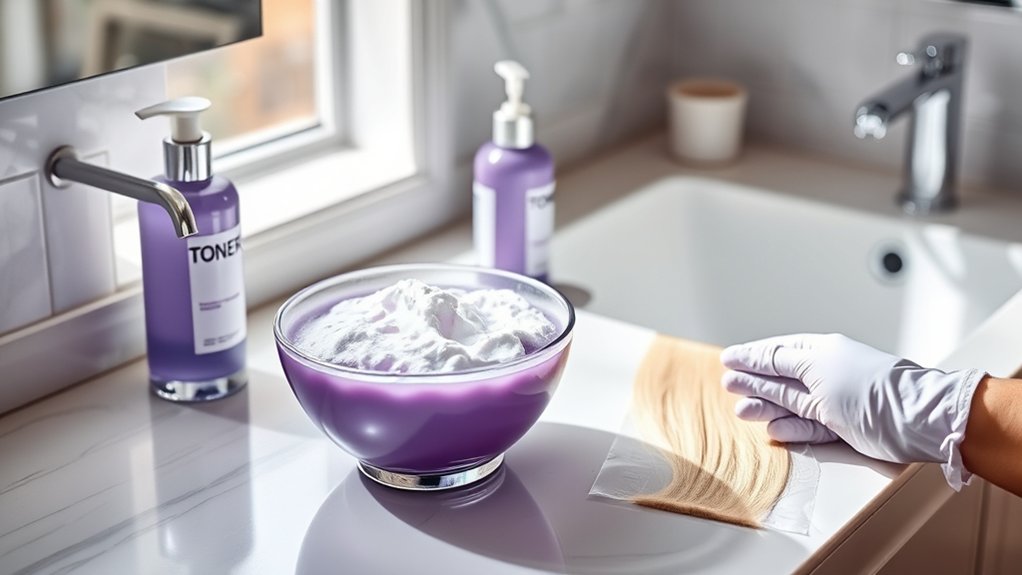
While both purple shampoo and salon toners target unwanted brassiness, they serve distinct purposes and work in different ways.
Purple shampoo is made for at-home maintenance and offers a gradual toning effect by depositing color during regular washes. It helps neutralize unwanted yellow tones with a one-size-fits-all approach. This makes it great for keeping your color fresh between salon visits.
On the other hand, salon toners have concentrated pigments and are applied by professionals right after coloring to neutralize unwanted hues instantly. They often need a developer to activate and provide a customized solution based on your hair’s specific needs.
Unlike toners, purple shampoo also acts as a cleansing agent. So, it’s a convenient choice if you want to maintain your color without the intensity or immediacy of salon toners.
When Should You Use Purple Shampoo vs. Professional Toner?
When should you reach for purple shampoo instead of booking a salon appointment for a professional toner? Purple shampoo is ideal for hair maintenance. It neutralizes brassy tones gradually between salon visits using violet pigments.
It’s best used once or twice a week for subtle brassiness. On the other hand, professional toner offers immediate, more intense color correction. It’s perfect for freshly colored hair or significant brassiness.
Professional toner is applied with a developer during salon treatments, allowing precise shade adjustments.
| Aspect | Purple Shampoo |
|---|---|
| Usage | At-home maintenance, weekly use |
| Function | Neutralizes brassy tones gradually |
| Application | Shampoo with violet pigments |
| Best For | Subtle brassiness |
| Aspect | Professional Toner |
| Usage | Salon visits, immediate correction |
| Function | Intense color correction |
| Application | With developer, salon-applied |
| Best For | Freshly colored hair, major brassiness |
How To Use Purple Shampoo For Best Results
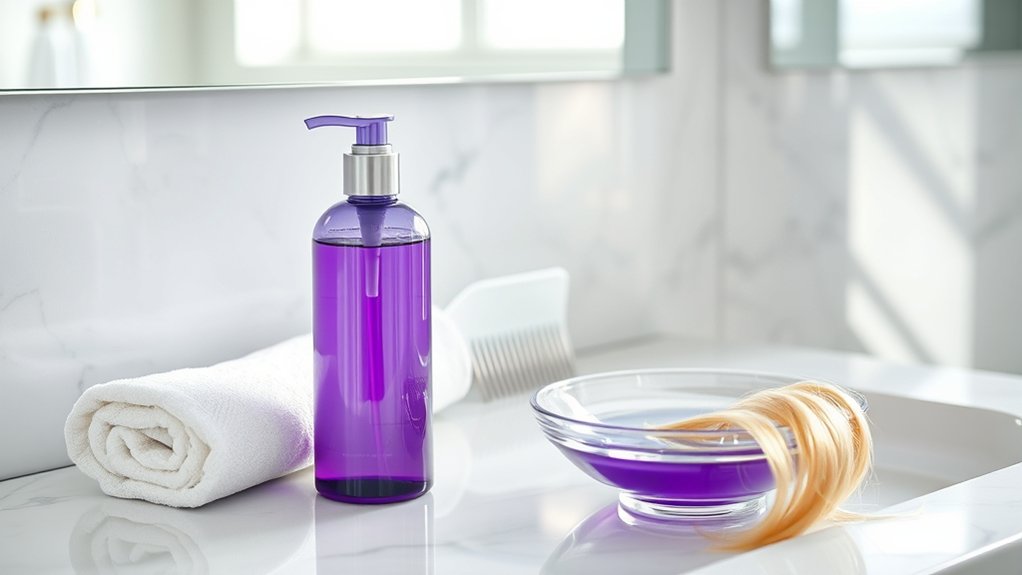
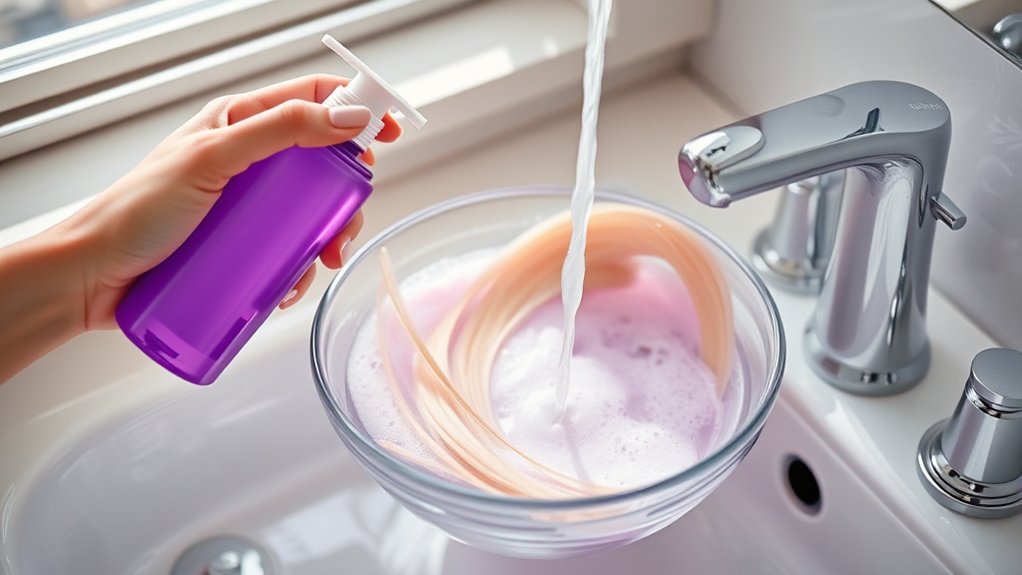
To get the most out of purple shampoo, you’ll want to apply it to wet hair, focusing on areas prone to brassiness for even toning. Use the toning shampoo once or twice a week to neutralize yellow and brassy hair without overloading your strands.
Leave the purple shampoo in for 1 to 5 minutes, adjusting the time depending on how intense the brassiness is and the best results you want.
Adjust the purple shampoo time from 1 to 5 minutes based on brassiness intensity for optimal results.
After rinsing thoroughly with cool or lukewarm water to lock in color and prevent fading, always follow with a hydrating conditioner. This step restores moisture and maintains hair health, ensuring your color stays vibrant.
Applying purple shampoo thoughtfully maximizes its toning power while protecting your hair’s integrity. It’s all about finding that balance to keep your hair looking fresh and healthy.
Common Mistakes When Using Purple Shampoo As A Toner
You might be surprised, but overusing purple shampoo can actually leave your hair looking dull or even with a purple tint.
So, it’s really important to stick to the recommended use—usually just once or twice a week—to avoid this.
Also, make sure you leave the shampoo on for the right amount of time, typically between 1 to 5 minutes.
That’s the key to getting the proper toning effect.
Overuse Effects
Avoid overusing purple shampoo, as it can leave your hair looking dull or tinted with an unwanted purple hue. This is especially true if your hair is chemically lightened or porous. Excessive application and not adjusting the contact time based on your hair type often cause too much pigment to deposit.
Many people mistakenly replace their regular shampoo with toning shampoos, which leads to overuse and less effective results. To avoid those unwanted tones, try to limit your use to once or twice a week. You might also want to mix purple shampoo with your regular shampoo for a more gradual toning effect.
| Issue | Cause | Effect |
|---|---|---|
| Overuse | Excessive application | Dull, purple tint |
| Incorrect contact time | Not tailored to hair types | Brassiness persists |
| Using only purple shampoo | Replacing regular shampoo | Over-depositing purple |
| Frequent washing | Daily use | Ashy or gray tones |
| Not mixing shampoos | Pure purple shampoo use | Unnatural color buildup |
Application Timing
Although purple shampoo can effectively tone brassiness, improper application timing often leads to unintended purple hues or uneven color correction. To avoid this, tailor the application timing to your hair type and the severity of brassy tones.
Typically, leaving purple shampoo on for 2 to 3 minutes works well for most hair types, but never exceed 5 minutes to prevent a purple tint. Be certain to thoroughly lather and evenly distribute the product to guarantee consistent toning throughout your hair. Skipping this step can cause patchy results, with some areas remaining brassy while others turn too cool.
Finally, always follow up with a hydrating conditioner to replenish moisture, as toning can dry out your hair.
Correct application timing is key to achieving balanced, vibrant results. Just take your time and pay attention to how your hair responds!
Benefits And Limitations Of Purple Shampoo For Brassiness Correction
A key benefit of purple shampoo lies in its violet pigments, which effectively neutralize unwanted yellow and orange tones in blonde or lightened hair by adhering to the strands and counteracting brassiness through color theory.
Purple shampoo works well for maintenance, helping you keep brassiness at bay between salon visits. However, it has limitations: it’s less concentrated than a toner and won’t provide immediate correction after coloring.
Overusing purple shampoo can cause dullness or an unwanted purple tint, so it’s best to use it once or twice weekly or mix it with regular shampoo for gentler toning.
If you have high porosity hair, be cautious, as it may absorb too much pigment, resulting in a purple haze.
Understanding these factors helps you manage brassiness effectively without overdoing it.
Can Purple Shampoo Replace Salon Toners?
You can definitely use purple shampoo as a handy way to keep your hair’s tone fresh between salon visits.
It’s great for reducing brassiness and giving your hair a little boost. That said, it’s not as concentrated as professional toners.
So, while it helps, it won’t deliver the same level of color correction or intensity you get from a salon toner.
Knowing this can help you set realistic expectations for your hair care routine.
Purple Shampoo Limitations
Since purple shampoo is designed mainly for maintenance, it can’t fully replace the powerful, immediate correction salon toners provide.
Purple shampoo works gradually to neutralize brassy tones and helps maintain color between salon visits, but it lacks the concentration and customization of professional toning.
Depending on your hair type and the severity of brassiness, purple shampoo mightn’t deliver sufficient color correction, especially for more stubborn or severe discoloration.
Salon toners offer targeted, instant results tailored to your desired shade, addressing color issues at a deeper level.
While purple shampoo aids in preserving salon results, it’s essential to consult your colorist for professional toning when brassiness persists or more precise color correction is needed to keep your hair looking its best.
Toner Vs. Shampoo
Two key products, purple shampoo and salon toners, serve distinct roles in managing hair color, especially when dealing with brassiness. Purple shampoo uses violet pigments to neutralize brassy tones between salon visits. It acts more like a maintenance tool rather than a color corrector.
On the other hand, a toner provides immediate and precise color correction. It’s typically applied after bleaching with concentrated formulas tailored through developers.
While purple shampoo helps prolong salon toning effects, it can’t replace the targeted results of professional toners.
Using too much purple shampoo can risk dullness or an unwanted purple cast. Toners, however, are designed for one-time adjustments to achieve your desired shade.
When To Seek Professional Toning Instead Of Purple Shampoo
Although purple shampoo is great for regular maintenance, professional toning becomes necessary when brassiness is really noticeable and stubborn. If you see unwanted tones that purple shampoo just can’t fully get rid of, professional toning gives you a more concentrated and faster fix.
When your hair color doesn’t turn out quite right after a salon visit, getting professional color correction ensures precision and care tailored just for you. Pros can also check for damaged or over-porous hair and use toners that won’t damage your hair’s health.
Keep in mind, hitting your perfect tone might take a few salon visits, especially if you’re switching to lighter shades or tackling serious brassiness.
Maintaining Blonde Hair: Tips Beyond Purple Shampoo
To keep your blonde hair vibrant, it’s important to focus on hydration. Try using deep conditioning treatments regularly to combat dryness — your hair will thank you for the extra moisture.
Also, protecting your color is key. Rinse with cool water instead of hot, and try to minimize heat styling whenever you can.
But if you do use heat tools, always apply a heat protectant first to shield your strands.
On top of that, think about reducing environmental damage. Installing shower filters can help, and don’t forget to get consistent trims.
Keeping those ends fresh will maintain your hair’s health and overall appearance.
Hydration And Conditioning
When you lighten your hair, maintaining proper hydration and conditioning becomes essential to preserve its health and vibrancy. Incorporate deep conditioning treatments into your routine once a week to combat dryness caused by lightening and restore moisture.
Always use a sulfate-free, hydrating conditioner after purple shampoo. It helps maintain hydration and prevents further damage to chemically treated hair.
Applying a nourishing hair mask regularly strengthens hair and replenishes lost moisture, especially for those with high porosity from bleaching. Rinse your hair with cool water to lock in color and hydration, enhancing blonde vibrancy.
Also, consider installing a shower head filter to reduce the effects of hard water. Hard water can strip moisture and color from your hair over time, which compromises its overall health and appearance.
It’s a simple step that can make a big difference.
Protecting Hair Color
Maintaining the vibrancy of blonde hair requires consistent care beyond just using purple shampoo. While purple shampoo helps eliminate too much yellow and unwanted brassy tones, protecting hair color involves more.
Rinse your hair with cool water to prevent color fading, and incorporate a deep conditioner weekly to keep your hair hydrated and healthy.
Using a shower head filter reduces the effects of hard water, which can strip color and cause brassiness. Regular trims every 6-8 weeks remove split ends, maintaining the integrity of your blonde hair.
Avoiding Environmental Damage
Although purple shampoo plays an essential role in neutralizing brassiness, you need to take additional steps to protect your blonde hair from environmental damage. Chlorine exposure and UV rays can cause unwanted warm tones, so using UV protection products and swim caps is vital. Installing shower filters helps reduce mineral buildup that fades color.
Rinsing with cool water seals the cuticle, locking in moisture and vibrancy. Finally, deep conditioning weekly restores hydration lost from lightening and environmental stress. These simple steps work together to keep your blonde looking fresh and healthy.
| Action | Benefit |
|---|---|
| Use UV protection | Shields hair from sun damage |
| Install shower filters | Prevents color fading |
| Cool water rinse | Locks in moisture, reduces brassiness |
| Deep conditioning | Restores hydration, maintains health |
Combine these steps with purple shampoo for ideal blonde hair care. It’s all about giving your hair the care it deserves!
Frequently Asked Questions
Can Purple Shampoo Cause Dryness or Damage to Hair?
Yes, purple shampoo can cause dryness or damage if you overuse it or choose one with harsh sulfates.
To prevent dryness, monitor your usage frequency and always follow up with hydrating conditioner to support moisture retention and damage repair.
If you have scalp sensitivity or already dry hair, use it cautiously to protect hair health.
Also, watch for product buildup, which can worsen damage and affect your scalp’s condition.
Just keep an eye on how your hair reacts, and adjust your routine as needed to keep your hair healthy and looking great.
How Often Should Purple Shampoo Be Used for Optimal Results?
You might worry purple shampoo will dry your hair, but following frequency guidelines helps avoid that. Use it once or twice a week, and adjust based on your hair type and how brassy your hair looks.
User experiences show that using it as a replacement for regular shampoo on toning days works best. It’s all about finding the right balance for your hair’s needs.
Also, compare products to find sulfate-free options for those non-toning days.
With the right application techniques and maintenance tips, you’ll get the results you want without causing damage.
Is Purple Shampoo Safe for Color-Treated or Chemically Processed Hair?
Yes, purple shampoo is safe for color-treated or chemically processed hair when you follow proper application techniques.
Many sulfate-free formulas support color preservation and hair health by gently neutralizing brassiness without stripping moisture.
Ingredients like violet pigments help maintain vibrancy, which is backed by user reviews and professional recommendations.
Just use it as directed, usually once or twice a week, to avoid dryness or unwanted tones.
This way, you can keep your hair looking fresh and healthy without any hassle.
Can Purple Shampoo Be Used on Dark Brown or Black Hair?
You can use purple shampoo on dark brown or black hair, but its effectiveness is limited. It mainly benefits lighter sections by neutralizing brassiness, so the benefits for dark hair are pretty subtle.
If you’re looking for better color correction, try blue shampoo as an alternative toning method. Just make sure to follow shampoo application tips carefully to avoid over-toning.
And don’t forget to prioritize your hair’s health throughout the process.
Since user experiences can vary, it’s a good idea to test a small area first to see how your hair responds. That way, you’ll know if it’s the right choice for you.
Does Purple Shampoo Work on Natural Gray Hair Without Dye?
Yes, purple shampoo works on natural gray hair without dye by enhancing its color and brightness.
You’ll notice it neutralizes yellow or brassy tones, offering clear color enhancement benefits. While it’s not exactly a toner, it functions similarly in hair care by maintaining cool, vibrant gray shades.
Using it regularly supports hair maintenance, keeping your natural hair looking fresh and preventing dullness over time.
Just watch the application time to avoid a purple tint. It’s pretty easy to use and can really make a difference if you want your gray hair to pop.
Conclusion
Purple shampoo brightens your blonde, neutralizes brassiness, and refreshes your tone right at home. It works gently and saves you time, making it great for regular upkeep.
That said, it won’t fully replace salon toners. Those are designed to correct deeper, stubborn hues and give you customized results.
Use purple shampoo to maintain your color, trust professionals for bigger changes, and combine both for lasting vibrancy. Take care of your hair, choose wisely, and keep your blonde looking stunning because it deserves nothing less.