How Long To Keep Purple Shampoo In – Best Timing Guide
You should keep purple shampoo in your hair between 1 to 10 minutes depending on your hair color and porosity. Light blonde hair needs just 1 to 3 minutes to avoid a lilac tint, while darker or gray hair can benefit from up to 10 minutes for better brassiness neutralization.
Avoid leaving it on too long to prevent dryness and unwanted hues. Follow with conditioner to maintain moisture.
To master timing and care, keep exploring expert tips for best results.
How Long Should You Leave Purple Shampoo in Your Hair?
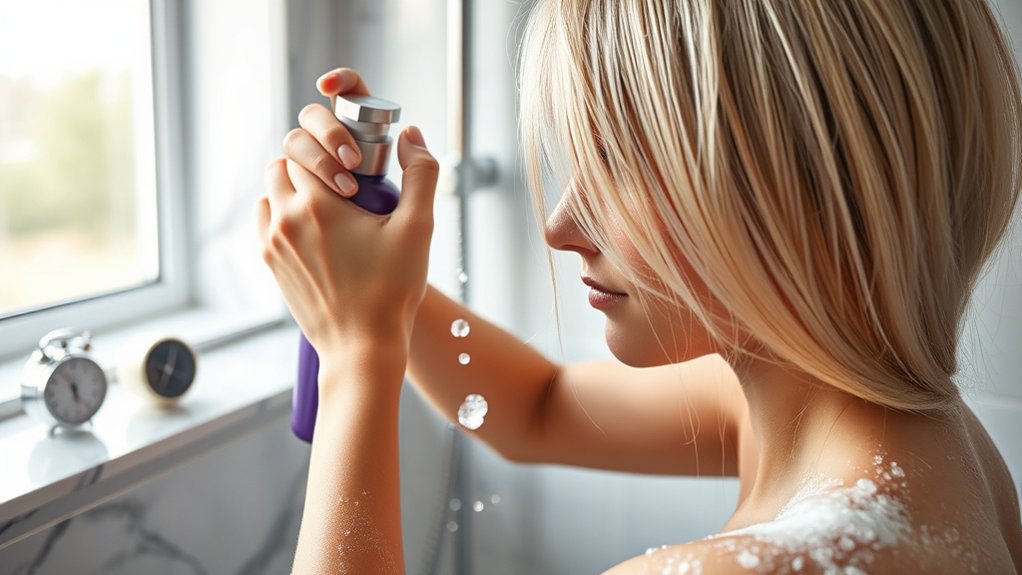
If you want to gently neutralize brassy tones, a shorter application is ideal. For stronger yellow neutralization, leaving the purple toning shampoo in a bit longer can help.
It’s best to start with the minimum recommended time and adjust based on how your hair responds. Keep in mind that leaving it on too long risks a lilac tint, especially beyond an hour.
Experimenting within the recommended time frame guarantees you find the perfect balance for vibrant, brassy-free hair without over-processing.
How Your Hair Color Affects Purple Shampoo Timing
Since hair color varies widely, the time you leave purple shampoo in should be tailored to your specific shade to avoid unwanted tones or dryness. Blonde hair, for example, needs shorter application times to prevent over-toning. Gray hair, on the other hand, can tolerate longer exposure to fully neutralize brassiness.
Adjusting the timing based on your hair color guarantees ideal results without compromising hair health.
| Hair Color | Application Time | Purpose |
|---|---|---|
| Light Blonde Hair | 1–3 minutes | Avoid lilac hue |
| Medium Blonde Hair | 3–5 minutes | Neutralize brassiness |
| Dark Blonde Hair | Up to 5 minutes | Combat persistent brassiness |
| Gray or Silver Hair | Up to 10 minutes | Enhance vibrancy, neutralize yellow |
| Brunette with Blonde Highlights | 3–5 minutes | Target brassiness in highlights |
Why Timing Is Key to Purple Shampoo’s Effectiveness
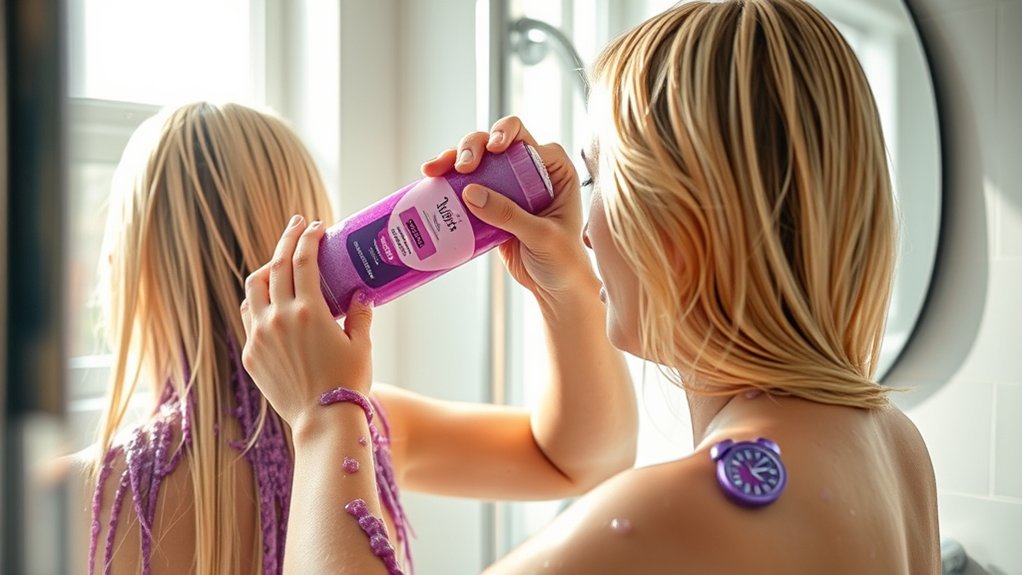
Although purple shampoo can brighten and neutralize unwanted tones, its effectiveness hinges on timing. The recommended application time generally ranges from 1 to 5 minutes, depending on the brand and your hair type.
Your hair porosity plays an essential role. High porosity hair absorbs products faster, so shorter application times help avoid unwanted undertones or a lilac tint. Starting with a brief exposure lets you see how your hair reacts and adjust accordingly for the best results.
Keep in mind that longer application times can intensify toning but might overdry your hair. To keep your hair healthy, always follow purple shampoo with a hydrating conditioner.
What Happens If You Leave Purple Shampoo on Too Short?
If you leave purple shampoo on for too short a time, it won’t fully neutralize those brassy yellow tones in your hair.
So, you might notice only a slight change, and some unwanted warmth could still hang around.
To really see the best results, it’s important to let the shampoo sit long enough for the violet pigments to do their job properly.
Insufficient Brassiness Neutralization
When you leave purple shampoo on for too short a time, it doesn’t fully neutralize the yellow and brassy tones in your hair. This leads to less effective toning results. Purple shampoo needs enough time to work—usually between 1 to 5 minutes—to properly neutralize yellow undertones and correct brassy hair.
If you rinse too quickly, you risk not neutralizing the brassiness enough, leaving your hair with lingering warmth and dullness. This is especially true for lighter blonde hair, where a short application won’t cut it against unwanted yellow hues.
To get better toning results, try extending the application time a bit, but don’t overdo it or you might end up with lilac tints.
Also, keep in mind that using purple shampoo for too short a time often means washing your hair more frequently. That can cause dryness and affect your hair’s health over time.
Minimal Color Correction
Leaving purple shampoo on for less than a minute often results in minimal color correction, leaving brassy and yellow tones largely unneutralized. If you cut the application time too short, the shampoo won’t effectively counteract brassy undertones or unwanted warmth. Most brands suggest keeping purple shampoo in for at least 1 to 2 minutes to achieve noticeable toning.
Insufficient contact time often leaves your hair looking dull and fails to enhance color vibrancy. Since hair porosity and starting shades vary, experimenting with application time helps you find the sweet spot for best results.
To avoid minimal color correction, make sure you allow purple shampoo to linger long enough, so it fully neutralizes brassiness and improves your hair’s overall tone.
What Are the Risks of Leaving Purple Shampoo on Too Long?
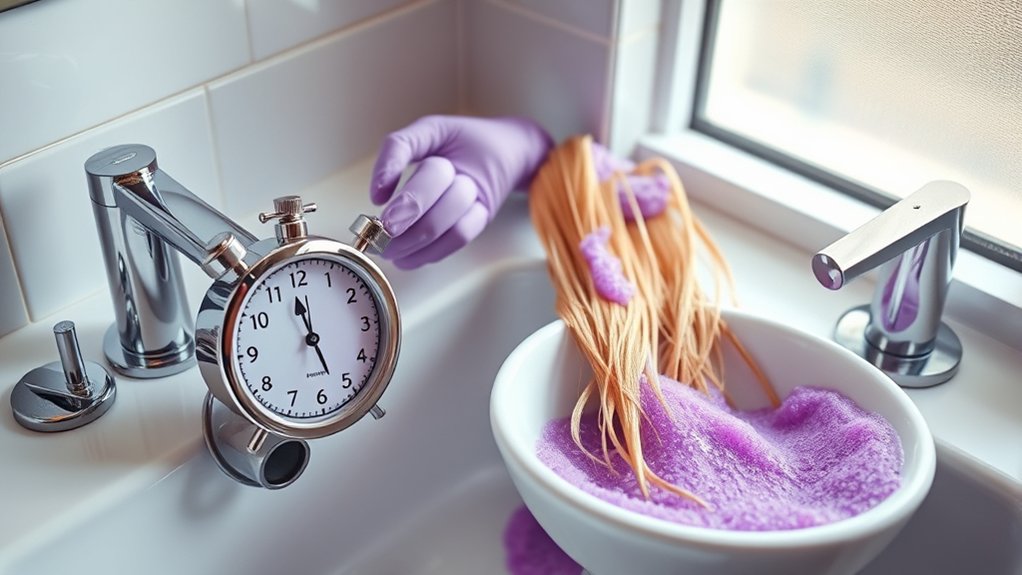
If you leave purple shampoo on too long, it can dry out your hair, making it brittle and more prone to damage.
Plus, using it too much might give your hair unwanted lilac or gray tones, especially if your hair is porous or lightened.
Hair Dryness Risks
Although purple shampoo is effective for neutralizing brassiness, applying it for longer than the recommended 1 to 5 minutes can cause your hair to develop a lilac tint and become dry or brittle.
Prolonged use of purple shampoo increases the risk of hair dryness because these formulas contain drying agents that strip essential moisture from your strands.
If your hair has high porosity, it’s even more vulnerable to absorbing excess pigment and becoming overly dry or brittle.
Overusing purple shampoo won’t enhance toning effects but will compromise hair health instead.
To prevent damage, always rinse thoroughly and follow up with a moisturizing conditioner or mask.
This replenishes essential moisture and helps maintain hair’s softness and strength after using purple shampoo.
Color Alteration Effects
Applying purple shampoo beyond the recommended 1 to 5 minutes carries several risks, including unwanted color shifts and hair damage. Extended application times can cause your hair to develop an unnatural lilac or gray tint, especially if your hair is light or porous.
While purple shampoo effectively neutralizes yellow tones, over-toning may create stark color changes that look muted or overly cool. Different hair types respond uniquely; high porosity hair is more prone to absorbing excess pigment, raising the risk of over-toning.
You should carefully monitor color changes during use to maintain your desired vibrancy without compromising hair health.
Sticking to appropriate application times guarantees you balance toning benefits with preserving hair strength and appearance, avoiding dryness and brittleness linked to prolonged exposure.
Should You Use Purple Shampoo on Dry or Wet Hair?
Where should you apply purple shampoo to achieve the best results, on dry or wet hair? You should always apply purple shampoo on wet hair. Wet hair lets you spread the violet pigments evenly, which helps with effective color correcting. If you put it on dry hair, the shampoo might deposit unevenly, leading to patchiness and unwanted tones.
Wet hair also expands the cuticles, so the shampoo’s toning agents can penetrate deeply for the best results. This damp application helps neutralize yellow tones evenly across your strands. After leaving it on for the recommended time, make sure to rinse thoroughly to avoid any leftover tint.
| Application Type | Result |
|---|---|
| Wet Hair | Even pigment spread |
| Wet Hair | Better absorption |
| Wet Hair | Effective color correcting |
| Dry Hair | Uneven pigmentation |
| Dry Hair | Patchy, unwanted tones |
How to Use Purple Shampoo With Conditioner
After you rinse out the purple shampoo thoroughly, go ahead and apply a conditioner that works well with it. This helps bring moisture back into your hair and stops it from getting dry.
If you want to boost the toning effect, using a purple conditioner is a great idea—especially if you’re aiming for a cooler blonde shade.
Letting the conditioner sit for a few minutes really helps lock in hydration.
Just keep an eye on how your hair reacts, so you can tweak how long you leave it on and how often you use it to get the best results.
Conditioner Compatibility Tips
Since purple shampoo can be drying, you should always follow it with a conditioner to restore moisture and keep your hair healthy. After rinsing out the purple shampoo thoroughly, apply a conditioner to help rebalance your hair’s moisture.
For an extra toning boost, you might want to try a purple conditioner. Just be careful and use it only if you’re aiming for specific color results, so you don’t end up with unwanted vibrancy. Let the purple conditioner sit for a couple of minutes to get the best effect.
To keep your hair’s moisture just right, try alternating between your purple shampoo routine and a hydrating, non-tinted conditioner. This way, you avoid dryness while still enjoying the toning benefits of the purple shampoo.
Pairing purple shampoo with the right conditioner ensures your hair stays healthy, vibrant, and well-moisturized without any residue buildup.
Timing Purple Shampoo Application
Applying purple shampoo effectively hinges on carefully timing its leave-in duration. You’ll want to apply it on wet hair, focusing on the brassiest areas to guarantee even toning results. Leave the shampoo between 1 to 5 minutes, adjusting based on your hair type and desired effect.
Don’t exceed 10 minutes to avoid an unwanted lilac tint. Afterward, rinse thoroughly with cool water to close hair cuticles. Follow with a purple conditioner only if you aim to boost toning results, as it adds pigment.
| Time You Leave Purple Shampoo | Effect on Hair |
|---|---|
| 1-3 minutes | Light toning |
| 4-5 minutes | Moderate toning |
| 6-10 minutes | Strong toning, risk of lilac tint |
Timing controls your color outcome precisely. Just keep an eye on the clock and adjust as you go!
Enhancing Hydration Benefits
While purple shampoo neutralizes brassiness, pairing it with a moisturizing conditioner restores the hydration your hair needs to stay healthy and vibrant.
After leaving the purple shampoo on for 1 to 5 minutes, rinse thoroughly and apply a moisturizing conditioner for 2 to 5 minutes to achieve ideal hydration and maintain color.
Using a purple conditioner can further enhance toning effects while providing essential moisture.
To support hair health, incorporate weekly deep conditioning treatments, especially after purple shampoo use, to counteract dryness.
Always finish with a cool water rinse to seal cuticles, locking in hydration and promoting a smooth, shiny finish.
This routine guarantees your hair remains balanced, vibrant yet nourished, combining effective toning with essential moisture for lasting hair health.
How Often Should You Use Purple Shampoo for Best Results?
Although purple shampoo is a powerful tool for maintaining blonde tones, you should use it strategically to avoid unwanted lilac hues or dryness. Generally, using purple shampoo once or twice a week helps maintain color vibrancy without over-toning.
If you notice brassiness, you can increase usage to 2-3 times weekly, but keep an eye out for any purple tint developing.
How often you use purple shampoo also depends on your hair porosity. High porosity hair may absorb toners faster, which means you might need to apply it more often, while low porosity hair needs less.
To prevent dryness, always follow up with a conditioner—ideally a purple conditioner—to reinforce toning and hydration.
For gentler toning, you can mix purple shampoo with your regular shampoo. This way, you can use it more frequently without compromising your hair’s health.
How to Adjust Purple Shampoo Timing Based on Hair Condition
Since hair porosity affects how much purple shampoo your strands absorb, you should adjust the timing accordingly to achieve ideal toning without unwanted discoloration. Your hair condition plays an essential role in determining the best leave-in time to combat brassiness effectively while maintaining moisture levels.
For low porosity hair, keep purple shampoo on 1-3 minutes to prevent a grayish tint. High porosity hair tolerates 5-10 minutes due to higher absorption and the need for extra toning.
Increase leave-in time gradually if brassiness returns quickly, starting from 2 up to 5 minutes. Always perform a test rinse to evaluate color results before adjusting timing.
Reduce leave-in time and hydrate if hair feels dry or brittle after use. It’s all about finding the right balance that works for your hair type and condition.
How to Keep Purple Shampoo From Turning Your Hair Lilac
If you want to prevent your hair from turning lilac when using purple shampoo, it’s essential to limit the application time to between one and five minutes based on your hair’s porosity and condition.
Purple shampoo neutralizes yellow pigments, but leaving it on too long can deposit excess violet tones, causing a lilac tint.
Start with a shorter ideal duration and adjust according to your hair’s reaction. High porosity hair absorbs pigments faster, so keep timing minimal to avoid grayish hues.
Always rinse thoroughly after use to remove residual product that might alter color.
Use purple shampoo once a week or biweekly, alternating with a color-safe shampoo to maintain vibrancy without over-toning.
Monitoring these factors helps you achieve balanced, natural-looking results. Just keep an eye on how your hair responds, and you’ll find the sweet spot in no time.
Frequently Asked Questions
Can Purple Shampoo Damage Color-Treated Hair Over Time?
Yes, purple shampoo can damage color-treated hair over time if you don’t follow frequency guidelines.
It may disrupt your hair’s moisture balance, leading to increased hair porosity and brittleness. Overuse can cause color fading and product buildup on your scalp, affecting scalp health.
To protect your hair, monitor how it responds and limit usage to recommended times.
Always follow up with moisturizing treatments to maintain vibrant, healthy color-treated hair.
Taking these steps helps keep your hair looking its best without the risks.
Is Purple Shampoo Safe for Use on Curly Hair?
Sure, purple shampoo isn’t some curly hair villain plotting to steal your curl definition! It’s safe when used wisely.
For curly hair benefits, keep your purple shampoo routine brief—1 to 3 minutes tops—and pair it with moisturizing conditioners.
Follow hair health tips like spacing washes every 1-2 weeks and mind styling product compatibility to avoid dryness.
These color maintenance strategies help preserve those gorgeous curls while enhancing tone without sacrificing bounce.
Can Purple Shampoo Help With Gray Hair Yellowing?
Yes, purple shampoo is key for gray hair maintenance and yellowing prevention. Its violet pigments neutralize brassy tones, enhancing your color and keeping gray hair vibrant.
Incorporate it into your hair care routine once a week for the best results. Follow product application tips carefully to avoid dryness.
Using purple shampoo regularly offers clear benefits. It helps you maintain a fresh, bright look without unwanted yellow hues.
Give it a try and see the difference it can make!
Should Purple Shampoo Be Used Before or After Styling Products?
You should use purple shampoo before applying any styling products to guarantee peak styling product effectiveness. Applying purple shampoo first allows its violet pigments to tone your hair properly, enhancing color maintenance.
This purple shampoo application step fits into your hair care routine seamlessly and promotes styling product compatibility. Using it after styling products can cause patchiness and reduce effectiveness.
If you want alternatives, consider color-depositing conditioners or toners for a similar effect without interfering with styling products. These options can be just as effective and might work better depending on your routine.
Can Purple Shampoo Be Mixed With Other Hair Treatments?
Did you know 65% of haircare routines benefit from proper shampoo ingredients interaction? You can mix purple shampoo with other treatments, but keep the ratio higher for subtle purple shampoo benefits.
Avoid combining it with deep conditioners at the same time to preserve color and effectiveness.
Instead, try alternating treatments to support color preservation techniques. Following tips on how often to apply guarantees you get the best results without overwhelming your hair during your hair care routines.
It’s all about finding the right balance that works for you!
Conclusion
You might worry purple shampoo will turn your hair an unwanted shade, but if you stick to the recommended timing based on your hair color and condition, you’ll avoid that.
Leaving it on too long can cause lilac tones, while too short won’t neutralize brassiness effectively. Use it as directed, adjust timing thoughtfully, and combine with conditioner for best results.
This way, you’ll keep your hair vibrant and beautifully balanced every time.