
How Long Does Dandruff Shampoo Take To Work – Timeline And Results
You can expect dandruff shampoo to start reducing flakes and itching within 3 to 5 washes, with initial relief often seen in 1 to 2 weeks. Significant improvement typically occurs between 2 to 4 weeks. Severe cases may require 4 to 6 weeks of consistent use.
Your scalp type and shampoo ingredients impact results, so it’s important to follow treatment guidelines closely. If you stick with it, you’ll likely notice better outcomes.
There are also ways to optimize your regimen and manage persistent symptoms effectively. Understanding these can really help you get the best results.
How Dandruff Shampoos Stop Flakes and Itching
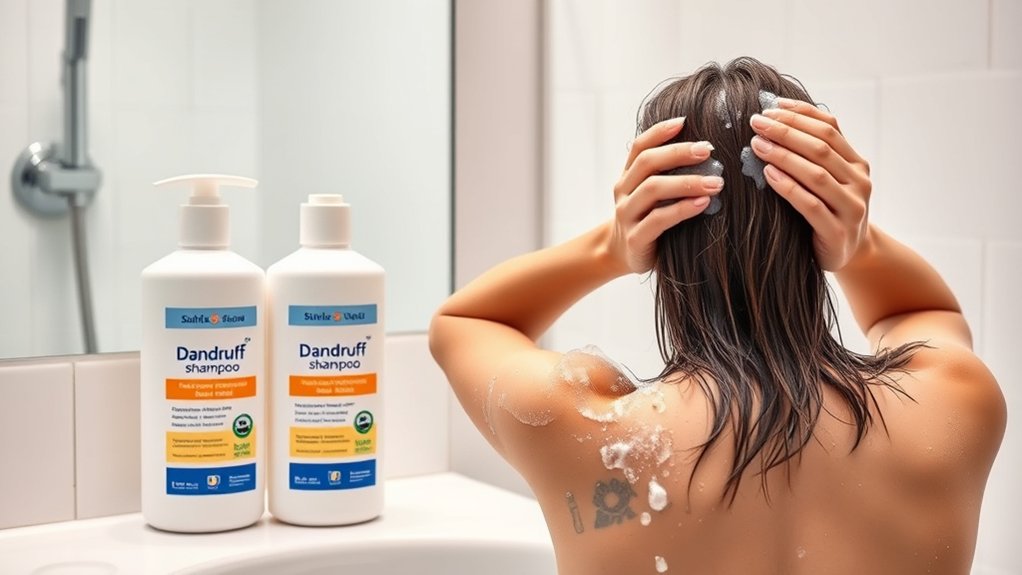
Dandruff shampoos combat flakes and itching by targeting the underlying causes, primarily the Malassezia yeast on your scalp. Active ingredients like zinc pyrithione and ketoconazole in these shampoos inhibit fungal growth and reduce inflammation, addressing the root of dandruff.
Dandruff shampoos fight flakes and itching by targeting Malassezia yeast with antifungal and anti-inflammatory ingredients.
You can expect initial relief from itching and flaking within 3 to 5 washes, which usually means 1 to 2 weeks of use. Consistent scalp care with 2 to 3 applications weekly and leave-in times of 3 to 5 minutes guarantees ideal results.
Significant reduction in visible scaling usually occurs within 2 to 4 weeks, while maximum therapeutic benefits often require 4 to 6 weeks of use. If dandruff symptoms persist beyond this period, further evaluation is necessary.
Proper shampoo use and sticking to the recommended weeks of use are critical for effective dandruff management and sustained scalp health.
How Your Scalp Type and Dandruff Severity Affect Results
The effectiveness of dandruff shampoo depends greatly on your scalp type and the severity of your condition. If you have an oily scalp, you may need to apply dandruff shampoo 3-4 times weekly for ideal results, as oily scalps can hinder the absorption of active ingredients.
Normal to dry scalps usually require only 1-2 applications per week.
Your dandruff severity also impacts how quickly you see results. Mild cases often improve within 3 to 5 washes, while severe dandruff may take 4 to 6 weeks for maximum relief.
If you have sensitive scalps, choosing gentler formulations like zinc pyrithione is essential. Irritation can delay improvement, so it’s worth picking products that are kind to your skin.
Tailoring your treatment frequency and product choice to your scalp type and dandruff severity guarantees more effective and timely results. It really makes a difference when you match the shampoo to what your scalp needs.
Key Active Ingredients That Speed Up Dandruff Relief
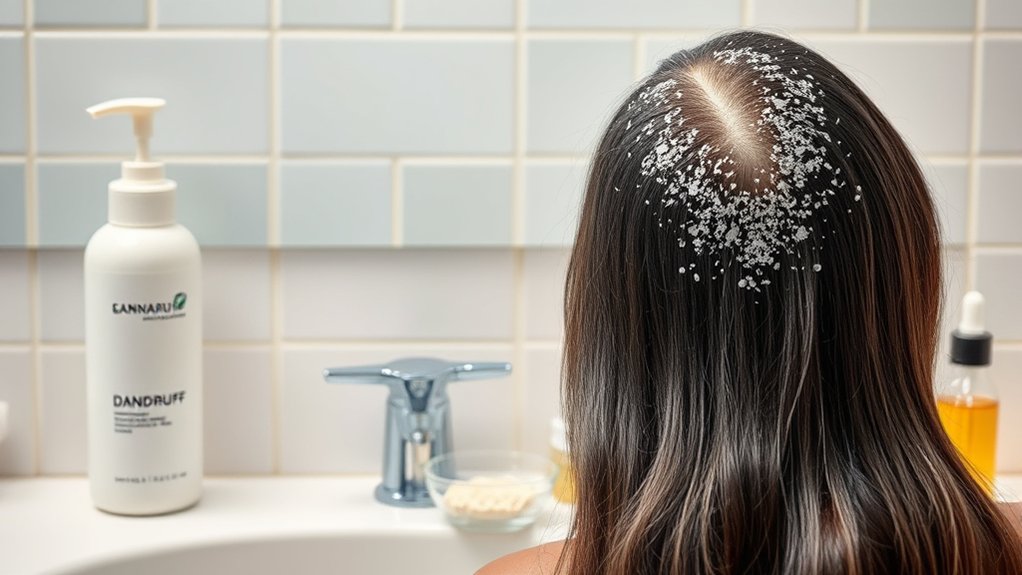
When you choose a shampoo with proven active ingredients, you accelerate your scalp’s recovery from dandruff. Key antifungal shampoos like zinc pyrithione and ketoconazole actively reduce flaking by targeting the fungi responsible for the scalp condition.
Zinc pyrithione offers antimicrobial effects, showing visible improvement within two weeks, while ketoconazole provides broad-spectrum antifungal action, with maximal benefits by week four.
Selenium sulfide reduces fungal growth and scalp cell turnover, contributing to symptom relief typically within two to four weeks. Salicylic acid complements these by removing scalp buildup, enhancing overall efficacy.
For persistent cases, ciclopirox olamine serves as an alternative active ingredient, combating resistant dandruff effectively.
Selecting dandruff shampoos with these active ingredients guarantees a targeted, efficient approach to managing and reducing your scalp condition. It’s all about picking the right formula to give your scalp the care it needs.
When You’ll See Full Dandruff Shampoo Results
You’ll start to notice visible improvement in your dandruff symptoms within about 1 to 2 weeks of using the shampoo consistently.
Usually, the best results come around 4 to 6 weeks. How quickly you see these changes depends on a few things, like the active ingredients in the shampoo and the condition of your scalp.
Keep an eye out for signs like less flaking and itching—that’s how you’ll know when you’ve reached the full benefits of the treatment.
Timeline For Visible Improvement
Although dandruff shampoos begin relieving itching and flaking within 1 to 2 weeks, you can expect to see initial improvement after about 3 to 5 washes.
Visible improvement in scaling becomes more pronounced with consistent use.
Typically, dandruff shampoo users notice a significant reduction in scaling within 2 to 4 weeks, especially with antifungal agents like ketoconazole or zinc pyrithione.
Maximum therapeutic benefit usually takes 4 to 6 weeks of regular application.
If symptoms persist beyond this period, further evaluation may be necessary to rule out other conditions.
Factors Affecting Dandruff Results
Since several variables influence how quickly dandruff shampoo produces full results, understanding these factors can help set realistic expectations for treatment outcomes. The type of active ingredients, such as ketoconazole or zinc pyrithione, directly impacts the timeline for visible improvement by targeting dandruff and seborrheic dermatitis at the source.
Consistent use is critical. Irregular application delays therapeutic effects and prolongs symptoms.
Also, your scalp sensitivity plays a role. A more reactive scalp may require gentler formulations or slower adjustment periods.
Frequency of shampooing matters too. Insufficient application reduces efficacy. Recognizing these factors helps you monitor progress accurately and avoid stopping treatment too soon.
Typically, full benefits show up after 4 to 6 weeks of regular use as the active ingredients normalize scalp conditions and reduce flaking and itching effectively.
Signs Of Maximum Benefit
Understanding how various factors influence your dandruff shampoo’s effectiveness helps clarify when you can expect to see full results.
Typically, maximum benefit occurs after 4 to 6 weeks of consistent use. This allows the active ingredients to fully control scalp scaling and inflammation.
You’ll notice visible improvement in scaling within 2 to 4 weeks, especially with antifungal shampoos like 2% ketoconazole.
Key signs of maximum benefit include significant reduction or elimination of visible scaling, absence of itching and flaking during and between washes, and sustained scalp clarity with no recurrence of symptoms.
If symptoms persist beyond this timeframe, it’s a good idea to reconsider your diagnosis or treatment approach.
Best Dandruff Shampoo Tips to Speed Up Results
To speed up dandruff shampoo results, apply the product 2–3 times per week and leave it on your scalp for 3–5 minutes. This helps guarantee ideal absorption of the active ingredients. Consistent use is really important for effective scalp treatment and achieving a healthy scalp.
After shampooing, follow up with a gentle conditioner. This keeps your scalp hydrated and helps reduce irritation. Taking these simple steps can make a big difference in how quickly you see results.
| Tip | Benefit |
|---|---|
| Use 2–3 times weekly | Maximizes active ingredient absorption |
| Leave on scalp 3–5 minutes | Assures deeper scalp penetration |
| Apply conditioner after shampoo | Maintains scalp hydration and prevents irritation |
Why Rotating Dandruff Shampoos Helps Clear Flakes
You’ll reduce antifungal resistance by rotating shampoos with different active ingredients. This way, you prevent yeast from adapting to just one treatment. It’s like keeping them on their toes!
Switching things up also targets different strains of Malassezia, which means better overall results against flakes.
Plus, it’s great for maintaining your scalp’s barrier balance, helping your skin stay healthier and giving you long-term control.
Reduces Antifungal Resistance
Although individual antifungal shampoos can be effective at first, rotating between products like ketoconazole and zinc pyrithione helps prevent Malassezia yeast from developing resistance.
When you use medicated shampoos consistently but switch up the active ingredients, you keep the antifungal power strong enough to reduce scaling effectively.
This approach lowers the chance of yeast adapting to one treatment and keeps your scalp healthy over time.
To reduce antifungal resistance, think about these points:
- Rotate shampoos to expose Malassezia yeast to different mechanisms of action
- Keep a structured schedule to get the most antifungal effectiveness
- Stay consistent to avoid hitting a plateau and help control symptoms long-term
Targets Diverse Yeast Strains
Building on the need to prevent antifungal resistance, rotating dandruff shampoos with varied active ingredients directly addresses the diverse strains of Malassezia yeast responsible for flaky scalp conditions.
Each antifungal agent works through unique mechanisms, so your rotation regimen can target diverse yeast strains effectively. This strategic alternation helps maintain scalp health and reduces fungal overgrowth and inflammation over time.
| Active Ingredient | Mechanism of Action | Targeted Yeast Strains |
|---|---|---|
| Ketoconazole | Inhibits fungal cell membrane synthesis | Broad spectrum Malassezia |
| Zinc Pyrithione | Disrupts fungal metabolism | Resistant Malassezia strains |
| Selenium Sulfide | Slows fungal cell growth | Persistent yeast strains |
Maintains Scalp Barrier Balance
When you rotate dandruff shampoos containing different antifungal agents, you prevent your scalp from developing tolerance to any single ingredient. This guarantees the treatment remains effective.
This approach maintains the scalp barrier balance, which is vital for reducing flaking and irritation.
Medicated shampoos with varied active ingredients target yeast overgrowth through distinct mechanisms. This supports a healthier scalp environment.
By rotating products, you address scalp flaking from multiple angles, diminishing inflammation.
You also maintain a responsive, balanced scalp barrier that supports healthy hair. Plus, you shift treatment from reactive to preventive, lowering the risk of recurrence.
Implementing a structured rotation, such as alternating ketoconazole and zinc pyrithione shampoos, optimizes medicated treatment efficacy.
It promotes sustained scalp health. This strategy makes sure your scalp stays resilient and flake-free over time.
How to Manage Scalp Irritation During Treatment
If you experience scalp irritation during dandruff treatment, you can often reduce discomfort by alternating medicated shampoos with gentle, non-medicated ones. This helps prevent excessive dryness.
Applying the medicated shampoo for 3–5 minutes allows the active ingredients to penetrate effectively while minimizing scalp irritation.
Keep an eye on how your scalp responds. If you notice tightness or increased dryness, try adjusting how often you use the medicated shampoo.
It’s also a good idea to use deep moisturizing conditioners after each medicated shampoo. This will help restore moisture and soothe any irritation.
If irritation keeps happening, you might want to switch to hydrating products made for sensitive scalps. Sticking to this routine helps balance treatment effectiveness with comfort.
But if the irritation doesn’t go away, it’s best to see a dermatologist. They can check for other scalp issues or suggest alternative treatments.
When Dandruff Shampoo Isn’t Working (And What to Do)
Although dandruff shampoos often improve scalp condition within weeks, you should reconsider your approach if you see no progress after 4 to 6 weeks. Persistent scalp issues despite weeks of consistent use may indicate the need to adjust treatment or seek a dermatologist’s evaluation.
If no improvement occurs after 4 to 6 weeks, reconsider treatment or consult a dermatologist.
Consider these steps: switch the dandruff shampoo’s active ingredients, for example, from ketoconazole to zinc pyrithione, to target different causes.
Use antifungal shampoos daily during flare-ups for up to two weeks before returning to maintenance frequency.
Keep a symptom diary to monitor effectiveness and identify triggers, which can help you make precise adjustments.
If severe itching or flaking extends beyond your scalp, a dermatologist’s evaluation is essential to rule out conditions like psoriasis or eczema.
How to Maintain Results After Dandruff Treatment
To maintain the improvements you’ve achieved after dandruff treatment, continue using medicated shampoos once or twice weekly to prevent symptom recurrence.
Rotate between different active ingredients like ketoconazole and zinc pyrithione to reduce the risk of tolerance. On non-medicated days, use a gentle, moisturizing shampoo to support scalp health by preventing dryness.
Consistent treatment is essential. Applying dandruff shampoo two to three times weekly sustains the clinical benefits gained during initial therapy.
Regularly monitor your scalp condition and adjust treatment frequency as needed to optimize outcomes.
By following these evidence-based strategies, you’ll maintain results effectively.
This way, you can ensure long-term control of dandruff symptoms without compromising scalp integrity or comfort.
Signs You Should See a Dermatologist for Dandruff
Maintaining dandruff control with regular treatment is effective for most people, but certain signs indicate that self-care measures may no longer suffice. If your symptoms don’t improve after 4 to 6 weeks of consistent antifungal shampoo use, it’s time to see a dermatologist.
Consistent dandruff treatment works for most, but see a dermatologist if symptoms persist beyond 4 to 6 weeks.
Persistent flaking and redness spreading beyond the scalp suggest a more serious condition requiring medical evaluation. Severe itching that disrupts sleep or daily activities also demands professional attention.
You should consult a dermatologist if you experience:
- Persistent flaking and redness extending to the face, ears, or chest
- Severe itching interfering with daily life
- Yellow crusting or oozing on the scalp indicating possible infection
A dermatologist can provide stronger treatments and rule out alternative diagnoses like psoriasis or eczema.
It’s always better to get checked if you’re unsure or if things aren’t getting better.
Frequently Asked Questions
Can Dandruff Shampoo Cause Hair Loss?
Yes, dandruff shampoo can cause hair loss if you misuse it or have a negative reaction to the ingredients.
Different dandruff types need specific treatments to keep your scalp healthy.
Ingredients like ketoconazole and zinc pyrithione work well but might irritate sensitive scalps, which can lead to temporary shedding.
So, it’s important to use shampoos as directed and keep an eye on how your scalp reacts.
If you notice persistent hair loss or irritation, it’s a good idea to talk to a dermatologist.
They can help figure out the best approach for your scalp and hair health.
Is It Safe to Use Dandruff Shampoo Daily?
You can safely use dandruff shampoo daily for up to two weeks during flare-ups, but beyond that, it may disrupt scalp health.
Studies show over 30% of users experience dryness or irritation with daily use.
For dandruff prevention tips, pair your shampoo with moisturizing conditioners and avoid common dandruff triggers like harsh chemicals.
If daily use irritates your scalp, consider alternative treatments or consult a dermatologist to maintain ideal scalp health.
Can Dandruff Shampoo Be Used on Colored Hair?
Yes, you can use dandruff shampoo on colored hair, but you need to pick products with gentle ingredients. This helps avoid harsh effects like fading or dryness.
Also, be mindful if your scalp is sensitive. Make sure to apply the shampoo as directed and don’t overuse it.
It’s a good idea to alternate dandruff shampoo with moisturizing shampoos to keep your hair healthy.
And for long-term care, always condition afterward to maintain both hair health and color vibrancy.
Does Diet Affect Dandruff Severity?
Think of your scalp like a garden. Dietary influences act as the soil’s quality. Yes, what you eat directly impacts dandruff severity.
Inflammatory foods high in sugar promote yeast overgrowth and worsen flakes. Nutritional deficiencies, especially zinc, and poor hydration harm scalp health and increase dryness.
Adding omega-3s and probiotics supports a balanced microbiome. This helps reduce inflammation and makes your scalp more resilient against dandruff.
Your diet really shapes your scalp’s condition.
Can Children Use Dandruff Shampoo Safely?
Yes, children can safely use dandruff shampoo if you choose formulations suited for their sensitive scalp. Focus on gentle shampoo ingredients like zinc pyrithione or ketoconazole, but always seek pediatric advice first.
It’s important to understand what causes dandruff to help you pick the right treatment options. Sometimes, milder shampoos or natural remedies might do the trick.
Try to limit use to 1-2 times a week and keep an eye out for any irritation. If symptoms stick around, it’s a good idea to check in with a healthcare professional to make sure your child’s scalp gets the best care possible.
Conclusion
Think of your dandruff shampoo as a lighthouse guiding you through a foggy night. Persistent use steadily clears the haze of flakes and itching. Your scalp’s unique landscape and the shampoo’s active ingredients determine how quickly you reach safe shores.
Stay consistent, manage irritation, and adjust if results stall. When the storm persists, consulting a dermatologist guarantees you navigate toward lasting relief. With care and patience, you’ll reclaim a healthy, flake-free scalp.