Where Was Shampoo Invented – History And Origins
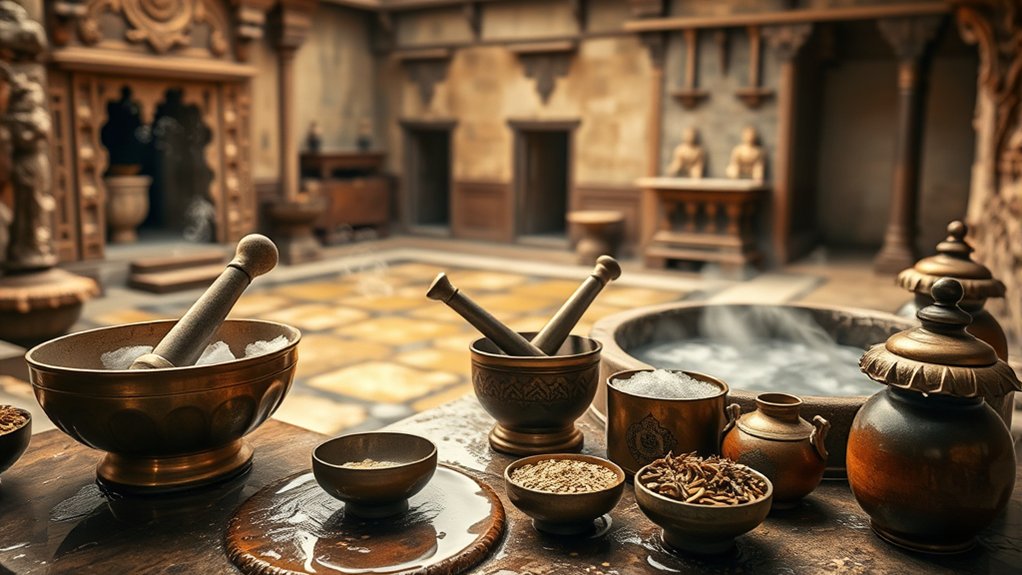
You’ll find shampoo’s origins in ancient India over 4,000 years ago, where natural ingredients like soapberries, herbs, and Indian gooseberries were expertly used for hair cleansing. The term itself comes from the Hindi word “cā̃pō,” meaning to soothe or press.
Shampoo evolved from these botanical roots before spreading to Europe through colonial trade, eventually leading to modern formulations. Exploring this history reveals how shampoo transformed from herbal remedies to the diverse products you see today.
It’s pretty fascinating to see how something we use daily has such ancient and rich beginnings, isn’t it?
Origins of Shampoo in Ancient India
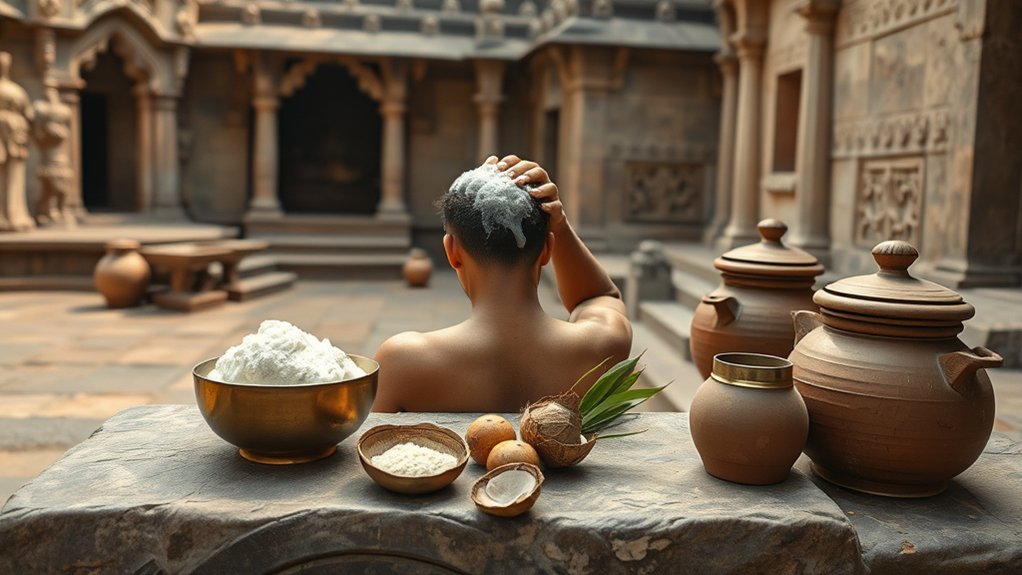
Although shampoo is often associated with modern cosmetics, its origins trace back over 4,000 years to ancient India. Back then, natural ingredients like soapberries, herbs, and hibiscus flowers formed the basis of hair cleansing practices.
In ancient India, the term “shampoo” comes from the Hindi word “cā̃pō,” which means to press or soothe. This reflects the methodical process of scalp massage combined with cleansing. Early shampoo formulations involved boiling soapnut fruits and using dried Indian gooseberries (amla).
Herbs were super important for maintaining hair health. This herbal approach wasn’t just practical—it had cultural significance too. It shows how sophisticated people were in understanding and using natural ingredients for hair care.
Shampoo Use in Early Civilizations
You’ll notice that early civilizations came up with hair cleansing methods using natural ingredients like soapnut fruits and vinegar. It’s pretty interesting because this shows a practical approach to hygiene back then.
These herbal traditions really set the stage for shampoo as a cleaning agent. They combined what was available in nature with their cultural practices.
When you understand these methods, it’s easier to see how shampoo evolved—from simple, plant-based formulas to much more complex preparations over time.
Ancient Hair Cleansing
When exploring early methods of hair cleansing, you’ll find that ancient civilizations developed distinct techniques suited to their environments and resources.
In the Indus Valley Civilization around 4000 B.C., people practiced shampooing by using natural ingredients like soapnut fruits and dried Indian gooseberries for hair washing.
Meanwhile, ancient Egypt employed a mixture of vinegar and water to cleanse the scalp and hair, reflecting a sophisticated hygiene practice.
These methods highlight different approaches to maintaining hair cleanliness long before modern shampoos existed.
By examining these ancient techniques, you can see how shampooing evolved as an essential aspect of personal care, tailored to available materials and cultural preferences.
Understanding these origins helps clarify shampoo’s development from simple cleansing solutions to the diverse products used today.
Herbal Shampoo Traditions
Since ancient times, civilizations have relied on herbal ingredients to cleanse and nourish hair. These practices formed the roots of shampoo traditions that are still influential today. The first shampoos came from botanical resources, using herbs to offer hair care benefits beyond just cleansing.
Liquid shampoo forms appeared as natural infusions, like soapnut fruits in the Indus Valley and rice water in Tang dynasty China. These early methods used local plants to keep the scalp healthy and hair strong. It’s clear they always focused on the power of herbs.
| Civilization | Ingredients Used | Purpose |
|---|---|---|
| Indus Valley | Soapnut, Indian gooseberry | Cleansing and nourishment |
| Ancient Egypt | Vinegar, fragrant oils | Cleansing, styling |
| Tang Dynasty China | Rice water | Natural liquid shampoo |
| Ancient India | Hibiscus, various herbs | Hair care, strengthening |
| Common Theme | Locally sourced herbs | Herbal hair care roots |
Herbal Ingredients in Traditional Shampoo Recipes
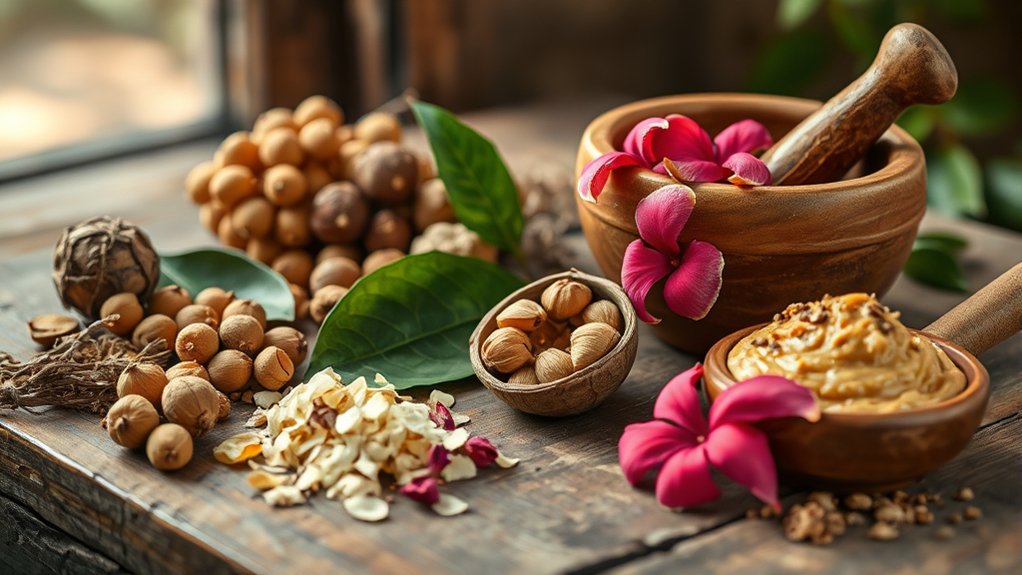
Although modern shampoos often rely on synthetic chemicals, traditional recipes harnessed the natural efficacy of herbal ingredients known for their cleansing and nourishing properties.
Traditional shampoos embraced herbal ingredients for their natural cleansing and nourishing benefits long before synthetic alternatives emerged.
When you explore these traditional shampoos, you’ll find that herbal ingredients played a significant role in natural cleansing and hair care.
Various cultures developed unique formulations based on local botanicals and their properties. It’s really interesting to see how these natural elements were used long before the rise of commercial hair products.
Key herbal ingredients in traditional shampoo recipes include:
- Soap nut (sapindus), valued for its gentle yet effective cleansing abilities
- Amla, rich in vitamin C, used to strengthen and promote hair health
- Lotus, combined with oils by ancient Egyptians for conditioning
- Rice water, utilized by the Chinese during the Tang dynasty as a mild rinse
These ingredients show a nuanced understanding of plant-based solutions for maintaining hair health and cleanliness.
It’s clear that traditional methods had a lot to offer when it comes to natural hair care.
Shampoo’s Arrival in Europe
You’ll find that shampoo first reached Europe through colonial traders who introduced the Indian practice of “champing,” which involved hair cleansing and massage.
Early European shampoos were soap-based and solid, reflecting their adaptation from traditional soaps rather than liquid products.
It’s interesting to see how this colonial influence helped shampoo evolve from a specialized treatment into a common household item by the late 19th century.
Colonial Influence on Shampoo
When British colonial traders brought the practice of shampooing from India to Europe in the 18th century, they introduced not just a new hygiene routine but also a cultural shift in hair care.
These colonial traders played a significant role in familiarizing Europeans with shampoo as a method of personal hygiene, rooted in Indian tradition.
Interestingly, the word shampoo comes from the Hindi “cā̃pō,” which means to press or soothe.
At first, European shampoos were solid and mainly used by professionals, which made them less accessible for everyday use.
The big change came with the first liquid shampoo introduced by H. S. Peterson and Company in 1909.
This innovation made shampoo easier to use and helped it spread beyond salons.
This colonial influence laid the foundation for modern shampoo manufacturers and the broader adoption of shampoo as part of daily hygiene routines.
Early European Shampoo Use
Since British colonial traders introduced shampoo to Europe in the 18th century, its use evolved from a specialized luxury into a more common hygiene practice. Early European shampoos often resembled solid soap bars rather than the liquid products we’re familiar with today.
Initially, shampooing was limited to professional hair stylists and wasn’t part of routine personal care.
During the 1800s, public awareness increased, but hair washing remained infrequent, typically only once a month. A notable shift occurred in 1908 when the New York Times recommended washing hair every couple of weeks, signaling growing acceptance of regular hair hygiene.
The late 1920s brought liquid shampoo, which simplified washing and made shampooing more accessible. This progression laid the foundation for modern hair care routines centered on regular shampoo use.
It really changed the way people thought about hair care.
Shampoo Evolution in Colonial Times
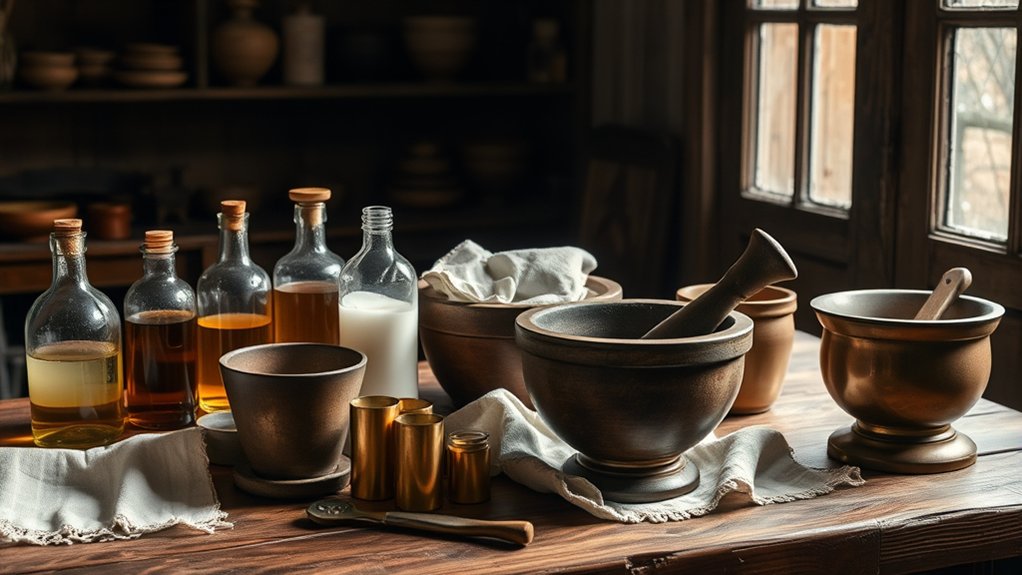
Although shampoo as we recognize it wasn’t originally European, British colonial traders introduced the concept in the 18th century after observing Indian hair cleansing practices. The first shampoo in Europe involved traditional techniques, where shampoo was made by dissolving shaved soap in water, mimicking Indian methods.
British traders brought shampoo to Europe in the 18th century, inspired by Indian hair cleansing traditions.
Young women at camp and professional hair stylists primarily used these early cleansing agents, reflecting limited domestic adoption.
Over time, awareness grew, but hair washing remained infrequent.
Key points in shampoo evolution during colonial times include:
- The term “shampoo” derives from Hindi, meaning to press or massage.
- Early European shampoos resembled solid soap bars rather than liquid formulas.
- Hair washing frequency was low, often monthly, due to limited hygiene understanding.
- Powder shampoos emerged late in the 1800s, facilitating easier home use.
Key Innovations in Shampoo From the 19th to 20th Century
Three pivotal innovations between the late 19th and mid-20th centuries transformed shampoo from rudimentary cleansing agents into sophisticated hair care products.
In 1914, the first commercial shampoo, Canthrox, introduced a dedicated hair cleansing product, setting a new industry standard.
Then, in 1927, Schwarzkopf launched the first liquid shampoo, moving away from soap-based bars and enhancing user convenience and efficacy.
The 1930s brought the development of non-soap-based surfactants in shampoos, which greatly improved cleansing performance and closely resemble modern formulations.
Earlier, in 1898, Schwarzkopf’s water-soluble dry shampoo introduced a novel, practical approach to hair care.
Each of these innovations laid critical groundwork for shampoo’s evolution, shifting it from basic cleansing agents to specialized products designed for targeted hair care needs.
These were key milestones in its history.
How Modern Shampoo Formulations Developed
When you examine the development of modern shampoo formulations, you’ll see that they began taking shape in the late 1800s with Hans Schwarzkopf’s powdered shampoos. These powders dissolved in water to clean hair effectively. Schwarzkopf’s innovations laid the groundwork for shifting from traditional soap-based cleansers to more sophisticated products.
Key advancements include the 1927 introduction of the first liquid shampoo by Schwarzkopf, which used non-soap surfactants.
Then, in the 1930s, synthetic ingredients were added to improve foam production and make cleansing gentler.
By the 1960s, polymers were adopted to enhance conditioning properties for damaged hair.
Later, in the 1980s, silicones were integrated, enabling “2-in-1” shampoo and conditioner formulations.
All these milestones together shaped the modern shampoo formulations you rely on today. They balance effective cleansing with hair care benefits in a way that’s easy to appreciate.
Types of Shampoo and Their History
You’ll find that shampoo types have evolved quite a bit since their beginnings in the Indus Valley, where people used natural ingredients like soapnut fruits.
Over the centuries, the way shampoos were made changed a lot — moving from soap-based solid bars to liquid synthetic formulas. This shift really changed how people clean their hair.
When you look at these historical changes, it’s easier to understand why there are so many different kinds of shampoos available today.
Historical Shampoo Variants
Although the concept of shampooing has evolved considerably over millennia, its origins reveal a variety of cleansing agents shaped by available resources and cultural practices. You can trace shampooing practices back to ancient civilizations, each using distinct formulations based on local ingredients.
For example, in the Middle Ages, people combined alcohol with eggs or sulfur for hair care. Later, powdered shampoos emerged in the late 19th century, with chemist Hans Schwarzkopf playing an essential role in their development.
The introduction of liquid shampoos in the late 1920s revolutionized hair cleansing, making it more convenient and effective.
- Indus Valley’s soapnut and gooseberry mixtures
- Egyptian vinegar and water rinses
- Medieval alcohol-based concoctions
- Hans Schwarzkopf’s powdered shampoo innovations and liquid shampoos
Evolution of Shampoo Types
The history of shampoo reflects continuous adaptation to meet changing needs and available materials. Early shampoos in India, made from soapberries and herbs, relied on natural cleansing agents that worked with water to clean hair gently.
Over 4,000 years ago, soapnut fruits and dried Indian gooseberries were boiled to create primitive shampoos. This shows an early understanding of surfactants’ role in removing oils and dirt.
By the late 1800s, powdered shampoos emerged, dissolving easily in water. This marked a shift toward convenience and efficiency.
The late 1920s introduced liquid shampoo, simplifying hair washing and broadening accessibility. Throughout the 20th century, synthetic surfactants and specialized formulas transformed shampoo into diverse types.
Each type was designed to address specific hair textures and concerns, emphasizing functionality and user needs.
It’s interesting to see how shampoo evolved from simple natural ingredients to complex products tailored for everyone.
Cultural Changes That Boosted Shampoo’s Popularity
Since its origins in 16th-century India, shampoo evolved considerably as cultural attitudes toward hair hygiene shifted. You see, people began washing their hair more regularly, adopting shampoo every few weeks as a hygiene standard.
Originating in 16th-century India, shampoo gained popularity as regular hair washing became a hygiene norm.
The addition of essential oils enhanced hair shine and fragrance, appealing to growing consumer desires. These cultural changes made shampoo a staple in daily grooming routines.
Key factors that boosted shampoo’s popularity include:
- Introduction of liquid shampoo in the 1920s, simplifying washing hair
- Colonial traders spreading daily hair washing habits in Europe
- Media influence promoting regular hair cleanliness, like a 1908 New York Times article
- Use of natural ingredients like soapberries and herbs enhancing appeal and effectiveness
This cultural shift transformed shampoo from a niche product to an essential hygiene item.
How Environmental and Health Trends Shape Shampoo
As cultural attitudes shaped shampoo’s rise, evolving environmental and health concerns now influence how products are formulated and marketed. You’ll notice sustainable shampoo products emphasize eco-friendly packaging, addressing plastic waste. Sulfate-free shampoos appeal by reducing scalp irritation, aligning with natural preferences.
Transparency in ingredient labeling has become a priority, building consumer trust through clearer formulations. Meanwhile, the “no poo” movement challenges traditional shampoo use, promoting alternatives like baking soda for environmental and scalp health benefits.
| Trend | Impact |
|---|---|
| Sustainable shampoo products | Reduced plastic waste, eco-friendly packaging |
| Sulfate-free shampoos | Gentler cleansing, less scalp irritation |
| Transparency in labeling | Increased consumer trust, stricter regulations |
| “No poo” movement | Alternative cleansing, environmental benefits |
| Reduced washing frequency | Maintains scalp’s natural oil balance |
These trends shape your shampoo choices today.
Frequently Asked Questions
What Are the Best Natural Ingredients for Homemade Shampoo?
For the best natural alternatives in your homemade shampoo, use soap nuts for gentle cleansing without chemicals.
Add amla powder to strengthen follicles and boost growth, while shikakai cleanses without stripping oils.
Coconut milk moisturizes and reduces frizz, enhancing shine.
Essential oils like lavender or tea tree improve scalp health and scent.
These DIY recipes combine ingredient benefits that support effective, nourishing hair care tailored to your needs.
How Does Shampoo Affect Different Hair Types?
Shampoo affects your curly hair by needing moisturizing agents to prevent dryness and frizz.
For an oily scalp, you should use clarifying shampoos that remove excess oil without stripping natural moisture.
Damaged strands benefit from sulfate-free formulas that reduce irritation and help repair.
If you have fine texture, shampoos with a lower pH prevent frizz and damage while maintaining volume.
Tailoring shampoo to your hair type keeps it healthy and manageable.
It’s all about finding the right balance for your unique hair needs.
Can Shampoo Cause Allergies or Scalp Irritation?
Of course, shampoo never causes scalp sensitivity or allergic reactions, except when it does. You might react to fragrances, preservatives, or surfactants in your shampoo.
That’s why ingredient awareness is essential. Knowing what’s in your product can prevent surprises.
If you have sensitive skin, product testing through patch tests helps identify allergens before full use.
Staying informed and cautious helps you avoid irritation while keeping your scalp healthy. It’s all about being aware and careful with what you put on your skin.
What Is the Environmental Impact of Shampoo Packaging?
You’ll find shampoo packaging notably impacts the environment due to its heavy reliance on single-use plastics.
These plastics often end up in landfills or oceans, which is a big problem.
To combat this, sustainable packaging and biodegradable options are gaining traction. They help reduce plastic waste and make a real difference.
Recycling initiatives remain limited but essential since only a small percentage of plastic actually gets recycled.
It’s crucial we support these efforts.
By choosing eco-friendly alternatives like solid shampoo bars or refillable containers, you actively help minimize environmental harm caused by traditional shampoo packaging.
Every little choice counts!
How Often Should You Shampoo Your Hair for Optimal Health?
You should aim for a shampoo frequency of two to three times weekly to maintain hair health and scalp balance. This routine effectively cleanses without stripping natural oils. Those oils are important because stripping them can cause your scalp to overproduce oil.
Adjust your cleansing methods based on your hair type and lifestyle. If you have an oily scalp, you might need to wash more often. On the other hand, dry or curly hair usually benefits from washing less frequently.
Keep an eye on how your scalp responds. That way, you can find the best shampoo frequency that works for you and keeps your hair healthy.
Conclusion
You’ve seen how shampoo’s journey, from ancient Indian roots to modern formulas, mirrors the evolution of society itself, like a river carving through time. Each era layered new ingredients and cultural shifts, shaping what you now use daily.
Understanding this history helps you appreciate shampoo not just as a cosmetic product, but as a reflection of changing health, environment, and beauty ideals. This awareness empowers you to make informed choices in your personal care routine.