Can I Use Dog Shampoo On My Cat – Safety And Risks Explained
You shouldn’t use dog shampoo on your cat because its lower pH disrupts your cat’s more alkaline skin. This can cause dryness and irritation. Many dog shampoos also contain toxic ingredients like permethrin and essential oils that can harm your cat’s health.
Using the wrong shampoo might lead to itching, redness, or even severe reactions that need vet care. So, it’s best to pick cat-specific products made just for their sensitive skin.
If you want to learn more about safe grooming and how to spot risks, keep exploring. It’s worth it to keep your furry friend happy and healthy!
Why Is Dog Shampoo Unsafe for Cats?
Although dog shampoos may seem like a convenient option, you should never use them on cats because their formulations can harm feline skin and health.
Dog shampoo is designed with a pH level suited for dogs, which ranges from 5.5 to 7.2, while cats have a higher skin pH. Using dog shampoo on your cat disrupts this balance, often causing skin irritation and dryness.
Dog shampoo’s pH suits dogs, but disrupts cats’ higher skin pH, causing irritation and dryness.
Plus, many dog shampoos contain toxic ingredients such as permethrin, which are safe for dogs but harmful to cats. This can potentially lead to liver damage.
Cats’ delicate skin can lose natural oils when exposed to these shampoos, increasing the risk of infections.
How Does Cat Skin pH Differ From Dogs’?
You might find it interesting that a cat’s skin pH is usually between 7.0 and 9.0, which is more alkaline compared to a dog’s pH, typically ranging from 5.5 to 7.2.
Because of this difference, using dog shampoos on your cat can actually throw off their skin’s natural balance. This can lead to dryness or irritation.
Cat Vs Dog pH
Because cat skin has a pH level ranging from 7.0 to 9.0, which is more alkaline than a dog’s skin pH of 5.5 to 7.2, shampoos formulated for dogs can disrupt a cat’s natural skin balance.
Understanding the differences in pH levels between cat skin and dog skin is essential when selecting grooming products.
Dog shampoos may cause stripping of natural oils essential for cat skin health, increased risk of dryness and irritation, potential skin inflammation due to pH mismatch, and even make allergic reactions or existing skin conditions worse.
So, you should always use shampoos formulated specifically for cats to keep their unique pH balance intact.
Only products safe for cats protect their skin’s integrity and help prevent problems from unsuitable formulas.
It really makes a difference for your pet’s comfort and health.
Impact On Skin
When you consider the differences in skin pH between cats and dogs, it becomes clear why using dog shampoo on cats can cause problems. Cats have a more alkaline skin pH (7.0–9.0) compared to dogs (5.5–7.2). This mismatch in pH levels can compromise your cat’s skin barrier, leading to dryness and skin irritation.
Dog shampoos often contain harmful ingredients that are safe for dogs but can trigger allergic reactions and inflammation in cats’ sensitive skin. Using products not formulated for cats disrupts their natural oils, increasing the risk of dermatological issues.
| Factor | Cats |
|---|---|
| pH Level Range | 7.0 – 9.0 |
| Skin Sensitivity | High |
| Risk of Irritation | Increased with dog shampoo on cats |
| Skin Barrier Impact | Easily compromised |
Which Dog Shampoo Ingredients Are Harmful to Cats?
You need to be careful about some dog shampoo ingredients because they can be harmful to cats. For example, permethrin is highly toxic and can cause serious health problems.
Also, essential oils, which are often found in dog shampoos, might irritate your cat’s sensitive skin or even cause allergic reactions. Knowing about these risks is really important to keep your cat safe from exposure to harmful chemicals.
Toxic Chemicals In Dog Shampoo
Although dog shampoos might seem safe for your cat, many contain toxic chemicals that can seriously harm feline health.
Dog shampoos often include ingredients that are toxic to cats or cause skin irritation because cats have different pH levels and sensitivities.
You should avoid products with essential oils. These can irritate your cat’s delicate skin and trigger allergic reactions.
Also, watch out for sulfates and parabens. They disrupt the skin barrier, causing dryness and potential infections.
Artificial fragrances and harsh chemicals are another no-go. They’re linked to discomfort and toxicity in cats.
Plus, dog shampoos are formulated with pH levels between 5.5 and 7.2. This can strip your cat’s natural oils and harm their skin.
Always check labels carefully. Harmful chemicals in dog shampoos make them unsafe for feline use.
Permethrin Dangers For Cats
Since permethrin is highly toxic to cats, using dog shampoos that contain this chemical can cause severe neurological symptoms or even be fatal.
Cats can’t metabolize permethrin effectively, so it builds up in their liver and increases the risk of life-threatening toxicity. Even a little exposure through the skin or if they lick it off can trigger symptoms like tremors, seizures, or trouble breathing.
Besides permethrin, dog shampoos often have ingredients that can irritate a cat’s skin or cause allergic reactions because cats have very sensitive skin.
So, it’s really important to avoid using dog shampoo on your cat unless it clearly says it’s safe for them.
If you think your cat has been exposed to permethrin or any suspicious shampoo, don’t wait—get veterinary help right away.
To keep your cat safe, always choose products made specifically for feline skin and avoid anything designed for dogs.
Essential Oils Risks
When selecting a shampoo for your cat, you should be aware that many dog shampoos contain essential oils, which pose significant risks to feline health.
These ingredients in dog shampoo can irritate your cat’s sensitive skin and lead to skin infection or allergic reactions.
Essential oils like tea tree, lavender, and citrus are highly toxic to cats and may cause drooling, vomiting, or lethargy if absorbed or ingested.
To protect your cat, always choose cat-specific shampoos and consult a veterinarian before using any dog shampoo.
Key risks include essential oils causing skin irritation and systemic toxicity.
Permethrin and similar compounds are highly toxic to cats.
Parabens and sulfates can disrupt the skin barrier.
There’s also the potential for severe allergic reactions or infections.
What Are the Signs of a Bad Reaction to Dog Shampoo?
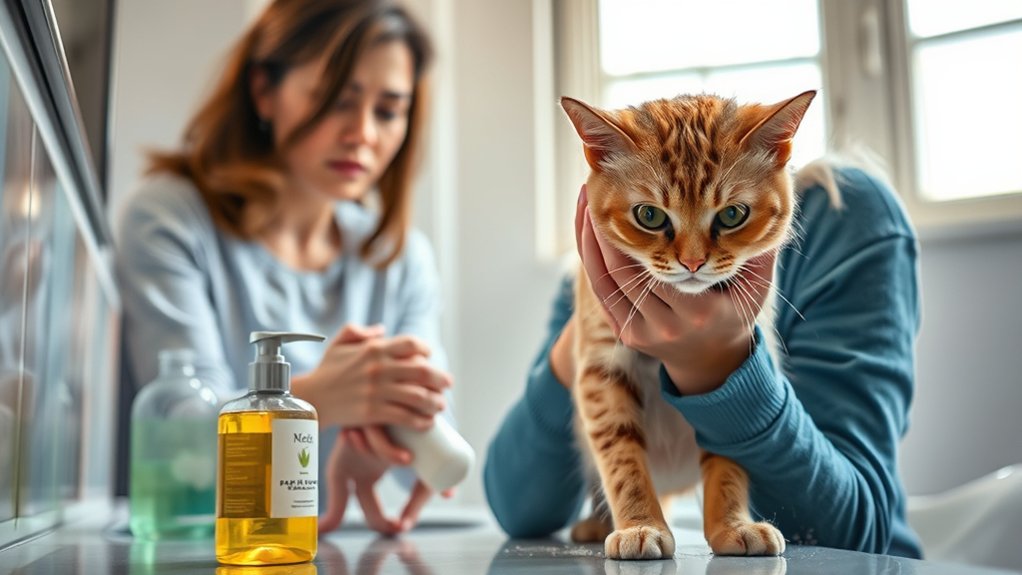
How can you tell if your cat is having a bad reaction to dog shampoo? Watch for clear signs such as redness, itching, or dryness of the skin. These often happen because of pH imbalance or harsh ingredients in dog shampoo that aren’t made for cats.
You might also notice your cat scratching a lot or losing hair. That usually means irritation or an allergic reaction. Sometimes, cats can even have tummy troubles like vomiting or diarrhea if they lick shampoo off their fur.
More serious reactions include swelling or hives, and those need a vet’s attention right away.
To keep your cat safe, keep a close eye on how it acts and looks after using any dog shampoo. Catching these signs early helps avoid bigger problems and keeps your cat happy and healthy.
Can You Use Human Shampoo on Cats?
Noticing how sensitive your cat’s skin can react to dog shampoo might make you wonder if human shampoo is a safer alternative. However, using human shampoo on cats isn’t advisable because of differences in pH and ingredients.
Human shampoos are formulated for a lower pH than your cat’s skin needs, which can mess with its natural balance. Key concerns include ingredients like parabens and sulfates that can irritate and inflame your cat’s delicate skin.
There’s also the risk of stripping essential oils, which causes dryness and can lead to skin infections. Even gentle formulas, like baby shampoo, might be too harsh for cats.
Another thing to keep in mind is that cats groom themselves, so using human shampoo increases the risk of harmful chemical ingestion.
It’s best to avoid using dog shampoo or human shampoo on cats to keep your pet’s skin healthy and prevent any complications.
What Are Safe Alternatives to Cat Shampoo?
You’ll want to pick shampoos that are made just for cats or ones that your vet says are safe for both cats and dogs. That way, you know they’re gentle and have the right pH balance for your furry friend.
If you’re thinking about making your own cleaning solution at home, it’s a good idea to check with your vet first to make sure it’s safe.
Also, using waterless bathing wipes or just sticking to regular brushing can really help keep your cat clean without needing to give them baths all the time.
Vet-Recommended Shampoo Options
Although it might seem convenient to use dog shampoo on your cat, selecting a vet-recommended shampoo specifically formulated for feline skin is crucial.
Cat shampoo matches your cat’s unique skin pH, preventing skin irritation that dog shampoo may cause.
When choosing a safe grooming product, consider these vet-recommended options: hypoallergenic, unscented cat shampoos to reduce allergic reactions and products like DOUXO S3 Care, which are safe for dogs and cats and contain skin-friendly Ophytrium.
You can also try waterless bathing wipes for gentle cleaning without giving your cat a full bath.
And remember, always consult your veterinarian before introducing new grooming products.
Choosing the right cat shampoo over dog shampoo guarantees your pet’s skin health and comfort.
This helps you avoid any adverse reactions linked to inappropriate products.
Safe DIY Cleaning Methods
When traditional cat shampoos aren’t available or suitable, several safe DIY cleaning methods can keep your cat fresh without risking irritation. You can use a warm, damp washcloth for light cleaning or waterless cat wipes made with natural ingredients to gently remove dirt and dander.
Mild dish soap diluted in water works in a pinch for cat bathing, but be sure to rinse thoroughly to prevent skin issues.
While some may wonder if dog shampoo is safe to use on cats, it’s best to avoid it unless your veterinarian confirms it’s suitable for your pet’s specific needs.
Always consult a veterinarian before trying any DIY methods to guarantee the products or techniques won’t harm your cat’s sensitive skin.
It’s better to be safe and keep your furry friend comfortable!
What to Look for in Cat Shampoo
Since cats have a unique skin pH ranging from 7.0 to 9.0, selecting a shampoo specifically labeled for cats is crucial to maintain their skin’s natural balance. Using dog shampoo can disrupt this balance and might cause irritation.
So, it’s really important to pick the right product.
When choosing cat shampoo, focus on a few key things. Select pH-balanced formulas designed for cats, and avoid harsh ingredients like parabens and sulfates.
Opt for mild, unscented, and unmedicated shampoos to protect sensitive skin.
Choose gentle, fragrance-free, and medication-free shampoos to safeguard your cat’s delicate skin.
You might also want to consider waterless shampoos or wipes for easy cleaning without giving your cat a full bath.
And remember, always check with your vet to make sure the shampoo suits your cat’s specific needs, especially if they’ve skin conditions.
Prioritizing these factors helps keep your cat’s skin healthy and prevents any unwanted reactions from using the wrong products.
It’s all about keeping your furry friend comfortable and happy!
When Should You Bathe Your Cat?
Choosing the right shampoo is just one part of caring for your cat’s hygiene. So, when should you bathe your cat? Generally, healthy cats groom themselves efficiently and don’t need regular baths. You only need to bathe your cat if it has gotten into harmful substances or toxins that require immediate cleaning.
Moreover, senior, overweight, or ill cats that can’t groom properly may need occasional bathing. For minor dirt, a damp washcloth often suffices instead of a full bath.
If your cat has skin conditions or infections, always ask your vet before bathing your cat, as they may recommend treatments or shampoos specifically formulated for those issues.
Proper timing and product choice guarantee safe and effective care. It’s all about knowing when your cat really needs a bath and how to do it right. That way, you keep your furry friend clean without causing stress or harm.
What to Do If Your Cat Gets Dog Shampoo
If your cat accidentally gets dog shampoo on its fur, you should immediately rinse the area thoroughly with water to remove any residue that could cause skin irritation.
After rinsing, keep an eye on your cat for symptoms like redness, itching, or hair loss. It’s important to catch any issues early.
Try to keep your cat indoors to prevent further skin irritation or exposure to allergens. If you notice severe reactions, don’t wait—consult a veterinarian promptly for expert advice and treatment.
Here’s what you should do next:
- Rinse your cat thoroughly with lukewarm water to remove all dog shampoo residue
- Monitor your cat’s skin and behavior for any signs of irritation or distress
- Keep your cat indoors until the skin stabilizes
- Contact a veterinarian if symptoms worsen or don’t improve within 24 hours
Taking these steps helps protect your cat’s health after exposure to dog shampoo. Just stay calm and act quickly!
When Should You Contact a Vet About Your Cat’s Skin?
After rinsing your cat and checking how it’s doing, knowing when to contact a vet about your cat’s skin can really make a difference for their health.
You should reach out if you notice any skin irritation like redness, itching, or your cat scratching a lot.
Also, watch for hair loss or unusual patches. These could be signs of an allergic reaction or an infection.
If your cat starts vomiting or shows any tummy troubles after using dog shampoo, it’s important to get veterinary advice right away.
Persistent dryness or flaky skin is another reason to call the vet.
Plus, if your cat already has a skin condition or shows severe reactions, talking to a vet ensures they get the right care and treatment.
This helps keep your cat’s skin healthy and supports their overall well-being.
Frequently Asked Questions
Can Dog Shampoo Affect My Cat’s Fur Texture?
Yes, dog shampoo can negatively affect your cat’s fur texture. Since cats have different skin sensitivity and pH levels, using dog grooming products may cause allergic reactions.
This can lead to dryness, matting, or brittleness. Poor fur maintenance with inappropriate shampoos compromises coat health over time.
Is It Safe to Use Dog Shampoo on Kittens?
It’s not safe to use dog shampoo on kittens, even if your grooming habits are consistent.
Kitten skin has a different pH and reacts differently to product ingredients found in dog shampoos. This can cause allergic reactions or irritation.
Proper bathing techniques and veterinary advice recommend cat-specific shampoos formulated for their delicate skin.
Always choose products designed for kittens to guarantee their health and comfort during grooming sessions.
It really makes a difference to use the right stuff!
How Often Can I Bathe My Cat Safely?
You should bathe your cat only when necessary, typically every 4 to 6 weeks, to keep the bathing frequency safe. Over-bathing can cause skin irritation, so it’s best to follow some simple cat grooming tips like using cat-specific shampoo.
Try to keep bath time as stress-free as possible for your furry friend. Focus on feline skin care by gently rinsing and drying your cat thoroughly.
Don’t forget the post-bath care. Brushing your cat and checking for dryness can help avoid irritation and keep your cat comfortable.
Are There Natural Dog Shampoos Safe for Cats?
Imagine risking your cat’s comfort by using the wrong shampoo.
Natural dog shampoos rarely match your cat’s pH balance and often contain essential oils that trigger allergy reactions. Even natural ingredients can be harmful without vet recommendations.
To keep your cat safe during grooming, stick to shampoos formulated for cats.
Always consult your vet for grooming tips to guarantee you protect your feline friend’s delicate skin and health.
Can Dog Shampoo Cause Long-Term Health Issues in Cats?
Yes, dog shampoo can cause long-term health risks in cats. The pH imbalance between dog shampoo and cat skin often leads to chronic skin irritation and allergic reactions.
Repeated exposure may disrupt your cat’s grooming habits, stripping essential oils and increasing infection risks.
Over time, harmful ingredients can accumulate and cause serious health issues.
Conclusion
Using dog shampoo on your cat is like fitting a square peg in a round hole. It just doesn’t work safely. Cats have unique skin pH and sensitivities that dog shampoos don’t accommodate. This can risk irritation or worse.
Always choose products designed specifically for cats. Watch for any reactions, and never hesitate to contact your vet if you notice trouble. Your cat’s skin deserves tailored care, so stick to what’s made just for them.