How Long To Leave Blue Shampoo In – Timing Guide For Best Results
You should leave blue shampoo in your hair for 3 to 7 minutes, depending on your hair type and the level of brassiness. For subtle toning, 2 to 3 minutes works well, especially if your hair is porous.
If your hair is low porosity or coarser, you might need closer to 5 to 7 minutes. Just be careful not to overuse it to avoid unwanted blue or green tints. Always follow up with a hydrating conditioner.
Understanding these little differences helps you get the best results every time.
How Blue Shampoo Neutralizes Brassiness
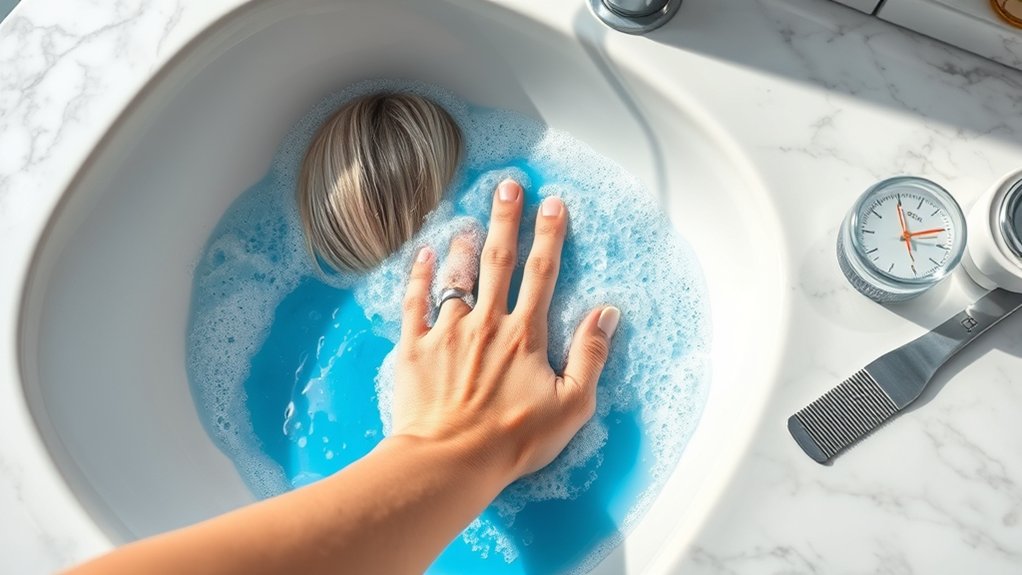
Although brassiness can be frustrating, blue shampoo effectively neutralizes those unwanted orange and red tones in brunette hair by depositing blue pigments that adhere to the hair cuticle. This process works on color theory: blue sits opposite orange on the color wheel, allowing it to cancel out brassy tones.
Blue shampoo uses color theory to cancel out brassy orange and red tones in brunette hair.
When you use blue shampoo on color-treated hair, including balayage or ombré styles, it helps preserve your intended shade by neutralizing unwanted warmth. For best results, follow a timing guide. Apply to wet hair and leave in for 3 to 7 minutes depending on your hair’s needs.
Using blue shampoo regularly, about 1 to 2 times a week, maintains a cooler, more vibrant brunette hue by keeping brassiness at bay between salon visits.
It’s a simple way to keep your color looking fresh without extra trips to the salon.
Why Timing Matters for Blue Shampoo
Using blue shampoo effectively depends largely on how long you leave it on your hair. Timing plays a critical role because leaving it on too long can cause an unwanted blue tint, especially if you have porous hair or lighter shades.
Since porous hair absorbs pigments faster, you might need to adjust the timing accordingly.
To find the ideal duration, perform a strand test before full application. This helps you gauge how your hair reacts and prevents over-toning. Typically, subtle toning requires 2 to 5 minutes, while brassy areas may tolerate 5 to 7 minutes.
How Long To Leave Blue Shampoo On
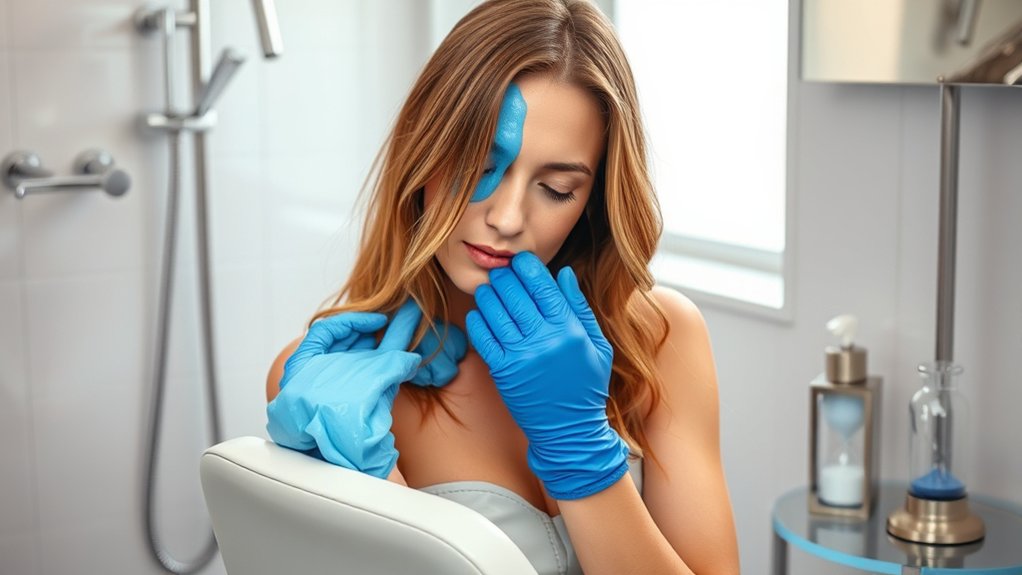
How long should you leave blue shampoo on your hair to achieve the best results? Generally, you want to leave blue shampoo on for about 3 to 7 minutes.
If you’re aiming for subtle toning, 3 minutes is sufficient, but brassy sections often require 5 to 7 minutes.
Keep in mind, high porosity hair tends to absorb pigments faster, so you might need to shorten the application time to avoid unwanted blue hues.
It’s essential not to exceed the recommended time because over-application can leave a blue tint.
After rinsing out the shampoo, always apply a hydrating conditioner to restore moisture and counteract any dryness caused by the shampoo’s pigments.
Monitoring how long to leave your blue shampoo on guarantees you get the perfect tone without damage.
How Hair Type Affects How Long To Leave Blue Shampoo On
Because your hair type influences how it absorbs pigments, you’ll need to adjust the time you leave blue shampoo on accordingly. High porosity hair soaks up pigment quickly, so 2-3 minutes usually suffices.
Low porosity hair resists absorption, requiring 5-7 minutes for effective toning.
Hair texture also matters; fine hair benefits from shorter timing, while coarse hair may need longer to neutralize brassiness fully.
Consider your individual hair characteristics like thickness and prior treatments. These impact how your hair responds to the shampoo.
To summarize:
- High porosity hair: 2-3 minutes
- Low porosity hair: 5-7 minutes
- Adjust for hair texture and individual characteristics
Testing a strand first guarantees you find the perfect timing without over-toning or damage.
How Hair Porosity and Damage Affect Blue Shampoo Timing
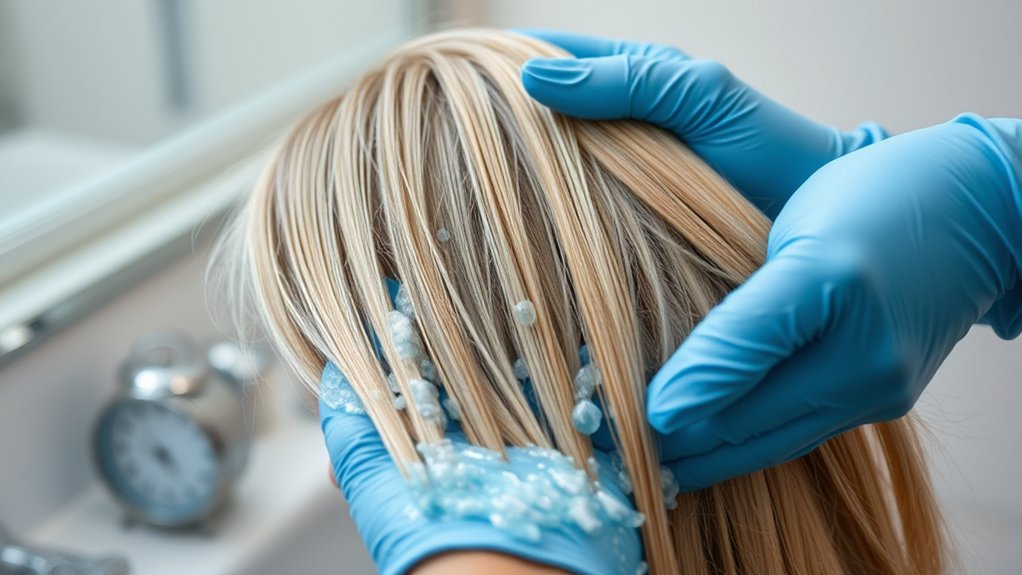
Your hair’s porosity plays a big role in how fast it soaks up blue shampoo. If your hair is high porosity or damaged, you’ll want to keep the shampoo on for a shorter time to avoid getting too strong of a tint.
On the other hand, if your hair has low porosity, it usually needs a bit more time with the shampoo to reach the perfect tone.
Porosity Impact On Absorption
Since hair porosity directly influences how quickly blue shampoo absorbs, you’ll need to adjust the timing based on your hair’s characteristics. Understanding your hair type and porosity guarantees you get the best toning results without over or under processing.
Here’s how porosity affects absorption and timing with blue shampoo:
- High porosity hair absorbs pigments quickly, so you might need less time, often under 5 minutes, to avoid an overly blue tint.
- Low porosity hair resists absorption, requiring the full recommended 5 to 7 minutes for effective toning.
- Conduct a strand test to gauge your hair’s response and refine timing, as individual porosity varies.
Tailoring your timing to porosity helps optimize blue shampoo performance and maintain your desired hair tone.
Damage Influences Timing
While hair porosity plays an essential role in how blue shampoo interacts with your strands, damage can further influence the timing needed for ideal results. Damaged hair absorbs pigments faster, so you’ll often need only 2-3 minutes of blue shampoo exposure to avoid over-toning and unwanted blue or green hues.
Conversely, low porosity hair resists absorption, requiring longer application times, up to 7 minutes. High porosity hair, especially if damaged, demands shorter timing to prevent excessive pigment buildup.
To achieve the best results, conduct a strand test considering your hair’s porosity and damage level. Regularly evaluating these factors helps you adjust blue shampoo timing precisely, ensuring even toning without risking damage or over-toning.
How To Apply Blue Shampoo for Even Toning
To get that even toning, the first step is to section your hair evenly. This way, you make sure every part gets covered.
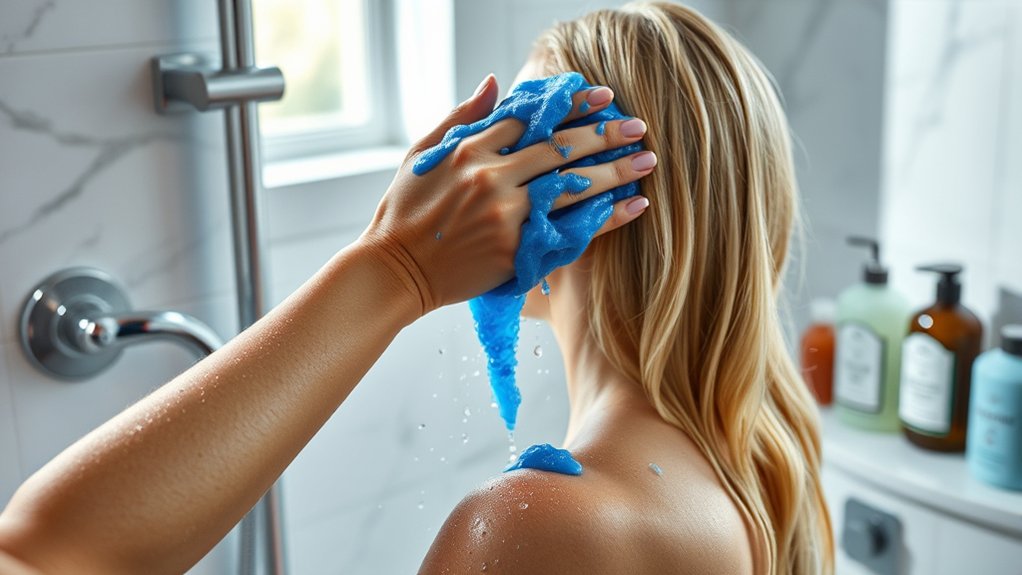
Then, apply the blue shampoo to wet hair, working it from roots all the way to the ends.
Doing it this way helps target those brassy spots really well and gives you consistent results throughout your hair.
Sectioning Hair Evenly
Dividing your hair into four sections, two at the front and two at the back, helps guarantee an even application of blue shampoo. Proper sectioning ensures you apply the product evenly, preventing patchy results and maximizing toning coverage.
Secure each section with clips to keep hair manageable and avoid missing any spots.
Follow these steps for the best results:
- Section your hair into four parts to manage application efficiently.
- Apply the shampoo starting from the ends, working upward toward the roots for thorough coverage.
- Evenly distribute the shampoo by massaging it into each section. You can use a wide-tooth comb if needed to spread the product and detangle.
This methodical approach guarantees consistent toning and ideal results. It really makes a difference when you take the time to do it right.
Applying Shampoo Thoroughly
Start by thoroughly wetting your hair to guarantee the blue shampoo spreads evenly.
Next, apply a generous amount, concentrating on the mid-lengths and ends where brassiness tends to be strongest.
Massage the shampoo into your scalp and hair, making sure every strand is coated for consistent toning.
Once applied, leave the shampoo in for 3 to 7 minutes.
Adjust the timing based on your hair type and the severity of brassiness. This careful timing assures ideal toning without over-depositing color.
After the recommended time, rinse your hair thoroughly with warm water to remove all product residues.
Finish with a hydrating conditioner to restore moisture.
Following these steps will help you use blue shampoo effectively, achieving even, vibrant results every time.
Risks of Leaving Blue Shampoo On Too Long
Although blue shampoo can effectively neutralize unwanted brassy tones, leaving it on too long can cause an unwanted blue or gray tint. This is especially true if your hair is porous or lightened. You need to be mindful of the risks associated with overexposure to blue shampoo pigments.
Blue shampoo neutralizes brassiness but overuse can leave blue or gray tints, especially on porous or lightened hair.
Here’s what to watch out for:
- Application time: Exceeding the recommended 3 to 7 minutes can intensify blue or gray hues, particularly on high porosity or lightened hair.
- Dryness: Prolonged use may lead to dryness and brittleness, so always follow up with a hydrating conditioner.
- Hair porosity: The more porous your hair, the faster it absorbs pigment. This increases the risk of unwanted discoloration if left on too long.
Always tailor your timing to your hair’s condition to avoid these common pitfalls. It really makes a difference!
How Often To Use Blue Shampoo
You should use blue shampoo about 1–2 times per week. This helps neutralize brassiness without drying out your hair or causing unwanted tones.
Just be careful not to overdo it. If you use it too often, your hair might end up with blue or purple hues, which is something you probably want to avoid. So, keep an eye on how frequently you’re applying it.
Also, remember to adjust how often you use blue shampoo depending on your hair type. For example, if you have high porosity or sensitive strands, you might need to tweak the frequency a bit.
Recommended Weekly Frequency
When aiming to neutralize brassiness effectively, using blue shampoo one to two times per week offers the best balance between toning and maintaining hair moisture. The ideal frequency depends on your hair’s porosity and condition, so you want to make sure you avoid dryness or unwanted hues.
Consider these guidelines: Use blue shampoo every wash or every other wash for subtle toning, especially if your hair is less porous or damaged.
Sticking to 1–2 times weekly is great for controlling brassiness without stripping your natural oils.
If you’re unsure, it’s always a good idea to consult a hairstylist. They can help tailor the frequency based on your hair’s porosity and damage level.
That way, you get the best results without overdoing it.
Effects Of Overuse
If blue shampoo is used too frequently, it can dry out your hair and make it brittle because the pigments tend to strip away essential moisture. Overuse often leads to dryness and can leave your hair feeling rough and fragile. To avoid this, limit your use to 1–2 times per week.
Applying blue shampoo more often or leaving it on longer than 5–7 minutes can also cause an unwanted blue or green tint, especially on porous hair. This may introduce unwanted warmth rather than neutralizing brassiness. So, it’s best not to overdo it.
To counteract dryness from regular use, always follow with a hydrating conditioner that replenishes moisture and maintains hair health.
If you still notice brassiness despite proper usage, it’s better to consult a hairstylist than increase the shampoo frequency.
Adjusting Based On Hair
Although blue shampoo generally suits most hair types when used 1–2 times per week, adjusting the frequency based on your hair’s condition and porosity guarantees the best results.
Knowing how often you should use blue shampoo depends on your hair health and desired tone.
Consider these guidelines when adjusting based on hair:
- If you have high porosity or damaged hair, use blue shampoo less frequently and limit the time to 2–3 minutes to prevent dryness.
- For significant brassiness, you can use it every wash but keep the application short to avoid a blue tint.
- Virgin or uncolored hair benefits from using blue shampoo once every few weeks to enhance shine without over-toning.
Tailoring how long to leave blue shampoo in and how often you use it guarantees balanced, healthy-looking hair.
How To Avoid Blue or Green Tints With Blue Shampoo
Because blue shampoo deposits strong pigments, you should only leave it on your hair for the recommended 2 to 5 minutes to avoid unwanted blue or green tints. Over-toning can happen if you go over that time, especially if your hair is high porosity and soaks up pigments faster.
To keep your color even, make sure to apply blue shampoo evenly from roots to ends. It’s a good idea to do a strand test first to see how your hair reacts and adjust the timing if needed.
If your hair is porous or damaged, try reducing the time to avoid building up too much pigment.
After using blue shampoo, rinse your hair thoroughly to get rid of any leftover residue. This step helps keep your tone looking natural.
Following these tips means you can enjoy the benefits of blue shampoo without worrying about unwanted color shifts.
Why You Should Always Use Conditioner With Blue Shampoo
When you use blue shampoo, you should always follow up with a hydrating conditioner to restore moisture that the toning process can strip away.
Blue shampoo’s toning effects can dry out your color-treated hair, so a hydrating conditioner is crucial. Here’s why:
Blue shampoo tones hair but can dry it out, making a hydrating conditioner essential.
- It replenishes moisture lost during toning, preventing brittleness and damage.
- It seals the hair cuticle, enhancing shine and manageability after shampooing.
- It balances the toning effects, reducing the risk of over-toning and preserving your desired shade.
Using a conditioner formulated for color-treated hair optimizes these benefits, helping your hair stay healthy and vibrant.
Don’t skip this step. Pairing blue shampoo with a hydrating conditioner guarantees your hair looks its best while maintaining its color and moisture.
Frequently Asked Questions
Can Blue Shampoo Be Used on Natural (Non-Colored) Hair?
Yes, you can use blue shampoo on natural hair to enjoy benefits like color correction and reducing warmth or brassiness.
It’s especially helpful if your natural hair shows orange or warm undertones. Just watch how often you use it—1 to 2 times a week is usually enough to avoid over-toning or product buildup.
Always follow up with a hydrating conditioner to keep your natural hair healthy and vibrant while maintaining a cooler tone.
This way, you get the best of both worlds without drying out your hair. It’s a simple step but makes a big difference!
Is Blue Shampoo Safe for Sensitive Scalps?
Yes, blue shampoo can be safe for you if you have a sensitive scalp, but you should watch for sensitive scalp reactions.
Always perform patch testing first to check how your skin reacts. Pay close attention to blue shampoo ingredients, avoiding sulfates or harsh fragrances.
Limit frequency of use to prevent irritation. If you experience discomfort, consider alternative products designed for sensitive skin or consult a dermatologist for personalized advice.
Can Blue Shampoo Replace Regular Shampoo in My Routine?
Think of blue shampoo like a specialty paint. It enhances but doesn’t replace the base coat. You shouldn’t swap your regular shampoo for blue shampoo since it’s made mainly to neutralize brassiness with specific blue pigments, not to thoroughly cleanse.
Using it 1–2 times a week gets the most out of blue shampoo without over-drying your hair. Don’t fall for myths that say blue shampoo can be a full substitute.
For cleansing, stick to your regular shampoo or choose blue shampoo alternatives made for daily use.
Does Water Temperature Affect Blue Shampoo Effectiveness?
Yes, water temperature does affect blue shampoo effectiveness. You should consider water hardness and shampoo formulation, as hard water can reduce pigment absorption. Your hair porosity also plays a role.
Higher porosity benefits from lukewarm water to open cuticles. Adjust your application technique and rinse duration accordingly. Lukewarm water helps the shampoo penetrate better.
Cooler water seals cuticles after rinsing to lock in color and moisture for ideal results.
Can Blue Shampoo Help With Gray or Silver Hair Maintenance?
Yes, blue shampoo offers great gray hair benefits by neutralizing yellow tones, making silver hair maintenance easier.
When you use proper toning techniques and follow product application guidelines, your gray or silver hair stays vibrant and cool-toned.
Stick to frequency recommendations of 1–2 times per week to avoid over-toning.
This routine helps you maintain brightness and guarantees your hair looks fresh without becoming dry or dull.
Just remember, less is more when it comes to keeping that perfect tone!
Conclusion
To get the best results, leave blue shampoo on just long enough to neutralize brassiness without overdoing it. Adjust your timing based on your hair type, porosity, and damage to avoid unwanted blue or green tints.
Use it regularly but not too often, and always follow with conditioner to maintain hair health. Balance, timing, and care are key. Master these, and you’ll keep your color vibrant, your hair healthy, and your look flawless.