How To Shampoo Carpet – Easy Cleaning Guide
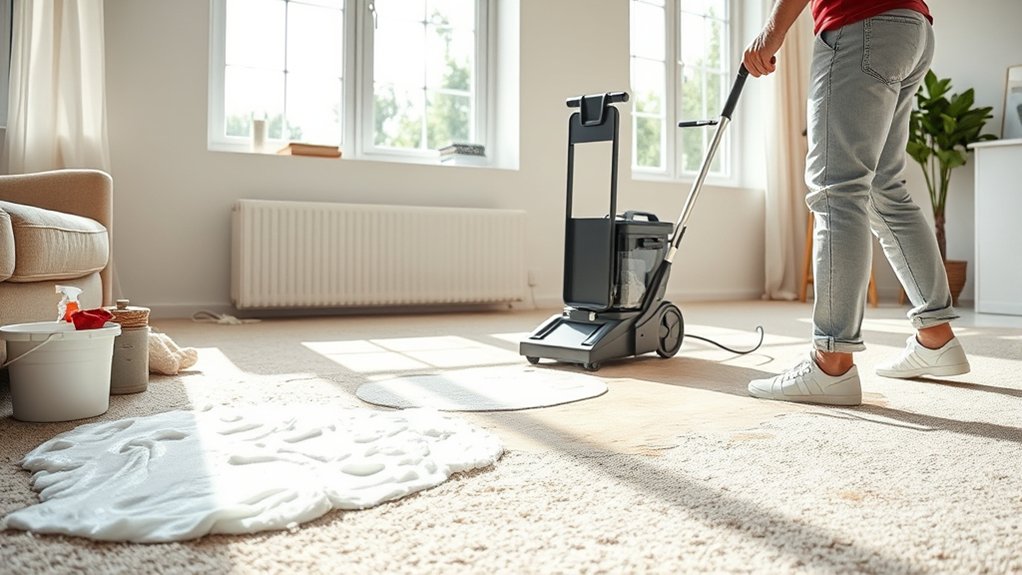
To shampoo your carpet effectively, start by clearing and vacuuming the area thoroughly. Focus especially on high-traffic spots to get the best results. Pre-treat any stains with the right solutions.
Next, choose a shampoo that suits your carpet type. For example, enzymatic cleaners work great on pet stains, while dry powders are better for delicate fibers. Use a carpet shampooer in slow, overlapping passes to make sure you cover everything.
After shampooing, rinse with cold water and extract as much moisture as you can. This helps prevent mold from forming. Following these proper techniques helps you avoid damage and residue buildup.
Keep going to uncover more expert tips and detailed steps!
How Often Should You Shampoo Your Carpet?
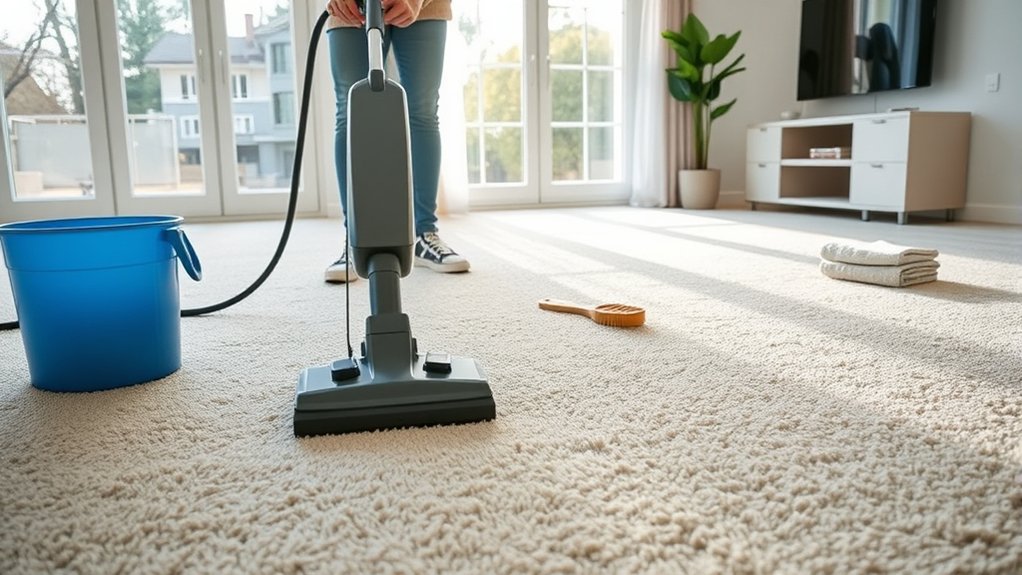
But if your home has heavy foot traffic, kids, or pets, you’ll want to clean your carpets more often. This helps prevent dirt buildup and damage that can happen if you wait too long.
It’s really important to shampoo your carpets right away when you notice stains, odors, or pest problems. Waiting too long only makes these issues worse and can harm the carpet fibers.
Regular vacuuming and spot cleaning can help you go longer between deep cleanings. Still, don’t skip shampooing every 12 to 18 months.
If your allergies are acting up more than usual, that’s a sign your carpet needs professional cleaning more often. This will improve indoor air quality and keep your home healthier overall.
Why Shampooing Your Carpet Matters
Although regular vacuuming removes surface dirt, shampooing your carpet is essential to eliminate embedded allergens, dust, and stains that degrade fiber integrity over time.
Using specialized carpet cleaning solutions lets you deep clean your carpets effectively, dissolving oils, dirt, and residues that vacuuming can’t reach.
This process not only preserves the carpet’s appearance but also improves indoor air quality by removing trapped allergens that contribute to respiratory issues.
Timely shampooing prevents permanent damage from stains and odors, protecting your investment.
Moreover, routine professional deep cleaning every 12 to 18 months complements your efforts, ensuring a thorough clean that maintains fiber strength and color vibrancy.
Proper maintenance through shampooing also safeguards warranties and reduces resoiling, extending your carpet’s lifespan and performance.
Preparing Your Carpet and Room for Shampooing
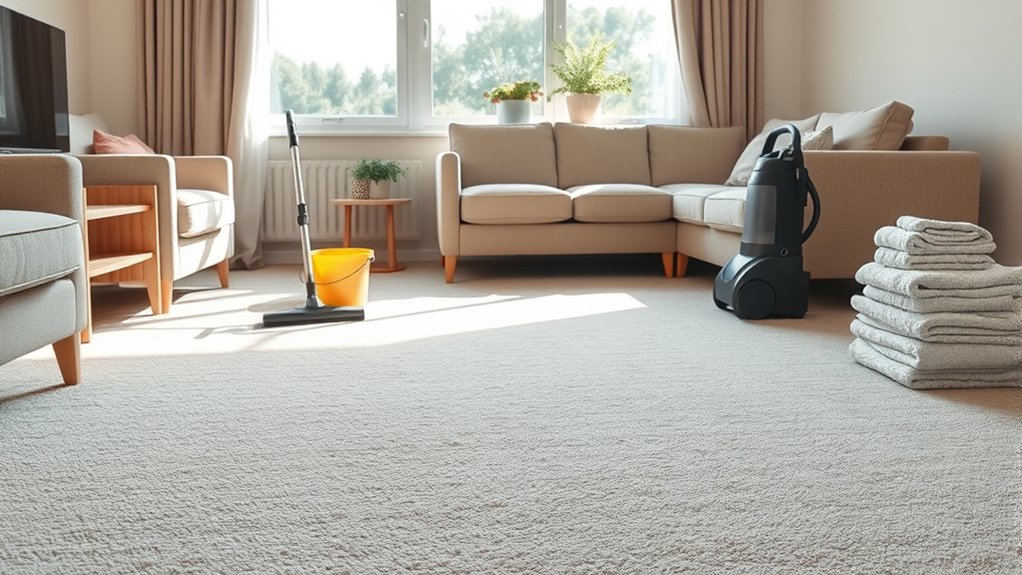
Before you start shampooing, you’ll want to clear the room completely by removing all furniture. This makes sure you have unobstructed access to every inch of carpet. It’s an essential step for a thorough clean and to avoid damage to your belongings.
Next, vacuum the carpet meticulously to remove loose dirt and debris. This helps the shampoo work better. Be sure to pre-treat heavily soiled areas with a suitable stain remover. That way, you can break down embedded grime before shampooing.
Vacuum thoroughly and pre-treat stains to ensure deep cleaning and effective shampooing results.
Also, take a good look for any lingering odors or stains. Treat those with targeted solutions so your carpet comes out fresh and clean.
Finally, let the carpet dry fully before you put the furniture back. This prevents any damage to the carpet fibers.
Remove all furniture for full carpet access
Vacuum to eliminate surface dirt
Pre-treat heavily soiled areas
Address visible stains and odors
Confirm carpet is completely dry before replacing furniture
What Carpet Shampoo Solutions Work Best?
Choosing the right carpet shampoo solution depends on the specific cleaning challenge you face and the carpet type. For stubborn pet stains, opt for enzymatic carpet cleaning solutions designed to break down organic matter effectively. This helps prevent lingering odors and keeps your carpet fresh.
Steam cleaners paired with hot water and specialized detergents penetrate deep into fibers. They remove embedded dirt and revitalize your carpet thoroughly.
If you need a quick, no-rinse option, dry carpet shampoos in powder form absorb dirt and odors efficiently without water. These are ideal for delicate carpets.
Avoid generic products because targeted formulations usually yield better results. Picking a solution tailored to your carpet’s fiber and soil type guarantees peak cleaning performance and longevity.
Plus, it helps safeguard the material’s integrity.
How to Make a DIY Carpet Shampoo at Home
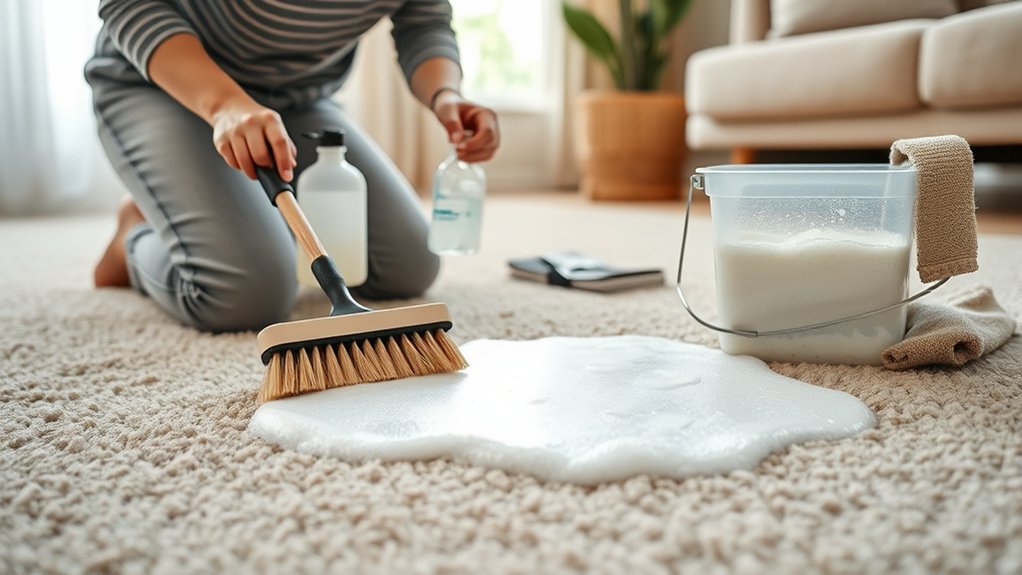
You can easily make effective DIY carpet shampoos right at home using simple recipes like vinegar-water solutions or baking soda blends. Each of these options offers its own cleaning and deodorizing benefits, so you get a fresh carpet without any harsh chemicals.
It’s also helpful to understand how key ingredients like hydrogen peroxide and mild dish soap work with your carpet fibers. This way, you can target stains more precisely without causing any damage.
When you apply these homemade formulas the right way, you’ll get a thorough clean that keeps your carpet’s texture and color looking great.
Plus, it’s a budget-friendly and natural approach to carpet care!
Simple Homemade Recipes
Although commercial carpet shampoos are widely available, making your own DIY carpet shampoo at home can be both cost-effective and efficient.
Utilizing homemade cleaning solutions allows you to control ingredients and tailor the cleaning method to your carpet’s specific needs.
Here are five simple recipes to get you started:
- Mix equal parts white vinegar and water for a versatile cleaner that deodorizes and lifts light stains.
- For stubborn stains, layer baking soda over the area, spray vinegar solution, scrub, then vacuum once dry.
- Combine a few drops of dish soap with warm water for a gentle yet effective shampoo.
- Use hydrogen peroxide mixed with baking soda to tackle tough discolorations, scrubbing and vacuuming after drying.
- Always test your homemade cleaning solution on a small, hidden patch to verify carpet safety.
These methods guarantee efficient carpet care without harsh chemicals.
Give them a try and see how easy and effective homemade carpet cleaning can be!
Key Ingredient Benefits
Understanding the distinct properties of each key ingredient empowers you to create a DIY carpet shampoo tailored for maximum cleaning performance.
Vinegar and water serve as a cost-effective natural deodorizer and stain remover, breaking down dirt and grime effectively.
When combined with baking soda, the resulting effervescence penetrates deep, lifting tough stains by loosening embedded particles.
Dish soap solution gently removes grease and dirt without harsh chemicals, ensuring fiber safety.
Hydrogen peroxide paired with baking soda forms a potent stain-fighting compound that, when scrubbed and dried, can remove any remaining stubborn marks.
These ingredients aren’t only budget-friendly but also eco-friendly, offering a precise, technical approach to carpet cleaning without relying on commercial chemicals.
This knowledge lets you customize your formula for best results.
It’s a smart way to get your carpets clean using simple, accessible ingredients.
Application Tips and Tricks
Mastering the properties of each ingredient sets the foundation for crafting an effective DIY carpet shampoo, but applying these mixtures correctly guarantees ideal results.
To achieve a clean carpet, you must carefully apply shampoo and follow precise steps that maximize cleaning power without damaging fibers.
Before you start, always pre-test solutions on a hidden area to prevent discoloration or damage.
For general cleaning, spray a vinegar-water mix evenly, then scrub to lift dirt and odors. It’s simple but really effective.
When tackling tough stains, try layering baking soda, spraying vinegar, letting it fizz, then scrubbing gently.
For delicate stains, use dish soap diluted in warm water. Just make sure to rinse thoroughly with clean water afterward so no residue is left behind.
If you come across dark stains, apply a hydrogen peroxide and baking soda paste. Let it sit, then scrub and vacuum once it’s dry.
These application techniques will make sure your DIY shampoo works both effectively and safely.
How to Treat Stains Before Shampooing
Start by addressing stains with a precise, step-by-step approach to prevent damage and guarantee effective removal.
Begin blotting the stain gently with a white cloth or paper towel to absorb excess liquid. Never scrub, as this risks fiber damage.
Next, apply a CRI-certified spot cleaner, but always test it on a hidden area first to avoid discoloration.
For organic stains like food or drink, treat the area with an equal-parts vinegar and water solution to break down residues effectively.
Pet stains require immediate attention using a specialized pet stain cleaner to prevent permanent discoloration and odors.
Always work from the stain’s outer edge toward the center to avoid spreading. Repeat blotting until the stain lifts.
These steps optimize stain removal before shampooing, ensuring thorough cleaning of your carpet.
Just take your time and be gentle—it really makes a difference!
How to Shampoo Your Carpet Step-by-Step
First, clear the room completely and vacuum thoroughly to get rid of all the loose dirt and debris. This step is really important because it makes the shampooing more effective.
Next, prepare your shampoo solution carefully. Then, apply it using systematic, overlapping passes with a carpet shampooer. Taking your time here helps ensure the carpet gets cleaned evenly.
Finally, make sure the carpet dries evenly to avoid any mold or damage. Letting it dry properly really completes the cleaning process and keeps your carpet looking great.
Preparation And Vacuuming
Clear the area by removing all furniture to prevent damage and guarantee you can clean every inch of carpet thoroughly. Proper preparation sets the foundation for effective shampooing.
Begin by vacuuming the carpet meticulously to remove larger debris and lift fibers. This helps shampoo penetrate better. Focus your vacuuming efforts on high-traffic zones and visibly dirty spots for the best dirt removal.
Key preparation and vacuuming steps include:
- Remove all furniture to avoid damage and guarantee access.
- Use a SOA-certified vacuum for superior dirt extraction.
- Vacuum slowly to agitate and lift carpet fibers.
- Target high-traffic and stained areas with extra passes.
- Empty vacuum bags or bins before use to maintain suction.
This controlled preparation maximizes cleaning efficiency and helps preserve carpet integrity.
Shampooing And Drying
With the carpet fully prepared and vacuumed, you’re ready to mix the shampoo solution. Combine warm water with carpet detergent at a 1:10 ratio. You can add vinegar if you want some extra cleaning power.
Using a carpet shampooer, start from a corner and move in straight, overlapping lines. Keep a steady pace of about one step per second to make sure you shampoo well and remove dirt effectively.
After you’ve covered the entire carpet, don’t rush to dry it. Let it dry completely for at least six hours. Proper drying stops moisture buildup that can cause mold or damage.
Only when the carpet is totally dry should you put the furniture back. This helps keep your carpet clean and lasting longer.
Following these steps carefully will make the shampooing more effective and ensure the carpet dries just right.
How to Operate a Carpet Shampooer Properly
Position the carpet shampooer carefully in a corner of the room and guide it along the wall using straight, overlapping lines to maximize cleaning efficiency.
Pull the machine slowly, about one step per second, to allow deep dirt extraction without over-wetting the carpet. Before starting, fill the water tank up to the maximum line and apply a small amount of recommended cleaner to avoid clogging.
During carpet cleaning, keep an ear on the motor sound. Unusual noise might mean the dirty water tank is full, so it’s a good idea to pause and empty it promptly.
Also, watch the water levels and refill or empty as needed, especially in heavily soiled areas.
Use slow, deliberate strokes for the best dirt removal. Avoid overfilling tanks to prevent malfunction.
Apply a small amount of cleaner for effective shampooing. Empty dirty water frequently to maintain suction.
And keep an eye on motor sounds to catch any maintenance needs early.
How to Rinse and Dry Your Carpet After Shampooing
After you’ve shampooed your carpet, it’s important to rinse it thoroughly with cold water. This helps get rid of all the soap residue, leaving your carpet looking spotless.
Once rinsed, let your carpet dry for at least six hours to prevent any mold from developing. To speed things up, you can use fans or floor dryers—these really help move the air around and dry the carpet faster.
Try to avoid walking on the carpet until it’s completely dry. This helps keep the fibers in good shape.
Also, keep an eye on how damp it is, and if needed, use a wet vacuum to remove any excess moisture.
Effective Carpet Rinsing
Because leftover shampoo can attract dirt and damage fibers, you need to rinse your carpet thoroughly using cold water to eliminate all soap residue. This step is essential for an effective clean and helps maintain your carpet’s longevity.
Use a clean water tank in your carpet shampooer to prevent mixing dirty rinse water with clean water.
Make multiple passes over each section, allowing the machine to extract as much moisture and residue as possible. Proper rinsing directly impacts drying time and carpet health. So, take your time and make sure you get it right.
- Use cold water for rinsing to avoid setting soap residue.
- Clean your shampooer’s water tank before rinsing.
- Perform several passes to maximize residue removal.
- Extract moisture thoroughly to reduce drying time.
- Confirm no leftover soap to prevent fiber damage and resoiling.
Drying Time Importance
Thoroughly rinsing your carpet sets the stage for proper drying, which directly affects its cleanliness and longevity. After shampooing, make sure all soap residue is removed with cold water to prevent dirt from sticking.
Pay close attention to the carpet’s moisture level; it should feel damp but not wet before you put any furniture back.
If you don’t allow enough drying time, less than six hours, mold can start to grow and cause unpleasant odors. To keep your carpet in good shape, watch the moisture levels carefully and don’t use the carpet too soon. Proper drying time helps preserve the carpet fibers and stops stains and indentations from forming.
Tips For Faster Drying
While rinsing your carpet with cold water removes soap residue, which is essential for preventing rapid re-soiling, using effective drying techniques can speed up the process a lot.
Start by using a wet vacuum to get as much water out as possible. This step drastically cuts down your carpet’s drying time.
Next, increase airflow by opening windows and running fans to help evaporation along. You can also place absorbent towels on high-traffic areas to soak up any leftover moisture. Just remember to replace the towels regularly until the carpet is dry.
Keep in mind, your carpet needs at least 6 hours to dry before you put any furniture back on it. This helps avoid any damage.
- Rinse thoroughly with cold water to remove soap residue
- Use a wet vacuum to extract water efficiently
- Increase air circulation using fans and open windows
- Apply absorbent towels on damp spots regularly
- Allow a minimum of 6 hours drying time before use
Common Mistakes to Avoid When Shampooing Carpets
When shampooing carpets, you must steer clear of several common mistakes that can compromise both the cleaning effectiveness and the carpet’s integrity. Avoid using steam cleaners on urine spots because heat sets stains permanently. Don’t scrub aggressively. Instead, blot gently to protect the fibers.
Always use white cloths to prevent color transfer. Applying too much cleaner causes residue buildup, which can make stains worse. Also, skipping pre-treatment on heavy soils only extends cleaning time and reduces the results.
| Mistake | Consequence | Solution |
|---|---|---|
| Using steam on urine | Permanent stain setting | Blot, avoid heat |
| Aggressive scrubbing | Fiber damage | Gentle blotting |
| Excess cleaner | Residue buildup | Use minimal cleaner |
Avoid these errors to guarantee effective and safe carpet cleaning. It’s all about being gentle and careful!
Frequently Asked Questions
Can Shampooing Damage Delicate Carpet Fibers?
Yes, shampooing can damage delicate carpet fibers if you don’t use proper cleaning techniques tailored to specific fiber types.
Harsh chemicals or aggressive scrubbing can cause fraying or discoloration, especially with silk or synthetic fibers.
Over-wetting may promote mold growth, which can further harm the carpet.
Always choose a shampoo designed for delicate fibers and perform a spot test first. This way, you protect your carpet’s integrity while effectively cleaning it.
What Safety Precautions Should I Take When Using Carpet Shampoo?
When you handle carpet shampoo, think of it as a shield guarding you from chemical exposure. Always wear gloves and make sure there’s proper ventilation by opening windows or using fans.
It’s a good idea to test cleaning solutions on a hidden spot first to avoid damaging the fibers. Follow the manufacturer’s instructions for your cleaning equipment carefully. This helps you stay in control and stay safe.
Keep children and pets away until the carpet dries completely. This prevents accidents and keeps them from being exposed to any chemicals.
Being careful like this protects both your health and your carpet.
How Long Does It Take for Shampooed Carpets to Fully Dry?
Shampooed carpets typically require 6 to 12 hours of drying time, but humidity plays a big role in this. When the air is humid, drying slows down because moisture evaporates more slowly.
On the other hand, low humidity helps the carpet dry faster.
You can speed up drying by improving air circulation. Using fans or dehumidifiers makes a noticeable difference.
Also, keep in mind thicker carpets hold onto moisture longer, so they take more time to dry.
Try to avoid walking on the carpet until it’s completely dry. This helps keep it clean and protects the carpet’s fibers.
It’s worth the wait to make sure your carpet stays in great shape!
Can Carpet Shampooing Help With Allergens and Pet Odors?
You might think shampooing won’t really reduce allergens or pet odors, but it actually provides significant allergen reduction by deeply extracting dust mites, pollen, and pet dander trapped in carpet fibers.
The specialized detergents break down odor-causing molecules, enabling effective pet odor elimination.
Regular shampooing, especially with professional-grade equipment or proven homemade solutions, guarantees your indoor air quality improves and persistent pet smells vanish.
This makes your home healthier and fresher.
Is Professional Carpet Shampooing More Effective Than DIY Methods?
Yes, professional carpet shampooing is generally more effective than DIY methods.
Your cost comparison shows that while professionals charge more upfront, they use industrial-grade equipment and CRI-certified products. This means they deliver deeper cleaning and superior stain removal.
Your effectiveness analysis reveals that trained technicians target specific issues better, which helps extend carpet life and improve indoor air quality.
DIY might save you money in the short term, but professionals provide more thorough, long-lasting results that are worth the investment.
Conclusion
Now that you know exactly how to shampoo your carpet like a pro, the real question is, will you take the shortcut and risk damage, or follow each precise step for lasting cleanliness? Proper preparation, the right solutions, and careful rinsing make all the difference.
Skipping even one detail can haunt your carpet with stains or mold. So, are you ready to transform your carpet’s life, or will it stay trapped in grime?