What Is In Shampoo – Ingredients Explained
Shampoo contains surfactants that break down oils and dirt. It also has carrying agents like water and fatty alcohols to evenly distribute ingredients and keep moisture locked in. Plus, there are thickeners that control texture for a smooth application.
Emollients form a protective layer on your hair, which boosts shine and hydration. Preservatives keep the product safe and fresh. However, some ingredients like sulfates or parabens might cause irritation or raise health concerns.
Knowing what’s inside your shampoo helps you pick formulas that fit your hair’s needs. It also lets you see how each ingredient supports the health of your scalp and hair.
Main Types of Shampoo Ingredients and Their Roles
Although shampoo formulas vary widely, they all rely on a core set of ingredients that work together to cleanse, protect, and improve your hair’s condition.
Surfactants act as effective cleaners, lifting dirt and oils from your hair and scalp. Carrying agents, primarily water and fatty alcohols like cetyl alcohol, dissolve and deliver these active ingredients while maintaining the product’s texture and moisture.
Surfactants remove dirt and oils, while carrying agents like water and cetyl alcohol deliver ingredients and preserve texture.
Thickeners such as xanthan gum and stearic acid adjust viscosity, ensuring smooth application without compromising hair health.
Emollients including aloe vera and silicones like dimethicone form a protective film on hair cuticles, enhancing moisture retention and shine.
Preservatives like sodium benzoate and potassium sorbate safeguard the formula by preventing microbial growth. This helps keep the shampoo safe and effective throughout its shelf life.
Together, these components create a balanced, functional shampoo. So, when you pick up your shampoo, remember it’s these ingredients working behind the scenes to keep your hair clean and healthy.
How Surfactant Ingredients Clean Your Hair and Scalp
Surfactants play an essential role in shampoo by using their dual affinity. One end attracts water while the other binds to oils and dirt, which helps lift impurities from your hair and scalp effectively.
These cleansing agents break down sebum, dirt, and product buildup. That makes it easy for you to rinse them away. Common surfactants like sodium lauryl sulfate and sodium laureth sulfate generate rich lather and have strong cleaning power.
But sometimes, they can strip natural oils, which might cause dryness or irritation. On the other hand, mild surfactants offer gentler cleansing. They’re great for sensitive scalps and help maintain hair health.
It’s all about finding the right balance. Balanced surfactant blends optimize cleansing without over-drying your hair. Choosing the proper surfactants preserves scalp comfort and keeps your hair healthy.
Here are some key points to remember:
- Surfactants’ dual affinity targets both water and oils
- Sodium lauryl sulfate and sodium laureth sulfate are effective but potent
- Mild surfactants reduce irritation and protect moisture
- Balanced surfactant blends optimize cleansing without over-drying
- Proper surfactant choice preserves scalp comfort and hair health
Why Carrying Agent Ingredients Matter in Shampoo Formulas
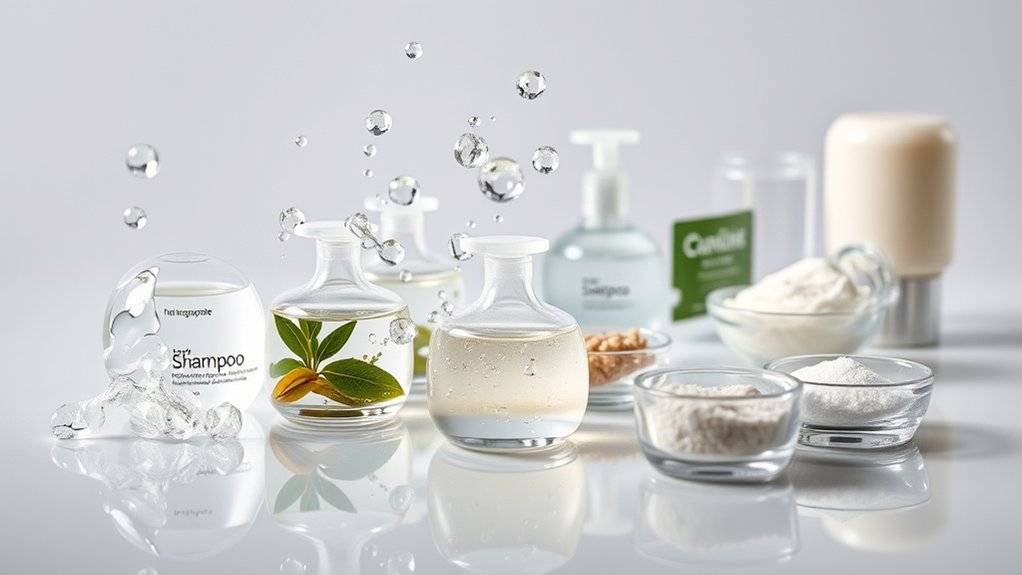
You rely on carrying agents like water and alcohols to evenly spread active ingredients throughout your shampoo formula.
Picking the right type—whether drying alcohols or moisturizing fatty alcohols—makes a big difference for your hair’s health and how the shampoo feels.
Knowing about these agents helps you choose products that really get into your hair and scalp without causing any harm.
It’s all about finding that balance between effectiveness and care.
Role of Carrying Agents
Carrying agents play a vital role in shampoo formulas by serving as the medium that evenly distributes active ingredients during application. Without effective carrying agents, the cleansing efficacy and overall performance of shampoos would suffer, impacting hair health.
Key functions include acting primarily as water (aqua), the universal carrier for active ingredients. They also utilize alcohols like propanol, which may dry hair if overused.
At the same time, fatty alcohols such as cetyl and lauryl alcohol are incorporated to help retain moisture.
These agents enhance texture and consistency, making the shampoo easier and more pleasant to use. Plus, they improve the bioavailability and effectiveness of the active ingredients, so your shampoo works better overall.
Types of Carrying Agents
Although water forms the primary base in most shampoos, the specific types of carrying agents incorporated greatly influence how active ingredients are delivered and how the product performs.
Carrying agents like alcohols and fatty alcohols play distinct roles. Simple alcohols can cause dryness, while fatty alcohols such as cetyl and lauryl alcohol help retain moisture and improve texture.
These agents affect shampoo viscosity and ease of application, ensuring active ingredients distribute evenly across hair and scalp.
A well-formulated shampoo balances these carrying agents to optimize performance without compromising moisture levels.
Understanding the types of carrying agents helps you select products that maximize ingredient efficacy, maintain product stability, and enhance your overall hair care routine.
Impact on Hair Health
When selecting a shampoo, the ingredients that act as carrying agents play an essential role in determining how well the product supports your hair’s health. Carrying agents facilitate the effective delivery of active ingredients like surfactants and emollients, optimizing cleansing and moisturizing properties. However, not all carrying agents are equal.
For example, short-chain alcohols such as ethanol can strip moisture, potentially harming hair health, while fatty alcohols like cetyl alcohol help retain hydration.
Consider these factors:
- Water (aqua) as a universal carrying agent
- Impact of alcohol type on moisture balance
- Role in shampoo texture and application
They also enhance surfactant efficiency and help prevent dryness and damage through proper formulation.
Choosing the right carrying agent helps maintain your hair’s integrity and moisture. So, it really pays to pay attention to these details!
Thickener Ingredients: Their Role in Shampoo Texture
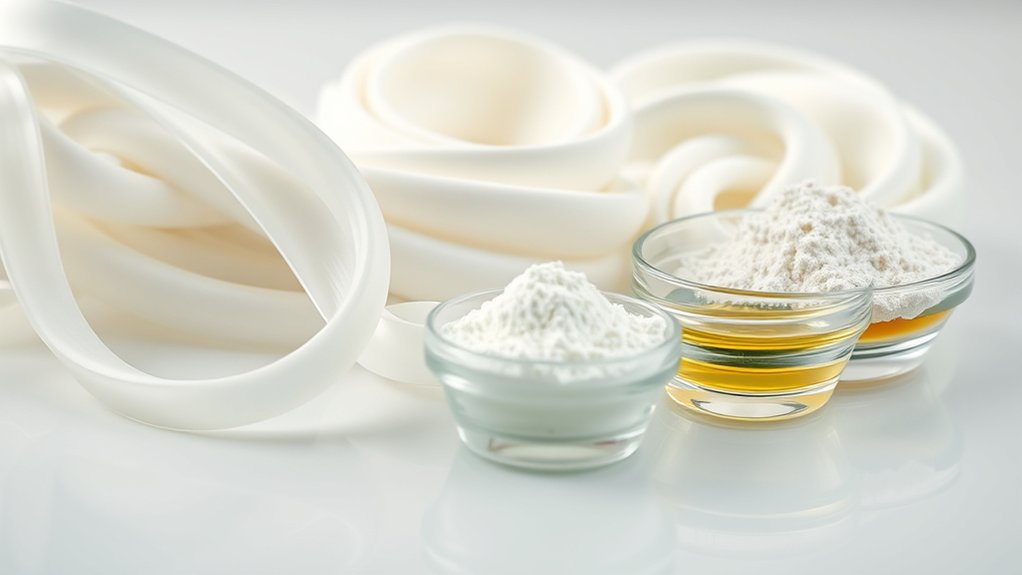
You’ll often see common thickening agents like stearic acid, gelatin, and xanthan gum in shampoo formulas.
These ingredients help control the viscosity, making sure the shampoo has just the right thickness. This way, the shampoo flows smoothly from the bottle without being too runny or too thick.
By adjusting the thickness, they not only make it easier to apply but also enhance the overall feel when you use it.
Plus, they do all this without compromising the health of your hair.
Common Thickening Agents
Since shampoo texture greatly affects application and user satisfaction, formulators add thickening agents like stearic acid, gelatin, and xanthan gum to increase viscosity.
These shampoo ingredients improve texture, ensuring the product flows smoothly and feels pleasant during use. Thickening agents, often derived from natural sources, appeal to those seeking cleaner beauty products without compromising performance.
They also play a role in product stability and shelf life, enhancing overall quality.
Common thickening agents include:
- Stearic acid: a fatty acid that boosts viscosity
- Gelatin: a protein-based thickener from animal collagen
- Xanthan gum: a polysaccharide from bacterial fermentation
- Hydroxyethylcellulose: a cellulose derivative for thickening
- Guar gum: a plant-derived polysaccharide improving texture
These agents help you enjoy a consistent, effective shampoo experience.
Impact On Shampoo Consistency
Although shampoo ingredients vary widely, thickeners play a critical role in defining the product’s consistency and user experience. By increasing viscosity, thickeners like stearic acid, gelatin, and xanthan gum guarantee the shampoo flows smoothly without dripping excessively during application. This improved texture enhances even distribution, making cleansing more efficient.
Thickeners also act as stabilizers within the formulation, maintaining uniformity and preventing ingredient separation over time. Importantly, they achieve this without compromising hair health or cleansing efficacy.
When formulating shampoo, balancing thickeners with surfactants and conditioners is essential to optimize texture and performance.
Understanding the impact of thickeners on shampoo consistency helps you appreciate how these ingredients improve product usability while supporting effective cleansing and conditioning.
How Emollient and Conditioner Ingredients Protect Hair
While washing and environmental factors can strip hair of its natural moisture and protective oils, emollient and conditioner ingredients work to shield and restore hair health.
Emollients and conditioning agents play a critical role in maintaining moisture retention and protecting the hair cuticle from damage.
Emollients like aloe vera and vegetable oils prevent dryness and brittleness by locking in moisture.
Conditioning agents create a protective film over the hair cuticle, minimizing damage from washing and exposure.
Silicones, such as dimethicone, enhance shine and smoothness by sealing moisture within the hair shaft.
Natural oils like jojoba and argan oil nourish and strengthen hair, supporting healthier growth.
Emollients improve hair texture and manageability, making styling easier.
Using these ingredients guarantees your hair stays hydrated, resilient, and visually healthy.
Key Preservative Ingredients That Keep Shampoo Safe
When you pick up a bottle of shampoo, you rely on key preservative ingredients to keep the formula safe and effective by preventing microbial growth. Common preservatives like sodium benzoate and potassium sorbate inhibit bacteria and fungi, extending shelf life without compromising safety.
Parabens, another class of preservatives, provide strong antimicrobial properties but have raised concerns due to their potential endocrine-disrupting effects. This has prompted a demand for paraben-free alternatives.
Natural preservatives such as rosemary and grapefruit seed extracts also offer antimicrobial benefits. They appeal to consumers who are looking for cleaner formulations.
Regulatory agencies worldwide conduct rigorous stability studies to guarantee these preservatives maintain shampoo safety over time.
Understanding these preservative ingredients helps you make informed choices about the products you trust for daily hair care.
Ingredients to Avoid for Healthier Hair and Scalp
Preservatives play an essential role in keeping shampoo safe, but certain ingredients can undermine your hair and scalp health. To maintain your scalp’s natural balance and promote effective hair care, avoid these common harmful components:
- Sulfates (e.g., SLS, SLES) strip essential oils, causing dryness and irritation.
- Parabens, potential endocrine disruptors, may affect hormonal balance.
- Synthetic fragrances often contain undisclosed chemicals triggering allergies and respiratory issues.
- Formaldehyde-releasing agents (e.g., DMDM Hydantoin) irritate skin and eyes, posing long-term risks.
- Phthalates, hidden in fragrances, disrupt endocrine function and reproductive health.
Being aware of these ingredients to avoid helps you choose shampoos that protect your scalp’s natural integrity and support healthier hair over time.
It’s really about knowing what’s in your products so you can make smarter choices for your hair care routine.
Natural Ingredients That Nourish and Strengthen Hair
You’ll find that plant oils like jojoba and argan are packed with essential fatty acids that really nourish and moisturize your hair.
Plus, botanical extracts like aloe vera and green tea help keep your scalp healthy and make your hair stronger.
When these natural ingredients come together, they work hand in hand to boost your hair’s resilience and encourage growth.
Plant Oils Benefits
Although synthetic ingredients dominate many shampoos, plant oils offer natural, potent benefits that nourish and strengthen your hair at the molecular level. These oils contain essential fatty acids and vitamins that improve shine and moisture retention while protecting hair integrity.
Key plant oils include:
- Argan and jojoba oils: rich in essential oils that strengthen hair and enhance overall health.
- Coconut oil: penetrates the hair shaft, reduces protein loss, and prevents damage.
- Olive oil: moisturizes dry hair and improves elasticity, reducing breakage.
- Castor oil: stimulates hair growth and thickness through ricinoleic acid and antibacterial action.
- Avocado oil: packed with antioxidants and vitamins E and D to moisturize and repair damaged hair.
Using shampoos with these plant oils can greatly improve your hair’s resilience and luster.
Give them a try and see the difference for yourself!
Botanical Extracts Role
When you choose shampoos infused with botanical extracts, you tap into natural compounds that actively nourish and strengthen your hair while supporting scalp health. Botanical extracts like aloe vera and green tea deliver antioxidants that hydrate and protect the scalp, reducing irritation and promoting balance.
Plant oils complement these effects by mimicking natural sebum to nourish hair and enhance moisture retention. Some extracts, such as saw palmetto, target thinning hair by blocking DHT, a hormone linked to hair loss. These natural ingredients tend to be gentler than synthetic alternatives, making them ideal for sensitive scalps.
| Botanical Extract | Primary Benefit |
|---|---|
| Aloe Vera | Hydrates and soothes scalp |
| Saw Palmetto | Helps prevent thinning hair |
| Jojoba Oil | Nourishes hair, boosts shine |
Choosing Shampoo Ingredients for Different Hair Types
Because hair types vary widely in their needs, selecting the right shampoo ingredients is essential for peak care. Tailoring your shampoo choice enhances effectiveness and maintains hair health.
Choosing shampoo ingredients that match your hair type is key to optimal care and lasting health.
For dry hair, use moisturizing ingredients like coconut oil and organic honey to hydrate and reduce frizz.
If you have oily hair, tea tree oil helps balance sebum and clarifies the scalp without over-stripping.
Opt for sulfate-free shampoos if your hair is color-treated. They preserve dye vibrancy and prevent premature fading.
Address hair loss by choosing shampoos with phyto-caffeine or minoxidil to stimulate growth and strengthen follicles.
Curly hair demands hydrating agents such as shea butter while avoiding harsh sulfates to maintain moisture and curl definition.
Matching ingredients to your hair type guarantees peak cleansing without compromising hair integrity.
How to Read and Understand Shampoo Ingredient Labels
Understanding shampoo ingredient labels is essential for selecting products that suit your hair’s needs and help you avoid potentially harmful substances. When you read the label, focus on the INCI list. This list orders ingredients by concentration, so the ingredients that make up most of the formula appear first.
Watch out for sulfates like SLS or SLES. These cleaning agents effectively remove dirt but can strip natural oils, which might lead to dryness. It’s a good idea to avoid products with excessive fillers or parabens since they may pose health risks.
Usually, a shorter and clearer list means fewer synthetics and fillers. Recognizing surfactants, emollients, and natural oils can help you understand each ingredient’s role.
Frequently Asked Questions
How Do Shampoo Ingredients Affect Color-Treated Hair Longevity?
Shampoo ingredients directly impact your color protection by influencing moisture retention and pH balance.
Sulfates strip color, causing fading, while sulfate-free formulas preserve vibrancy. Nourishing oils like argan enhance hydration, sealing in color longer.
Maintaining a pH near 5.5 protects your hair cuticle, preventing damage. UV filters shield against sun-induced fading, extending color life.
Choosing shampoos with these components guarantees your color-treated hair stays vibrant and healthy.
Can Shampoo Ingredients Cause Allergic Reactions or Sensitivities?
Think of your scalp as a delicate garden. Common allergens like sulfates and fragrances can act like harsh storms, triggering allergic reactions and sensitivity symptoms such as itching or redness.
You should prioritize ingredient transparency to avoid irritants.
Also, consider natural alternatives cautiously since even essential oils might provoke sensitivities.
Patch testing helps identify potential issues before full use. This way, you protect yourself from unexpected flare-ups and keep your scalp healthy and calm.
What Environmental Impact Do Common Shampoo Ingredients Have?
You need to reflect on the fact that common shampoo ingredients often harm wildlife and impact water usage because of non-biodegradable compounds and petrochemical sourcing.
Choosing products with sustainable sourcing and biodegradable formulas can really help reduce environmental strain.
Also, avoiding plastic packaging lowers landfill waste, which is a big plus.
Eco-friendly alternatives like plant-based surfactants help minimize toxic runoff.
How Do Shampoo Ingredients Interact With Other Hair Care Products?
Think of your hair care routine as a delicate ecosystem. Shampoo surfactant types and pH balance directly influence how well moisturizing agents and silicones from conditioners absorb.
Fragrance impact is subtle but can affect scalp sensitivity, which might change how products perform. Preservative roles guarantee formula stability, preventing breakdowns that reduce efficacy.
If you mismatch these ingredients, silicone buildup or moisture loss can occur. That ends up diminishing the benefits of your entire hair regimen.
Are There Any Benefits to Shampoo Ingredients for Scalp Health Beyond Cleansing?
Yes, shampoo ingredients do more than just cleanse; they support scalp hydration and maintain pH balance. This helps preserve your scalp’s natural oils and microbiome.
Soothing agents like aloe vera reduce irritation, while humectants improve ingredient absorption for better effectiveness.
These components work together to create an ideal environment for scalp health. They promote comfort and help prevent dryness or inflammation beyond basic cleansing.
It’s pretty great how shampoos can do all that, right?
Conclusion
Now that you know what’s inside your shampoo, you can steer clear of harmful ingredients and choose those that truly nourish your hair. Think of your shampoo as a well-oiled machine. Each ingredient plays a crucial role in keeping your hair healthy and vibrant.
By understanding surfactants, thickeners, and conditioners, you’re equipped to make informed choices tailored to your hair type. Your scalp and strands will thank you for it.