
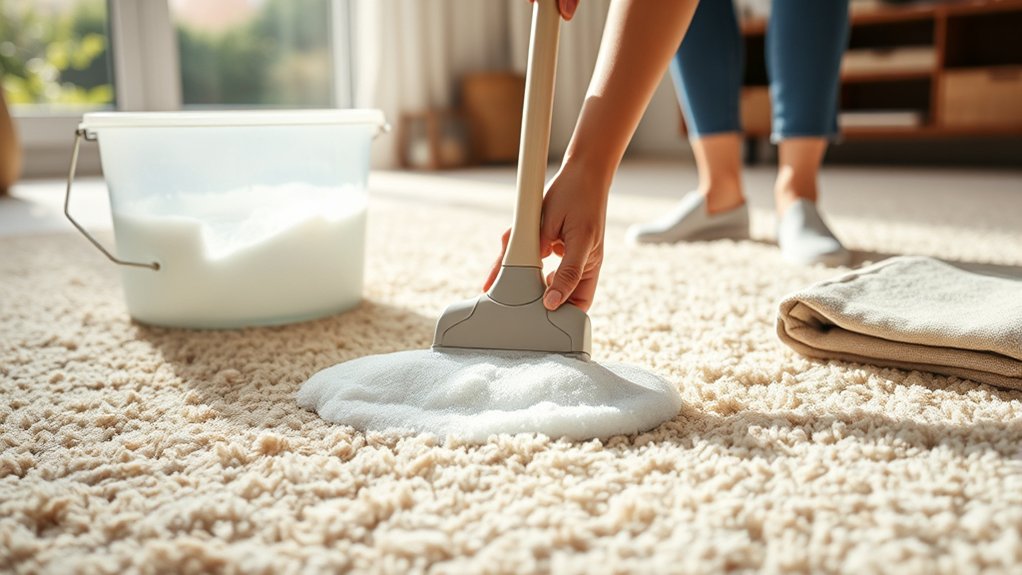
How To Shampoo Carpet By Hand – Manual Cleaning Guide
To shampoo your carpet by hand, first clear and vacuum the area thoroughly. Pre-treat stains with vinegar or a stain remover, then sprinkle baking soda for odor control. Mix equal parts vinegar and warm water or add mild dish soap for greasy spots.
Apply the solution with a soft brush, scrubbing gently in small circles. Rinse with a damp cloth and blot excess moisture with towels. Let it dry completely, and avoid placing furniture on it until it’s fully dry.
Keep going if you want expert tips on avoiding common mistakes and speeding up drying.
Preparing Your Carpet for Hand Shampooing
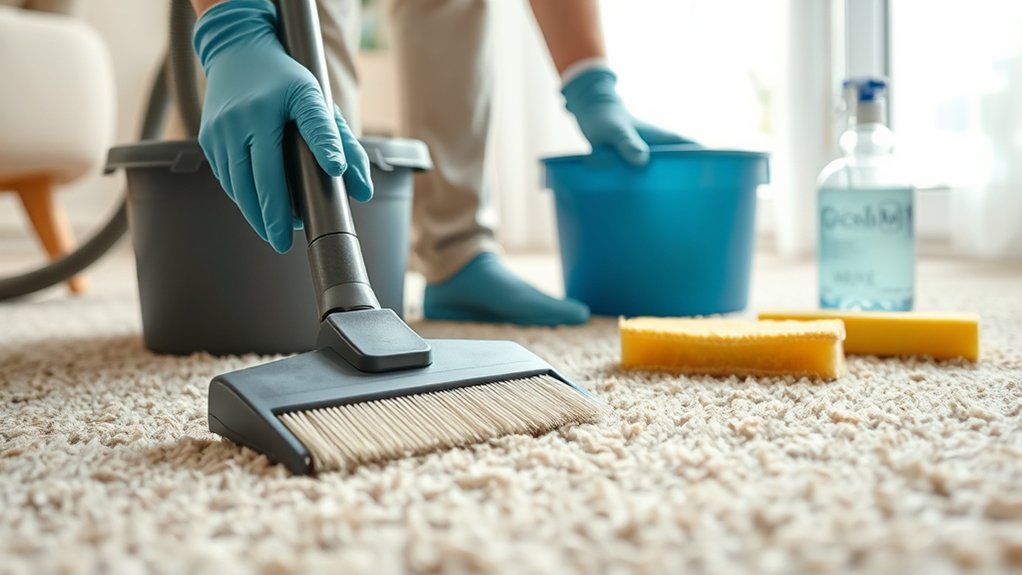
Before you begin shampooing your carpet by hand, make sure you clear the area of all furniture and objects so you can easily access every inch of the carpet.
Start with thorough vacuuming to remove loose dirt, hair, and debris. This step is really important for effective cleaning.
Begin by vacuuming thoroughly to clear away dirt, hair, and debris for better cleaning results.
Next, pre-treat any visible stains by applying a suitable stain remover or a vinegar and water solution directly to the spots. This targeted approach softens stains and helps improve overall results.
Gather your supplies carefully, including a bucket, mild dish soap or carpet shampoo, warm water, a scrub brush, and clean towels for blotting.
Make sure you’re working in a well-ventilated space. This helps speed up drying and prevents mold growth.
Taking these preparatory steps sets a solid foundation for a successful carpet shampooing process.
Essential Tools and Ingredients for Hand Shampooing
When you’re ready to shampoo your carpet by hand, gathering the right tools and ingredients is essential for achieving a deep, effective clean without damaging the fibers.
Start with baking soda, which you’ll sprinkle on the carpet to lift dirt and neutralize odors naturally.
Next, have vinegar on hand. Diluted with water, it breaks down grime and removes stubborn odors.
Add a few drops of dish soap to warm water to create a gentle yet effective cleaning solution that lifts grease and stains without harming fibers.
Equip yourself with a soft-bristle brush to scrub in circular motions, ensuring thorough cleaning without abrasion.
Finally, use microfiber towels to blot excess moisture and residue. This helps prevent long-term dampness and odors for a fresh, clean finish.
Making a DIY Carpet Shampoo
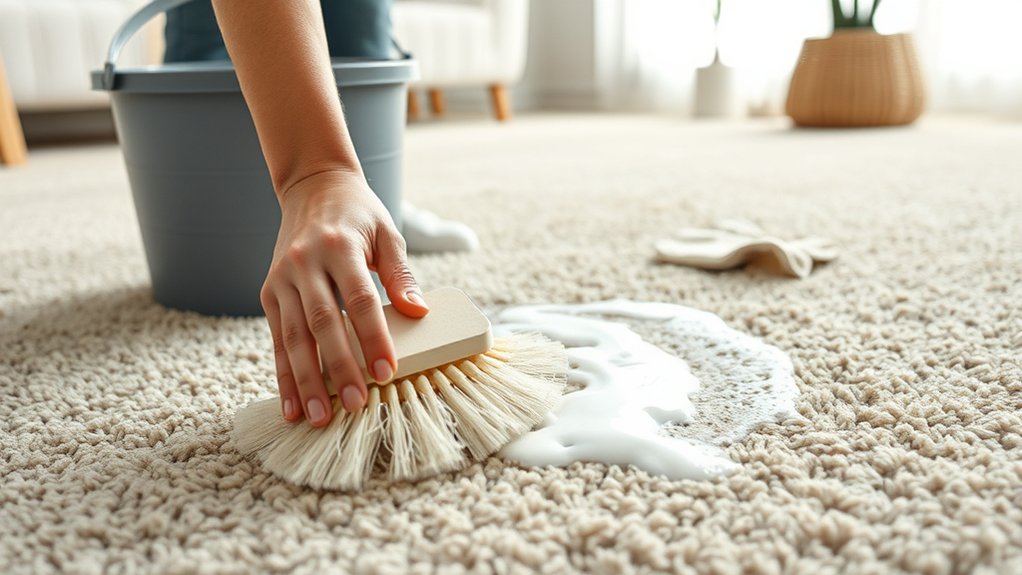
Now that you have the right tools and ingredients ready, you can create an effective DIY carpet shampoo tailored to your cleaning needs. Start by mixing equal parts white vinegar and warm water. This solution breaks down stains and neutralizes odors efficiently.
For grease stains, add a few drops of mild dish soap to warm water. Just be careful not to use too much soap to prevent residue buildup.
Before applying, sprinkle baking soda over the carpet to lift dirt and help with odor control when combined with vinegar.
Always test your DIY carpet shampoo on a hidden spot first to make sure it won’t discolor your carpet.
If you want extra cleaning power, you might add a splash of hydrogen peroxide to the baking soda and vinegar mix. But only do this if your carpet’s material can handle it safely.
Vacuum Thoroughly to Remove Loose Dirt
Start by vacuuming your carpet thoroughly using a vacuum cleaner equipped with a HEPA filter. This helps capture dust, allergens, and pet hair that’s embedded deep within the fibers.
Vacuuming the carpet slowly and methodically makes sure you remove as much loose dirt as possible before shampooing. Focus on high-traffic zones and corners where dirt tends to concentrate.
Vacuum carpets slowly and thoroughly, concentrating on high-traffic areas and corners for optimal dirt removal before shampooing.
For effective deep cleaning, here are some tips: Vacuum each section at least twice to maximize dirt removal. Use a vacuum with a brush roll to dislodge embedded particles.
Prioritize areas prone to heavy foot traffic and pet activity. Try to maintain regular vacuuming, ideally twice a week, to prevent buildup.
This thorough approach prepares your carpet for shampooing, which enhances cleaning results and extends its lifespan by minimizing dirt accumulation.
Pre-Treat Stains Before Shampooing
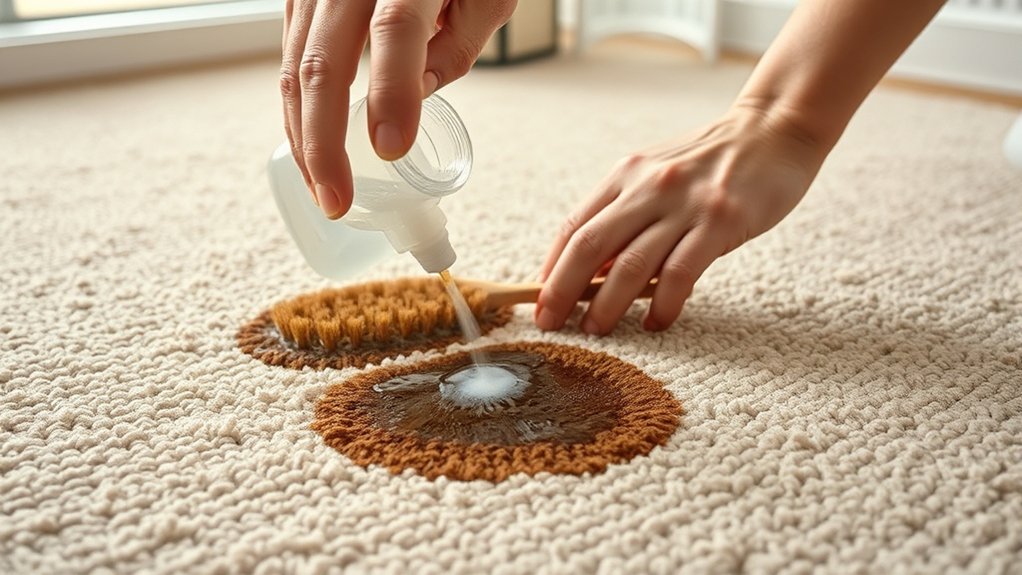
Although shampooing tackles general dirt, pre-treating stains guarantees targeted removal before they set permanently.
Start by blotting spills immediately with a dry cloth to absorb excess liquid and prevent deeper setting.
Next, prepare a cleaning solution by mixing equal parts water and white vinegar or use a mild carpet shampoo. Always test your cleaning solution on a hidden carpet area first to avoid discoloration.
When you apply the solution, work from the outer edge of the stain toward the center. This prevents spreading.
Let the pre-treatment sit for 5-10 minutes to break down the stain effectively.
Finally, blot the area gently to lift the stain without rubbing. This way, your carpet is ready for thorough shampooing.
Apply Shampoo and Gently Scrub in Circles
Start by applying shampoo evenly with a sponge or a soft-bristle brush.
Then, gently scrub small sections of the carpet using circular motions. This technique helps lift dirt effectively without stressing the fibers or causing any damage.
Just keep your pressure light to ensure a deep clean while preserving the carpet’s texture.
Circular Scrubbing Technique
Apply the shampoo solution evenly across the carpet fibers using a soft-bristle brush or scrub brush, then gently scrub in small circular motions. This circular scrubbing technique helps lift dirt and stains effectively without harming the carpet fibers.
Focus on manageable sections to keep control and avoid over-saturating the area. Remember to use a soft-bristle brush for even shampoo solution application. Working in small, controlled sections really makes a difference.
Employ circular scrubbing motions for efficient cleaning. After that, rinse with a damp cloth to remove residue. Following this method guarantees the carpet fibers remain intact and clean.
Once you’re done scrubbing, let the carpet dry completely to prevent mold and odors. Using fans or dehumidifiers can help speed up the drying process. This approach keeps your carpet fresh and well-maintained.
Gentle Pressure Application
After spreading the shampoo solution evenly, focus on using gentle pressure as you scrub the carpet in small circular motions. Use a soft-bristle brush to work the shampoo deep into the fibers without causing damage.
Applying too much force can fray the carpet and spread stains, so maintain steady, light pressure. Work in manageable sections to let the shampoo penetrate and lift dirt effectively.
Once scrubbed, rinse the area with a damp sponge to remove residue, preventing dirt attraction later. This way, your carpet stays cleaner for longer.
| Feeling | Result |
|---|---|
| Confidence in your method | Cleaner, refreshed carpet |
| Satisfaction with control | No fiber damage or stains |
| Calm focus and patience | Effective, gentle cleaning |
Rinse Carpet and Blot Excess Moisture
To effectively rinse your carpet, use a clean sponge or cloth soaked in warm water to lift away any remaining soap residue. After rinsing, blot the area with a dry towel to absorb excess moisture.
Be sure to apply firm pressure without rubbing to protect the fibers.
Apply firm pressure gently, avoiding rubbing to keep carpet fibers intact and looking their best.
Repeat this rinse-and-blot cycle until the water runs clear. It might take a few rounds, but it’s worth it to get all that soap out.
Keep these tips in mind:
- Use warm water for thorough rinsing.
- Blot gently yet firmly to avoid fiber damage.
- Continue until no soap residue remains.
- Try to avoid walking on damp areas to prevent marks.
This method guarantees your carpet is free from soap and excess moisture. That way, you set the stage for proper drying and keep your carpet looking great.
Dry Your Carpet Properly After Hand Shampooing
After shampooing your carpet, grab some clean, dry towels and press them firmly onto the surface to soak up as much moisture as possible. This helps get rid of the wetness quickly.
To speed things up, open your windows and turn on some fans to boost air circulation.
If you have a dehumidifier, using it can really help dry the carpet faster and keep the humidity down.
Just be sure your carpet is completely dry before moving any furniture back onto it. This will help prevent mold growth and avoid any damage.
Moisture Absorption Techniques
Even though hand shampooing your carpet cleans deeply, you’ll need to remove excess moisture quickly to prevent mold and damage. Effective moisture absorption is essential to reduce drying time and avoid trapping excess water in the fibers.
Start by pressing firmly with towels or old rags to lift water without damaging the carpet.
Then, consider these practical techniques:
- Use absorbent materials systematically to soak up residual moisture.
- Employ a hairdryer on a cool setting, moving continuously to prevent overheating.
- Avoid placing furniture back on the carpet until fully dry, usually after 24 hours.
- Utilize a dehumidifier to lower room humidity and speed drying.
Enhancing Air Circulation
Moisture absorption sets the stage, but speeding up the drying process relies heavily on enhancing air circulation around your carpet. Open windows and doors to create cross-ventilation, allowing fresh air to flow through and boost air movement over the carpet surface.
Set up fans strategically to increase this airflow, cutting down drying time considerably compared to passive air drying.
Moreover, employ a dehumidifier to extract excess moisture from the room’s air, accelerating the carpet’s drying process further.
For targeted drying, use a hairdryer on a cool setting, moving it continuously to avoid fiber damage.
By actively managing air circulation, you guarantee your carpet dries thoroughly and efficiently, preparing it for use without risking lingering dampness.
It’s a simple step that makes a big difference!
Preventing Mold Growth
Because damp carpets create the perfect environment for mold, you need to dry your carpet thoroughly right after shampooing by hand.
Start by blotting the carpet with clean towels to absorb excess moisture immediately. This step is essential to prevent mold growth.
Then, enhance airflow by opening windows and running fans. Use a dehumidifier to reduce humidity, speeding up drying and inhibiting mold development.
Finally, don’t place furniture back on the carpet until it’s completely dry, ideally after six hours, to avoid trapping moisture underneath.
Regularly check for lingering dampness or odors, as these signs can indicate hidden mold. Following these practical steps guarantees your carpet stays fresh and mold-free after manual cleaning.
- Blot the carpet to remove excess moisture
- Improve air circulation with fans and open windows
- Use a dehumidifier to lower humidity levels
- Avoid placing furniture on damp carpet for at least 6 hours
Avoid These Common Mistakes When Hand Shampooing
When hand shampooing your carpet, you’ll want to steer clear of several common mistakes that can compromise both the cleaning results and the carpet’s longevity.
First, avoid over-saturating the carpet. Use only damp cloths or sponges to prevent mold and mildew growth.
Always test your cleaning solutions on a hidden spot to make sure no color fading or damage occurs.
Don’t scrub aggressively. Gentle circular motions lift dirt without harming the fibers.
After cleaning, thoroughly rinse to remove all soap residue, because leftover detergent attracts dirt and causes stickiness.
Finally, allow your carpet to dry completely, ideally for six hours or more, to prevent odors and mold.
Following these tips will help you clean carpets by hand effectively and safely every time.
When It’s Time to Call a Pro
If your carpet has some serious dirt or stubborn stains that just won’t budge no matter how hard you try, it’s definitely time to call in a pro.
They come equipped with specialized tools and the know-how to save you time and get your carpet looking and feeling fresh again.
Knowing when to hand over the job means your carpet gets the deep clean it really needs, without all the hassle for you.
Signs of Severe Soiling
Although you might try regular hand shampooing, certain signs clearly indicate that your carpet requires professional intervention. When you spot visible stains that won’t budge or detect strong odors lingering despite cleaning, it’s time to evaluate expert help.
Carpets in high traffic areas often accumulate deep grime and wear, which DIY methods can’t fully address.
Watch for these signs of severe soiling:
- Persistent visible stains resistant to manual cleaning
- Lingering odors suggesting embedded bacteria or dirt
- Noticeable wear or discoloration in high traffic areas
- Dirt transferring to your hands or socks after walking on the carpet
Recognizing these indicators early lets you restore your carpet’s hygiene and appearance effectively by calling a professional cleaner.
It’s definitely worth it to get expert care rather than struggling with stubborn grime yourself.
Stubborn Stain Solutions
Persistent stains that resist your usual cleaning methods demand more targeted solutions. For stubborn marks like red wine or pet urine, use a specialized stain remover formulated for those specific stains to improve your chances of success.
However, if the stain has set deeply or lingered over time, it’s wise to call a professional. Experts have access to industrial-grade equipment and advanced cleaning solutions that outperform typical household products.
Professional cleaning services also offer steam cleaning, which effectively eliminates embedded dirt and persistent odors.
If you notice recurring stains in busy areas, a professional assessment can identify underlying issues and provide the appropriate treatment.
Knowing when to shift from DIY efforts to professional help guarantees your carpet maintains its appearance and longevity without unnecessary damage.
Time and Expertise
When should you consider calling a professional for carpet cleaning? If your DIY carpet efforts aren’t cutting it, it’s time to enlist expert help.
Professional cleaning offers deeper, more effective results than manual methods, especially for tough situations.
Think about hiring a pro if you face heavily soiled or stubborn stains that you just can’t remove yourself.
Or if there are persistent odors or allergens messing with your indoor air quality.
High-traffic areas that need restoration and thorough hygiene are another good reason.
Also, if you have limited time or physical ability to do the cleaning yourself, bringing in a professional makes sense.
They use specialized equipment and cleaning solutions that get deep down, removing ingrained dirt and bacteria your hands can’t reach.
Knowing when to switch from DIY carpet shampooing to professional cleaning means your carpets stay fresh, clean, and healthy without unnecessary effort or risk.
It’s all about making your life easier while keeping your home looking great.
Frequently Asked Questions
How Often Should I Shampoo My Carpet by Hand?
You should shampoo your carpet by hand at least once every 12 months for effective carpet maintenance tips.
If you have pets or kids, increase shampooing frequency to every 6-8 months to tackle dirt and allergens.
Compare cleaning solutions carefully. Opt for gentle, effective formulas that suit your carpet type.
Regular manual cleaning prevents buildup, keeps fibers fresh, and extends your carpet’s life.
Can I Use Bleach to Disinfect My Carpet?
You shouldn’t use bleach to disinfect your carpet because it can damage fibers and cause color fading. Instead, opt for bleach alternatives like vinegar or specialized carpet cleaners that guarantee carpet safety while effectively killing bacteria.
When disinfecting, always test any solution on a small, hidden area first.
These safer disinfecting techniques protect your carpet’s integrity and keep your home healthy without risking harsh chemical damage. It’s definitely better to be cautious and keep your carpet looking great!
Is Hand Shampooing Safe for All Carpet Types?
Think of carpet materials like delicate characters in a story. Each one needs its own care. Hand shampooing isn’t safe for all carpets.
Natural fibers like wool demand gentle cleaning techniques to avoid damage. Synthetics, on the other hand, handle it well. For effective stain removal, always test a small area first.
Tailoring your method to the carpet type guarantees you clean thoroughly without risking fraying or matting.
Just follow care instructions closely for the best results.
How Do I Remove Pet Odors After Shampooing?
To remove pet odor after shampooing, sprinkle baking soda generously as a natural carpet freshener.
Let it sit for 15-30 minutes before vacuuming.
Then, apply enzymatic cleaners designed specifically for pet odors. These break down lingering organic compounds effectively.
You can also lightly mist a mixture of equal parts white vinegar and water to neutralize smells.
Make sure to keep good ventilation throughout. This helps the carpet dry quickly and keeps your space smelling fresh.
What Should I Do if My Carpet Gets Overly Wet?
Think of your carpet like a sponge soaked after a rainstorm. It needs quick drying or it’ll harbor mold.
When your carpet gets overly wet, start with moisture absorption methods. Blot excess water using absorbent towels.
Use carpet drying techniques like opening windows, running fans, and deploying a dehumidifier to speed drying.
Avoid walking on it to prevent water damage. Acting fast is key to water damage prevention and keeping your carpet fresh and healthy.
Conclusion
So, you’ve wrestled your carpet with shampoo and survived the blotting ballet—congratulations! Remember, this isn’t rocket science, just a bit of elbow grease and savvy stain-busting. Skip the shortcuts, or you’ll end up with a soggy mess that even your dog won’t claim.
When DIY turns into “oh no,” don’t hesitate to call in the pros. They’ve got the gear and the know-how to rescue your floor from its sudsy saga.