What To Use In Place Of Dry Shampoo – Easy Alternatives That Work
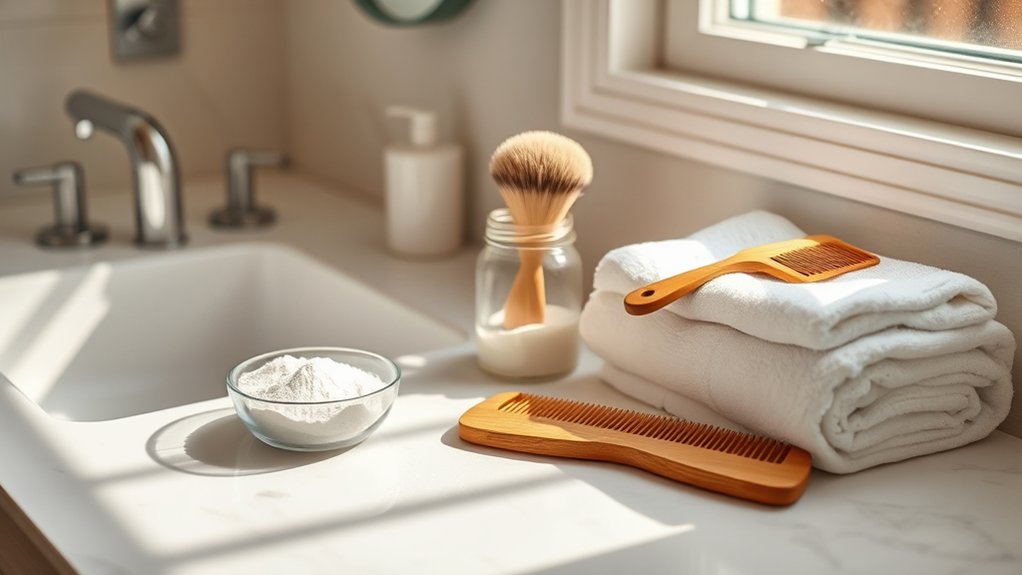
If you don’t have dry shampoo, you can use natural starches like cornstarch or oat flour to soak up oil and add volume. Baby powder (fragrance-free) works well too, especially for sensitive scalps. Sprays made from diluted lemon juice or apple cider vinegar refresh and deodorize hair quickly.
For instant touch-ups, blotting papers absorb grease without residue. You can even mix your own powder with essential oils for a personalized boost. Explore these easy swaps to keep your hair looking fresh longer. Give them a try and see what works best for you!
When and Why to Use Dry Shampoo Substitutes
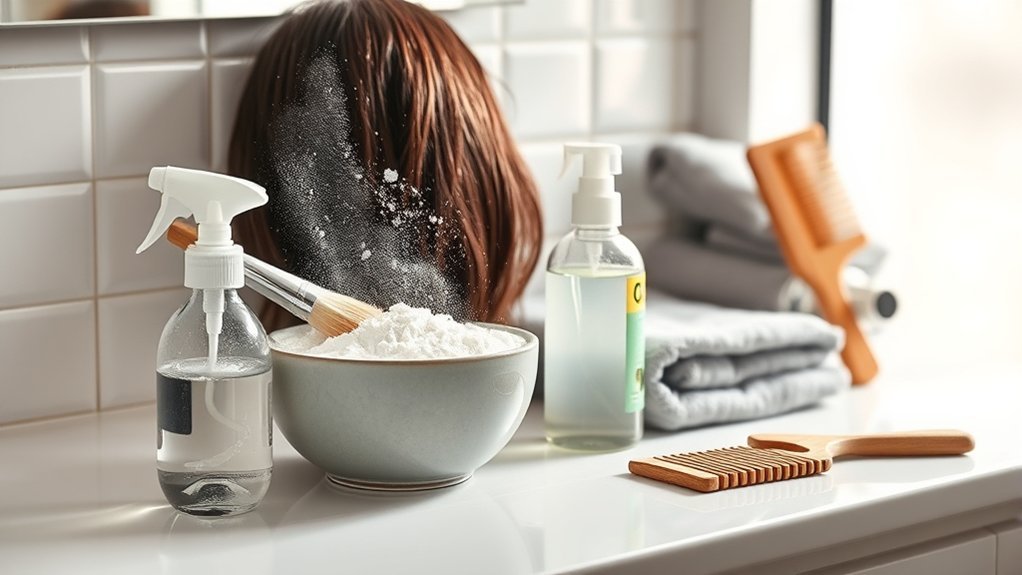
Although washing your hair regularly is ideal, you might find yourself needing dry shampoo substitutes when you’re short on time or traveling.
Dry shampoo alternatives can effectively absorb oil, helping you extend your hairstyle’s freshness without the hassle of washing.
You can turn to DIY dry shampoo options, customizing them to match your hair color and avoid any residue.
Natural oils in some substitutes, like apple cider vinegar or lemon juice, not only absorb oil but also add shine and deodorize your hair.
Furthermore, common hair care products such as blotting papers or even paper towels can quickly absorb excess oil for last-minute touch-ups.
These alternatives provide practical solutions when traditional washing isn’t feasible, keeping your hair looking clean and refreshed.
Effective Starches as Dry Shampoo Alternatives
If you’re exploring dry shampoo substitutes, starches offer a simple yet powerful solution to manage oil buildup between washes. Corn starch, known for its excellent oil-absorbing properties, works well for all hair colors when mixed with natural colorants.
Tapioca starch is lightweight and ideal for fine hair. Potato starch adds volume alongside oil absorption. Rice starch enhances texture and volume, suiting various hair types.
Using these starches, you can refresh your hair naturally and effectively.
| Starch Type | Key Benefits |
|---|---|
| Corn starch | Strong oil absorption, versatile |
| Tapioca starch | Lightweight, great for fine hair |
| Potato starch | Adds volume, absorbs oil |
| Rice starch | Improves texture and volume |
| Combination | Enhanced oil absorption with clays |
Baking Soda as a Dry Shampoo Substitute
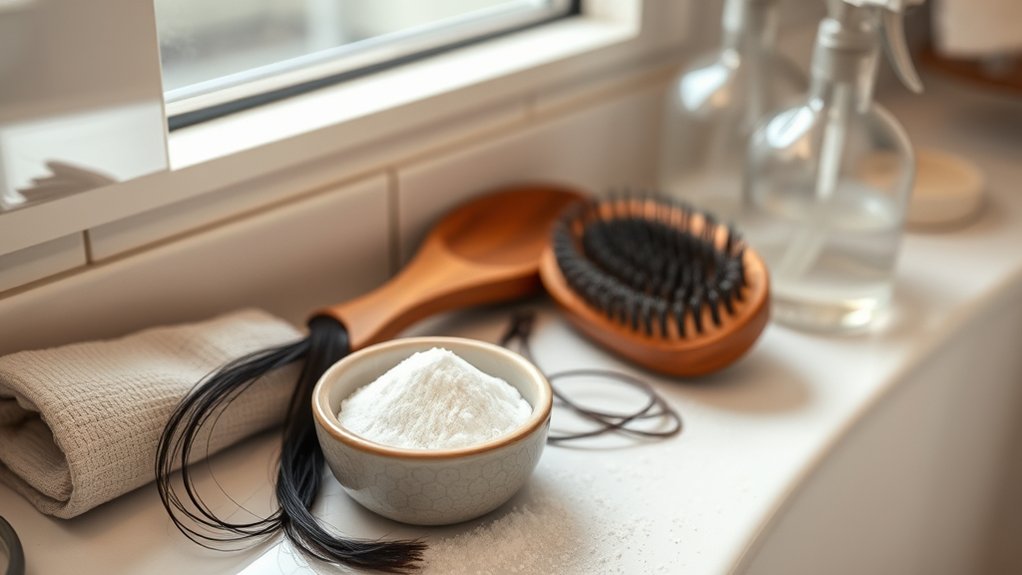
You can totally count on baking soda’s natural oil-absorbing power to give your hair a quick refresh between washes. Just sprinkle a little bit onto your roots, massage it in gently, and then brush out the extra.
It’s super easy and works like a charm to control shine, leaving your scalp feeling fresh and your hair with a nice, matte finish.
Perfect for those days when you don’t have time for a full wash!
Oil Absorption Power
Anyone looking to refresh oily hair without harsh chemicals can turn to baking soda as a powerful oil absorber. Baking soda effectively eliminates excess oil and odors, making it a reliable homemade dry shampoo alternative.
When combined with cornstarch, its oil absorption power increases, offering superior results for oily scalps. This eco-friendly, non-toxic option also helps balance your scalp’s pH, potentially reducing oil production over time.
Here’s a quick comparison to help you understand baking soda’s benefits:
| Feature | Baking Soda Alone | Baking Soda + Cornstarch |
|---|---|---|
| Oil Absorption | Strong | Enhanced |
| Odor Control | Effective | Effective |
| Scalp pH Balance | Balances | Balances |
| Eco-Friendly | Yes | Yes |
Baking soda offers a versatile, natural dry shampoo solution you can easily make at home.
Application And Usage
Building on baking soda’s impressive oil absorption and odor control abilities, applying it correctly guarantees you get the best results without irritating your scalp.
To use baking soda as a dry shampoo substitute, sprinkle a small amount onto your roots and apply gently with your fingertips to absorb oil without causing dryness.
After massaging it in, brush out the excess thoroughly to maintain cleanliness and avoid residue buildup. For a pleasant scent, mix baking soda with a few drops of essential oils before application.
Remember, moderation is key. Using baking soda too often can irritate your scalp.
This simple, non-toxic method offers an effective, inexpensive way to refresh your hair between washes while keeping it clean and odor-free.
Natural Baby Powder for Oily Hair
One simple and effective alternative to traditional dry shampoo is natural baby powder. It helps absorb excess oil from your scalp quickly. It’s a great option to refresh oily hair between washes.
Here’s how to use it effectively:
- Choose a fragrance-free natural baby powder to avoid irritating your scalp.
- Shake a small amount onto your roots where excess oil gathers.
- Gently rub the powder into your scalp to absorb oil and mattify your hair.
- Brush out the excess powder thoroughly for a natural, clean finish.
Remember to apply sparingly to prevent buildup and keep your scalp healthy.
Natural baby powder’s talc or cornstarch base makes it excellent at absorbing excess oil. It leaves your hair feeling fresh without any harsh chemicals.
Using Oat Flour and Natural Clays to Absorb Oil
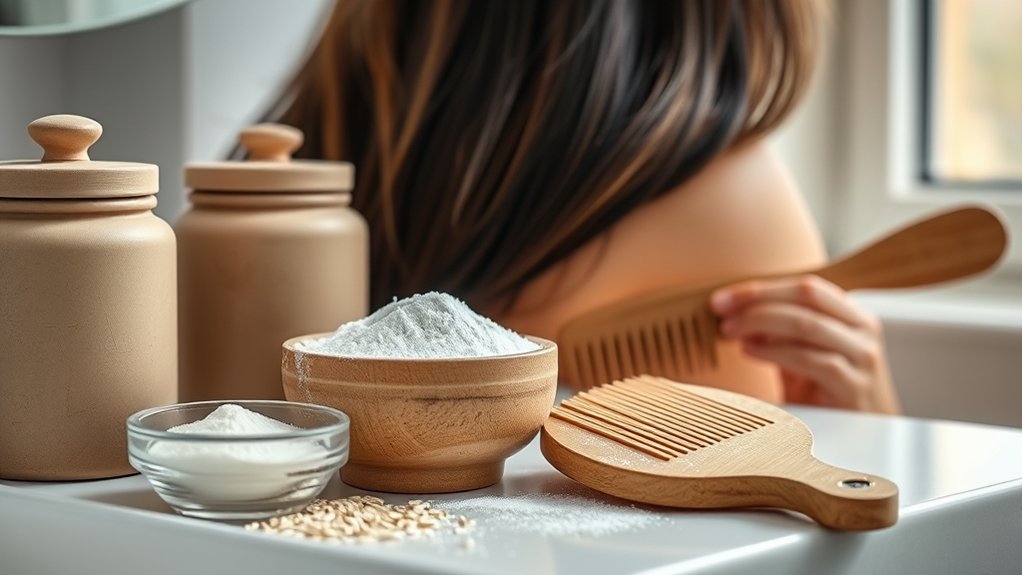
You can easily absorb excess oil by using oat flour or natural clays like bentonite and kaolin. These ingredients not only soak up the oil but also support your scalp’s health.
Applying them with a clean makeup brush or shaker makes it super easy to get even coverage without any clumps.
Plus, when you combine oat flour and clays, you get a powerful blend that refreshes your hair and gives it some extra nutrients too.
Oil Absorption Benefits
Although commercial dry shampoos are convenient, opting for natural alternatives like oat flour and natural clays can effectively absorb excess oil while benefiting your scalp and hair health.
These natural ingredients work well across various hair types, offering an eco-friendly way to keep your hair fresh.
Here’s how they help:
- Oat flour absorbs oil gently, enhancing shine without leaving residue. It’s perfect for all hair types, especially darker shades.
- Natural clays like bentonite and kaolin detoxify the scalp while absorbing oil, giving a matte finish.
- Both ingredients support scalp health by reducing buildup and irritation.
- Using these natural options reduces reliance on synthetic chemicals, promoting a greener hair care routine.
Application Techniques
When applying oat flour or natural clays to absorb oil, precise distribution is key to achieving a fresh, matte finish without residue. Use a makeup brush or shaker bottle for even distribution, sprinkling oat flour directly onto your roots and natural clays like bentonite or kaolin onto your scalp.
Gently massage oat flour into the hair to absorb excess oil and add natural shine. For clays, let them sit a few minutes to work before brushing out the excess.
These application techniques guarantee thorough coverage on greasy areas while preventing patchiness. Remember to limit use to 1-2 times weekly to avoid over-drying your scalp.
With proper application, oat flour and natural clays offer an effective, natural alternative to dry shampoo. Give it a try, and you might just love the fresh feel they provide!
Clay and Flour Blends
Since both oat flour and natural clays excel at absorbing oil, combining them creates a powerful blend that tackles greasiness more effectively than using either ingredient alone.
You can customize this oil-absorbing mix by adding essential oils for a pleasant scent or herbal powders for scalp benefits.
To use, sprinkle a small amount on your roots, massage gently, then brush out the excess powder.
Here’s how to create and apply your blend:
- Mix oat flour with a natural clay like kaolin or bentonite.
- Add a few drops of your favorite essential oils.
- Apply to oily roots and massage for absorption.
- Brush thoroughly to remove residue and refresh your hair.
This blend suits all hair types and supports scalp health naturally.
Give it a try and see how fresh your hair feels!
Spray Alternatives: Hand Sanitizer and Apple Cider Vinegar
Two easy spray alternatives to dry shampoo you can try are hand sanitizer and apple cider vinegar.
Hand sanitizer’s high alcohol content quickly breaks down oil at your roots, promoting effective oil absorption and adding a subtle shine.
Hand sanitizer’s alcohol content breaks down root oil, absorbing grease and adding a natural shine to your hair.
Apple cider vinegar, diluted with water, acts as a natural degreaser thanks to its acetic acid, deodorizing your hair while boosting shine.
For both, apply to the roots, massage gently, and let dry to refresh your hairstyle between washes.
To enhance hair health and add a pleasant scent, consider mixing in a few drops of essential oils.
These alternatives offer practical, convenient solutions when washing isn’t an option. They help you maintain clean-looking hair without sacrificing your scalp’s natural balance.
Freshen Hair With Lemon Juice Spray
Lemon juice spray offers a natural and effective way to refresh your hair by breaking down excess oil and deodorizing your scalp. Thanks to its citric acid, lemon juice acts as a gentle, oil-absorbing degreaser that leaves your hair feeling clean without harsh chemicals.
To make your own lemon juice spray, mix equal parts lemon juice and water in a spray bottle. This helps avoid scalp dryness.
Apply the spray directly to your roots for an instant refresh. You’ll also enjoy the natural citrus scent that deodorizes and revitalizes your scalp.
Use it regularly to subtly lighten hair in sunlight, adding a nice sun-kissed glow. This natural method helps you maintain fresh, healthy hair between washes.
It’s a smart alternative to commercial dry shampoos and super easy to make at home!
Quick Oil Removal With Blotting Papers
If you’re looking for an even quicker way to tackle oily roots, blotting papers can be a game-changer. These absorb excess oil instantly, making them perfect for rejuvenating greasy roots without leaving any residue.
Simply press a sheet onto the oily areas of your hair, and it gently lifts oil without disturbing your hairstyle.
Blotting papers are super convenient for on-the-go use. They fit easily into your purse or bag, so you can do quick touch-ups during busy days or travel.
Plus, they’re a cost-effective solution since packs often contain multiple sheets you can use again and again.
This makes blotting papers an excellent, practical alternative to dry shampoo when you need a fast, mess-free fix for oily hair.
Easy DIY Powder Recipes for Dry Shampoo
You can totally make your own dry shampoo powders at home using simple ingredients like cornstarch, arrowroot, and baking soda.
It’s easy to tailor the mix to your hair type and color, so it works just right for you.
If you want to add a little something extra, try mixing in cocoa powder or oat flour. These not only give natural tones but also bring some added benefits for your hair.
And don’t forget about essential oils—they’re great for giving your dry shampoo a nice, pleasant scent.
When you apply these powders correctly, they do a fantastic job of soaking up oil and refreshing your hair quickly.
Plus, you avoid any harsh chemicals, which is always a bonus!
DIY Powder Ingredients
Creating your own dry shampoo powder lets you customize the formula to match your hair type and color while keeping control over the ingredients. You can mix simple, natural powders that soak up oil and refresh your hair without any harsh chemicals.
Here are four essential DIY powder ingredients to get you started:
- Arrowroot Powder is a versatile base that absorbs oil well and can be tinted to suit different hair shades.
- Cornstarch is popular for soaking up oil; you can mix it with cocoa powder if you have darker hair tones.
- Cocoa Powder works great for brunettes because it adds natural color when combined with lighter powders.
- Essential Oils add a nice fragrance and scalp benefits—just a few drops of tea tree oil can do wonders.
These ingredients come together to make a customizable and effective dry shampoo that’s just right for you.
Application Techniques
Although DIY dry shampoo powders are simple to make, applying them correctly guarantees the best results without leaving residue or irritation. Start by mixing 2 tablespoons of arrowroot powder with a few drops of essential oils for fragrance and scalp benefits.
Use a kabuki brush or a shaker bottle to apply lightly to your roots.
For dark hair, blend cornstarch with cocoa powder to match your natural color, then massage gently to evenly distribute the powder.
If you use baking soda, combine it with cornstarch in equal parts to absorb excess oil while minimizing scalp irritation. Always test your DIY dry shampoo on a small scalp patch first.
These application techniques assure your homemade powder works effectively and feels comfortable all day.
How to Apply Dry Shampoo Alternatives for Best Results
When applying dry shampoo alternatives, focusing on the roots where oil tends to accumulate will deliver the best results. A little bit goes a long way, especially with powder-based options like cornstarch or arrowroot. These work really well to keep your hair looking fresh.
Here’s how to apply them effectively: Use a clean makeup brush or your fingertips to sprinkle powder onto your roots. Let the powder sit for a few minutes to absorb oil.
Then, gently brush or massage it in for even distribution. For sprays like apple cider vinegar, just apply directly on the roots and let it dry naturally.
These steps will help you use dry shampoo alternatives effectively for a fresh, oil-free look.
Frequently Asked Questions
Can Dry Shampoo Substitutes Cause Scalp Irritation?
Yes, dry shampoo substitutes can cause scalp irritation, especially if you have a sensitive scalp.
Natural ingredients like arrowroot powder are usually gentler. But some alternatives might still trigger symptoms like redness or itching.
To protect yourself, always do an allergy test on a small patch before applying the product fully.
Also, watch out for product buildup because that can make irritation worse over time.
Choosing mild, natural options helps minimize risks and keeps your scalp healthy.
It’s all about finding what works best for you and being gentle with your skin.
How Often Can I Use Homemade Dry Shampoo Alternatives?
You can use homemade dry shampoo alternatives 1-2 times a week for the best results.
When learning how to make your own, focus on safe ingredients like cornstarch or arrowroot powder for gentle effectiveness.
Apply lightly and evenly to avoid buildup, and store your mix in an airtight container to keep it fresh.
Compared to commercial options, these DIY versions work well. Just keep an eye on your scalp’s response and adjust how often you use it accordingly.
Are Dry Shampoo Alternatives Safe for Colored Hair?
Yes, dry shampoo alternatives can be safe for your colored hair care routine if you choose natural ingredients like cornstarch or herbal powders.
These options help maintain moisture retention and support scalp health without harsh chemicals that strip color. Just be mindful of washing frequency to avoid buildup and fading.
Always patch test to verify your hair responds well.
This way, you can preserve vibrancy while managing oil between washes effectively. It’s all about finding what works best for your hair!
Can Dry Shampoo Substitutes Help With Dandruff?
Think of dry shampoo substitutes as a refreshing change for your scalp health. They help with oil absorption using natural ingredients like cornstarch and baking soda, which can reduce dandruff’s appearance.
While these alternatives support hair hygiene and soothe irritation, remember they’re dandruff remedies best used occasionally.
For persistent flakes, you’ll still need targeted treatments to truly restore your scalp’s balance and comfort.
Do Dry Shampoo Alternatives Affect Hair Texture Over Time?
Yes, dry shampoo alternatives can affect your hair texture over time if you’re not careful. Frequent use might cause product buildup, which can disrupt your scalp’s balance. This could lead to dryness or even breakage.
To keep your hair healthy, try alternating oil control methods with regular washing.
Also, use gentle styling techniques to minimize damage.
Choosing natural ingredients usually helps reduce irritation.
Still, it’s important to watch how your scalp reacts. That way, you can manage oil without compromising your hair’s texture.
Conclusion
When you need a quick refresh, reach for effective starches, baking soda, or natural baby powder. When you want something gentle, try oat flour or natural clays. When you crave a fresh scent, spritz lemon juice or use blotting papers.
These easy, affordable alternatives absorb oil, eliminate odor, and revive your hair without harsh chemicals. You don’t have to rely on dry shampoo. Try these simple swaps and keep your hair looking fresh, clean, and vibrant every day.