How To Shampoo Car Seats – Cleaning Guide
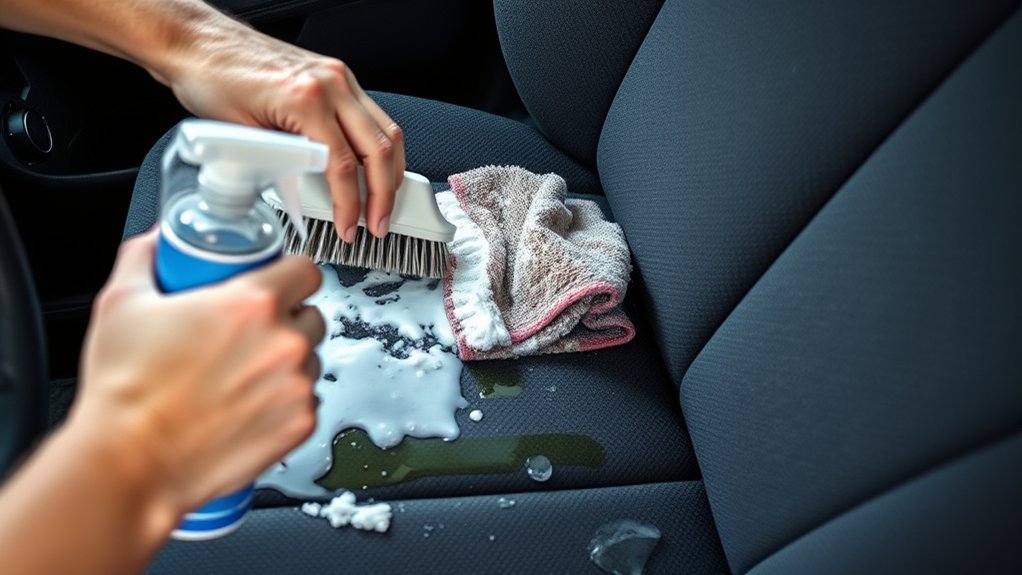
To shampoo your car seats effectively, start by removing personal items and vacuuming thoroughly to lift dirt from seams. Spot-treat stains with a suitable cleaner, then apply upholstery shampoo in small sections using a spray bottle. Gently agitate the fabric with a soft brush, blot excess moisture with microfiber towels, and guarantee proper drying to avoid mold.
Regular maintenance like weekly vacuuming preserves cleanliness between deep cleans. Follow this precise process to restore your seats’ condition while avoiding damage. You’ll also discover techniques to protect and maintain fabric longevity.
Why You Should Shampoo Your Car Seats
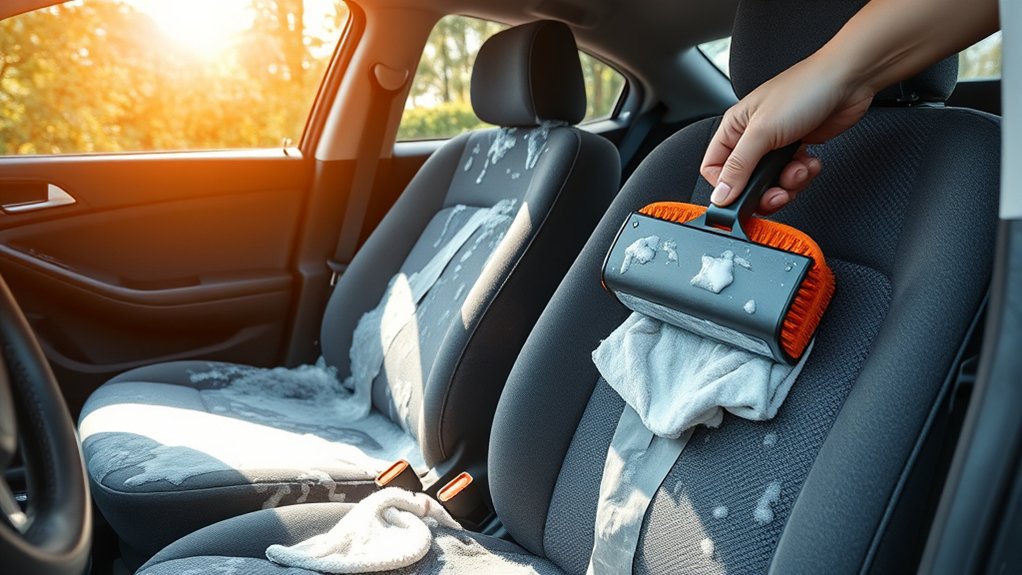
Although it might seem like a routine task, shampooing your car seats plays an essential role in preserving your vehicle’s value by maintaining the upholstery’s integrity and appearance.
The shampooing process delivers deep cleaning that removes tough stains and odors embedded in the fabric, ensuring a clean car interior.
Shampooing deeply cleans upholstery, eliminating stubborn stains and odors for a fresh, clean car interior.
Regular cleaning through upholstery cleaning not only enhances comfort but also prevents wear and tear, extending the lifespan of your seats.
This method effectively eliminates allergens and bacteria, promoting a healthier environment for passengers.
By committing to consistent shampooing, you achieve impressive results that keep your upholstery fresh and free from dirt and grime.
Ultimately, this maintenance step reduces the need for costly replacements, safeguarding your investment over time.
Tools and Products You Need for Car Seats
Maintaining the cleanliness and condition of your car seats requires the right set of tools and products to get effective results. Essential tools include a vacuum cleaner with a crevice tool for removing dirt from seams, a soft brush to agitate fabric safely, and microfiber towels to blot moisture efficiently.
For products, use a quality upholstery shampoo, like Foaming Citrus Fabric Clean. Apply it evenly with a spray bottle to prevent over-saturation. Choosing the right cleaning solution ensures deep penetration without damage.
| Tool/Product | Purpose |
|---|---|
| Vacuum cleaner | Remove loose dirt and debris |
| Soft brush | Agitate fabric gently |
| Microfiber towels | Blot moisture and trap contaminants |
These tools and products together make your car seat shampooing process much easier and more effective.
Prepare Your Car Seats for Shampooing
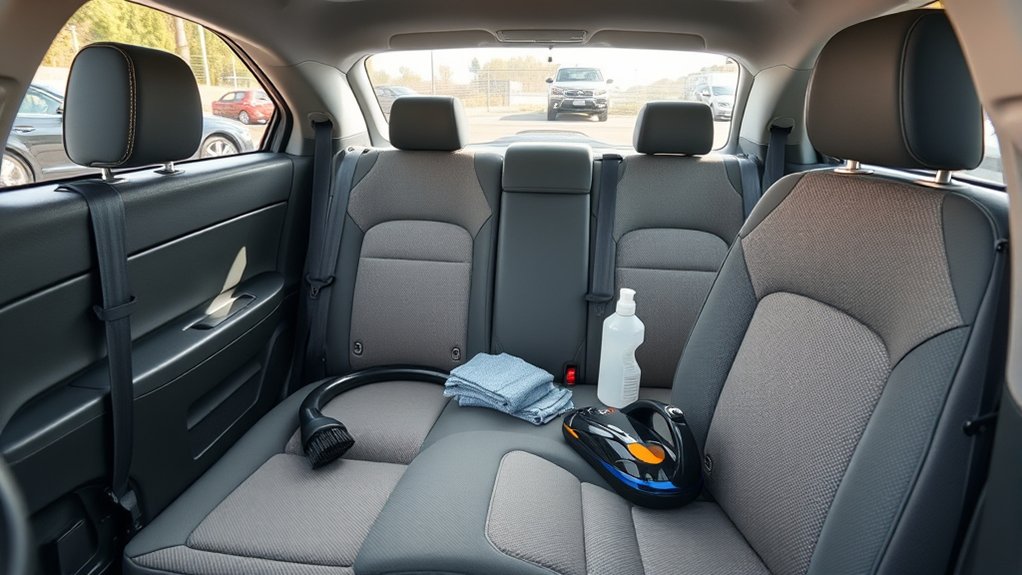
First, take out all your personal items and floor mats to clear the area.
Then, give the seats a good vacuum, especially paying attention to the seams and crevices where dirt tends to hide.
After that, spot any stains you see and apply a treatment, letting it sit for a few minutes before you start shampooing.
Remove Personal Items
Before you shampoo your car seats, make sure to remove all personal items like bags, clothing, and anything that could block access to the upholstery. Taking out your personal belongings is key to getting ready for cleaning and making sure you reach every surface.
Also, clear out any trash and debris so dirt doesn’t mix with your cleaning solution. That can really mess with how well it works.
Don’t forget to take out floor mats and any removable seat covers—this helps you clean every spot thoroughly.
Organizing the car first creates a clean workspace, which makes the whole shampooing process smoother and more effective. When you keep things tidy before you start, you lower the chance of dirt coming back and improve how well your car seats get cleaned.
Thorough Vacuuming
Clear away any remaining personal items and trash.
Then, equip your vacuum with a hose and crevice tool to methodically remove loose dirt, crumbs, and hair from every seam and corner of your car seats.
Begin vacuuming from the top down, focusing on high-traffic areas and any visible stains. This helps prevent dirt buildup during shampooing car seats.
Use the crevice tool to access tight spaces where debris accumulates, ensuring a thorough vacuuming process.
Opt for a vacuum with a HEPA filter to capture allergens and bacteria. This enhances your car’s cleanliness and air quality.
This meticulous step is essential to lift all loose dirt before applying cleaning solutions. It avoids muddying the cleaning process and prepares your seats for effective shampooing.
Spot-Treat Stains
Although thorough vacuuming removes loose debris, you’ll still need to address visible stains directly by applying a targeted upholstery cleaner. Begin spot cleaning by identifying stain types to select the appropriate cleaner. Apply a small amount of upholstery cleaner onto the stain; let it dwell 2–3 minutes to penetrate the fabric.
Gently agitate with a soft brush in circular motions to lift grime without damaging fibers. Next, blot the area using a clean microfiber towel, avoiding rubbing to prevent spreading stains. Repeat these steps until stains are minimized, making sure no cleaner residue remains.
| Step | Action |
|---|---|
| Identify Stains | Determine stain type |
| Apply Cleaner | Targeted upholstery cleaner |
| Agitate | Soft brush, circular motion |
| Blot | Microfiber towel, absorb dirt |
Vacuum Thoroughly to Remove Dirt
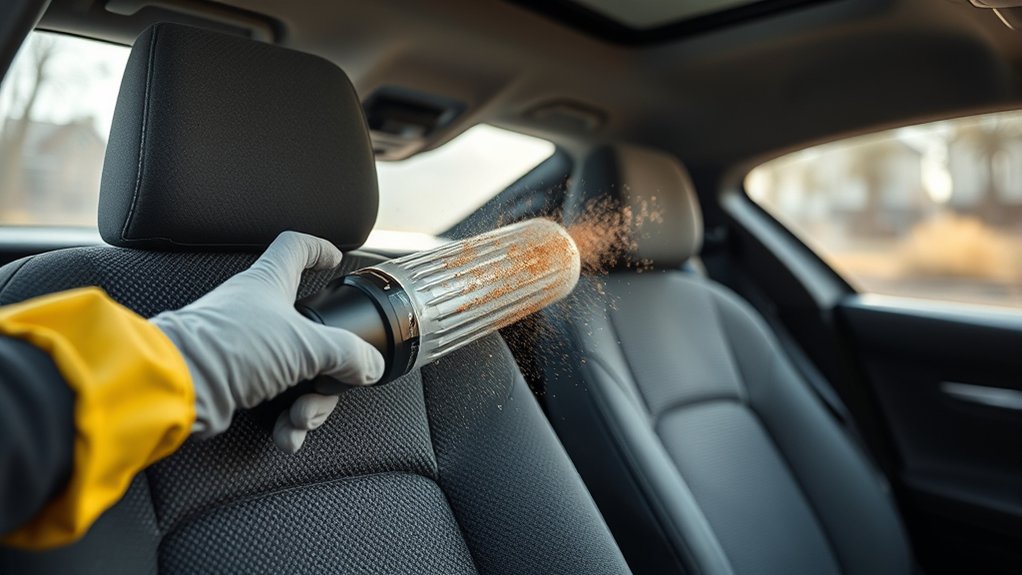
Start by vacuuming your car seats thoroughly using a vacuum cleaner equipped with a hose and crevice tool to access tight seams and crevices.
Begin at the top of each seat, working downward to dislodge loose dirt, crumbs, and hair efficiently.
Focus on high-traffic areas and beneath the seats where debris often accumulates unnoticed. This step is crucial before shampooing because vacuuming removes particles that could otherwise mix with cleaning solutions, creating mud and making the cleaning process more complicated.
Regular vacuuming not only prepares your seats for effective shampooing but also helps keep a healthier environment inside your vehicle by preventing allergens and bacteria buildup.
When you vacuum consistently, your car seats stay cleaner longer and your overall cleaning routine works better.
Pre-Treat Stains and Problem Areas
Before shampooing your car seats, you need to identify and pre-treat any visible stains to improve cleaning effectiveness.
Begin by testing the upholstery cleaner on a small, hidden area to verify it won’t damage upholstery or cause discoloration.
Once you’re sure it’s safe, apply the upholstery cleaner directly onto the stains and let it sit for 2-3 minutes. This gives it time to penetrate deep into the fibers.
Next, use a soft-bristle brush to gently agitate the cleaner in circular motions. This helps break down the dirt thoroughly.
After that, blot the area with a microfiber towel to lift the stain and any excess cleaner.
If the stains are still there, just repeat the pre-treat process until they’re visibly reduced or removed.
Proper pre-treatment makes the overall cleaning more effective and helps protect your car seat fabric.
Apply Shampoo to Car Seats in Sections
You should apply shampoo in small sections to keep things manageable and stop it from drying too fast.
Using a spray bottle is a great way to spread the cleaner evenly without soaking the fabric, which can make drying take longer and even cause mildew.
Plus, working in sections helps you stay on top of drying and makes sure every part gets cleaned properly.
Sectional Application Benefits
Applying shampoo to car seats in smaller sections offers five key benefits that enhance cleaning efficiency and fabric care.
When you shampoo car seats using sectional application, you gain better control over the cleaner’s moisture, preventing it from drying out prematurely. This method allows for thorough agitation, which effectively lifts dirt and stains from the fabric.
Plus, it helps you avoid over-saturating the upholstery, reducing the risk of mold or mildew.
Here are the main advantages:
- Enhanced agitation improves dirt and stain removal.
- Controlled moisture prevents fabric damage.
- Monitoring each section guarantees uniform results.
- Focused cleaning minimizes residue, promoting a healthier interior.
Using sectional application, you achieve precise, consistent cleaning with ideal fabric preservation.
It’s a smart way to keep your car seats looking fresh and well cared for.
Preventing Over-Saturation
Although thorough cleaning is vital, applying shampoo to your car seats in small, manageable sections prevents over-saturation and guarantees even coverage. Use upholstery shampoo in controlled amounts, ideally via a spray bottle, to limit excess moisture on the fabric.
Agitate each section gently with a soft-bristle brush in circular motions, allowing the cleaner to penetrate deeply without soaking the upholstery. After scrubbing, blot the area with a microfiber towel to lift foam and dirt while removing residual moisture. This step is important for preventing mildew growth.
Keep an eye on fabric dampness; if it feels too wet, pause to promote adequate air circulation before proceeding.
This methodical approach assures you’re preventing over-saturation and protecting your car seats from damage caused by trapped moisture.
Managing Drying Time
Maintaining control over moisture levels during cleaning directly impacts drying time and overall seat condition.
When you shampoo my car seats, managing drying time is critical to avoid over-saturation and mildew.
To clean your car seats effectively, follow these steps:
- Apply shampoo in small, even sections to minimize moisture as much as possible and prevent over-saturation.
- Allow each section to dwell briefly, then perform thorough agitation for best cleaning.
- Use a wet/dry vacuum immediately after agitation to extract moisture and reduce drying times.
- Progress sequentially, making sure each area is processed before moving on, preventing excess pooling.
This method guarantees consistent cleaning, efficient moisture removal, and controlled drying times.
It helps preserve the upholstery’s integrity.
Use a Soft Brush to Agitate Fabric
When you use a soft brush with medium bristles, you effectively lift dirt from fabric car seats without damaging the upholstery fibers. To agitate fabric properly, apply the cleaner evenly and move the soft brush in circular motions. This technique allows the cleaner to penetrate deeply, breaking up tough stains and embedded grime.
Agitating in small sections guarantees the cleaner remains active and prevents premature drying. Before starting, make sure the brush is clean to avoid putting dirt back onto the upholstery. This step is really important for an efficient cleaning process and gets the fabric ready for the next phase, where contaminants will be removed.
Using a soft brush to agitate fabric not only optimizes stain removal but also boosts the performance of your extractor during cleaning. It’s a simple step that makes a big difference!
Blot and Extract Moisture With Towels
Use high-absorbency microfiber towels to blot moisture from your car seats right after shampooing.
Just press firmly without scrubbing—that way, you get the water out efficiently while keeping the fabric fibers safe.
To help things dry faster, swap out the towels often for dry ones.
You might also want to try using a wet/dry vacuum for a deeper moisture removal—it really makes a difference!
Choosing Absorbent Towels
Any effective car seat shampooing routine hinges on selecting the right towels for blotting and moisture extraction. You’ll want high-GSM microfiber towels, which absorb over 500% of their weight in water. This ensures superior moisture removal.
Opt for ultra-absorbent, super plush towels to protect fabric while lifting moisture efficiently. Here’s a simple approach to follow:
- Use the two-towel method: one damp towel for cleaning, a dry towel for extracting moisture.
- Switch to fresh towels regularly during the process to avoid reintroducing moisture.
- Choose towels designed specifically for fabric surfaces to prevent damage.
- After use, wash microfiber towels separately to maintain absorbency and avoid lint transfer.
This precise selection maximizes drying efficiency and helps preserve your car seats’ integrity. It’s all about using the right tools to get the job done well.
Proper Blotting Techniques
Three key principles guide proper blotting techniques for shampooing car seats: using microfiber towels, applying even pressure, and avoiding rubbing.
Start by selecting high-quality microfiber towels. These towels effectively absorb moisture and trap dirt without leaving lint.
When you blot, apply even pressure to extract moisture without saturating the fabric. This helps prevent mildew.
Always blot gently, never rub, because rubbing can push stains deeper.
Make sure to rotate to a clean part of the towel or switch towels frequently during the process. This helps avoid redistributing dirt and moisture.
Proper blotting techniques let you absorb moisture efficiently and promote quick drying of the car seat fabric.
Following these steps guarantees thorough moisture extraction while maintaining the integrity of your car seats and preventing mold growth.
Taking a little extra care really pays off!
Enhancing Moisture Extraction
Although blotting with towels is essential, you’ll enhance moisture extraction by selecting high-GSM microfiber towels that can absorb over 500% of their weight in water.
These towels deliver superior moisture absorption on fabric seats without leaving any residue.
To maximize moisture extraction, press the towel firmly into the fabric using your body weight. Just avoid using towels that are too damp to prevent liquid transfer.
Frequently switch to dry sections of the towel to keep your blotting effective and stop moisture from spreading around.
After blotting, check for cool or damp spots. This helps you spot any lingering moisture in the foam underneath, which could lead to mildew.
For thorough extraction, use a wet/dry vacuum to pull out any leftover moisture until the water being extracted runs clear.
This method guarantees efficient blotting, reduces lingering moisture, and helps prevent mildew on fabric seats.
Dry Car Seats Properly to Prevent Mold
Since moisture trapped in car seats can quickly lead to mold growth, you need to guarantee they dry completely within 4 to 6 hours. To clean car seats properly, maximize airflow by opening windows or using fans. Use absorbent microfiber towels to press firmly into the fabric, extracting moisture efficiently.
Avoid closing doors until the seats are completely dry to prevent mold and odors. Keep an eye on the drying process by checking for dampness and coolness in the fabric and foam padding. If you’re dealing with humid conditions, a wet/dry vacuum can help speed up moisture removal.
| Step | Action |
|---|---|
| Drying Time | 4 to 6 hours |
| Airflow | Open windows, use fans |
| Towels | Absorbent microfiber towels |
| Moisture Check | Monitor fabric and padding |
| Humidity Solution | Wet/dry vacuum if needed |
Keep Your Car Seats Clean Between Shampooings
To maintain your car seats’ cleanliness between shampooings, you should vacuum them at least once a week to remove loose dirt, crumbs, and pet hair. Regular vacuuming prevents buildup and helps keep things fresh.
Here’s what else you can do:
- Use a microfiber cloth to quickly wipe up spills and food residues. This helps reduce the chance of stubborn spots forming.
- Keep a portable stain remover in your car so you can treat accidental spills right away. That way, stains won’t have time to set in.
- After each deep cleaning, apply a fabric protector spray. This creates a barrier against future spills and stains.
- Schedule a thorough clean every 2-3 months to give your car interior an extensive refresh and keep your seats hygienic.
Following these simple steps will help you keep your car seats clean and stretch the time between those big shampoo sessions.
Frequently Asked Questions
Can I Use Household Cleaners Instead of Upholstery Shampoo?
You shouldn’t use household cleaners instead of upholstery shampoo because they often contain harsh chemicals that can damage fabric types in your car seats.
Upholstery shampoo is specifically formulated for automotive cleaning solutions, ensuring effective stain removal and preserving material integrity.
While some DIY methods suggest household cleaners, their effectiveness comparison shows they can leave residue or even void warranties.
It’s better to avoid the risk and stick with products made for your car.
Always follow safety precautions by choosing products designed for your car’s upholstery.
That way, you keep your seats looking great without any unwanted damage.
How Often Should I Shampoo Leather Car Seats?
You should shampoo your leather car seats every 3 to 6 months to keep them in great shape.
Of course, you might want to clean them more often if you use your car a lot or if the seats get dirty or stained frequently.
Make sure to use pH-balanced leather cleaners and conditioners.
These are great for removing stains and protecting the leather at the same time.
Also, don’t forget to dry the seats properly after cleaning to avoid any damage.
It’s a good idea to regularly dust your seats between cleanings.
And if your seats get really dirty or need a deep clean, consider hiring a professional.
This will help keep your leather looking fresh and durable for years to come.
Is It Safe to Shampoo Car Seats With Pets Inside?
Shampooing car seats with pets inside is like juggling flaming torches, risky and best avoided.
For your pet’s safety, it’s always better to remove them before cleaning. This helps prevent their exposure to harsh cleaning products, which can vary depending on the upholstery type and seat material.
Pet hair and odor removal need a thorough cleaning followed by proper drying. This step is important to avoid mold from forming.
It’s also good to adjust how often you clean based on how much you use your car.
But above all, prioritize your pet’s well-being by keeping them out during shampooing sessions. It’s just safer and more comfortable for everyone.
Can Shampooing Remove Odors From Car Seats Completely?
Yes, shampooing can remove odors from car seats completely if you use proper odor elimination techniques.
Fabric types matter, so choose cleaners accordingly, like enzyme-based cleaners for organic odors. Pre-treatment solutions help tackle stubborn stains removal.
It’s a good idea to maintain a deep cleaning frequency to prevent buildup.
Also, use effective drying methods to avoid moisture retention. Always follow guidelines to avoid damage risks, ensuring your car seats stay fresh without compromising fabric integrity.
What Should I Do if My Car Seats Get Wet During Cleaning?
If your car seats get wet during cleaning, act fast with wet seat solutions like a wet/dry vacuum to extract moisture.
Use microfiber towels for blotting, applying pressure to soak up water effectively.
Try drying techniques such as opening windows and using fans to speed up the drying process. Avoid heat sources since they can damage the fabric.
Make sure to follow mold prevention tips and protect your upholstery by ensuring it dries thoroughly.
Also, stick to recommended cleaning products for the best interior maintenance results.
Conclusion
If you prefer your car seats to resemble a science experiment gone wrong, skip shampooing altogether. But if you want to avoid the luxury of mold colonies and mystery stains, follow these steps precisely. Vacuum, treat, scrub, blot, and dry like your car’s resale value depends on it because it does.
Regular cleaning isn’t just a chore; it’s a technical necessity to maintain hygiene and fabric integrity. Your seats and future you will thank you.