What Can You Use For Dry Shampoo – Natural Options Guide
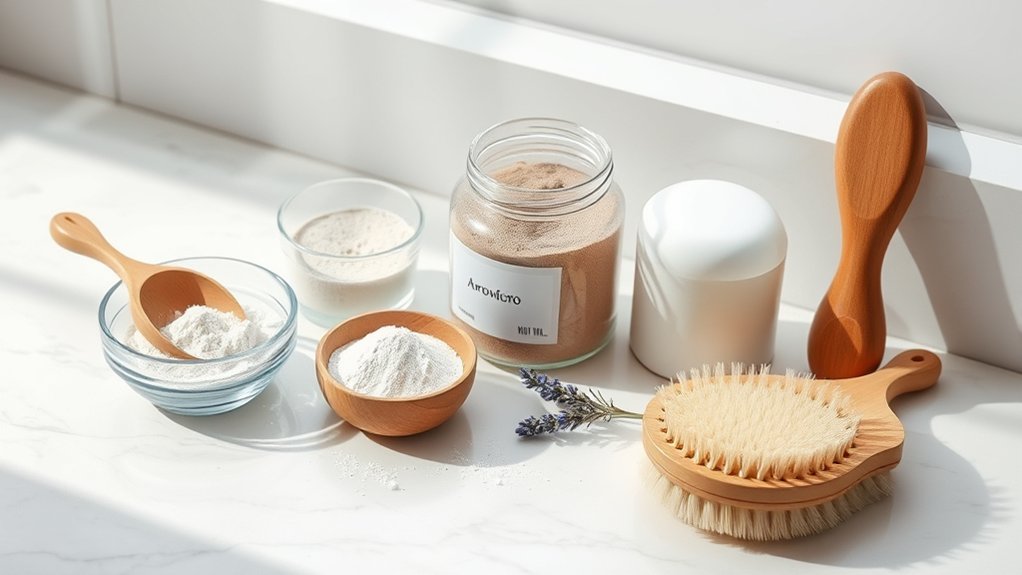
You can use natural options like cornstarch or arrowroot to absorb oil and refresh your hair without harsh chemicals. Baking soda works well for deep cleansing, while cocoa powder and activated charcoal suit darker hair by blending color and reducing shine.
Adding essential oils boosts scent and scalp benefits. Just use these powders sparingly to avoid buildup and focus on oily roots.
If you want to master application and customize blends for your hair type, there’s plenty more to explore.
What Is Dry Shampoo?
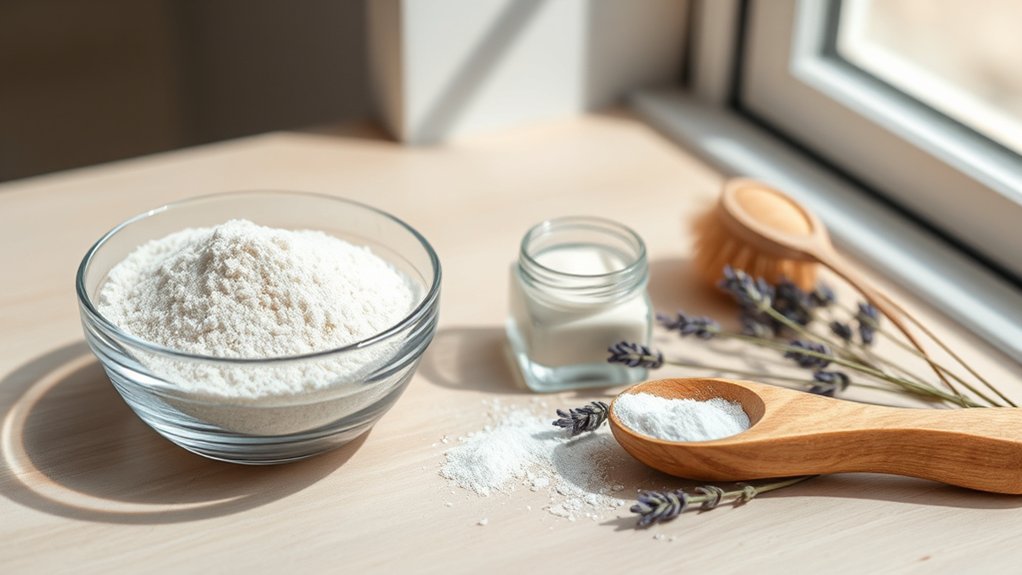
Although you might think dry shampoo is a modern invention, it’s actually been around since the 1940s. It was designed to help women who couldn’t wash their hair frequently.
Dry shampoo works by absorbing excess oil from your scalp and hair, giving you a fresh, clean look without water. It’s typically made with natural ingredients like cornstarch or arrowroot.
Dry shampoo absorbs excess oil, refreshing your hair naturally without water using ingredients like cornstarch or arrowroot.
It’s a convenient part of hair care for busy days when washing isn’t possible. You can even create homemade dry shampoo using simple powders that work for all hair types.
Just keep in mind, it’s important to use dry shampoo sparingly to avoid buildup or dryness. Understanding what dry shampoo is helps you make smarter choices for keeping your hair healthy and fresh between washes.
Why Use Natural Dry Shampoo Alternatives
When you choose natural dry shampoo alternatives, you not only reduce your exposure to harsh chemicals like butane and propane, but you also get a customizable solution that suits your hair type and color. Natural ingredients absorb oil effectively, add volume, and are gentle on sensitive scalps.
Plus, homemade dry shampoos save money and avoid synthetic fragrances. It’s a win-win for your hair and your wallet!
| Ingredient | Benefits | Suitable For |
|---|---|---|
| Cornstarch | Absorbs oil, adds volume | Oily hair |
| Arrowroot | Light texture, gentle | Sensitive scalp |
| Baking soda | Deep cleansing, absorbent | Normal hair |
| Cocoa powder | Absorbs oil, adds color | Dark hair |
| Oat flour | Soothes scalp, absorbs oil | Dry or sensitive hair |
Using natural dry shampoo alternatives means healthier hair and scalp without compromising style. Why not give them a try? Your hair will thank you!
How Starches Like Cornstarch and Arrowroot Work as Dry Shampoo
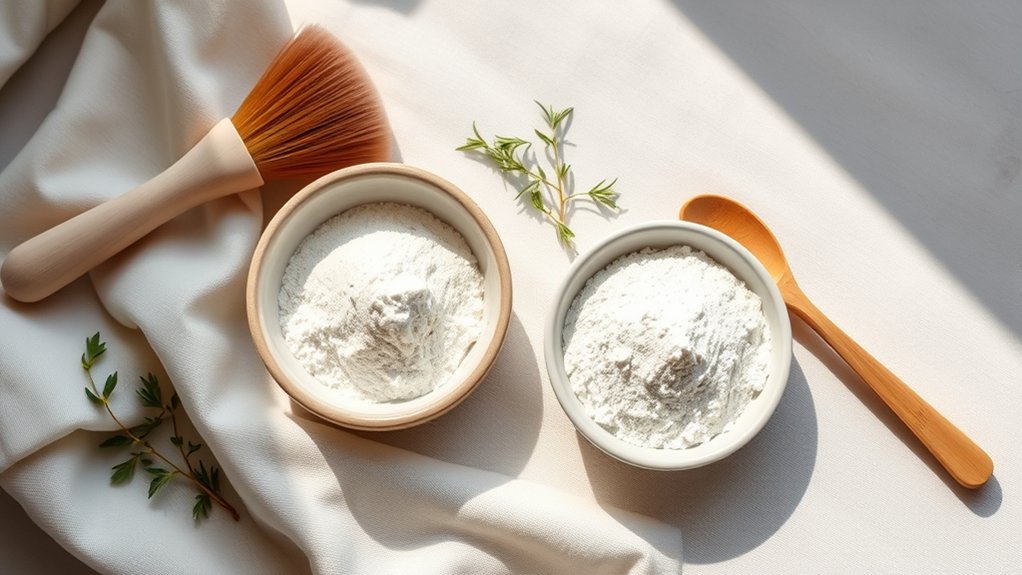
You can totally count on cornstarch and arrowroot to soak up excess oil and refresh your hair between washes.
Just apply a small amount to your scalp, and these natural starches will absorb the grease without any harsh chemicals.
With a gentle touch, you’ll keep your hair feeling clean and light all day long.
Oil Absorption Properties
Starches like cornstarch and arrowroot play an essential role in dry shampoo by effectively absorbing excess oil from your scalp and hair. This instantly reduces greasiness and revitalizes your look.
When you use cornstarch or arrowroot powder in a DIY dry shampoo, you’ll notice how they absorb oil efficiently, soaking up natural oils without leaving residue. They also provide gentle care.
Arrowroot powder especially suits sensitive scalps.
These starches enhance volume, giving your hair a fuller, textured appearance. Plus, they offer versatility, allowing you to customize your dry shampoo for your hair color and needs. It’s pretty handy, right?
Application Techniques
Applying cornstarch or arrowroot as dry shampoo involves a simple yet effective technique that refreshes your hair without water.
You start by sprinkling a small amount of cornstarch or arrowroot onto your roots, focusing on oily areas. Gently massage the starch into your scalp to guarantee it absorbs excess oil thoroughly.
After waiting a few minutes, brush out the excess powder for a clean, matte finish. You can mix these starches with a few drops of essential oils to add a pleasant scent and scalp-soothing benefits.
If you have a sensitive scalp, arrowroot is especially gentle, reducing irritation risks.
These application techniques help maintain your hair’s natural moisture balance while extending the time between washes, making cornstarch and arrowroot excellent natural dry shampoo options.
Baking Soda and Clays for Oil and Odor
Although many commercial dry shampoos rely on synthetic ingredients, baking soda and natural clays offer effective, gentle alternatives for controlling oil and odor.
You can create a natural dry shampoo that absorbs excess oil and detoxifies your scalp by combining these ingredients thoughtfully. Here’s how:
Use baking soda for powerful oil absorption and odor elimination.
Mix baking soda with arrowroot powder or corn starch to reduce residue and balance oil control.
Choose natural clays like bentonite or kaolin to detoxify your scalp while absorbing oil.
Add activated charcoal for darker hair to avoid chalky buildup and enhance cleansing.
Massage the mixture into your roots and let it sit briefly before brushing for best results.
This approach keeps your hair fresh naturally.
Simple Dry Shampoo Powder Blends for Fresh Hair
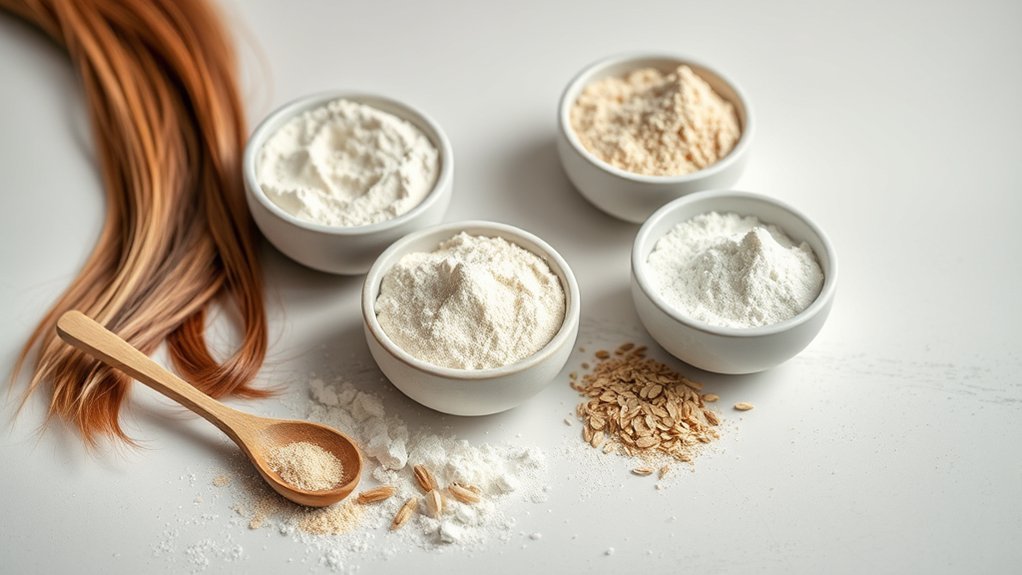
When you want an easy, natural way to refresh your hair between washes, simple dry shampoo powder blends offer a practical solution. Using arrowroot powder as a base leverages its excellent oil-absorbing properties and works for all hair colors.
For dark hair, adding cocoa powder helps blend the dry shampoo powder seamlessly while maintaining its effectiveness.
You can customize your natural dry shampoo further by mixing in a few drops of essential oils like lavender or tea tree for a fresh scent and scalp benefits.
These DIY dry shampoos are quick to make and gentle on your hair, providing a reliable alternative to commercial products.
By combining these ingredients thoughtfully, you can keep your hair looking fresh and clean without harsh chemicals.
It’s a simple way to care for your hair naturally and save time between washes.
Give it a try—you might just love how easy and effective it is!
Liquid Dry Shampoo Alternatives: Apple Cider Vinegar and Lemon Juice
If you’re looking for a natural way to manage oily hair without powders, apple cider vinegar and lemon juice offer effective liquid alternatives to dry shampoo. Both help absorb oil and refresh your scalp naturally.
Just mix apple cider vinegar or lemon juice with water to create a gentle spray that degreases hair. Then, apply it to your scalp and let it dry completely before styling for the best oil absorption.
Use these solutions as needed, but try not to overdo it to avoid dryness or irritation.
And if you have a sensitive scalp, test on a small area first to make sure you don’t have any adverse reactions.
Quick Dry Shampoo Fixes: Blotting Papers and Hand Sanitizer
Anyone facing a sudden oily scalp can rely on quick fixes like blotting papers and hand sanitizer to refresh their hair without the fuss of powders or sprays. Blotting papers efficiently absorb oil from oily hair; simply press them onto greasy roots to lift excess shine instantly.
Hand sanitizer’s high alcohol content helps break down oil when applied sparingly with your fingertips, focusing on the scalp and allowing it to dry completely.
Both options serve as effective quick fixes but aren’t meant for frequent use, as overuse may cause dryness or irritation.
Remember, these methods offer temporary relief and don’t provide the volumizing or lasting freshness traditional dry shampoos or natural alternatives deliver.
Use blotting papers and hand sanitizer wisely within your hair care routine to manage oiliness efficiently.
Customize Dry Shampoo for Your Hair Color
Quick fixes like blotting papers and hand sanitizer can help manage oiliness on the go, but customizing your dry shampoo to suit your hair color offers a more seamless and natural look.
Here’s how you can tailor your dry shampoo for your natural hair:
- For blonde hair, mix arrowroot powder with a few drops of essential oils to absorb oil while keeping a light, fresh scent.
- Brunettes benefit from blending cocoa powder with cornstarch, which adds a darker tint that matches their hair.
- If you have dark hair, activated charcoal combined with arrowroot powder improves color match and oil absorption.
- Redheads can add cinnamon or paprika for a warm tone that complements their hair color.
Adjust these mixes based on hair thickness and oiliness to customize your perfect dry shampoo.
Add Essential Oils to Boost Dry Shampoo Benefits
While dry shampoo already helps absorb oil and refresh your hair, adding essential oils can really boost its benefits.
Essential oils like tea tree oil balance oiliness and have antibacterial properties that support scalp health.
Lavender oil brings a calming scent and soothes irritation, making it a gentle choice for sensitive scalps.
Lemon oil adds a fresh touch with natural citric acid, which helps cut grease effectively.
When you make a DIY dry shampoo, mix in about five drops of your chosen essential oil per batch. This enhances both effectiveness and fragrance without overpowering.
Using these natural options not only refreshes your hair but also promotes a healthier scalp, making your dry shampoo routine more beneficial and enjoyable.
Apply Natural Dry Shampoo for Best Results and Frequency
When you’re applying natural dry shampoo, try to focus on your roots and any oily spots.
Use a clean brush or your fingertips to spread it evenly. After that, let it sit for a few minutes so it can really soak up the oil.
Once some time has passed, brush out the excess product. This helps keep things looking fresh without feeling heavy.
Just a heads up—try to limit using dry shampoo to about 1-2 times a week. Of course, pay attention to how your hair reacts and adjust from there to keep your scalp healthy.
Application Techniques Explained
Applying natural dry shampoo effectively involves a few simple yet essential steps to guarantee your hair looks refreshed without residue. Mastering the right application techniques helps absorb oil while maintaining a natural finish. Here’s how to do it:
First, dust natural dry shampoo lightly onto your roots and massage it into the scalp for even coverage. Then, allow a wait time of several minutes so the powder can fully absorb excess oil.
Next, use a clean brush with the proper brushing technique to distribute the product and remove any excess, boosting volume. For liquid versions, spray evenly on roots, let dry briefly, then style as usual.
Following these steps ensures effective use without buildup, supporting a healthy scalp and ideal frequency of use. It’s pretty straightforward once you get the hang of it!
Recommended Usage Frequency
A balanced approach to using natural dry shampoo can keep your hair fresh without compromising scalp health. The recommended usage frequency is typically 1-2 times per week to maintain hair health and avoid excessive dryness or oil buildup.
When you apply dry shampoo, focus on the roots and greasy areas, massaging well for ideal absorption. Overusing dry shampoo can cause scalp build-up and irritation, so make sure to wash your hair with traditional shampoo every few days.
Pay close attention to your scalp condition and adjust usage based on your hair type and lifestyle. It’s all about finding what works best for you.
Alternating between natural dry shampoo and wet washing helps maintain a healthy balance. This way, your hair stays clean and your scalp remains comfortable.
Just keep an eye on how your scalp feels and tweak your routine as needed.
Frequently Asked Questions
Can Natural Dry Shampoo Cause Scalp Irritation?
Yes, natural dry shampoo can cause scalp irritation if you have scalp sensitivity or ingredient allergies.
To avoid skin reactions, you should test the product on a small patch first.
Also, pay attention to how you apply it and how often you use it, because overuse can make irritation worse.
It’s a good idea to choose formulas with soothing ingredients and gentle herbal options like cornstarch or arrowroot.
Being mindful about these things helps you enjoy the benefits of dry shampoo without any discomfort or damage.
How Long Does Natural Dry Shampoo Typically Last in Hair?
Natural dry shampoo typically lasts about one to three days, depending on your hair type and activity level.
Using DIY recipes with ingredients like arrowroot or cocoa powder offers oil absorption and subtle scent options. Application techniques, like focusing on roots, improve effectiveness.
You’ll need to adjust how often you use it. For example, fine hair may require more frequent touch-ups.
Also, store your mix in airtight containers to preserve the benefits of the ingredients.
Tailoring these tips helps you keep your hair feeling fresh and balanced for longer.
Are Natural Dry Shampoos Safe for Color-Treated Hair?
Did you know 85% of users report improved hair health with natural dry shampoos? Yes, they’re safe for color-treated hair! Their ingredient safety preserves color longevity by avoiding harsh chemicals.
By using gentle application techniques, you maintain scalp hydration and product effectiveness without stripping color. Many user experiences confirm natural powders keep hair vibrant while reducing damage.
So, natural dry shampoos are a smart choice for protecting your color and boosting overall hair health.
It’s a simple way to care for your hair and keep it looking fresh.
Can Natural Dry Shampoo Help With Dandruff?
Yes, natural dry shampoo can help with dandruff by improving scalp health through oil control and absorption properties.
Using natural ingredients like arrowroot powder and tea tree oil provides dandruff remedies that soothe irritation.
To maximize long-term benefits, apply dry shampoo properly.
Sprinkle onto roots and massage gently without overusing it. This supports a balanced scalp environment, reducing flakes while maintaining your hair’s freshness between washes.
How Do Natural Dry Shampoos Affect Hair Texture Over Time?
Natural dry shampoos improve your hair texture over time by enhancing oil control and promoting healthy hair absorption. Their gentle ingredients boost volume without stripping moisture, supporting texture improvement and overall hair health.
When you apply them correctly, they minimize buildup and nourish your scalp with beneficial oils.
Using natural dry shampoos thoughtfully helps maintain a balanced, refreshed feel. This way, your hair stays vibrant and manageable while protecting it from damage.
It’s a simple step that makes a noticeable difference in how your hair looks and feels every day.
Conclusion
You might think only store-bought sprays can freshen your hair, but natural options prove otherwise. Using cornstarch, baking soda, or clays not only soaks up oil but also keeps your scalp healthy.
Adding essential oils customizes the scent and boosts benefits, making your routine feel personal and effective. With simple blends and mindful application, you can confidently skip harsh chemicals and still enjoy fresh, vibrant hair every day.