Is Baby Shampoo Good For Adults – Benefits And Drawbacks Explained
You can use baby shampoo as an adult, especially if you have a sensitive or dry scalp. Its gentle, pH-balanced formula helps reduce irritation and supports scalp health.
However, it doesn’t have strong cleansing agents or the active ingredients needed for oily, dandruff-prone hair or hair loss treatment. Baby shampoo is great for keeping your scalp comfortable, but it might not tackle specific adult hair issues.
If you want to know when baby shampoo works best and what its limits are, keep reading to explore more about this topic.
What Makes Baby Shampoo Different From Adult Shampoo
Although both baby and adult shampoos serve the primary purpose of cleansing hair, they differ markedly in formulation to meet distinct needs. Baby shampoos feature a neutral pH between 6 and 7, aligning closely with natural scalp pH to support scalp health. They use gentle surfactants like decyl glucoside instead of harsh chemicals such as sulfates found in many adult shampoos.
This chemical-free, tear-free formulation minimizes irritation, making it dermatologist recommended for sensitive skin. Baby shampoos exclude artificial dyes, synthetic fragrances, parabens, and harsh preservatives. They often incorporate moisturizing ingredients to maintain softness and hydration.
In contrast, adult shampoos usually target specific hair concerns with stronger cleansers and acidic pH around 5.5. Understanding these differences helps you choose the right product for your scalp and hair type.
Benefits of Baby Shampoo for Adults With Sensitive Scalps
When you have a sensitive scalp, choosing a shampoo that minimizes irritation is essential. Baby shampoo offers several benefits in this regard. Its gentle formulation uses mild cleansers and is pH-balanced (6-7), which helps support scalp health by maintaining a stable environment.
Here’s how baby shampoo helps: it reduces irritation with gentle surfactants that cause less redness and itching. It also contains soothing ingredients like aloe vera and chamomile, which provide relief from inflammation.
Plus, baby shampoo excludes artificial fragrances, dyes, and harsh preservatives. This makes it ideal for people with skin sensitivities.
On top of that, it supports your scalp’s natural oils, preventing dryness and helping maintain moisture balance.
When Should You Choose Baby Shampoo Instead of Regular Shampoo?
Why should you choose baby shampoo over regular shampoo? You should opt for baby shampoo when you have a sensitive scalp prone to irritation, contact dermatitis, or allergic reactions. Its mild ingredients provide gentle cleansing while preserving your scalp’s natural pH.
Baby shampoo suits daily use and fragile hair, avoiding harsh surfactants that can worsen scalp care concerns. It’s a great choice if you want something safe and soothing for your scalp.
| Condition | Baby Shampoo Benefit | Regular Shampoo Drawback |
|---|---|---|
| Sensitive scalp | Reduces irritation | May cause allergic reactions |
| Fragile hair | Protects and nourishes | Can damage hair strands |
| Contact dermatitis | Gentle, non-irritating | Potential irritants present |
| Daily use | Mild cleansing | Often too harsh |
| Scalp care | Maintains natural pH | Disrupts scalp balance |
Choose baby shampoo when you need a gentle option tailored for delicate scalp and hair needs. It’s all about keeping your scalp happy and healthy without the harsh stuff.
Using Baby Shampoo for Dry or Itchy Scalp
If you experience dryness or itchiness on your scalp, baby shampoo can offer a gentle solution by soothing irritation and maintaining moisture balance. Its pH-balanced, mild formulation acts as a gentle cleanser that removes impurities without stripping natural oils. These oils are essential for dry scalp and itchy scalp relief.
The inclusion of natural ingredients like aloe vera and chamomile provides moisturizing and scalp-soothing benefits, which are ideal for sensitive skin. When using baby shampoo for scalp care, keep a few things in mind.
Use it regularly to help reduce irritation caused by harsher shampoos. Rely on its moisturizing properties to maintain scalp hydration. You can expect scalp soothe from its mild, pH-balanced formulation.
That said, baby shampoo mightn’t address severe dryness or dandruff, so if those are concerns, it’s a good idea to seek medical advice. Just remember, baby shampoo is great for gentle care but isn’t a cure-all for every scalp issue.
Can Baby Shampoo Help With Hair Loss or Receding Hairlines?
You can definitely use baby shampoo for gentle scalp cleansing because its mild formula helps reduce irritation that might make hair loss worse.
That said, it won’t actually help grow new hair or fix a receding hairline. Think of it more as a supportive option to keep your scalp healthy while you use treatments that are designed to target hair loss directly.
Gentle Scalp Cleansing
Although baby shampoo doesn’t contain ingredients that directly stimulate hair regrowth, its gentle, non-irritating formula can soothe sensitive scalps and reduce inflammation that may contribute to hair loss. You’ll find that its pH-balanced, mild formula supports scalp health by preserving natural oils and minimizing irritation around vulnerable areas like receding hairlines.
Here’s how gentle cleansing with baby shampoo benefits you:
- Maintains scalp comfort by reducing irritation on sensitive scalps.
- Uses mild surfactants that avoid clogging hair follicles, supporting scalp cleanliness.
- Preserves natural oils essential for healthy scalp and hair retention.
- Provides a non-irritating, pH-balanced environment conducive to scalp health.
While it won’t directly reverse hair loss, baby shampoo promotes scalp comfort and irritation reduction, which are key for maintaining hair retention. So, even though it’s not a miracle cure, it’s definitely a smart choice for keeping your scalp happy.
Hair Loss Limitations
While baby shampoo offers a gentle cleansing experience that minimizes scalp irritation, it doesn’t contain ingredients proven to stimulate hair growth or reverse receding hairlines. Its mild formula provides gentle cleansing, reducing scalp irritation that can contribute to poor hair health.
But it lacks active anti-hair loss agents like minoxidil or biotin.
If you’re dealing with thinning hair or a receding hairline, baby shampoo alone won’t promote hair regrowth or address the underlying causes, such as hormonal factors or scalp conditions.
Although it supports scalp comfort, it doesn’t prevent or treat hair loss.
For effective intervention, you’ll need targeted treatments and medical advice tailored to your specific hair loss concerns.
Baby shampoo’s role is limited to maintaining a healthy scalp environment rather than reversing hair loss.
Why Baby Shampoo Isn’t Best for Oily or Dandruff-Prone Hair
Because baby shampoos contain very mild cleansing agents, they often fail to remove excess oil and buildup effectively from oily or dandruff-prone scalps. If you have oily hair or dandruff, relying on baby shampoo can cause issues such as scalp irritation and clogged follicles.
Here’s why:
Baby shampoos’ gentle surfactants don’t adequately remove excess oil or buildup from styling products and pollutants. They also lack the targeted ingredients needed to combat scalp infections or dandruff caused by fungal conditions.
Without medicated shampoo components like salicylic acid or zinc pyrithione, dandruff control is just not enough.
If you keep using baby shampoo for these issues, it may actually make scalp irritation worse and lead to clogged follicles, which only adds to oily hair and dandruff problems.
So, for effective management, you really need shampoos formulated with stronger, targeted ingredients designed specifically for these scalp concerns.
It’s worth choosing something that works a bit harder to keep your scalp healthy.
How to Use Baby Shampoo Safely as an Adult
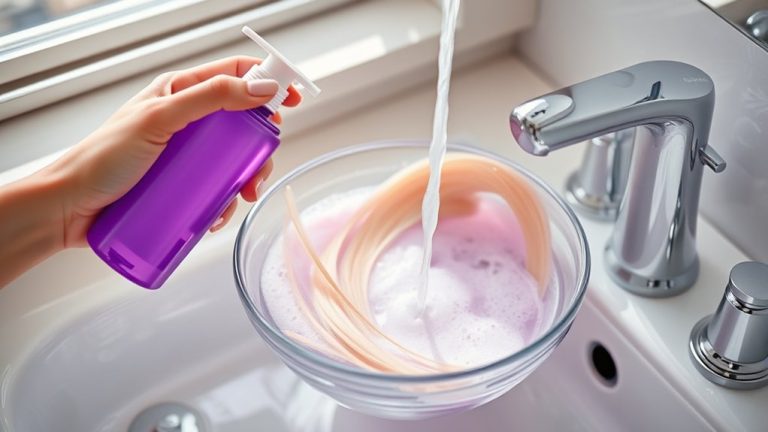
If you want to use baby shampoo safely as an adult, it’s a good idea to dilute it with some water first. Just apply it sparingly—this helps prevent over-cleansing and keeps your scalp from getting too dry.
Also, keep an eye on how often you’re using it, especially if your scalp tends to get oily or you use styling products a lot. You want to make sure it’s doing its job without stripping your hair too much.
And don’t forget to rinse it out thoroughly! After that, follow up with a lightweight conditioner to keep your hair moisturized and soft. It really makes a difference.
Proper Dilution Techniques
Although baby shampoo is made for gentle cleansing, you should always dilute it with water before applying it to your hair. This helps minimize the risk of dryness and irritation. Proper dilution balances effectiveness with scalp sensitivity.
Here’s how to use it safely:
- Mix one part baby shampoo with two to three parts water to get a mild concentration.
- Apply the diluted solution to wet hair, gently massaging your scalp to spread it evenly without harsh rubbing.
- Rinse thoroughly with lukewarm water to remove all residue and prevent buildup that can cause irritation.
- If your scalp feels dry or sensitive, try adding more water to the mix.
This way, you keep the shampoo gentle while protecting your scalp’s health.
Frequency And Amount
Once you’ve mastered proper dilution, understanding how often and how much baby shampoo to use becomes key to maintaining scalp health. Thanks to its gentle, pH-balanced formula, daily use of a quarter-sized amount supports effective cleansing without causing scalp irritation.
However, if you use heavy styling products or have an oily scalp, reduce frequency to every other day to prevent buildup.
| Frequency | Amount | Notes |
|---|---|---|
| Daily use | Quarter-sized | Gentle cleansing, moisture retention |
| Every other day | Quarter-sized | For oily scalp or styling product buildup |
| As needed | Small amount | Adjust based on scalp condition |
| Avoid excess | N/A | Prevents dryness and irritation |
This approach balances gentle cleansing with ideal scalp health.
Post-Wash Care
When you finish washing with baby shampoo, rinse your hair thoroughly using lukewarm water to remove all residue and prevent buildup. Proper rinsing is essential to avoid lingering residue, which can impair scalp health and cause scalp irritation.
To keep your hair and scalp in good shape, follow these simple steps in your post-wash routine:
- Use lukewarm water for rinsing to protect sensitive skin and scalp.
- Apply a lightweight conditioner, focusing on ends and scalp, to restore moisture without weighing hair down.
- Massage gently to stimulate blood flow without aggravating sensitive scalps.
- Keep an eye on your scalp and hair condition regularly, and adjust how often you wash if you notice more oiliness or irritation.
This way, you’re making sure your post-wash care is effective while using baby shampoo safely as an adult.
When to See a Doctor Instead of Using Baby Shampoo
If you experience persistent scalp irritation, severe dandruff, or hair loss despite using gentle shampoos like baby shampoo, you should seek medical advice. Worsening scalp conditions or symptoms like redness, itching, crusting, or open sores that don’t improve with over-the-counter treatments require professional evaluation.
Sudden or patchy hair loss may signal underlying scalp infections or alopecia, so it’s important to get prompt attention. Also, scalp pain, intense itching, or burning sensations that persist shouldn’t be ignored.
| Scalp Symptom | When to See a Doctor |
|---|---|
| Persistent irritation | If it doesn’t improve after weeks |
| Severe dandruff | When over-the-counter remedies fail |
| Hair loss | Sudden, patchy, or worsening |
| Redness or open sores | If crusting or sores appear |
| Scalp pain or itching | When intense and persistent |
Frequently Asked Questions
Can Baby Shampoo Be Used on Colored or Chemically Treated Hair?
Yes, you can use baby shampoo on colored or chemically treated hair because its gentle cleansing and mild formula offer a non-irritant solution. Its skin-friendly formulation with no harsh chemicals and hypoallergenic properties suits sensitive scalps well.
The tear-free benefit and natural ingredients provide a softening effect without stripping color.
However, it mightn’t fully remove buildup, so pairing it with treatments designed for color care is best for maintaining vibrancy.
Does Baby Shampoo Have Any Fragrance or Allergens for Adults?
Baby shampoos often address fragrance concerns by offering fragrance-free options and using hypoallergenic ingredients. This helps reduce allergen risks for adults with skin sensitivity.
While some formulas have mild, natural scents, they usually avoid harsh fragrance additives that can trigger allergies or allergy symptoms.
So, if you’re prone to skin reactions, it’s a good idea to pick baby shampoos labeled fragrance-free or hypoallergenic.
This way, you minimize the chance of irritation from scented formulas or allergens. It’s all about keeping things gentle and safe for sensitive skin.
How Often Should Adults Use Baby Shampoo for Best Results?
You should adjust your usage frequency based on hair health, scalp sensitivity, and hair texture. For daily gentle cleansing and skin compatibility, baby shampoo works well. It supports hair growth without harsh chemicals.
If your scalp is oily or you use styling products, try limiting use to 2-3 times weekly. This helps avoid dryness and buildup. It’s all about finding the balance that works for you.
When you think about the chemical composition and environmental impact, baby shampoo offers product longevity. Plus, it often comes with a cost advantage compared to harsher alternatives. So, it’s a pretty smart choice overall.
Is Baby Shampoo Effective for Removing Heavy Styling Products?
You might expect baby shampoo to tackle heavy styling products easily, but it doesn’t. Its gentle cleansing and mild formulation prioritize scalp health, pH balance, and hair hydration. This makes it ideal for chemical sensitivity or allergen risk.
However, it struggles with product residue from gels or waxes. While fragrance-free and rich in natural ingredients, baby shampoo often requires multiple washes to remove buildup.
Can Baby Shampoo Be Used as a Body Wash for Adults?
You can use baby shampoo as a body wash because its mild formulation offers gentle cleansing that suits sensitive skin well. Its chemical-free options and natural ingredients reduce skin irritation risks while supporting scalp health and hair hydration.
Baby shampoo’s product versatility makes it ideal for those seeking a gentle, environmentally friendly cleanser. However, it may not thoroughly remove heavy sweat or oils, so consider your skin’s needs before switching completely.
Just keep in mind what your skin really needs before making the switch.
Conclusion
Choosing baby shampoo as an adult can be a gentle alternative, especially if you have a sensitive or dry scalp. However, it’s not a one-size-fits-all solution. Those with oily or dandruff-prone hair might find it less effective.
Think of it like using a quill pen in the digital age: charming but sometimes impractical. Always monitor your scalp’s response and consult a doctor if issues persist. This way, you can keep your hair care routine safe and effective.