Does Purple Shampoo Clean Your Hair – What It Really Does
Purple shampoo doesn’t clean your hair like regular shampoo. It’s designed to deposit violet pigments that neutralize yellow and brassy tones, not to remove dirt, oil, or buildup. While it gently refreshes your color and tones warm hues, you still need regular shampoo for thorough cleansing.
Overusing purple shampoo can lead to dullness or a purple tint, so timing and balance are key. Keep exploring to understand the best ways to use it alongside your regular shampoo.
What Is Purple Shampoo?
What exactly is purple shampoo, and why might you need it? Purple shampoo is a toning shampoo specifically formulated to neutralize warm tones like yellow and brassy hues in blonde, silver, or gray hair. It contains crushed violet pigments that work based on color theory to cancel out these unwanted warm colors on your hair’s surface.
Purple shampoo neutralizes yellow and brassy tones in blonde, silver, or gray hair using violet pigments.
Unlike regular shampoos, purple shampoo doesn’t just clean; it provides a targeted toning effect that maintains and enhances cool blonde or silver shades. You use it primarily as a maintenance product to prolong the vibrancy and brightness of your hair.
It helps prevent discoloration caused by environmental factors.
If you want to keep your color looking fresh and avoid brassiness, purple shampoo is essential. It’s a simple step that makes a big difference in keeping your hair looking its best. So, if you’re dealing with unwanted warm tones, give purple shampoo a try!
How Purple Shampoo Neutralizes Brassiness
You’ll find that purple shampoo works by using violet pigments to neutralize yellow and brassy tones. It’s all based on color theory.
These pigments actually deposit onto your hair, canceling out those warm hues. So, it creates a cooler, more balanced blonde.
Purple Pigments Neutralize Yellow
Since purple sits opposite yellow on the color wheel, purple shampoo uses this relationship to neutralize unwanted yellow tones in blonde or gray hair. The purple pigments in the shampoo deposit tiny molecules that directly neutralize yellow tones caused by oxidation and mineral buildup, effectively reducing brassiness.
This toning process helps restore your hair’s cool, bright appearance, making blonde hair look more platinum or ash-toned rather than warm or brassy. The effectiveness of purple pigments depends on how intense the yellowing is. More pronounced brassiness requires longer or more frequent use for ideal results.
Purple shampoo works best on porous, light-colored hair affected by environmental factors or chemical processing. It’s an essential product for maintaining vibrant, cool-toned hair.
Color Theory Behind Toning
Although it might seem simple, the color theory behind purple shampoo plays an essential role in how it neutralizes brassiness in your hair. Purple sits opposite yellow on the color wheel, so when you use purple shampoo, its violet pigments counteract yellow tones effectively.
These pigments absorb light in the yellow spectrum, toning down warm, golden hues and leaving your hair with a cooler, more balanced appearance.
When applied, purple shampoo deposits subtle violet pigments onto your strands, blending with existing colors to reduce brassiness. Keep in mind, hair porosity affects how well these pigments absorb.
Also, the timing and frequency of use are vital to avoid overcooling or dulling your hair’s natural shine.
This precise toning makes purple shampoo a valuable tool for maintaining vibrant, cool tones. It’s pretty neat how a little color theory can make such a difference in your look!
Why Purple Shampoo Isn’t a Regular Cleanser
While purple shampoo plays an essential role in toning blonde or gray hair by neutralizing brassiness and yellow hues, it isn’t designed to replace your regular cleansing routine. Purple shampoo contains fewer cleansing agents compared to regular shampoo, focusing mainly on depositing purple pigments to counteract unwanted warm tones.
Because of this, it doesn’t effectively remove dirt, oil, or product buildup like traditional shampoos do. Using purple shampoo alone can lead to pigment deposits accumulating on your hair, causing dullness or an unintended purple tint if not rinsed properly.
To keep your hair healthy and clean, you need to use purple shampoo intermittently for toning. It works best when you complement it with a regular shampoo that thoroughly cleanses your scalp and hair strands without stripping natural oils.
When and How Often Should You Use Purple Shampoo?
Knowing when and how often to use purple shampoo helps you maintain your hair’s tone without causing unwanted discoloration. Typically, the frequency of use for purple shampoo is about once a week. This effectively prevents brassiness while preserving your blonde hair’s vibrancy.
If your hair gets particularly brassy or is very porous and processed, you might benefit from using purple shampoo every 4 to 7 days to keep tones balanced. Start with weekly use and adjust based on how your hair responds to toning.
Avoid using purple shampoo daily, as overuse can cause dull, grayish, or purple hues.
How Long Should You Leave Purple Shampoo in Your Hair?
A typical purple shampoo treatment lasts between 2 to 3 minutes, providing effective toning without risking unwanted discoloration. You should avoid leaving purple shampoo in your hair longer than 5 minutes to prevent overly violet or dull tones, especially on porous or bleached hair.
For stronger toning, some leave it up to 10 minutes but proceed cautiously. Start with a short duration and adjust based on how your hair reacts to control brassy and yellow tones effectively. Always rinse thoroughly after the recommended time to maintain a natural blonde appearance.
| Duration | Result |
|---|---|
| 2–3 minutes | Effective toning, subtle |
| 3–5 minutes | Stronger toning, safe range |
| 5–10 minutes | Intense toning, risk of dull |
| Over 10 minutes | Possible purple tint buildup |
What to Do If Purple Shampoo Leaves a Purple Tint
If purple shampoo leaves a purple tint, the first thing you want to do is figure out how intense that discoloration is. Is it just a slight hue, or is it pretty noticeable?
Once you know that, you can tackle the problem by using a clarifying shampoo to help fade the over-toned color.
After that, make sure to condition your hair well to bring back any moisture you might’ve lost.
And moving forward, try adjusting your hair care routine to avoid this happening again.
This way, you can keep your hair looking just the way you want it.
Identifying Purple Tint
When purple shampoo stays on your hair too long, it can leave behind a noticeable purple tint, especially on porous or lightened strands. This unwanted purple hue often appears where brassy tones were most prominent, signaling porous hair absorbing excess pigment. Identifying this tint early helps you avoid prolonged discoloration and makes it easier to fix your color in time.
| Hair Condition | Cause of Purple Tint | Solution |
|---|---|---|
| Porous hair | Absorbs excess pigment | Use clarifying shampoo |
| Lightened strands | Fragile, more porous | Limit shampoo time |
| Brassy hair | Neutralized by purple | Monitor application |
| Over-toned hair | Excess shampoo usage | Rinse thoroughly |
| Unwanted purple | Leftover pigment | Deep conditioning |
Knowing these signs means you can manage brassy hair without causing new color problems. Just keep an eye on how your hair reacts, and adjust your routine as needed.
Correcting Over-Toned Hair
Although purple shampoo can effectively neutralize brassiness, leaving it on too long may cause an unwanted purple tint to develop in your hair. If you notice over-toned hair, the best step is to wash it thoroughly with a clarifying shampoo. This helps strip excess pigment, neutralizing unwanted purple hues and restoring a more natural tone.
After clarifying, apply a nourishing conditioner to replenish moisture and maintain hair health.
For persistent purple tint, use a purple conditioner regularly, as it gradually balances and refines your hair color.
Correcting purple tint requires prompt action and careful product choice to avoid further discoloration. By addressing over-toned hair with clarifying shampoo and purple conditioner, you can effectively manage and reverse the effects of overuse of purple shampoo.
Preventing Future Discoloration
How can you prevent purple shampoo from leaving an unwanted tint in your hair? Timing is vital. Avoid leaving purple shampoo on too long to reduce the risk of violet or ashy tones.
Use cool or lukewarm water when rinsing to prevent the purple pigment from setting too deeply.
Regularly check your hair’s tone to catch any over-toning early and keep your blonde color looking fresh.
If you notice a purple tint, wash your hair with clarifying shampoo to strip away excess pigment. Then, follow up with a deep conditioner to restore moisture lost during clarifying.
These steps are key to preventing discoloration and controlling brassy or yellow tones. With consistent care, you can avoid unwanted brassiness and keep your blonde shades vibrant and balanced.
Just a little attention goes a long way!
Can Purple Shampoo Clean Your Hair Like Regular Shampoo?
Two key functions distinguish purple shampoo from regular shampoo: toning and cleansing. Purple shampoo mainly targets brassy tones by depositing purple pigments, so it offers toning benefits rather than deep cleansing. While it does provide some cleansing, it’s gentler and less effective at removing hair buildup caused by dirt, excess oil, and styling products.
For truly clean hair, regular shampoos work better because they have stronger cleansing ingredients and more foaming action.
| Feature | Purple Shampoo |
|---|---|
| Primary Function | Toning brassy tones |
| Cleansing Power | Mild, less foaming |
| Color Deposit | Yes, temporary purple |
| Removes Buildup | Limited |
Use purple shampoo to keep your tone fresh, but rely on regular shampoo when you want a thorough clean.
How to Use Purple Shampoo Alongside Your Regular Shampoo
When you want to maintain your hair’s tone without overdoing it, alternate purple shampoo with your regular sulfate-free shampoo once or twice a week.
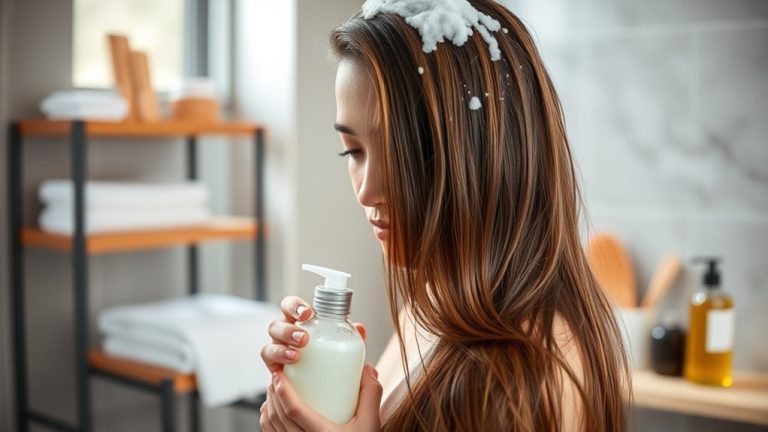
Start by applying purple shampoo on damp hair, concentrating on brassy tones or yellow areas. Leave it in for 2-3 minutes before rinsing thoroughly.
Apply purple shampoo to damp hair, focusing on brassiness, and rinse after 2-3 minutes for best results.
Use your regular shampoo during other washes to clean your hair without affecting toning.
If you want enhanced toning, you can incorporate purple shampoo after regular cleansing. Just avoid using it every wash to prevent dullness.
Make sure to follow up with a nourishing conditioner to hydrate and lock in the tone, especially since purple shampoo can dry strands.
Adjust how often you use purple shampoo based on how your hair responds. This way, you’ll get the perfect blonde or cool-toned result.
Frequently Asked Questions
Can Purple Shampoo Damage My Hair With Frequent Use?
Yes, overuse of purple shampoo can lead to hair damage, including moisture loss and hair brittleness. Frequent application increases the risk of color fading and scalp dryness, disrupting your natural texture.
To protect your hair, limit use to once or twice a week and follow with a nourishing conditioner. This helps maintain your hair’s health, preventing dryness and preserving its natural look without compromising your color.
Is Purple Shampoo Safe for All Hair Types?
Think of purple shampoo as a painter’s brush. It’s made for specific canvases. It’s safe for most hair colors but works best on light shades, while darker colors see little change.
Your hair porosity and texture affect how pigments settle. High porosity hair can absorb too much, which risks dullness.
So, consider your hair porosity and texture before use.
If your hair porosity is high, use it sparingly to avoid unwanted deposits.
Can Purple Shampoo Be Used on Dark or Natural Hair?
You shouldn’t use purple shampoo on dark hair or natural shades because it’s designed to neutralize blonde tones, not enhance hair pigmentation in darker colors. Purple shampoo targets brassiness in light hair but doesn’t preserve color or improve hair darkness.
Using it on natural or dark hair can cause unwanted purple tints without benefiting color preservation. Instead, choose shampoos formulated specifically for your hair’s pigmentation and darkness for the best results.
It’s all about picking the right product for your hair type! So, if your hair is dark or natural, skip the purple shampoo and go for something made just for you.
Does Purple Shampoo Help With Dandruff or Scalp Issues?
Purple shampoo doesn’t effectively treat dandruff or scalp irritation because it’s designed for color toning, not scalp care.
If you have scalp sensitivity or need dandruff prevention, you’ll want specialized products that focus on oil control, scalp hydration, and scalp exfoliation.
Using purple shampoo too often might actually make scalp dryness or irritation worse.
For proper dandruff treatment, it’s best to consult a dermatologist who can recommend shampoos tailored specifically to your scalp’s needs.
How Does Purple Shampoo Affect Colored or Chemically Treated Hair?
Purple shampoo affects colored or chemically treated hair by providing color correction and preventing pigment buildup, but you need to be careful. Because your hair is more porous, it absorbs pigments faster, which can change how long your color lasts if you leave the shampoo on too long.
It’s best to use purple shampoo occasionally as a toner replacement. This helps keep your color vibrant without causing unwanted shifts in tone.
Also, always pair it with nourishing products to keep your hair healthy and strong. That way, your hair stays looking its best while staying protected.
Conclusion
Purple shampoo isn’t your everyday cleanser. It’s more like a color-correcting artist, brushing away brassiness to keep your hair’s tone fresh. While it won’t clean dirt or oil like regular shampoo, using it wisely alongside your usual shampoo can maintain vibrant, cool hues.
Think of it as a touch-up rather than a full wash. Stick to recommended timing and frequency, and you’ll avoid unwanted purple tints while enjoying beautifully balanced hair color.