Can I Use Shampoo On My Dog – Safety And Best Practices
You shouldn’t use regular human shampoo on your dog, as it disrupts their delicate skin pH and causes irritation or dryness. Instead, choose a gentle, pH-balanced dog shampoo with soothing ingredients like oatmeal or aloe vera to keep their skin hydrated and healthy.
Over-bathing can harm their coat, so bathe every 4 to 6 weeks and rinse thoroughly to avoid irritation. It’s all about finding the right balance for your dog’s skin.
For more safe and effective bathing tips, keep exploring how to care for your dog’s skin and coat properly. Taking a little extra time will make a big difference in keeping your furry friend happy and healthy!
Why Dogs Need Special Shampoo
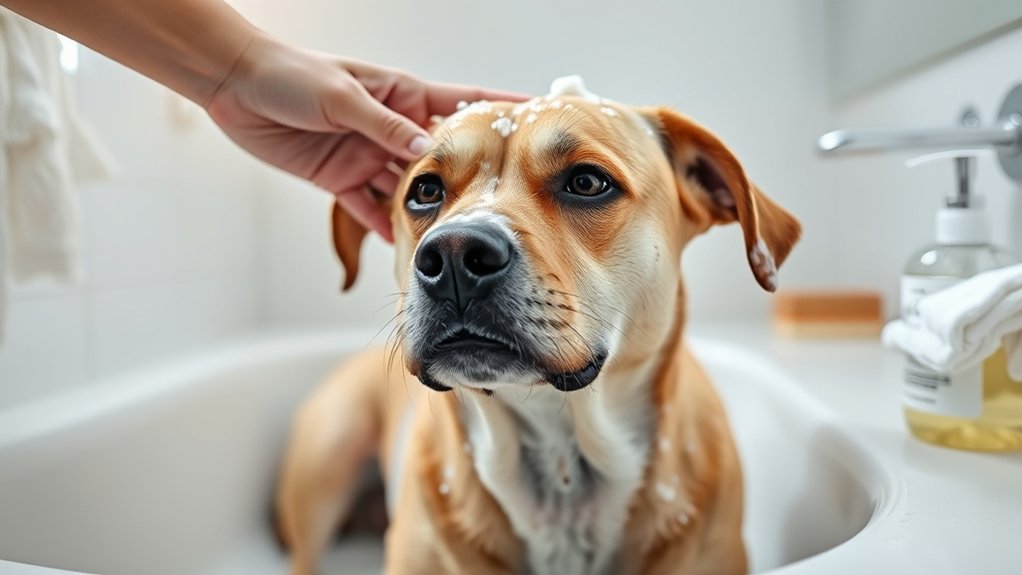
Because dogs have a different skin pH than humans, using your shampoo on them can cause irritation and dryness. Dogs’ skin pH ranges from 6.2 to 7.4, while human skin is more acidic, around 5.5. This difference means human shampoos disrupt your dog’s natural skin barrier, leading to skin irritation and increased vulnerability to parasites and infections.
Dogs’ higher skin pH makes human shampoos harsh, causing irritation and weakening their natural skin barrier.
Dogs also have fewer skin cell layers, making their skin more sensitive. That’s why dog shampoo is specially formulated to maintain their skin’s balance and protect against dryness and discomfort.
Using a dog shampoo enriched with soothing ingredients like oatmeal or aloe helps keep your pet’s skin healthy and hydrated, preventing common skin issues.
Choosing the right product shows you care about your dog’s skin health. It’s a simple way to keep your furry friend comfortable and happy.
How Human Shampoo Affects Your Dog’s Skin
Although it might seem convenient to use your own shampoo on your dog, doing so can harm their skin health. Human shampoo on dogs disrupts their natural pH balance, since human skin is more acidic (pH 5.5-6) while dog skin is closer to neutral (pH 6.2-7.4). This mismatch can cause dryness, irritation, and strip protective oils from their coat.
Dogs also have fewer skin layers, making them more sensitive to harsh chemicals like sulfates and parabens commonly found in human shampoos. These ingredients can trigger flaking, inflammation, and increase the risk of rashes or infections.
While an occasional use mightn’t cause serious problems, frequent washing with human shampoo can lead to long-term skin issues.
Is Human Shampoo Safe for Dogs?
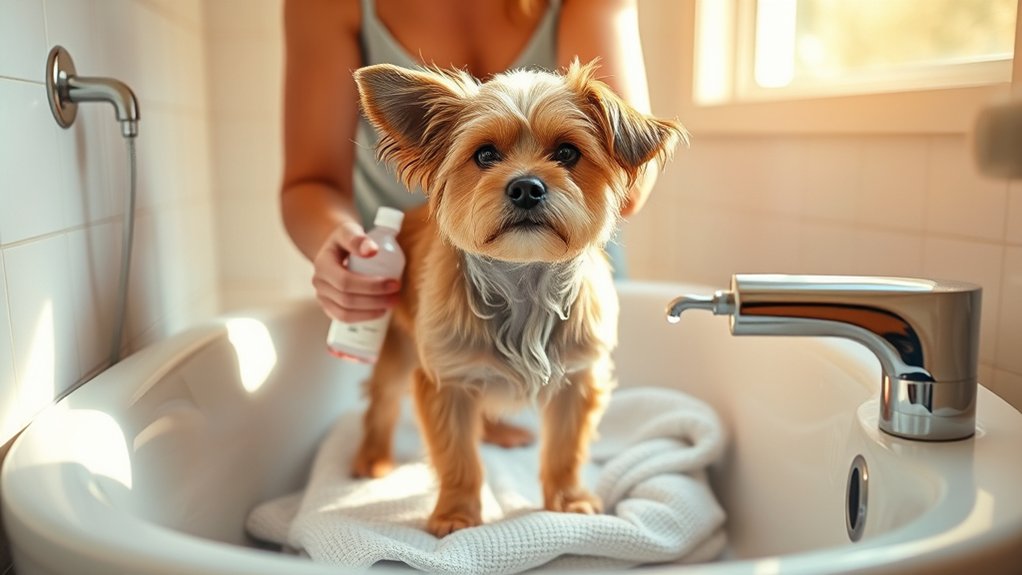
Why should you avoid using human shampoo on your dog? Human shampoos are made for the pH levels of human skin, which is around 5.5 to 5.6.
But your dog’s skin has a different, more neutral pH range of 6.2 to 7.4. Using human shampoo messes with this balance, causing dryness, flaking, and irritation.
Since dog skin has fewer cell layers and replaces cells faster, it’s more vulnerable to damage and infections from harsh ingredients in human shampoos.
Veterinarians strongly recommend dog shampoos that are specifically formulated to protect your dog’s natural skin barrier and keep the pH levels just right.
Now, if you ever find yourself in an emergency and only have human shampoo, a one-time use might be okay.
Just make sure to rinse thoroughly to reduce any negative effects.
But really, always try to use dog shampoos to keep your pet’s skin healthy and happy.
How to Choose Dog Shampoo for Your Dog’s Coat
Choosing the right shampoo means matching it to your dog’s coat type and skin needs. You want to look for gentle, pH-balanced formulas that have soothing ingredients like oatmeal or aloe vera. These help keep their skin healthy and comfortable.
It’s also a good idea to avoid harsh chemicals since they can cause dryness or irritation.
And if your dog has any specific skin issues, don’t hesitate to consult your vet for the best advice.
Coat Type Considerations
Since your dog’s coat type affects its grooming needs, selecting the right shampoo is essential for maintaining healthy skin and fur. For example, moisturizing shampoos work well for short-haired dogs prone to dryness. Thick or curly coats benefit from detangling formulas.
If your dog has sensitive skin, choose shampoos with soothing ingredients like aloe vera to reduce irritation. Avoid harsh chemicals that strip natural oils. A 3-in-1 shampoo can be a versatile option for multiple coat types.
| Coat Type | Recommended Shampoo Type |
|---|---|
| Short-haired | Moisturizing shampoos |
| Thick/Curly | Detangling, conditioning shampoos |
| Sensitive Skin | Soothing, calming shampoos (e.g., aloe vera) |
Ingredient Selection Guide
When selecting a shampoo for your dog’s coat, focus on ingredients that support skin health and address specific needs. The right shampoo for dogs can prevent or soothe common skin issues and keep their coat vibrant.
Use this ingredient selection guide to make an informed choice:
- Choose shampoos with soothing ingredients like oatmeal and aloe vera to reduce inflammation and itching.
- Avoid harsh chemicals such as sulfates, parabens, artificial fragrances, and dyes that can irritate your dog’s skin.
- Look for natural moisturizers like coconut oil that lock in moisture and promote a healthy, shiny coat.
Key Ingredients to Look For in Dog Shampoo for Healthy Skin
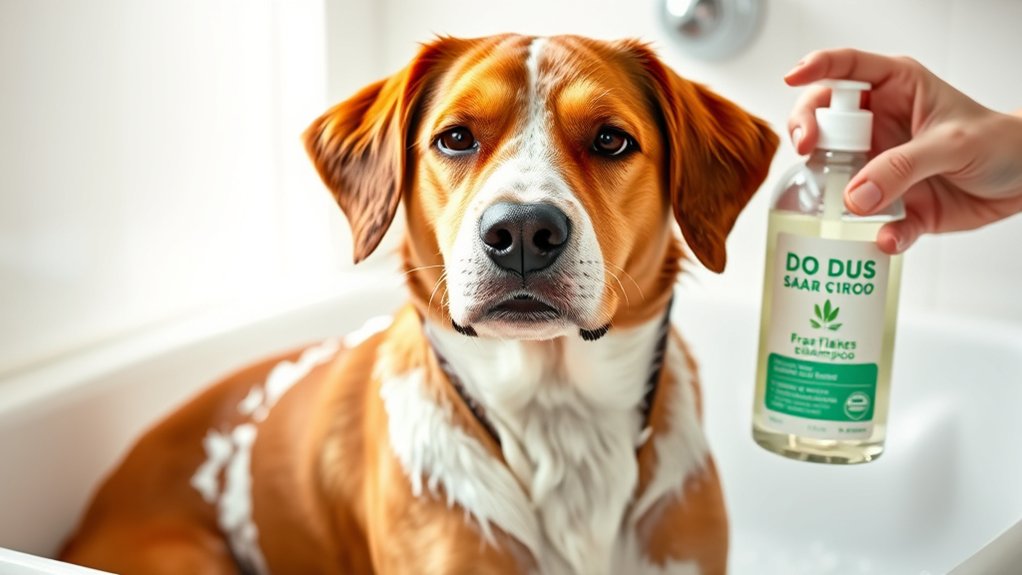
When you’re picking out a dog shampoo, look for soothing natural ingredients like oatmeal and aloe vera. These help calm irritation and keep your pup’s skin healthy.
You’ll also want moisturizing ingredients, like coconut oil, which help keep your dog’s coat hydrated and shiny.
It’s a good idea to choose formulas that offer anti-inflammatory benefits too, so your pet’s skin stays protected without getting dry or irritated.
Soothing Natural Ingredients
Although choosing a dog shampoo might seem straightforward, paying close attention to soothing natural ingredients can make a big difference in your pet’s skin health. Soothing ingredients like oatmeal and aloe vera gently calm irritation and reduce itching. This is especially important for dogs with sensitive skin.
Look for shampoos with moisturizing ingredients that help maintain the skin’s natural barrier and prevent dryness. Some key natural components to keep in mind include:
- Aloe vera offers anti-inflammatory and antimicrobial benefits to soothe and hydrate skin.
- Oatmeal reduces inflammation and itching effectively.
- Chamomile or lavender provide calming effects to make bath time easier for your dog.
Picking shampoos with these ingredients guarantees comfort and helps promote healthy, resilient skin for your furry friend.
Moisturizing Components Benefits
Because your dog’s skin can easily become dry or irritated, selecting a shampoo with effective moisturizing components is vital for maintaining a healthy coat and comfort. Look for shampoos enriched with natural oils like coconut oil, which locks in moisture and supports hydration.
These moisturizing components help protect your dog’s sensitive skin by preventing dryness and irritation. Avoid harsh chemicals that strip away natural oils, disrupting the skin’s protective barrier. Ingredients such as aloe vera offer soothing benefits while promoting a balanced, moisturized coat.
Choosing shampoos with gentle, natural moisturizing components guarantees your dog’s skin stays healthy and comfortable, reducing the risk of flaking or discomfort.
Prioritize formulas designed specifically for sensitive skin to maintain your dog’s overall skin wellness. This way, your furry friend stays happy and healthy with a soft, well-moisturized coat.
Anti-Inflammatory Properties
If your dog struggles with irritated or itchy skin, selecting a shampoo with anti-inflammatory properties can make a big difference. These soothing ingredients help calm inflammation, reduce itching, and support overall skin health.
When choosing a dog shampoo, look for ingredients known for their calming effects.
Oatmeal offers strong anti-inflammatory properties to soothe irritated skin and minimize discomfort. Aloe vera provides antimicrobial and anti-inflammatory benefits that protect sensitive skin. Coconut oil locks in moisture while delivering soothing relief to promote a healthy skin barrier.
Including these natural components in your dog’s shampoo not only makes bath time more pleasant but also helps keep their coat resilient and comfortable. It’s a great way to prevent dryness and infections, so your furry friend stays happy and healthy.
Ingredients to Avoid in Dog Shampoo for Sensitive Skin
When selecting a shampoo for your dog’s sensitive skin, you’ll want to steer clear of ingredients that can cause irritation or harm.
Avoid shampoos with sodium lauryl sulfate, a harsh sulfate that strips natural oils, leading to dryness and discomfort. Parabens are another ingredient to avoid, as they’re linked to skin irritation and potential long-term health issues.
Fragrances, including many synthetic scents and some essential oils, can trigger allergic reactions or worsen sensitivities, especially in dogs with pre-existing skin conditions.
Always check labels carefully and opt for gentle, natural formulations designed specifically for sensitive skin.
By avoiding these harmful ingredients, you’ll protect your dog’s skin barrier and keep them comfortable and healthy after every bath.
It’s all about keeping your furry friend happy and itch-free!
How Often Should You Bathe Your Dog and Why
Choosing the right shampoo is just one part of keeping your dog’s skin healthy. How often you bathe your dog plays an essential role in maintaining their skin and coat. Generally, bathing your dog every 4–6 weeks works well.
But if your dog has particularly oily skin, allergies, or is very active, more frequent baths might be necessary. Over-bathing can strip natural oils, causing dryness and irritation, so balance is key.
Consider this:
- Monitor your dog’s coat for odors, greasiness, or scratching. These are signs it’s time for a bath.
- Use medicated shampoos only under veterinary guidance if your dog has skin issues.
- Regular grooming between baths keeps the coat clean and healthy.
This approach guarantees your dog’s skin and coat stay in peak condition.
Emergency Dog Washing Without Shampoo
Although regular dog shampoo is ideal, you can still clean your dog effectively in emergencies without it. In an emergency, rinsing your dog with plain water removes dirt and debris gently. This helps keep a safe environment for your dog without causing skin irritation.
For spot cleaning, unscented baby wipes work well on short-haired breeds and avoid harsh chemicals. While some non-toxic products exist, they aren’t substitutes for dog shampoo and should be used cautiously. Always rinse thoroughly to prevent residue buildup that could irritate your dog’s skin.
To avoid emergency dilemmas, keep a supply of dog-safe shampoo at home. This way, you’re always prepared to maintain your dog’s hygiene safely. It’s a simple step that helps protect their skin health during unexpected situations.
Using Dawn Dish Soap for Dogs
How safe is it to use Dawn dish soap on your dog? Dawn dish soap is non-toxic and can be effective for quick clean-ups or treating fleas on young puppies when used sparingly.
However, frequent use isn’t recommended because it may cause skin irritation and strip natural oils from your dog’s coat.
Here’s what to keep in mind: Use Dawn dish soap occasionally and rinse thoroughly to avoid residue buildup.
Monitor your dog’s skin for any signs of irritation after use. Always consult a veterinarian for long-term shampoo alternatives tailored to your dog’s skin and coat needs.
While Dawn can help in emergencies, relying on it regularly may harm your dog’s skin health.
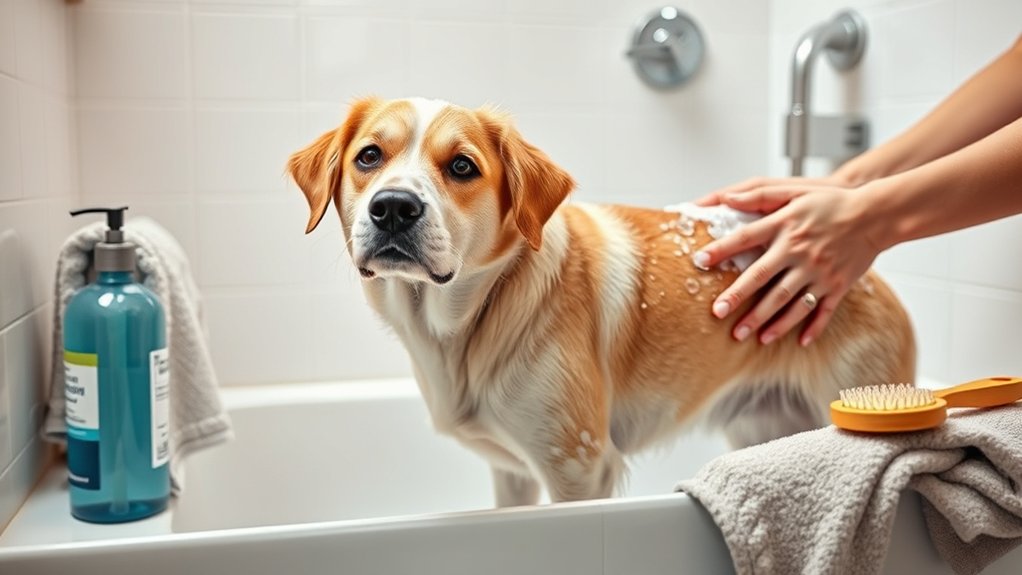
Tips for Bathing Your Dog Safely With Shampoo
When you’re giving your dog a bath, it’s super important to pick shampoos that are made just for their skin’s natural pH. This helps avoid any irritation or discomfort.
You’ll want to stick to a bathing routine of about every 4 to 6 weeks, but feel free to adjust it depending on how active your dog is or how sensitive their skin seems.
Oh, and don’t forget—rinsing out all the shampoo really well is key to keeping your furry friend happy and healthy!
Choosing Safe Shampoos
Because your dog’s skin has a different pH balance than yours, choosing shampoos specifically formulated for dogs is crucial to protect their skin barrier.
Using a pH-balanced dog shampoo helps maintain healthy skin, especially if your dog has sensitive skin prone to irritation.
When selecting a shampoo, keep these tips in mind:
- Opt for dog shampoos with soothing ingredients like oatmeal or aloe vera to calm itching and moisturize skin.
- Avoid products containing harsh chemicals such as sulfates and parabens, which can dry out and irritate your dog’s skin.
- In emergencies, use human shampoos only if they contain gentle, natural ingredients and rinse thoroughly.
Following these guidelines guarantees your dog’s coat remains healthy and comfortable after every bath.
Proper Bathing Frequency
Although dogs don’t need frequent baths like humans do, knowing the right bathing schedule is essential to keep their skin and coat healthy. Typically, bathing every 4 to 6 weeks works well.
But active dogs or those with sensitive skin may require more frequent attention.
Using a dog shampoo formulated to match your pet’s pH balance is vital since their skin is more neutral compared to human skin’s acidity. Over-bathing can strip natural oils, leading to dryness and irritation.
So, watch for changes in your dog’s skin condition.
Between baths, regular grooming helps maintain cleanliness and coat health without over-washing.
Thorough Rinsing Importance
Since shampoo residue can cause your dog discomfort and skin issues, thorough rinsing is essential after every bath. When you use dog shampoo, it’s critical to remove all traces to prevent skin irritation and dryness.
Here’s how to guarantee thorough rinsing: rinse each body part carefully, especially the belly, behind the ears, and under the legs, where residue often lingers.
Use lukewarm water to avoid discomfort or added sensitivity to your dog’s skin.
Keep rinsing until the water runs clear. That way, you’ll know all the shampoo is washed away, and your dog’s skin stays happy and healthy.
Frequently Asked Questions
Can I Use Homemade Shampoo Recipes for My Dog?
Yes, you can use homemade shampoo recipes for your dog, but you need to prioritize homemade ingredients safety to avoid irritation.
Using natural alternatives benefits your pup by reducing exposure to harsh chemicals. Always verify the shampoo maintains your dog’s pH balance, which is essential since their skin differs from yours.
Test the shampoo on a small area first.
And if your dog has skin issues, it’s a good idea to consult your vet. This way, you can keep bath time safe and soothing for your furry friend.
How Do I Properly Rinse Shampoo off My Dog?
Did you know that improper rinsing can cause skin irritation in over 30% of dogs? When rinsing shampoo off your dog, use lukewarm water to keep them comfortable.
Start the water flow from their neck down to avoid sensitive areas. Make sure to rinse thoroughly, especially in spots like under their legs and belly.
Keep rinsing until the water runs clear. This way, you’ll ensure no shampoo residue remains, which helps protect your dog’s skin and coat health.
Can Dog Shampoo Help With Flea and Tick Prevention?
Yes, dog flea shampoo effectiveness can be a key part of tick prevention strategies. These shampoos contain ingredients that kill or repel fleas and ticks, breaking their life cycles.
While natural flea remedies might appeal to you, they often lack proven results compared to medicated shampoos.
Always choose a product suited to your dog’s needs.
And it’s a good idea to consult your vet to guarantee safe, effective flea and tick control without irritating your dog’s skin.
What Should I Do if My Dog Licks Shampoo?
About 15% of dogs exposed to shampoo accidentally show shampoo toxicity signs like drooling, vomiting, or lethargy.
If your dog licks shampoo, immediately rinse their mouth with water and watch for these symptoms.
If you spot any, take immediate action by contacting your vet for consultation advice.
Don’t wait. Early vet intervention can prevent complications and keep your furry friend safe and comfortable.
Are There Shampoos for Dogs With Specific Coat Colors?
Yes, there are shampoos designed specifically for dog coat care that focus on color enhancement.
These shampoos use safe ingredients like optical brighteners or natural pigments to brighten white or dark coats while keeping your dog’s skin healthy.
When choosing one, make sure it’s pH-balanced and formulated for dogs to avoid irritation.
Always consult your vet or groomer to pick the best product for your dog’s unique coat and skin needs.
It really helps to get their advice since every dog is a bit different.
Conclusion
You wouldn’t use a rotary phone in today’s world, just like you shouldn’t use human shampoo on your dog. Their skin needs special care to stay healthy and happy.
By choosing the right dog shampoo and bathing them correctly, you protect their coat and avoid irritation. Always prioritize their unique needs. Your furry friend deserves the best.
Remember, a little knowledge goes a long way in keeping your dog safe and comfortable.