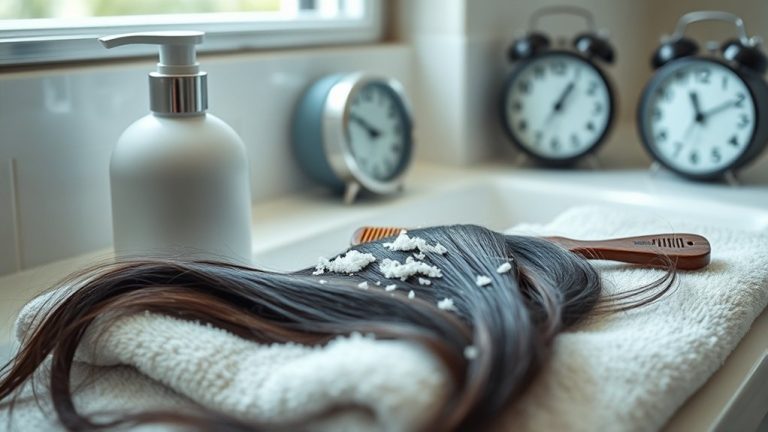
Why Is Shampoo Called Shampoo – Origin And Meaning Explained
You call it shampoo, but the word originally meant a therapeutic scalp massage from India. It comes from the Hindi word “chhampo,” which means “press” or “massage.”
British colonists picked up the term in the 18th and 19th centuries. They changed its meaning from a massage to something focused on hair cleansing.
This shift shows how cultures influenced each other and how grooming habits evolved over time.
When you understand shampoo’s origins, you see how traditional Indian wellness shaped modern hair care. It’s pretty cool how language, culture, and product innovation all connect here.
Where Does the Word “Shampoo” Come From?
Have you ever wondered where the word “shampoo” comes from? Its origin traces back to the Hindi word “chhampo,” which means “press” or “massage.”
Initially, “shampoo” described a specific action—massaging or pressing during cleansing rituals in India, rather than washing hair.
Originally, shampoo referred to a massage or pressing ritual, not hair washing.
The term entered English in the 19th century, keeping this original meaning related to massage. Over time, the meaning shifted from massage to hair washing.
This change reflects how cultural practices and what people use words for can evolve.
Understanding this linguistic evolution shows how words adapt as they move between languages and societies. Like “shampoo,” other English words such as “bungalow” and “pyjama” also have Hindi roots.
This illustrates the broader influence of Indian languages on English vocabulary.
How “Chāmpo” Inspired the Meaning of “Shampoo
You’ll find that “chāmpo” directly means to press or massage. This makes sense because it was used in traditional Indian scalp and body treatments with herbal oils.
When British traders came across this practice, they borrowed the term. At first, they used it just to describe the act of massaging the scalp, not washing hair.
Knowing this helps clear up how the word “shampoo” changed over time—from meaning a massage technique to the hair-cleaning product we know today.
Meaning of Chāmpo
How did a simple Hindi word transform into a staple of modern hair care? The word “chāmpo” originally meant “press” or “massage” in Hindi, specifically referring to the traditional practice of head massage with herbal oils and pastes.
When British colonial traders encountered this term, they adopted “chāmpo” to describe the scalp massage techniques they observed.
Over time, the meaning shifted from therapeutic head massage to hair cleansing. This evolution gave birth to the English word “shampoo,” which now primarily denotes washing hair rather than massaging it.
Understanding “chāmpo” clarifies how shampoo’s origins lie not just in cleaning but in a holistic practice of scalp stimulation and care.
It really highlights the deep cultural roots embedded in this everyday product. So next time you shampoo your hair, remember, it all started with a soothing head massage.
Traditional Indian Massage
Why did the traditional Indian practice of “chāmpo” leave such a lasting impact on modern hair care? The traditional Indian massage, known as chāmpo, involved pressing and kneading herbs and oils into the scalp. This promoted relaxation and scalp health.
This holistic ritual was central to Indian wellness and bathing customs. British colonists encountered chāmpo and adapted it. That’s how the word “shampoo” came about — it originally described this massage technique before it referred to hair-washing products.
| Aspect | Practice Details | Impact on Modern Hair Care |
|---|---|---|
| Technique | Scalp massage with herbs and oils | Relaxation and scalp health |
| Cultural Role | Integral to Indian bathing rituals | Inspired holistic hair care |
| Colonial Encounter | British adoption of chāmpo | Led to “shampoo” terminology |
| Linguistic Origin | Hindi word “chāmpo” means “press” or “massage” | Root of modern shampoo usage |
Linguistic Evolution of Shampoo
Although the original Hindi term “chāmpo” specifically described a therapeutic pressing or massage technique, British colonists adopted the word and gradually transformed its meaning. This linguistic evolution shows how the Hindi word chāmpo, initially tied to massage, shifted through cultural adaptation.
You’ll notice that early English usage of “shampoo” focused on the act of massaging rather than hair washing.
Over time, as the practice mingled with Western hygiene habits, the term evolved to denote the cleansing product we know today. This shift reflects a complex interplay of language and culture, where a traditional Indian concept was repurposed within a different context.
Understanding this helps you appreciate how “shampoo” embodies both its origins and its modern usage.
How Shampooing Arrived in Britain
When did shampooing first make its way to Britain? You’ll find that shampoo arrived during the 18th and 19th centuries, carried by Indian immigrants and the colonial influence of British traders.
The British encountered *champi*, a traditional Indian head massage involving herbal oils, which laid the foundation for shampooing.
The term “shampoo” itself is an anglicized form of the Hindi word *chāmpo*, meaning to massage or press. Initially, what you’d recognize as shampooing was less about washing hair and more focused on herbal mixtures and scalp massage.
Over time, this practice gained popularity in Britain, reflecting Indian cultural and hygiene traditions.
This colonial exchange considerably shaped how shampoo was understood and gradually integrated into British grooming routines. It’s pretty interesting how these traditions crossed continents and became part of everyday life in Britain.
The Shift From Scalp Massage to Hair Cleansing
The original concept of shampooing centered on therapeutic scalp massages using herbal oils, which you might find quite different from today’s hair-washing routine. Initially, shampoo referred to the act of pressing and massaging the scalp, deeply rooted in herbal traditions brought from British India.
Over time, this practice shifted focus from massage’s holistic benefits to primarily cleansing the hair.
You’ll notice this progression occurred gradually in the late 19th and early 20th centuries, as chemical surfactants replaced oil-based mixtures. These surfactants enhanced cleaning efficiency, diminishing the role of scalp massage in the process.
Early Commercial Shampoo Products and Their Influence
Since the early 20th century, commercial shampoo products have revolutionized hair care by shifting from traditional soap-based methods to specialized formulations designed for cleaning and conditioning. You’ll find that Hans Schwarzkopf pioneered the shampoo market with his powdered shampoo in 1903, which laid the groundwork for liquid shampoo formulations that emerged in the 1930s.
John Breck’s development of the first commercially successful liquid shampoo in 1908 further accelerated this shift, making shampooing common across American beauty salons. The evolution in formulation focused on improving cleansing efficiency without the harshness of soap, enhancing both user experience and hair health.
Brands like Breck and Schwarzkopf didn’t just innovate products; they shaped consumer habits and expanded the global market, transforming shampoo into a daily essential rather than a luxury or salon-only item. It’s interesting how these early efforts changed the way we think about hair care today.
How Shampoo Ingredients Have Changed Over Time
You’ll notice that shampoo ingredients started out with natural herbs like amla and shikakai, which people loved for their cleansing and nourishing properties.
Then, along came chemical surfactants like sodium lauryl sulfate, and that really changed the game by boosting effectiveness and foam production.
Lately, though, there’s been a clear shift back to Ayurvedic formulas, mixing traditional botanicals such as neem and turmeric with modern innovations.
It’s like the best of both worlds coming together.
Traditional Herbal Ingredients
Four traditional herbal ingredients, reetha, shikakai, amla, and hibiscus, have long formed the foundation of natural shampoos because of their effective cleansing and conditioning properties.
You’ll find these herbal shampoos use natural ingredients that gently cleanse while promoting scalp health without harsh chemicals. Each ingredient contributes uniquely to hair care, balancing cleansing with nourishment.
| Ingredient | Primary Benefit | Role in Herbal Shampoos |
|---|---|---|
| Reetha | Natural cleanser | Removes dirt & oil |
| Shikakai | Gentle cleanser | Conditions & detangles |
| Amla | Rich in antioxidants | Strengthens hair roots |
| Hibiscus | Moisturizer | Enhances shine & softness |
These ingredients show how traditional herbal shampoos maintain scalp health and hair liveliness. They really set the groundwork for modern natural formulations.
Shift To Chemical Surfactants
Although traditional herbal shampoos relied on natural cleansing agents, modern formulations have shifted toward chemical surfactants like sodium lauryl sulfate and sodium laureth sulfate to achieve superior foaming and oil removal. These chemical surfactants, introduced in the early 20th century, revolutionized shampoo by enhancing cleaning efficiency through their ability to bind oils and dirt, allowing easy rinsing.
Unlike herbal ingredients, these synthetic compounds generate abundant lather, which users associate with effective cleansing. Over time, shampoo formulas have evolved further, integrating conditioning agents, preservatives, and fragrances to improve hair health and sensory appeal.
This shift to chemical surfactants provided a consistent, reliable cleaning experience that traditional methods couldn’t match. It fundamentally changed how shampoos perform and meet consumer expectations in daily hair care routines.
Revival Of Ayurvedic Formulas
As consumer awareness grows about the potential drawbacks of synthetic chemicals, shampoo formulations have increasingly embraced Ayurvedic principles. They blend centuries-old botanical ingredients like neem, turmeric, and reetha with modern technology.
This revival marks a shift back to herbal formulations rooted in ancient Indian medicine. The goal is to balance scalp health and stimulate hair growth using natural ingredients. Drawing from texts like the Charaka and Sushruta Samhitas, contemporary Ayurvedic shampoos respect tradition while catering to modern wellness trends.
| Ingredient | Traditional Benefit | Modern Application |
|---|---|---|
| Neem | Antibacterial, scalp health | Chemical-free preservative |
| Turmeric | Anti-inflammatory, healing | Enhances scalp condition |
| Reetha | Natural cleanser | Gentle foaming agent |
You see, this fusion guarantees effective, gentle hair care without harsh chemicals.
Why Indian Herbal Traditions Still Influence Shampoo Formulas
Because Indian herbal traditions have honed natural hair care over centuries, many modern shampoo formulas still draw heavily from these time-tested ingredients. You’ll find that Ayurvedic hair care principles, emphasizing scalp health and nourishment, guide the inclusion of Indian ingredients like amla, shikakai, and reetha in shampoos.
These components offer more than cleansing; they strengthen hair and promote shine naturally.
Three key reasons why herbal traditions influence shampoos today include:
- Proven efficacy of Indian ingredients in maintaining scalp balance and hair robustness.
- Ayurvedic focus on holistic hair care, combining cleansing with therapeutic scalp massage.
- Consumer demand for natural, culturally rooted formulations driving product innovation.
This blend of ancient wisdom and modern science ensures shampoos benefit from time-honored herbal traditions.
What “Shampoo” Reveals About Language and Culture
How did a simple Hindi word transform into a global term for hair care? The word “shampoo” stems from the Hindi origin “chhampo,” meaning to press or massage. This directly reflects Indian scalp treatment traditions.
This linguistic adoption happened during colonial times and shows cultural exchange. British colonizers integrated Indian concepts into their language and lifestyle.
Over time, “shampoo” evolved from describing a massage technique to naming the cleansing product itself. This change signals shifts in personal care customs.
This progression highlights how language captures cultural interactions and adaptations. Today’s shampoo formulas, often inspired by herbal and Ayurvedic practices, echo those ancient roots. It proves that language and culture remain intertwined.
Frequently Asked Questions
Can Shampoo Be Used on Pets Safely?
You shouldn’t use regular shampoo on your pet’s hair because it’s not animal safe and can cause irritation. Instead, choose gentle formulas specifically made for pets, as these are pH-balanced and designed to protect their sensitive skin.
Using pet-safe shampoos guarantees their coat stays healthy without dryness or allergic reactions.
Always check labels carefully, and if you’re unsure, just ask your veterinarian to keep your pet’s hair clean and safe.
How Often Should I Wash My Hair With Shampoo?
You should aim for a hair washing frequency of every 2 to 3 days to maintain ideal scalp health. However, consider your hair type.
Oily hair may need more frequent washing to prevent buildup, while dry or curly hair benefits from less frequent shampooing to avoid stripping natural oils.
Adjust based on your scalp’s condition and lifestyle. Over-washing can irritate your scalp.
On the other hand, infrequent washing risks dirt and oil accumulation. So, it’s all about finding the right balance for you.
What’s the Difference Between Shampoo and Conditioner?
You’ll find shampoo and conditioner serve distinct roles in hair care. Shampoo uses surfactants, which are product ingredients that cleanse by removing dirt and oil.
Conditioner, on the other hand, contains moisturizing agents like silicones and proteins to detangle and smooth hair.
Their historical evolution shows shampoo’s cleansing focus is quite different from conditioner’s restorative purpose.
Using both strategically guarantees clean, manageable hair. First, shampoo cleanses, then conditioner replenishes moisture and closes the hair cuticle for shine and frizz control.
Are Sulfate-Free Shampoos Better for Hair Health?
Imagine your scalp as a delicate garden. Sulfate-free shampoos use natural ingredients that nurture it gently, unlike harsher chemicals that strip oils and disrupt scalp health.
They reduce irritation and dryness, especially if you have sensitive skin, and protect hair color longer.
However, they may require more effort to remove buildup. So, if you value gentle care over instant foam, sulfate-free options are better for maintaining your hair’s long-term health.
Can Shampoo Expire or Go Bad Over Time?
Yes, shampoo can expire over time. Its chemical stability depends a lot on how effective the preservatives are and how well the packaging protects it.
If the preservatives weaken or the packaging lets air and light in, the formula can break down.
This breakdown changes the shampoo’s consistency, smell, and cleansing power. You might notice separation or a rancid odor, which are clear signs it’s gone bad.
Conclusion
Think of shampoo as a linguistic bridge, connecting ancient traditions to modern science. You’ve seen how its roots in the Hindi word “chāmpo” evolved from soothing scalp massages to cleansing innovations. This journey reveals more than just hair care. It uncovers cultural exchanges shaping daily life.
By understanding shampoo’s origin and transformation, you gain insight into how language and culture continuously blend. They influence even the simplest routines, like washing your hair.