What Is Shampoo For – Hair Care Purpose Explained
Shampoo helps you cleanse your hair and scalp by using surfactants that remove oil, dirt, and buildup while preserving your scalp’s natural pH and sebum balance. It supports your scalp’s barrier, maintains hair cuticle integrity, and prevents clogged follicles, promoting healthy growth.
Proper shampoo use prevents irritation, dandruff, and damage, keeping hair manageable and resilient. Understanding its composition and benefits will reveal how shampoo contributes to ideal hair and scalp health.
What Is Shampoo and How Does It Work?
Shampoo contains a blend of surfactants that work together to remove dirt, oil, and product buildup from your scalp and hair. These surfactants surround dirt and oil particles, forming micelles, which are tiny clusters that trap impurities. When you rinse, water washes away these micelles, effectively cleansing your scalp, the crucial area where hair growth begins.
Although hair strands consist of dead keratin fibers, shampoo primarily targets the scalp’s cleanliness to maintain a healthy environment for new hair. The lather you see during shampooing comes from surfactant activity, not from cleansing power.
Proper shampoo application ensures that dirt and excess oils are encapsulated and removed efficiently. This precise mechanism leaves your hair feeling fresh and thoroughly cleansed after rinsing.
Benefits of Regular Shampooing for Hair Health
How often you cleanse your scalp plays a crucial role in maintaining hair health. Regular shampooing removes excess oil, dirt, and product buildup, which helps prevent scalp irritation and dandruff.
Cleansing your scalp regularly is key to removing buildup and preventing irritation and dandruff.
By maintaining scalp hygiene, you create an ideal environment for hair growth.
Proper hair cleansing balances the scalp’s natural oils without stripping them. This supports a balanced scalp microbiome, which is essential for overall hair health.
Consistent washing also reduces clogged follicles, minimizing the risks of hair thinning.
Using the right shampoo routinely improves hair appearance. It makes hair shinier, cleaner, and more manageable.
How Shampoo Protects Your Scalp and Hair
When you shampoo, the surfactants latch onto sebum, dirt, and any product buildup on your scalp. This makes it easier to rinse everything away, which helps prevent clogged follicles.
Keeping your scalp clean like this is key to maintaining its natural pH balance and sebum levels.
By doing so, you reduce irritation and create a healthy environment for your hair to grow.
Plus, shampooing the right way helps preserve the hair cuticle’s strength. This means your strands stay protected from damage and your overall hair health gets a nice boost.
Scalp Cleansing Mechanism
Although you mightn’t see it, your scalp accumulates oils, sweat, dead skin cells, and environmental pollutants throughout the day. Shampoo’s scalp cleansing action relies on surfactants, which form micelles that surround and lift away sebum, dirt, and dead skin cells.
This oil removal and debris clearance prevent buildup that can clog follicles, supporting scalp health and reducing scalp infections.
Proper shampoo use helps maintain your scalp’s natural pH balance, protecting its barrier function and minimizing irritation or inflammation.
By consistently removing excess oils and impurities, shampoo reduces the risk of fungal and bacterial growth responsible for dandruff and other scalp conditions.
This targeted cleansing mechanism guarantees a clean, balanced environment critical for healthy hair and scalp maintenance.
Sebum Balance Maintenance
Because sebum production directly influences scalp health and hair appearance, maintaining its balance is essential. Shampoo plays a critical role in sebum balance by cleansing excess oil without stripping away beneficial natural oils. This helps preserve the scalp’s barrier function.
Proper scalp regulation depends on maintaining the scalp’s slightly acidic pH balance, which shampoos formulated for this purpose support. By removing accumulated sebum and excess oil, shampoo prevents clogged follicles that can cause inflammation and hair thinning.
Furthermore, effective cleansing reduces microbial buildup that triggers dandruff and irritation. This promotes a healthy scalp environment.
Using the right shampoo ensures you control sebum overproduction while supporting scalp health. It strikes an ideal balance between cleansing and protecting your hair and scalp.
Hair Cuticle Protection
As you cleanse your hair, shampoo plays an essential role in protecting the cuticle by effectively removing dirt, excess oils, and product buildup that can roughen or damage the outer hair layer. Proper shampooing balances the scalp’s pH and preserves the hair cuticle’s integrity.
To safeguard your hair cuticle during shampooing, consider these key factors:
- Use gentle cleansers to minimize friction and prevent cuticle abrasion.
- Remove buildup thoroughly to avoid cuticle lifting and damage.
- Maintain moisture levels with conditioning ingredients that form a protective film over the cuticle.
- Shampoo regularly with appropriate formulas to support scalp health and keep the hair cuticle smooth and resilient.
This approach ensures your hair remains strong, shiny, and protected from environmental and mechanical stress. Taking these simple steps can make a big difference in how your hair looks and feels every day.
What’s Inside Your Shampoo and Why It Matters
What exactly goes into the shampoo you use daily, and why should you care? Shampoo formulations combine surfactants that remove dirt and oils, conditioning agents to detangle and smooth hair, and natural ingredients that promote hydration and scalp health.
Humectants guarantee moisture retention, preventing dryness, while preservatives maintain product stability. pH balance is vital; shampoos are slightly acidic to protect hair fibers and support scalp health.
| Ingredient Type | Purpose |
|---|---|
| Surfactants | Cleanse by removing oils and dirt |
| Conditioning Agents | Smooth and detangle hair strands |
| Natural Ingredients | Hydrate and support scalp health |
| Humectants | Retain moisture and hydration |
| Preservatives & pH | Guarantee stability and protect hair |
Understanding these components helps you choose shampoos that maintain hair integrity and scalp wellness. It’s good to know what’s in your shampoo so you can pick one that really works for your hair and scalp.
Types of Shampoo for Dry, Oily, and Colored Hair
When selecting a shampoo, understanding your hair type is essential to address its unique needs effectively. Different formulations target dry hair, oily scalp, or color-treated hair, optimizing care and results.
For dry hair, choose shampoos with hydrating ingredients like glycerin and nourishing oils to restore moisture and reduce brittleness.
If you have oily hair, opt for deep-cleansing surfactants such as sodium laureth sulfate that remove excess sebum while maintaining scalp balance.
Color-treated hair requires sulfate-free shampoos enriched with UV filters and antioxidants to guarantee hair color preservation and minimize damage.
Damaged hair benefits from protein-infused shampoos that repair strands and reinforce structural integrity through nourishing oils.
Selecting the right type assures effective cleansing, hydration, and protection tailored to your hair’s condition.
When to Use Specialized Shampoos: Dandruff, Baby, and More
Beyond selecting shampoos based on hair type, you’ll find specialized formulations designed to address particular scalp conditions and sensitive needs. Dandruff shampoos contain active ingredients like zinc pyrithione or selenium sulfide to combat fungal overgrowth and reduce flakes effectively.
Specialized shampoos target scalp conditions with ingredients like zinc pyrithione to effectively reduce dandruff and soothe irritation.
If you struggle with persistent scalp issues such as itchiness or inflammation, using a medicated shampoo with targeted medicated components can alleviate symptoms and promote scalp health.
For sensitive skin, baby shampoos use hypoallergenic ingredients and balanced pH to cleanse gently without causing irritation.
It’s essential to choose the appropriate specialized shampoo tailored to your scalp condition and follow product instructions carefully. When in doubt, consult a dermatologist to guarantee safe, effective treatment for your specific scalp issues.
Natural and Alternative Shampoo Methods Compared
Although conventional shampoos rely on synthetic surfactants to effectively remove oils and dirt, natural and alternative shampoo methods have gained traction by using ingredients like baking soda, honey, and chickpea flour to cleanse hair more gently. These sulfate-free formulas prioritize scalp health by minimizing over-stripping of natural oils with chemical-free cleansing agents.
Consider these points when exploring natural ingredients:
- Baking soda has a high pH, which can risk cuticle damage and irritation.
- Honey and chickpea flour help maintain pH balance, supporting gentle cleansing.
- Water-only methods reduce chemical exposure but might need some adjustment.
- Natural shampoos preserve scalp oils, which helps enhance moisture retention.
You’ll find these gentle formulas effective for maintaining scalp health while reducing reliance on harsh surfactants. They’re definitely worth trying if you want a softer, more natural approach to hair care.
Common Hair Care Mistakes Shampoo Can Prevent
Choosing gentle, pH-balanced shampoos not only supports scalp health but also helps you avoid common hair care mistakes that can lead to damage. Proper shampoo use prevents scalp buildup and dandruff by removing excess oil, dirt, and dead skin cells. It also reduces hair breakage and split ends by maintaining cuticle integrity.
Picking shampoos suited for your hair type stops over-drying or greasy hair, which are common styling errors. Regular cleansing removes product residue that clogs hair follicles and can slow down hair growth. Plus, gentle formulas minimize scalp irritation and allergic reactions caused by harsh ingredients.
| Mistake Prevented | How Shampoo Helps |
|---|---|
| Scalp buildup & dandruff | Removes excess oil and dead cells |
| Hair breakage & split ends | Maintains healthy cuticles, reducing damage |
| Over-drying & greasy hair | Balances moisture, preventing extremes |
Frequently Asked Questions
Can Shampoo Affect Hair Growth Rate?
Shampoo can indirectly affect your hair growth rate by improving scalp health through ingredient effects that maintain pH balance and regulate oil. Proper dandruff control and scalp hydration prevent product buildup, which clogs follicles and disrupts growth.
Using gentle formulas strengthens hair texture and reduces breakage, supporting healthy strands. However, harsh shampoos can damage hair strength and scalp integrity, potentially slowing growth.
How Does Shampoo Interact With Conditioner?
You might think shampoo and conditioner are mortal enemies, but they actually team up perfectly. Shampoo’s cleansing mechanism removes oils and residue, restoring pH balance to boost follicle health through scalp cleansing and lather formation.
This preps your scalp and hair for conditioner, which locks in scalp hydration and smooths strands. Shampoo ingredients guarantee a clean slate, so conditioner can work its magic without interference.
Together, they create healthier, more manageable hair. It’s all about working in harmony rather than against each other.
Are There Shampoos Safe for Daily Use on Sensitive Skin?
Yes, you can find shampoos safe for daily use on sensitive skin. Look for gentle formulas that are fragrance-free, hypoallergenic options, and preservative-free to minimize irritation.
Dermatologist-recommended products often feature natural ingredients and chemical-free compositions, reducing the risk of flare-ups on your sensitive scalp.
Always choose allergen-tested shampoos to guarantee safety. And it’s a good idea to conduct patch tests before regular use to protect your skin’s delicate barrier effectively.
Taking these steps helps keep your scalp calm and healthy every day.
Can Shampoo Cause Allergic Reactions or Irritations?
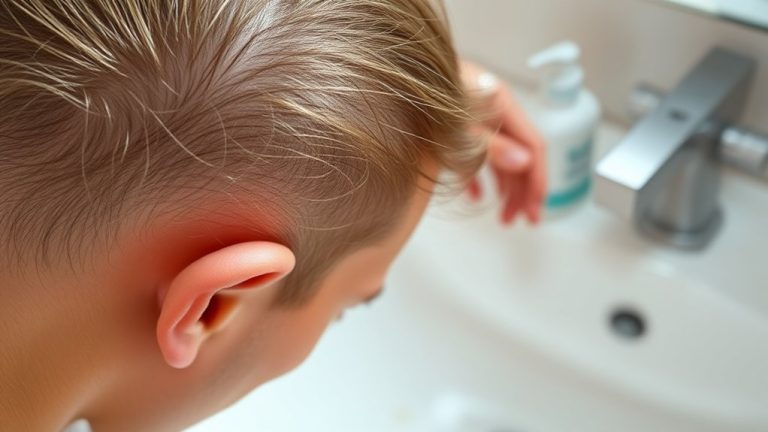
Imagine your scalp as a delicate garden. Chemical irritants and fragrance reactions can be like harsh storms, causing scalp inflammation and allergic symptoms such as itching or redness.
Yes, shampoo can trigger ingredient allergies that lead to contact dermatitis, especially if you have a sensitive scalp. You might want to consider allergic testing to identify what sets off your reactions.
Choosing natural remedies and gentle formulations can help protect your scalp. This also reduces the risk of irritation and allergic flare-ups.
Taking these steps makes a big difference in keeping your scalp healthy.
How Should Shampoo Be Stored to Maintain Effectiveness?
You should store shampoo under ideal storage conditions to preserve its shelf life and maximize preservative effectiveness. Keep it in a cool, dry place with controlled temperature and low humidity levels.
Avoid light exposure by using packaging designed with opaque or UV-resistant container material.
Make sure the product sealing is secure to prevent contamination and evaporation. Proper packaging design and temperature control help maintain shampoo stability.
Conclusion
Now that you know shampoo acts as the foundation of your hair care routine, you can treat your scalp and strands like a delicate ecosystem. Regular cleansing removes buildup, balances oils, and protects against damage. Think of it as a science-backed shield for your hair’s health.
Choosing the right formula tailored to your hair type guarantees ideal results. So, don’t underestimate shampoo’s power. It’s the essential catalyst for maintaining vibrant, resilient hair.