How To Use Shampoo Bars – Step By Step Instructions
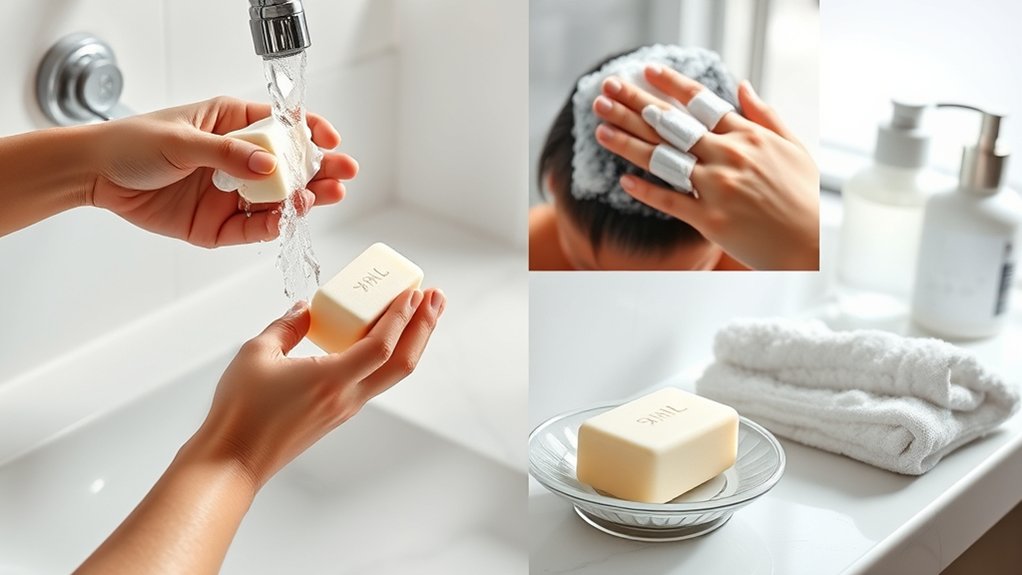
To use shampoo bars effectively, first thoroughly wet your hair and the bar to create rich lather. Rub the bar directly onto your scalp 4-5 times, then massage the lather evenly with your fingertips.
Rinse thoroughly with warm water to avoid residue, and consider double washing if needed. Adjust washing frequency based on your hair type, and always store the bar dry to prolong its life.
For detailed tips on care and technique, keep exploring the process further. You’ll get the hang of it in no time!
How To Choose The Right Shampoo Bar For Your Hair Type
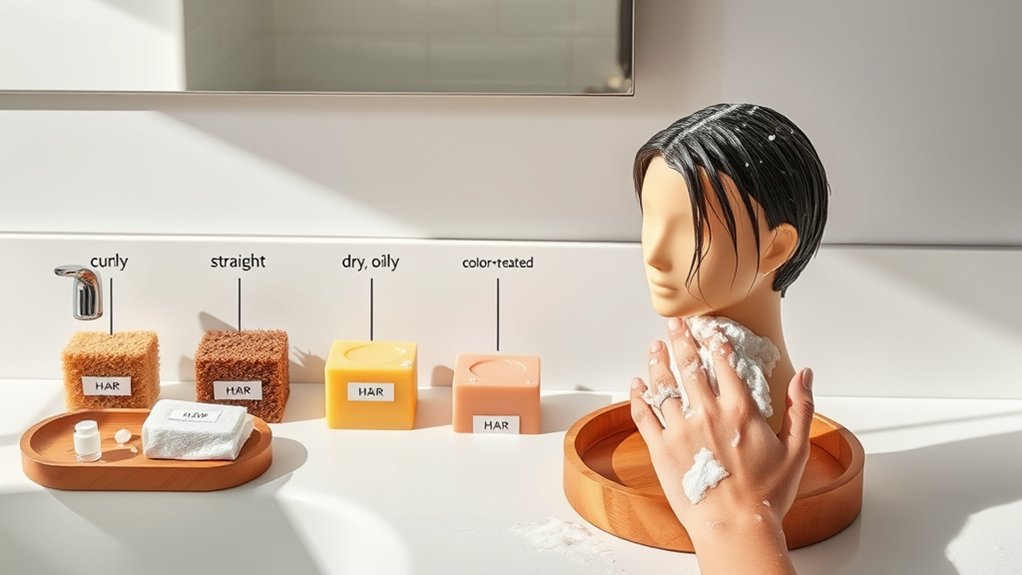
How do you choose the right shampoo bar for your hair type? First, identify whether your hair is oily, dry, curly, or straight. This helps you pick shampoo bars made to meet those specific needs.
Next, check out the ingredients. Look for bars with nourishing stuff like coconut oil for moisture. Try to avoid harsh chemicals like sulfates and parabens since they can damage your scalp.
Check ingredients carefully—choose nourishing oils like coconut and avoid harsh sulfates and parabens for a healthy scalp.
It’s also important to think about the environment. Choose shampoo bars that reduce plastic waste but still take good care of your hair.
Reading reviews from people with similar hair types can give you some helpful insights.
Preparing Your Hair Before Using A Shampoo Bar
Once you’ve selected the right shampoo bar for your hair type, getting your hair ready before application can make a significant difference in the results. Start by thoroughly wetting your scalp and hair; this is essential for activating the shampoo bar’s concentrated formula.
Preparing your scalp through a gentle clarifying wash can remove buildup, enhancing effectiveness. Detangling your hair with a comb guarantees even distribution during daily use. When you use shampoo bars, always wet the bar before applying to maximize lather.
| Step | Purpose |
|---|---|
| Wet the scalp and hair | Activates the shampoo bar’s formula |
| Clarifying wash | Removes buildup for better cleansing |
| Detangle hair | Prevents knots, guarantees even coverage |
Using A Shampoo Bar: Step-By-Step
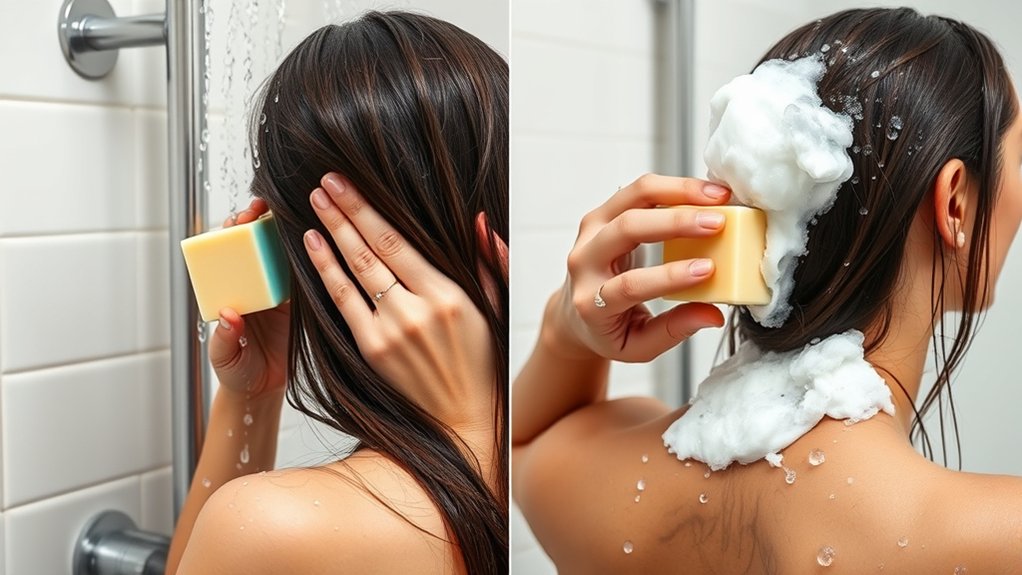
Begin by thoroughly wetting both your hair and the shampoo bar. This helps activate the cleansing agents and creates a rich lather.
Next, rub the bar directly onto your scalp 4-5 times to make sure you get even coverage. Or, you can lather it up in your hands first before applying. Use your fingertips to massage the shampoo into your scalp. This not only cleans but also stimulates blood flow.
After massaging, rinse your hair thoroughly. Make sure to remove all soap residue so you don’t end up with buildup or greasiness. For best results, you might want to double wash with your shampoo bar.
Then, follow up with a conditioner bar. This helps replenish moisture and makes detangling easier.
Taking these steps helps keep your hair healthy and clean while getting the most out of your shampoo and conditioner bars.
How To Rinse Shampoo Bars To Avoid Residue
Rinsing your hair properly after using a shampoo bar plays a big role in preventing residue buildup that can weigh your hair down or make it greasy.
Proper rinsing after shampoo bar use helps prevent residue that can weigh hair down or cause greasiness.
Shampoo bars usually have concentrated formulas, unlike traditional shampoos in plastic bottles, so you’ll want to make sure you rinse thoroughly to get rid of every trace.
Here’s how to avoid residue:
- Wet your hair and shampoo bar completely. This helps boost the lather and makes rinsing easier.
- Apply the shampoo using just a little product to avoid excess buildup.
- Rinse with warm water for at least 30 seconds, focusing on the roots and the nape of your neck.
- If you want, try using an apple cider vinegar rinse to clear any hard water deposits.
Following these steps will leave your hair feeling clean, light, and free from shampoo bar residue. Easy, right?
Using Conditioner Bars With Shampoo Bars
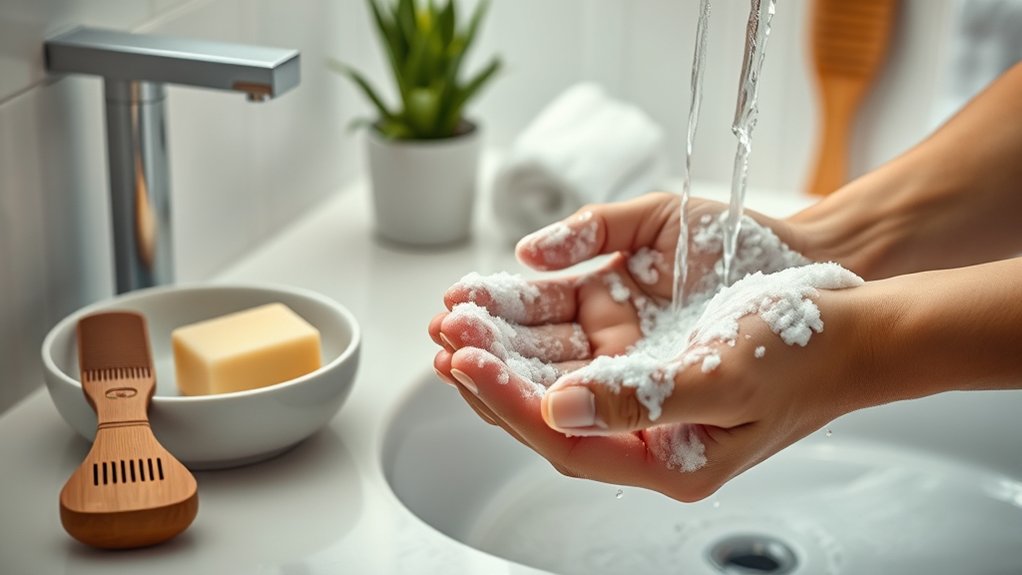
Why should you incorporate conditioner bars into your shampoo bar routine? Conditioner bars provide essential moisture and detangling benefits that complement shampoo bars’ cleansing action.
After rinsing shampoo bars from your hair, glide the conditioner bar over the lengths, focusing on the ends where moisture is vital. Leave it in for a few minutes to let the nourishing ingredients penetrate deeply.
Then, rinse thoroughly with warm water to avoid buildup and greasiness. Using conditioner bars alongside shampoo bars enhances your overall hair care. They offer concentrated formulas that work together, reducing waste and improving hair health.
| Step | Action |
|---|---|
| After Shampoo Bars | Apply conditioner bars on hair |
| Wait Time | Leave for a few minutes |
| Final Step | Rinse thoroughly with water |
Adjusting To Shampoo Bars: What To Expect
Although switching to shampoo bars offers many benefits, you should expect an adjustment period during the first few washes. Your scalp needs time to recalibrate from liquid shampoos to the concentrated formula of the shampoo bar.
Here’s what to expect:
The first 1-3 washes may feel different as your scalp adjusts. You might notice greasiness or dryness during this changeover. Changes in hair texture are common but usually stabilize over time.
Patience is essential. Consistent use leads to a healthier scalp and hair. Just give it some time, and you’ll likely see the benefits soon enough.
Common Washing Mistakes To Avoid With Shampoo Bars
Getting the best results from shampoo bars means avoiding some common mistakes that can interfere with their effectiveness.
First, make sure to wet your hair thoroughly with warm water before applying the shampoo bar. Dry hair prevents proper lathering, so this step is key.
Start with warm, thoroughly wet hair to ensure your shampoo bar lathers properly and works effectively.
Next, use less product than you might with liquid shampoo. Just a few strokes on your scalp are enough since shampoo bars are concentrated.
Don’t forget to massage your scalp gently. This boosts blood flow and helps ensure an even cleanse.
Also, rinse your hair thoroughly to avoid residue buildup that can make your hair greasy.
Finally, shift gradually to shampoo bars. Your scalp may need some time to adjust to the new formula and texture, which can help prevent frustration with the initial changes.
How To Store And Care For Your Shampoo Bar
Proper storage and care can greatly extend the life of your shampoo bar while keeping it effective. To store your shampoo bar correctly, follow these essential tips:
First, use a soap dish with drainage. This helps keep the bar dry and stops it from getting mushy.
Next, store the shampoo bar in a well-ventilated, dry spot. Make sure to avoid direct water contact between uses.
When traveling, put your shampoo bar in a mesh bag or a travel-friendly container. This will keep it clean and dry on the go.
Finally, don’t forget to regularly clean the soap dish and storage area. This helps maintain hygiene and makes your bar last even longer.
Best Shampoo Bars To Try Now
Knowing how to store and care for your shampoo bar guarantees you get the most out of each product. But choosing the right bar for your hair type and needs is just as important. Opt for shampoo bars with plant-based ingredients and sustainable palm oil to nourish and care for your hair effectively.
These bars are highly concentrated, which means they last longer and deliver excellent results. It’s all about picking the one that fits your hair goals.
| Brand | Key Features |
|---|---|
| Ethique | Targeted formulas for various hair types |
| Eco Warrior | Affordable, nourishing, uses sustainable palm oil |
| Lamazuna | Transparent sourcing, SLS-free |
Go for a bar that matches what your hair needs, and you’ll enjoy a sustainable, effective cleansing experience every time.
How Often Should You Wash Your Hair With A Shampoo Bar?
- Oily hair: Wash every 1-2 days to manage excess natural oils.
- Dry or curly hair: Limit washing to every 3-7 days to preserve moisture.
- Adjustment period: Expect increased washing initially as your scalp adjusts to the shampoo bar.
- Environmental factors: Adjust frequency based on humidity and activity level.
Keep an eye on how your hair responds so you don’t over-dry it or strip away essential natural oils.
Many people find that after a few weeks, they can wash less often because their scalp health improves.
Frequently Asked Questions
Can Shampoo Bars Be Used on Color-Treated Hair?
Yes, you can use shampoo bars on color-treated hair, but you’ll want to select one with gentle ingredients to guarantee color retention.
Since lather differences exist compared to liquid shampoos, focus on application techniques that evenly distribute the bar’s product.
Ingredients like coconut oil help maintain moisture without stripping color.
Always consider your hair type compatibility, choosing sulfate-free bars designed specifically for colored hair to protect vibrancy and avoid fading.
It’s all about finding the right formula that works for you!
Are Shampoo Bars Safe for Daily Use?
You can confidently use shampoo bars daily without worry. Their eco-friendly benefits and ingredient transparency guarantee gentle care, promoting scalp health with natural, nourishing components.
They’re also travel-friendly, making them super convenient for your routine. Plus, when you compare costs, you’ll often find they’re budget-wise over time.
Just pick a bar suited to your hair type, and any initial adjustment will soon smooth out. Before you know it, your hair will feel clean and balanced every day.
How Long Does One Shampoo Bar Typically Last?
One shampoo bar typically lasts between 60 to 80 washes, making it a cost-effective solution compared to liquid shampoos.
You’ll appreciate its eco-friendly alternatives and travel-friendly options since it’s compact and spill-proof. Proper lathering techniques help you use less product, extending its lifespan.
Plus, ingredients comparison shows shampoo bars often contain fewer preservatives, which enhances their quality.
Just make sure to store your bar in a dry place to maintain its effectiveness and longevity. It really helps keep your shampoo bar in great shape for longer!
Can Shampoo Bars Help With Dandruff?
Yes, shampoo bars can help with dandruff by targeting causes like fungal overgrowth and scalp irritation.
You’ll benefit from natural ingredients such as tea tree oil, which is known for soothing your scalp and improving scalp health.
For the best results, apply the bar directly to wet hair or lather it in your hands before massaging it into your scalp using gentle techniques.
Consistent use helps balance your scalp and reduce flakes over time.
Give it a try and see how your scalp feels!
Are Shampoo Bars Suitable for All Water Types?
Yes, shampoo bars are suitable for all water types and offer eco-friendly alternatives to traditional shampoos. You’ll find travel-friendly options that reduce plastic waste.
When using them, focus on lathering techniques, as water hardness can affect foam.
Comparing ingredients helps you pick bars compatible with your hair type. Testing different bars guarantees you find one that works best, balancing gentle surfactants and cleansing power for your specific water conditions.
Give it a try, and you’ll discover what suits you perfectly!
Conclusion
Using shampoo bars can transform your hair care routine into a sustainable, effective ritual. By choosing the right bar, prepping your hair properly, and following the steps carefully, you’ll avoid residue and keep your locks healthy. Remember, consistency is key.
Think of it like watering a plant. Regular care with shampoo bars will help your hair flourish. Store your bars well and avoid common mistakes. This way, you’ll enjoy shiny, vibrant hair every wash.