What Can You Use As Dry Shampoo – Easy Alternatives
You can use simple dry shampoo alternatives like cornstarch or arrowroot powder to soak up oil and refresh your hair instantly. For darker hair, mix cornstarch with cocoa powder to avoid white residue. Baking soda and baby powder also work well.
Diluted apple cider vinegar or lemon juice sprays act as natural degreasers. Adding essential oils can boost scent and scalp health. Keep your hair fresh and manageable.
There are plenty of easy ways to extend your style and care tips waiting for you. Give them a try and see what works best for you!
Best Dry Shampoo Substitutes You Can Use Right Now
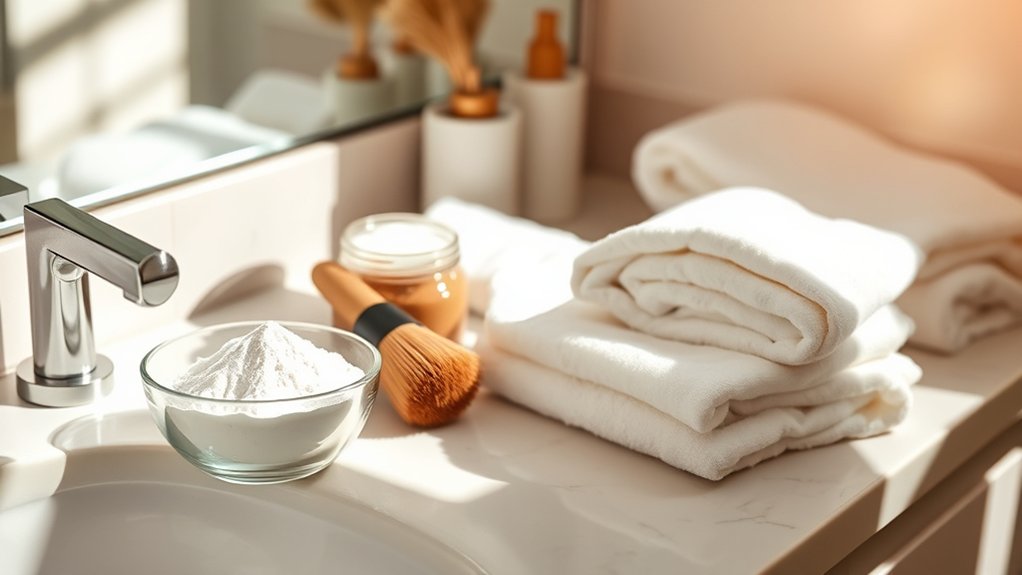
If you’re out of dry shampoo or simply want a natural alternative, you don’t have to worry. There are several household items that can quickly absorb oil and refresh your hair. Among the best dry shampoo alternatives, cornstarch stands out because it soaks up oil really well.
No dry shampoo? Household items like cornstarch can easily absorb oil and refresh your hair naturally.
If you have darker hair, mixing cornstarch with a bit of cocoa powder helps prevent white residue. Baby powder is another classic option, especially if you have blonde or thick hair. Just make sure to check for talc if allergies are a concern.
Both options work to soak up excess oil and add volume without harsh chemicals. These easy-to-find substitutes offer a quick fix when traditional dry shampoo isn’t an option.
They’ll keep your hair fresh and manageable throughout the day.
How to Use Powders Like Cornstarch and Arrowroot
When you want to refresh your hair without water, lightly dusting cornstarch or arrowroot powder onto your roots can work wonders.
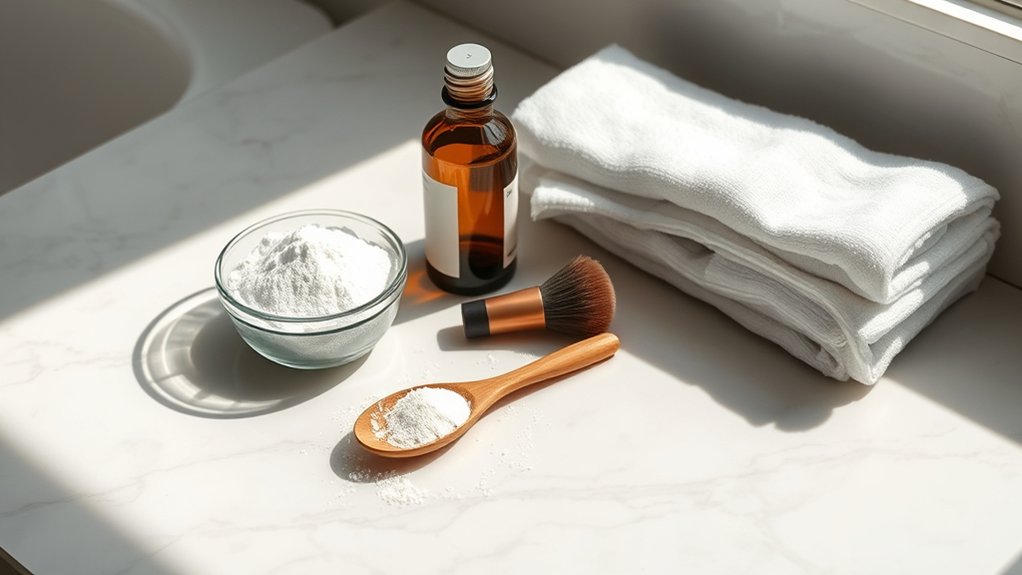
Use a clean makeup brush or shaker bottle to apply the powder evenly, focusing on greasy areas. Tap off any excess to avoid a heavy, messy finish.
Let the powder sit for 5-10 minutes to absorb excess oil effectively. Afterward, gently brush it out to remove any visible residue.
If you have dark or red hair, mix cornstarch or arrowroot powder with cocoa powder or cinnamon to blend the color naturally.
For a pleasant scent, add a few drops of essential oils like lavender or rosemary to the powder before applying.
This simple method keeps your hair fresh and oil-free between washes. It’s an easy trick to have up your sleeve when you don’t have time for a full wash.
Quick Fixes: Baking Soda, Baby Powder, and Setting Powders
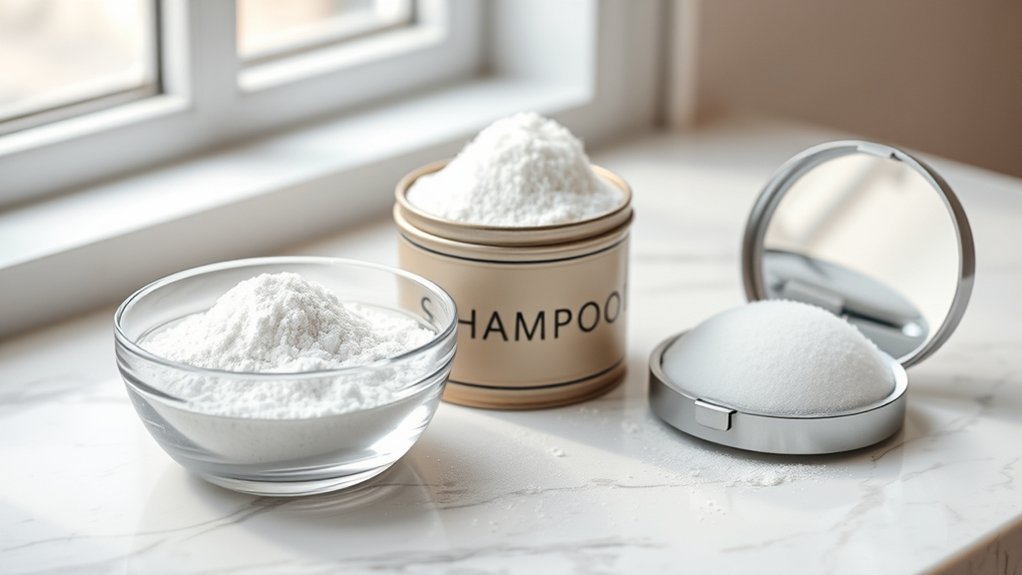
Powders like cornstarch and arrowroot offer a natural way to refresh your hair.
But sometimes, you need a quicker fix with products you probably already have at home. Baking soda mixed with cornstarch absorbs oil effectively. Just sprinkle lightly on your scalp, add a few drops of essential oil if you like, and brush through to avoid residue.
For a fast oil fix, mix baking soda with cornstarch, sprinkle lightly, add essential oils, and brush through.
Baby powder works well too, especially on blonde or thicker hair. Apply it directly to your roots and brush it in for instant oil control.
For a makeup twist, translucent setting powder can tame oily roots on the go. Use a clean blush brush to apply evenly and prevent cakiness.
Remember to tap off excess powder before use and focus on roots for the best quick fix between washes.
Liquid Alternatives: Apple Cider Vinegar and Lemon Sprays
Two natural liquids stand out as effective dry shampoo alternatives: apple cider vinegar and lemon juice.
Apple cider vinegar contains acetic acid that helps degrease hair, making it perfect for tackling greasy hair. If you have a sensitive scalp, just dilute it 50:50 with water.
Lemon juice spray also works wonders as a natural degreaser and deodorizer. It revitalizes oily hair without leaving residue when diluted with water. To use, fill a clean spray bottle and apply directly to your roots, making sure you get even coverage.
These sprays are great for various hair types, especially oily hair.
But try to avoid using them frequently on dry or damaged strands. You can use them between washes to keep your hair fresh, control oil production, and say goodbye to greasy hair without relying on traditional dry shampoo.
Using Herbs, Spices, and Essential Oils in DIY Dry Shampoo
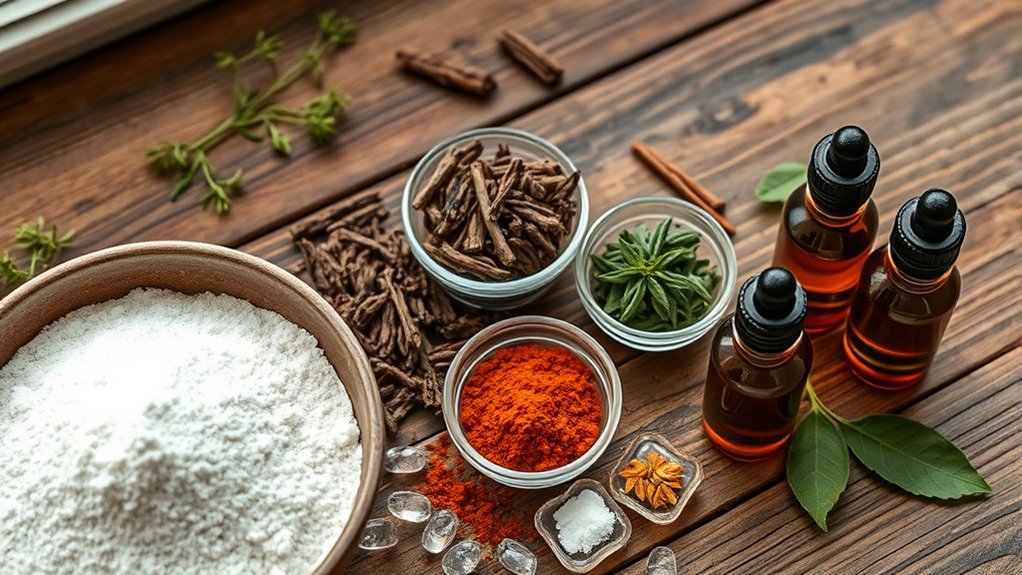
Although commercial dry shampoos often rely on synthetic ingredients, you can create effective, natural alternatives by incorporating herbs, spices, and essential oils into your DIY formulations.
These natural components not only absorb oil but also add fragrance and scalp benefits.
When crafting your dry shampoo, consider using powdered herbs like rosemary, sage, or lavender for oil absorption and scent. Mixing herbs with starches or clays can help you tailor your shampoo to suit your hair type and color.
You might add spices such as cinnamon or beet root powder to enhance color and fragrance, especially if you have red hair.
Incorporating essential oils like tea tree, lavender, or peppermint promotes scalp health and freshness.
Just remember to test for allergies, particularly with spices like cinnamon, so you can avoid irritation.
This approach gives you a personalized, natural dry shampoo that works and smells great.
Stylish Ways to Hide Greasy Hair Without Products
If you’re looking to manage greasy hair without reaching for any products, styling your hair strategically can make a big difference.
As a dry shampoo user, you know oily roots can be stubborn, but there are stylish ways to hide greasy roots naturally. Try sleek styles like a low ponytail or bun to pull hair away from your face and conceal oiliness.
Braids and twists add texture, effectively masking greasy hair while keeping your look fresh. Accessories like headbands, scarves, or statement clips divert attention from oily roots and boost your style.
For added volume, back-comb your roots to lift hair and minimize shine.
Half-up hairstyles also offer a creative solution, balancing coverage and flair without any product needed.
Give these tricks a try and you might just forget all about greasy roots!
When and How Often to Use Dry Shampoo Substitutes
You should use dry shampoo substitutes about 1-2 times a week to keep your scalp healthy and avoid buildup.
It’s best to apply them when your hair starts to look oily but isn’t quite ready for a full wash yet.
Just pay attention to how your scalp feels, and reapply only when you really need to.
That way, you can keep your hair feeling fresh without overdoing it.
Usage Frequency Guidelines
Using dry shampoo substitutes one to two times a week helps you manage oil without stripping your scalp’s natural moisture. Proper usage frequency is key to balancing oil production and preventing scalp irritation.
Apply these alternatives on days your hair looks greasy or flat, between regular washes. Keep an eye on how your scalp responds to avoid buildup or discomfort.
Here are some guidelines to follow:
- Use dry shampoo substitutes 1-2 times weekly for best results
- Choose gentler options if you have a sensitive scalp
- Avoid daily use to prevent scalp irritation and residue buildup
- Experiment with different substitutes to match your hair type and oil levels
- Monitor your scalp’s condition regularly to adjust usage frequency as needed
This approach keeps your hair fresh without compromising scalp health. Give it a try and see what works best for you!
Signs To Reapply
Knowing when to reapply dry shampoo substitutes can keep your hair looking fresh without overloading your scalp. You should reapply whenever your hair starts to look greasy or oily, usually every 1-2 days between washes.
Pay attention to your scalp’s condition, as too much build-up means you might need a proper wash instead of just relying on substitutes.
If you spot visible residue, especially in darker hair, it’s a sign to reapply or adjust the amount to avoid accumulation.
After sweating or being in humid conditions, reapplying can help combat excess oiliness.
For best results, wait 5-10 minutes after applying the substitute to let it absorb oil fully, then brush through evenly. This keeps your scalp balanced and your hair refreshed.
Choosing Safe, Non-Toxic Dry Shampoo Alternatives
When selecting dry shampoo alternatives, focusing on safe, non-toxic ingredients can really transform your hair care routine. Choosing natural ingredients helps you avoid harmful chemicals that are often in commercial products. This way, you keep your scalp healthy and feeling fresh.
You can also customize the color to match your hair, so there’s no visible residue. Adding essential oils not only boosts the scent but also helps balance oil production.
Here are some safe, non-toxic options to consider:
- Cornstarch, arrowroot powder, or baking soda for effective oil absorption
- Powdered rosemary or lavender for fragrance and scalp benefits
- Cocoa powder or activated charcoal for color customization on darker hair
- Essential oils like tea tree or peppermint for a revitalizing touch
- Talc-free powders such as natural baby powder to avoid health risks
Tips for Applying Dry Shampoo Substitutes Effectively
When you’re using dry shampoo substitutes, try to spread the powder evenly at your roots with a clean, fluffy brush.
It’s a good idea to let it sit for about 5 to 10 minutes so it can soak up the oils. After that, just brush through your hair to style and refresh it.
Depending on your hair type, you might want to tweak how much product you use or how you apply it.
That way, you’ll get the best results without any visible residue.
Proper Powder Application
Although dry shampoo substitutes like cornstarch and baking soda are effective, applying them correctly is key to achieving a natural, oil-free look. Proper powder application guarantees you get the most from these alternatives without leaving residue or clumps.
When using dry shampoos made from powders, keep these tips in mind: Use a fluffy foundation or bronzer brush to apply powder directly to roots for even distribution. Tap off excess powder before application to avoid overdoing it.
Focus on scalp sections, massaging powder in to absorb oil effectively. Let the powder sit for 5-10 minutes before brushing out to prevent white residue.
Experiment with amounts and mixes to match your hair color and texture perfectly. Mastering this technique makes your dry shampoo substitutes work just as well as store-bought options. It’s all about finding what works best for you!
Timing And Absorption
Since timing plays an essential role in how well dry shampoo substitutes absorb oils, you’ll want to apply them thoughtfully for the best results.
Start by using a clean brush to apply the powder directly to your roots, ensuring even distribution for ideal absorption. Section your hair to cover all oily spots thoroughly.
Once applied, let the powder sit for 5-10 minutes. This waiting period maximizes oil absorption, giving your hair a revitalized look.
You can then use a cool setting on your hair dryer to help set the product and add volume.
Begin with a small amount of powder to avoid buildup, and feel free to reapply throughout the day if needed.
Proper timing and absorption make all the difference in rejuvenating your dry, oily hair effectively.
Brushing And Styling
Mastering the art of brushing and styling after applying dry shampoo substitutes can transform your hair from oily to effortlessly fresh. To get the best results, use a clean, fluffy brush to spread cornstarch or your chosen powder evenly, focusing on roots. If you have dark hair, mix cornstarch with cocoa powder to avoid white residue.
Here are some tips to help you out: section your hair for better coverage and to avoid clumps. Let the powder sit for 5-10 minutes to absorb oil before brushing. Use gentle brushing to distribute the powder without disturbing your style.
For extra volume, you can back-comb or tease the roots lightly after brushing. Repeat brushing to make sure no visible powder residue remains. This technique guarantees fresh, natural-looking hair every time.
How to Care for Your Scalp When Using Alternatives
When you switch to dry shampoo alternatives, caring for your scalp becomes essential to keep it healthy and prevent buildup. Focus on scalp health by choosing ultra-gentle ingredients like arrowroot or oat flour, which help reduce irritation.
Try incorporating regular scalp massages to promote healthy oil distribution and keep residue from accumulating. You can also use natural oils like tea tree or lavender to soothe your scalp and balance oil production while using these substitutes.
It’s a good idea to establish a consistent washing routine tailored to your hair type so you don’t overdo it and your scalp stays clean.
And don’t forget to use clarifying shampoos every now and then to remove any leftover buildup from dry shampoo alternatives.
Following these steps helps keep your scalp healthy and comfortable while you enjoy the benefits of natural dry shampoo options.
Frequently Asked Questions
Can Dry Shampoo Substitutes Cause Allergic Reactions?
Yes, dry shampoo substitutes can cause allergic reactions. You should always prioritize ingredient safety by checking what’s inside your chosen product.
To avoid allergy symptoms like redness, itching, or flaking, perform testing methods such as a patch test before full use. This helps you spot any sensitivity early on.
If you notice any discomfort, stop using the substitute immediately to protect your scalp and skin health. It’s better to be safe than sorry when it comes to your skin!
How Long Do Dry Shampoo Alternatives Typically Last in Hair?
When it comes to dry shampoo alternatives, you’ll find their oil absorption lasts about 1 to 2 days, depending on your hair type.
To get the most product effectiveness, apply lightly and evenly, especially with powders like cornstarch or baking soda.
Remember, if your scalp gets oily quickly, you might need a touch-up during the day.
Think of it as putting a band-aid on a small cut. It’s temporary but helpful until you wash again.
Are Dry Shampoo Substitutes Safe for Color-Treated Hair?
Yes, dry shampoo substitutes can be safe for color-treated hair if you follow color preservation techniques and mind ingredient safety concerns.
Stick to gentle powders like cornstarch or arrowroot, and avoid harsh options like baking soda that may fade color.
Use careful application methods. Apply sparingly and test a small section first.
Adding essential oils can boost scalp health without damaging color.
This keeps your hair vibrant and fresh between washes. Just take it slow and listen to what your hair needs!
Can I Use Dry Shampoo Substitutes on Curly or Textured Hair?
Yes, you can use dry shampoo substitutes on curly hair, but you’ll want to choose wisely for the best curly hair care. Powders like cornstarch or arrowroot work great. They absorb oil without weighing down your curls.
For textured hair tips, blend baking soda sparingly or use oat flour customized to your shade. You can mix in essential oils for scalp health.
Just remember, with dry shampoo methods, avoid buildup by not overusing these alternatives.
Do Dry Shampoo Alternatives Affect Hair Styling Products?
Yes, dry shampoo alternatives can affect styling product interactions. When you use them sparingly, ingredients like cornstarch or translucent powders absorb oil without compromising ingredient effectiveness.
But if you overuse them, residue buildup may happen. This can hinder how your styling products work and even weigh your hair down.
To keep your hair fresh and styled well, try to balance using these alternatives. Avoid layering too much product so your hair stays clean and your style holds strong.
Conclusion
Think of your hair as a garden. Dry shampoo substitutes are the rain that refreshes it between washes. By choosing natural powders, liquids, or herbs, you’re nurturing your scalp without harsh chemicals.
These easy alternatives help you bloom confidently every day. Just remember, like any garden, balance and care are key. Use these options wisely, and your hair will stay vibrant, healthy, and ready to face whatever comes your way.