How To Use Blue Shampoo – Best Tips For Brassy Hair
To use blue shampoo effectively for brassy hair, apply it to damp hair and leave it on for 3-5 minutes to neutralize warm tones without over-toning. Tailor the timing based on your hair’s porosity and color, and rinse with cool water to seal cuticles.
Use it once a week to maintain a balanced, cool shade, followed by a hydrating conditioner. Understanding these steps helps you achieve vibrant hair while preserving its health. Explore how to fine-tune your routine for best results.
What Blue Shampoo Does for Brassy Hair
Although brassy tones can be stubborn, blue shampoo effectively neutralizes unwanted orange and red hues by depositing blue pigments that counteract warmth based on color theory.
When you apply blue shampoo to brassy hair, those blue pigments target the warm undertones, helping to neutralize brassy shades and maintain a cooler, more balanced color.
For best results, leave the shampoo on for 3-5 minutes to allow the pigments to fully absorb and counteract warmth.
Regular use keeps your hair looking fresh and prevents the orange and red tones from intensifying.
However, be cautious not to overuse it, as improper application can cause a bluish or greenish tint.
Mastering how to use blue shampoo guarantees you effectively neutralize brassy hair without unwanted side effects.
How to Choose the Right Blue Shampoo for Your Hair
You’ll want to pick a blue shampoo that really matches your hair tone. For brunettes, a darker blue works best, while blondes should go for a violet-blue to effectively neutralize brassiness.
It’s a good idea to pay close attention to the ingredients and how strong the formula is. This way, you can make sure it suits your hair’s porosity and condition, which helps the pigment absorb just right.
Also, don’t forget to check the usage guidelines so you don’t over-tone—this will help you get the best results.
Hair Tone Matching
How do you select the perfect blue shampoo to match your hair tone and effectively neutralize unwanted brassiness? Hair tone matching is key to successful color correction. It ensures you tackle brassy tones without overdoing it.
Choose a formula based on your hair’s natural shades and condition. For lighter hair with yellow brassy tones, pick a blue shampoo featuring violet or ash undertones.
If your hair is darker or brunette with orange or red brassiness, opt for a blue shampoo with neutral or navy hues.
Also, consider hair porosity. Porous hair absorbs pigment more intensely, so adjust the pigment strength and application time accordingly.
Always perform a strand test to avoid over-correction. This precision makes blue shampoo an expert tool in your hair care arsenal.
Product Ingredients Matter
When selecting a blue shampoo, understanding the product’s ingredients is essential to achieving the best results without compromising your hair’s health. Focus on blue pigments designed for your hair type and color, as they guarantee effective toning and neutralization of brassiness.
Opt for sulfate-free ingredients to prevent dryness and damage, maintaining your hair’s natural moisture. Nourishing ingredients like keratin, aloe vera, or vitamin E support hair health during regular use.
Pay attention to pigment concentration; stronger formulas offer deeper toning but require careful application to avoid overuse.
Also, avoid shampoos with harsh chemicals or heavy fragrances, as they can irritate your scalp and cause unwanted color buildup.
Prioritizing these ingredients helps you choose a blue shampoo that tones efficiently while preserving your hair’s integrity. It’s all about balancing effective toning with gentle care for your hair.
Suitability For Porosity
Understanding your hair’s porosity plays a key role in selecting the right blue shampoo and optimizing its effects. Hair porosity determines how much pigment your hair absorbs and how long you should leave the shampoo on.
If you have porous hair, it soaks up more pigment, which can increase the risk of a greenish tint if overused. So, adjusting application time and formula can help prevent this.
Consider these tips:
- Dilute blue shampoo with a sulfate-free shampoo to control pigment deposit on highly porous hair.
- Use shorter application times for less porous hair to avoid over-toning.
- Test a small section first to find the ideal leave-in time based on your hair porosity.
Tailoring your routine this way guarantees balanced toning without unwanted cool tones. It’s all about finding what works best for your hair!
How to Apply Blue Shampoo Correctly: Step-by-Step
Although applying blue shampoo might seem straightforward, following a precise method guarantees you neutralize brassiness effectively without over-toning.
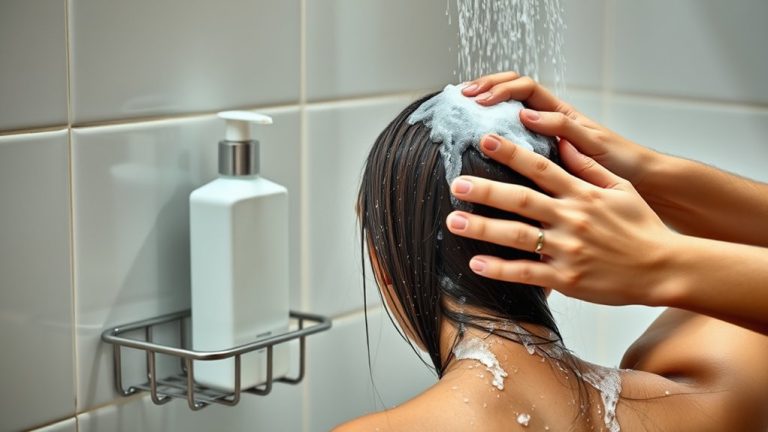
Start by wetting your hair thoroughly, then apply blue shampoo evenly, concentrating on brassy or warm-toned areas.
Before full application, perform a strand test to determine how long to leave the shampoo in, typically 3 to 5 minutes. This timing allows the blue pigments to counteract unwanted hues without causing a blue tint.
Afterward, rinse your hair thoroughly with cool water to seal the cuticles, which helps prevent color fade and residue buildup.
Finally, follow with a hydrating conditioner to replenish moisture and protect hair health.
This step-by-step approach ensures your blue shampoo works efficiently, leaving your hair vibrant and balanced.
How Often Should You Use Blue Shampoo to Prevent Brassiness?
Applying blue shampoo correctly sets the foundation, but knowing how often to use it is key to maintaining your hair’s cool tone without unwanted side effects. To prevent brassiness effectively, aim for a blue shampoo use frequency of once a week.
Using blue shampoo once a week is essential for keeping your hair’s cool tone without side effects.
Overuse, especially more than twice weekly, risks dull or bluish hues appearing on lighter hair.
Keep these tips in mind to optimize results: leave the shampoo on for 3 to 5 minutes based on your hair’s brassiness level. Also, monitor your hair color regularly to avoid buildup or dryness.
And don’t forget to always follow with a hydrating conditioner to maintain moisture balance.
This balanced approach helps you prevent brassiness while preserving your hair’s vibrant, cool tone. It’s all about finding that sweet spot to keep your color looking fresh without any unwanted side effects.
How to Avoid Over-Toning and Unwanted Color With Blue Shampoo
To avoid over-toning with blue shampoo, try to stick to the recommended 3-5 minute application time and make sure to rinse thoroughly with cool water.
Remember, your hair’s porosity plays a big role in how quickly it soaks up the pigment, so you might need to tweak the timing a bit depending on your hair.
It’s a good idea to test a small section first. This way, you can get a feel for the right balance and avoid any unwanted blue or gray tones.
Taking these steps will help you get the best results without overdoing it.
Timing And Application
How long should you leave blue shampoo on your hair to avoid over-toning? Generally, keep the application between 3-5 minutes unless the product specifies otherwise.
Timing is crucial to prevent unwanted color, so always perform a strand test first. This helps you gauge how long the shampoo should stay on your hair for optimal results without turning it blue or ashy.
To master the timing and application:
- Conduct a strand test to determine your ideal processing time.
- Use a timer to avoid exceeding the recommended duration.
- Rinse thoroughly with cool water after washing to seal the hair cuticle and minimize pigment residue.
Following these steps ensures precise application, protecting your hair from over-toning and maintaining the desired brass-free tone. Just stick to the timing, and you’ll get the best results every time.
Hair Porosity Effects
Three key factors related to hair porosity can profoundly impact your blue shampoo results, especially when it comes to avoiding over-toning and unwanted color shifts. High porosity hair absorbs more pigment quickly, increasing the risk of over-toning and developing unwanted blue or green hues. For this reason, you should reduce application time to prevent excessive color absorption.
Conversely, low porosity hair requires longer contact to neutralize brassiness effectively, but be cautious. Over-application can cause dull or muddy tones.
To optimize your routine, conduct a porosity test beforehand to tailor application time and frequency precisely. Regularly monitoring your hair during toning helps you avoid over-toning by adjusting as needed. This way, you ensure balanced results and maintain the integrity of your color.
Can You Use Blue Shampoo on Blonde or Brown Hair?
Can blue shampoo work on blonde or brown hair? Blue shampoo is mainly designed for brunettes or darker hair colors to neutralize orange or red brassy hair tones. Using it on blonde hair can backfire, causing a bluish or ashy tint instead of neutralizing yellow hues. Here’s what you should know:
Blue shampoo effectively targets brassy hair with warm, reddish undertones common in brown shades. On blonde hair, it may deposit unwanted color, making hair appear dull or muddy. For blondes, purple shampoo typically neutralizes yellow or gold tones more effectively.
If you want to maintain your hair color without unwanted tints, choose shampoos tailored to your specific shade to neutralize tones accurately.
Tips to Keep Your Hair Healthy While Using Blue Shampoo
Because blue shampoo can sometimes cause dryness or color buildup, you’ll want to take specific steps to keep your hair healthy while using it. Start by limiting its use to once or twice a week to avoid over-toning and color buildup.
Always apply the shampoo evenly on wet hair, leaving it on for the recommended 3-5 minutes.
Follow with a hydrating conditioner or hair mask to restore moisture and maintain ideal hydration. Conduct a strand test before full application to ensure your desired tone without unwanted shifts.
Furthermore, incorporate nourishing hair treatments like oils or serums into your routine. These support hair care by keeping strands moisturized and shiny, offsetting the potential drying effects of blue shampoo and preserving your hair’s overall health.
Best Products to Use Alongside Blue Shampoo for Optimal Results
To maximize the benefits of blue shampoo, you should pair it with complementary hair care products designed to maintain moisture and protect color. Using a hydrating conditioner immediately after blue shampoo prevents dryness and preserves your hair’s hydration.
A sulfate-free, color-safe shampoo extends the toning effects and helps guard your hair color from fading prematurely.
Plus, a weekly deep conditioning treatment replenishes moisture lost from toning products.
Think about these essentials alongside your blue shampoo:
- Hydrating conditioner or mask to combat dryness
- Sulfate-free, color-safe shampoo to maintain toning effects
- Leave-in conditioner or heat protectant to shield hair health
Frequently Asked Questions
Can Blue Shampoo Remove Color From Dyed Hair?
No, blue shampoo can’t fully remove color from dyed hair. It mainly targets hair discoloration by neutralizing orange and red tones. This may cause slight color fading or a muted effect.
But its interaction with hair dye only deposits blue pigments, it doesn’t actually remove the dye. If you want to strip or fade dye completely, you’ll need stronger treatments like clarifying shampoos or professional methods.
Is Blue Shampoo Safe for Sensitive Scalps?
Yes, blue shampoo can be safe for sensitive scalps if you choose a gentle formulation designed for skin sensitivity. Check product ingredients carefully and avoid harsh sulfates or irritants.
Make sure to use proper application techniques by applying shampoo mainly to hair lengths and ends, steering clear of direct scalp contact.
Always perform a patch test before full use.
Following these steps helps prevent dryness or irritation while benefiting your hair’s tone. It’s all about being careful and paying attention to how your scalp reacts.
Can Men Use Blue Shampoo for Brassiness?
Yes, men can definitely use blue shampoo for brassiness. In men’s grooming, it’s a smart tool for hair color correction and maintenance, especially if you have blonde, gray, or lightened hair.
The shampoo ingredients specifically target warm, brassy tones, neutralizing them effectively. Just apply it evenly, focus on brassy spots, and leave it on briefly.
This routine helps keep your hair looking fresh and vibrant without over-toning or damaging your scalp.
Give it a try and see the difference!
Does Blue Shampoo Work on Natural Gray Hair?
About 60% of people with gray hair experience scalp sensitivity, so choosing the right product really matters.
Blue shampoo doesn’t effectively support gray hair maintenance because it targets brassiness in colored hair, not the cooler tones of natural gray.
For natural hair care and hair color correction, purple or silver shampoos work better.
Using blue shampoo might leave a subtle blue tint and isn’t recommended for maintaining gray’s true tone or scalp health.
Can Blue Shampoo Lighten Hair Over Time?
No, blue shampoo can’t lighten your hair over time. It’s designed for color correction and hair toning, neutralizing brassy or orange hues to enhance your shade’s coolness.
While it improves shade enhancement and can make your color appear fresher, it doesn’t bleach or lighten hair.
For actual lightening or damage repair, you’ll need professional treatments.
Blue shampoo supports your color but doesn’t replace lightening processes. So, think of it as a helper to keep your tone fresh, not a way to lighten your hair.
Conclusion
Using blue shampoo is like wielding a precision tool to keep brassy tones at bay and your hair vibrant. By choosing the right formula and applying it carefully, you maintain that perfect cool hue without over-toning.
Remember to balance usage with nourishing treatments to protect your hair’s health. With these expert tips, you’ll confidently keep your color fresh and radiant, turning your hair care routine into a refined art form.