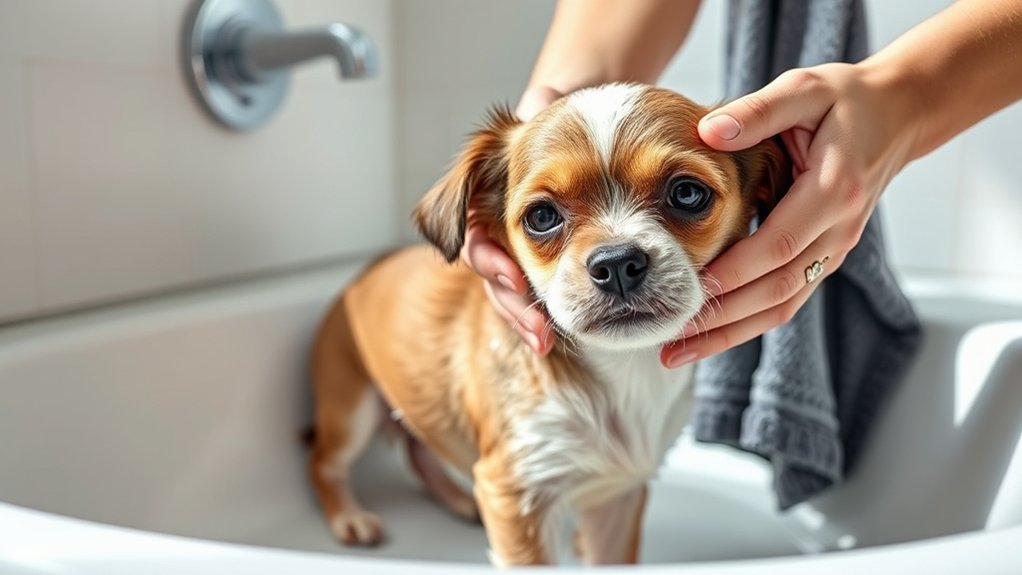
Can U Use Baby Shampoo On Dogs – Safety Guide For Pet Owners
You can use baby shampoo on your dog only as a temporary, cautious solution, especially in emergencies. While it seems gentle and has a near-neutral pH, baby shampoo’s acidity can dry out your dog’s skin and strip essential oils, causing irritation or flakiness.
Avoid fragrances and harsh chemicals, rinse thoroughly, and watch for redness or scratching afterward. For regular grooming, dog-specific shampoos suit their skin better.
Keep going to understand safe washing tips and signs to watch for.
How Dog Skin Differs From Human and Baby Skin
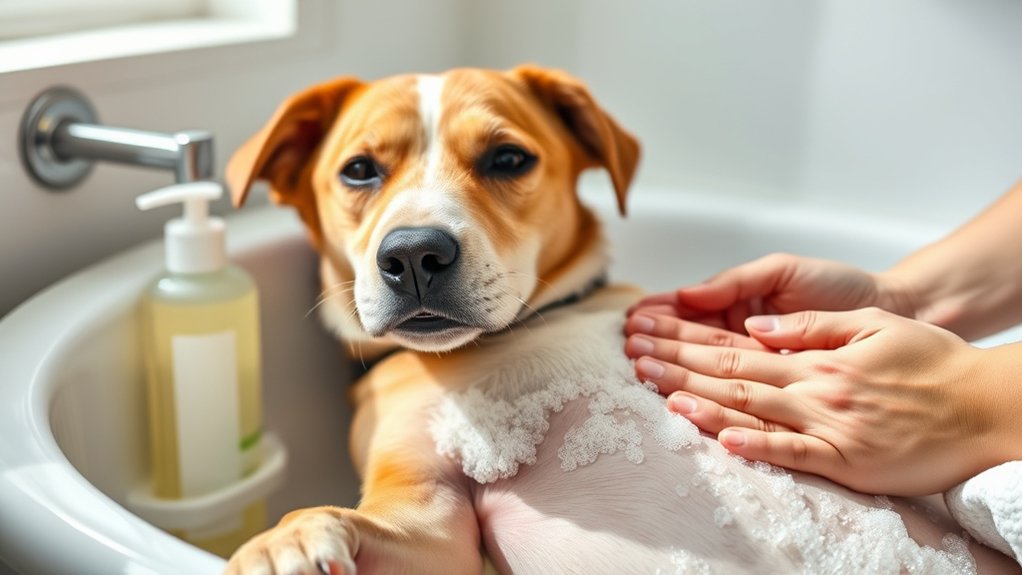
Although baby shampoos are gentle on human skin, they aren’t formulated for your dog’s unique needs. Dog skin has different pH levels, ranging from 6.5 to 7.5, making it more neutral or slightly alkaline compared to the acidic pH of human skin. This difference means baby shampoo, designed for humans, isn’t pH-balanced for your dog and can disrupt their skin’s natural defenses.
Furthermore, dog skin has a thinner skin barrier, making it more vulnerable to irritation from inappropriate grooming products. Unlike human skin, which tolerates mild shampoos well, dog skin relies heavily on natural oils to maintain its protective barrier. These oils can be stripped away by unsuitable products like baby shampoo.
Understanding these differences helps you choose grooming products that protect your dog’s skin health and comfort. It’s all about keeping your furry friend happy and healthy!
Why People Consider Baby Shampoo Safe for Dogs
You might think baby shampoo is safe for your dog because it’s made to be gentle and mild, designed specifically for sensitive human skin.
A lot of people believe its near-neutral pH level is closer to what a dog’s skin needs compared to regular human shampoos.
Because of that, baby shampoo often seems like a safer option when you need to clean your dog quickly.
Gentle Formulation Appeal
Because baby shampoo is marketed as gentle and tear-free, many pet owners consider it a safe choice for bathing their dogs. Its gentle formulation often feels reassuring, especially if your dog has sensitive skin or allergies.
Baby shampoo’s mild ingredients aim to minimize irritation, making it appealing for those caring for sensitive dogs or short-coated breeds.
While it’s formulated for human use, its pH level is closer to dog skin pH than regular adult shampoos, which contributes to its perceived mildness.
However, keep in mind that frequent use can still disrupt your dog’s natural oils, potentially causing dryness or irritation.
Perceived pH Compatibility
When selecting a shampoo for your dog, many pet owners assume that baby shampoo’s neutral pH of around 7 makes it a safe option.
While baby shampoo’s pH might seem compatible with your dog’s skin, which ranges from 6.5 to 7.5, it’s not specifically formulated for canine needs. Using it can disrupt the natural pH balance, stripping essential oils and causing dryness and irritation.
The mild, tear-free formula may seem gentle, but it can still lead to discomfort, especially if it gets into your dog’s eyes.
To protect your dog’s skin and prevent long-term issues, it’s best to choose dog-specific shampoos designed to maintain the right pH balance and support healthy, irritation-free skin.
Effects of Baby Shampoo on Dog Skin and Coat
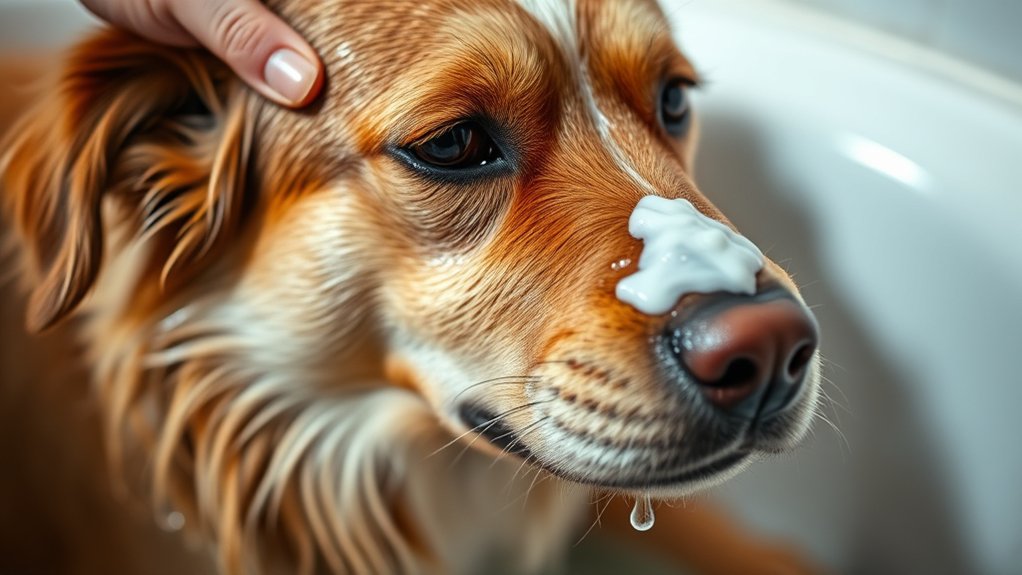
Although baby shampoo is designed to be gentle, using it on your dog can disrupt their skin’s natural balance due to differences in pH levels between humans and dogs.
Dog skin pH typically ranges from 6.5 to 7.5, while baby shampoo is formulated for a lower pH around 5.5. This mismatch can lead to dryness and irritation, stripping away essential oils that protect your dog’s skin and coat.
Over time, you might notice redness, flakiness, and a dull coat, especially in sensitive coat types.
Maintaining healthy skin means preserving your dog’s natural barrier, which baby shampoo may compromise. While it seems mild, baby shampoo isn’t ideal for regular use because it can cause discomfort and affect your dog’s overall skin health.
When Is It Okay to Use Baby Shampoo on Your Dog?
You can use baby shampoo on your dog, but only in emergencies.
It should really be just a temporary fix. When you do, make sure to choose a fragrance-free, hypoallergenic formula—this helps lower the risk of irritation.
And after you wash your dog, keep a close eye on them for any signs of discomfort or redness.
Emergency Use Only
If you find yourself without dog-specific shampoo during an unexpected bath time, baby shampoo can serve as a temporary solution. Use it only in emergency use situations, never as a regular alternative.
Opt for fragrance-free or hypoallergenic baby shampoo to reduce the risk of skin irritation.
Apply it sparingly and make sure to perform thorough rinsing to remove all residue, which might otherwise cause dryness or itching.
After the bath, watch your dog closely for signs of irritation, such as redness or excessive scratching.
If you notice any adverse reactions or if your dog has sensitive skin, consult your vet promptly for advice and safer, long-term alternatives.
Choose Hypoallergenic Formulas
When caring for a dog with sensitive skin, choosing a hypoallergenic baby shampoo can provide a safe, temporary cleansing option.
Look for formulas that are fragrance-free, soap-free, and paraben-free to minimize the chance of irritation. Hypoallergenic shampoos designed for babies typically avoid harsh chemicals, making them less likely to irritate your dog’s delicate skin.
Use only small amounts and rinse thoroughly to prevent residue that might cause dryness.
Before using any baby shampoo, always consult your veterinarian, especially if your dog has existing skin conditions or allergies.
While hypoallergenic baby shampoo can be helpful in emergencies, it’s not a substitute for pet-specific products recommended by professionals.
Prioritizing your dog’s comfort and health will guarantee a gentle, effective wash. So, keep your furry friend’s skin happy and healthy!
Monitor For Irritation
Although baby shampoo can serve as a safe option for your dog during emergencies, it’s essential to monitor closely for any signs of irritation. Use a fragrance-free, hypoallergenic formula and always give your dog a thorough rinse. Leftover shampoo can disrupt their skin pH balance, causing dryness or redness.
Limit baby shampoo use to occasional baths and watch for excessive scratching, dull coat, or redness. If you notice any adverse reaction, consult your veterinarian promptly.
| What to Monitor | Possible Signs | Action to Take |
|---|---|---|
| Skin Reaction | Redness, itching | Rinse thoroughly, stop use |
| Coat Condition | Dullness, dryness | Use moisturizing products |
| Behavior Changes | Excessive scratching | Consult your veterinarian |
How to Wash Your Dog Safely With Baby Shampoo
Because your dog’s skin is sensitive, you should choose a fragrance-free, hypoallergenic baby shampoo to reduce the risk of irritation.
Before washing, perform a patch test to make sure your dog doesn’t react negatively. Use a small amount of baby shampoo diluted with water, applying it gently while avoiding the eyes and ears.
Always rinse thoroughly to remove all shampoo residue. This helps prevent dryness and skin irritation.
Remember, baby shampoo is only a temporary solution and not a substitute for dog-specific grooming products.
Follow these steps for safe washing:
- Perform a patch test before full use
- Use fragrance-free, hypoallergenic baby shampoo
- Apply gently, avoiding eyes and ears
- Rinse thoroughly to prevent skin irritation
If you’re unsure or need long-term grooming advice, it’s best to consult your vet.
How to Spot a Reaction to Baby Shampoo in Dogs?
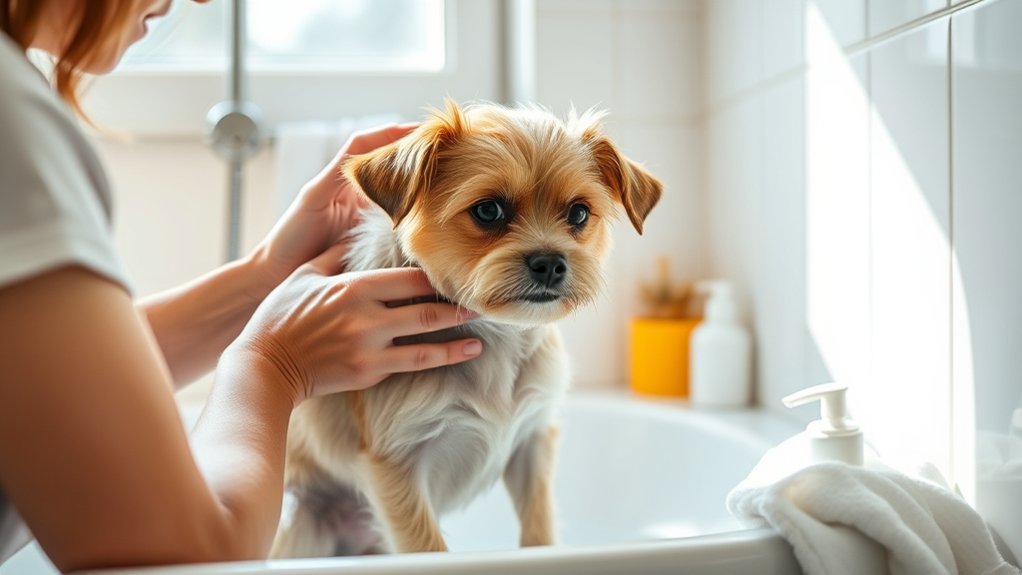
You’ll want to keep an eye out for common signs of irritation like redness, itching, or a flaky coat after using baby shampoo on your dog.
It’s also a good idea to watch for any changes in their behavior, like whining or avoiding being touched in the areas where you applied the shampoo.
Usually, these reactions show up within a few hours, so try to monitor your dog closely during that time.
Common Irritation Symptoms
How can you tell if baby shampoo is irritating your dog’s skin? Watch closely for signs of irritated skin caused by changes in the pH balance. Your dog may start excessive scratching or biting at certain areas.
You might also notice redness or rashes developing, which indicate discomfort. Furthermore, a dull or flaky coat can appear as the shampoo strips away natural oils, leaving the skin dry and vulnerable.
Look out for these common irritation symptoms:
- Excessive scratching or biting
- Redness or rashes on the skin
- Dull, flaky, or dry coat
- Increased shedding beyond normal levels
If you spot any of these signs, stop using the shampoo and consult your vet to protect your dog’s skin health. It’s better to be safe and get professional advice.
Behavioral Changes To Watch
When should you worry about your dog’s behavior after using baby shampoo? If you notice changes like reluctance to bathe or signs of distress during grooming, these might mean the shampoo is irritating your dog’s skin.
Excessive scratching or biting at the skin often comes with redness or rashes. These are clear signals that unsuitable products could be causing a reaction.
Keep an eye on your dog’s coat too. Dullness, flakiness, or more shedding than usual can also point to discomfort.
Catching these behavioral changes early helps you act fast to prevent more irritation.
Always choose grooming products made for dogs because baby shampoo can cause skin issues that affect your pet’s comfort and well-being.
Timing Of Reaction
Although reactions to baby shampoo can vary, most dogs will show signs within a few hours to a day after their bath. It’s important to monitor your pet closely during this period for any indication of skin issues. Early detection helps prevent discomfort and more serious problems.
Watch for these signs after using baby shampoo: excessive scratching or biting at the skin, redness, rashes, or visible irritation on the coat.
Also, keep an eye out for dryness or flakiness, which might mean their natural oils are disrupted. Increased shedding beyond normal seasonal levels is another warning sign.
If you notice any of these symptoms, stop using the shampoo right away and consult your veterinarian. Acting quickly helps keep your dog comfortable and ensures they get the right care for any reactions. Better safe than sorry, right?
What Ingredients to Skip in Baby Shampoos for Dogs
Because your dog’s skin is more sensitive than human skin, you’ll want to avoid baby shampoos that contain fragrances, dyes, parabens, or phthalates. Fragrances and dyes can cause allergic reactions or irritation, making your dog uncomfortable.
Parabens and phthalates aren’t just unnecessary, they may disrupt your dog’s hormonal balance and trigger skin issues.
Also, steer clear of strong synthetic ingredients that upset the natural pH of your dog’s skin, causing dryness or irritation. Instead, look for baby shampoos labeled hypoallergenic or with natural formulations designed to be gentle on canine skin.
Choosing the right ingredients helps protect your dog’s health and keeps their coat clean without risking sensitivity or discomfort.
Always read labels carefully to guarantee your pet’s safety.
Why Dog Shampoos Work Better Than Baby Shampoo
If you want to keep your dog’s skin healthy and comfortable, choosing a shampoo formulated specifically for dogs is essential. Dog shampoo matches the canine skin pH (6.5 to 7.5), preventing irritation that baby shampoos often cause due to their different pH balance.
Choosing a shampoo made for dogs protects their skin by matching their natural pH and preventing irritation.
Unlike baby shampoo, dog shampoo avoids harsh ingredients that can strip away natural oils and damage the skin barrier. Pet groomers recommend dog shampoos because they include soothing agents and treatments tailored for various coat types and skin conditions.
Here’s why dog shampoos work better than baby shampoos:
- Maintain the natural oils that protect your dog’s skin
- Support a healthy skin barrier and prevent dryness
- Address common canine skin issues with specialized ingredients
- Formulated by professionals to suit dogs’ unique needs
Using dog shampoo guarantees peak skin health and comfort. It’s really the best choice for your furry friend!
How Often to Bathe Your Dog With Baby or Dog Shampoo
Determining how often to bathe your dog depends on several factors, including their breed, activity level, and skin condition. Bathing frequency typically ranges from every few months to quarterly.
If your dog is very active or spends lots of time outdoors, especially during summer, you might need to bathe them more often.
While using baby shampoo occasionally on short-haired or hairless dogs is acceptable, it shouldn’t replace dog-specific shampoos designed to maintain the skin’s natural oils.
Overwashing with any shampoo, even gentle ones, can strip these oils, causing dryness and irritation. To keep your dog’s coat healthy, use dog shampoo regularly but avoid excessive baths.
Pay close attention to your dog’s skin condition and adjust bathing frequency accordingly to prevent dryness and maintain comfort.
When to Consult a Vet About Dog Shampoos
While regular bathing with suitable shampoos helps keep your dog’s coat healthy, certain signs should prompt you to consult a veterinarian about the products you’re using. If your dog has pre-existing skin conditions or allergies, always check with a vet before trying new shampoos.
Regular bathing with the right shampoo supports your dog’s coat health, but consult a vet if skin issues arise.
Keep an eye out for irritation or allergic reactions like excessive scratching, redness, rashes, or hair loss after a bath. These symptoms mean it’s time to get some professional advice. Your vet might suggest medicated shampoos that suit your dog’s specific needs instead of over-the-counter options like baby shampoo.
Be sure to consult a veterinarian if you notice:
- Persistent skin irritation or redness
- Unusual hair loss or rashes
- Signs of allergic reactions after bathing
- Worsening or ongoing skin conditions despite treatment
Frequently Asked Questions
Can Baby Shampoo Help With Flea or Tick Infestations on Dogs?
Baby shampoo isn’t effective for flea treatment or tick prevention since it lacks insecticidal ingredients. While it might wash away some pests temporarily, it won’t provide lasting protection.
When you compare shampoo options, vet-recommended products work better. Exploring natural remedies can help too, but always check with your vet first.
For dog grooming, use shampoos made specifically for pets. This helps avoid skin irritation and ensures proper parasite control.
Is Baby Shampoo Safe for Puppies Under 8 Weeks Old?
Think of your puppy’s skin as a delicate flower petal. Baby shampoo isn’t the safest choice for those under 8 weeks.
For gentle cleansing, you should opt for alternative shampoos specially formulated for puppies.
Keep bathing frequency low to protect natural oils. Follow puppy grooming tips to avoid irritation.
Always consult your vet for the best puppy skin care routine. This way, you ensure your little one stays healthy and comfortable during those early weeks.
Can Baby Shampoo Be Used on Dogs With Sensitive or Allergy-Prone Skin?
You shouldn’t use baby shampoo on dogs with sensitive skin or allergy-prone conditions because its pH balance can disrupt their natural skin barrier.
This disruption might cause allergic reactions or irritation.
While baby shampoo may have moisturizing effects, it’s not formulated for canine skin.
So, it’s better to choose shampoos made specifically for dogs with sensitive skin.
Always keep an eye out for any signs of discomfort.
And before trying new products, consult your vet to keep your dog safe and comfortable.
It’s always best to be cautious when it comes to your furry friend’s skin health.
How Does Baby Shampoo Affect a Dog’s Natural Oils Compared to Water Alone?
Baby shampoo disrupts your dog’s pH balance, removes natural oils, and increases skin irritation.
Water alone, on the other hand, preserves pH balance, retains oils, and reduces irritation.
When you use baby shampoo frequently, you risk drying out your dog’s skin and damaging coat texture.
In contrast, rinsing with water alone maintains healthy oils and supports natural coat texture.
It’s a gentler choice for regular bathing and helps minimize the need for harsh treatments.
Are There Any Specific Baby Shampoo Brands Recommended for Dogs?
You won’t find baby shampoo brands officially recommended for dogs since they don’t match your dog’s pH balance. Instead, choose shampoos designed for your dog’s coat type and grooming frequency.
If you must use baby shampoo, pick tear-free, hypoallergenic options without fragrances.
But really, for healthier skin and coat, it’s better to go with shampoos made specifically for dogs.
Always check with your vet before switching products to keep your pup comfortable and safe.
That way, you’ll know you’re doing what’s best for your furry friend.
Conclusion
You might think baby shampoo is a gentle choice for your dog, but their skin tells a different story. While it’s okay occasionally, using dog-specific shampoos respects your pet’s unique needs. It keeps their coat healthy and itch-free.
Remember, not all baby shampoos are created equal. Skip harsh ingredients and bathe wisely. When in doubt, trust your vet.
After all, your furry friend deserves the best care, not just the safest guess.