
Can I Use Conditioner Without Shampoo – Benefits And Risks
You can use conditioner without shampoo through co-washing, which gently cleans your scalp while preserving natural oils. It’s great if you have thick, curly, or dry hair, or a sensitive scalp. This method helps boost moisture, reduce frizz, and improve manageability.
However, co-washing risks buildup if not done right, especially with silicone-heavy conditioners. So, occasional shampooing is still necessary to keep your hair and scalp healthy.
To get it right and avoid common pitfalls, here’s what you need to know.
What Is Co-Washing?

Although traditional hair care routines rely on shampoo for cleansing, co-washing offers a different approach by using only conditioner to clean your hair. This method helps retain your scalp’s natural oils while providing essential moisture.
When you apply conditioner, focus on a thorough scalp massage for 3-5 minutes to break down dirt and distribute oils evenly.
Co-washing suits various hair types but is especially effective for thick, curly, or dry hair, as it reduces frizz and maintains hydration.
However, keep in mind that conditioner alone mightn’t remove heavy buildup, so occasional shampoo use is necessary.
Who Can Benefit Most From Co-Washing?
You’ll get the most out of co-washing if your hair is thick, curly, or dry and needs a bit of extra moisture and frizz control.
It’s also a great option if your scalp is sensitive or tends to react badly to harsh shampoos.
Plus, if you have color-treated or chemically styled hair, co-washing can help keep it healthy by gently cleansing without stripping away the natural oils.
Ideal Hair Types
Three hair types benefit most from co-washing: thick, curly, and wavy hair.
If you have curly hair or coarse texture, conditioner-only washing helps maintain moisture, enhances curl definition, and reduces frizz. Those with dry hair will find co-washing especially advantageous, as it nurtures softness and minimizes breakage.
It promotes better hair health without stripping natural oils. Co-washing is ideal if you want to avoid harsh shampoos and embrace a gentler routine.
However, if your hair is fine or oily, co-washing might weigh it down or increase greasiness, so it’s less suitable.
Overall, conditioner-only washing supports hair types prone to dryness or damage. It helps you achieve manageable, healthier hair with consistent use.
Give it a try if you want a softer, more defined look without the harshness of traditional shampoos.
Scalp Condition Considerations
Understanding your scalp’s condition plays a significant role in determining whether co-washing will benefit you. Co-washing can be a game-changer if you have dry, curly, or chemically treated hair. Using conditioner helps maintain moisture and reduce frizz without stripping natural oils.
It’s also great if you experience scalp issues like dandruff or irritation. Co-washing avoids harsh shampoo ingredients that might worsen your scalp condition.
Plus, if you have thick or coarse hair, co-washing enhances softness and natural texture while minimizing breakage.
However, if your scalp tends to be oily, relying solely on co-washing may increase oiliness and irritation. You’ll likely need to alternate with shampoo occasionally to keep a healthy scalp balance.
Tailoring your routine based on your scalp helps you enjoy the benefits of co-washing without compromising scalp health.
What Are the Main Benefits of Co-Washing?
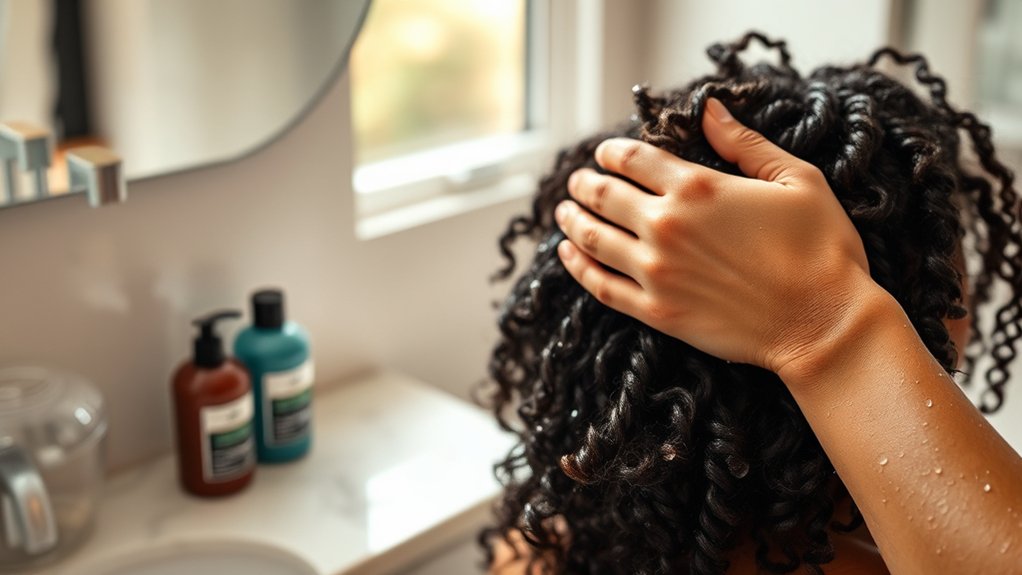
Although co-washing may seem unconventional, it offers several key benefits that can transform your hair care routine. By using conditioner instead of shampoo, co-washing helps retain your hair’s natural oils, boosting moisture and reducing dryness. This is especially great for curly and textured hair.
Co-washing preserves natural oils, enhances moisture, and is ideal for curly, textured hair care routines.
This method enhances scalp health by preventing over-drying and irritation often caused by traditional shampoos. Co-washing also promotes healthy hair growth by maintaining a well-hydrated scalp and hair shaft.
Plus, it makes hair softer and more manageable, reducing frizz without relying on extra styling products. Frequent conditioning through co-washing hydrates your hair more regularly without the risk of buildup.
And here’s a bonus—it’s cost-effective! You can focus on quality conditioners that nurture your hair and scalp efficiently, supporting overall hair health.
How to Wash Hair Using Only Conditioner?
To wash your hair using only conditioner, start by thoroughly wetting your hair.
Then, apply a generous amount of silicone-free conditioner, making sure your hair is fully saturated. For thick hair, use about four palmfuls, but feel free to adjust the amount depending on your hair type.
Next, cover your hair with a shower cap to let the conditioner really sink in.
After letting it sit for a while, rinse well while gently scrubbing your scalp to remove any buildup.
It’s important to choose the right conditioner for this method. Silicone-free options, like Suave Naturals Coconut, work best because they help avoid buildup and keep your hair healthy.
Step-By-Step Process
When you wash your hair using only conditioner, start by thoroughly wetting your hair to guarantee even distribution. Use a silicone-free conditioner as a gentle cleanser to cleanse your scalp and hair thoroughly.
Follow this step-by-step process:
- Apply a generous amount of conditioner to your scalp and hair, making sure all strands are saturated.
- Massage your scalp for 3-5 minutes to lift dirt and distribute natural oils, kind of like what shampoo does.
- Rinse thoroughly to remove all the conditioner and prevent buildup. If needed, gently scrub your scalp with water.
Adjust how often you do this to 2-3 times per week, depending on your activity level and hair type.
This method keeps your hair clean without stripping away natural oils, giving you a balanced way to care for your hair.
Choosing Suitable Conditioners
Choosing the right conditioner is crucial for successfully washing your hair without shampoo. Opt for a silicone-free conditioner that delivers moisture without causing buildup, such as Suave Naturals Coconut or organic brands.
Apply a generous amount directly to your scalp and hair, massaging thoroughly to guarantee proper cleansing and hydration. For thick hair, about four palmfuls typically suffice.
After massaging, rinse thoroughly to remove all residue, preventing greasiness or scalp irritation. Adjust your washing routine to 2-3 times weekly based on your activity level to maintain scalp cleanliness while preserving natural oils.
Keep an eye on how your hair responds. Some people notice improved texture and moisture, while others might experience buildup and need to go back to traditional shampooing for the best scalp health.
How Often Should You Co-Wash Your Hair?

Consider these points for effective co-washing hair care:
Expect an adjustment period as your scalp adapts. You might notice your hair getting oilier at first, but that’s totally normal.
Use a conditioner that’s specifically made for co-washing. It makes a big difference in how your hair feels and looks.
Pay attention to how your hair responds. Adjust how often you co-wash to keep your scalp healthy and happy.
When and How to Use Clarifying Shampoo?
You should use clarifying shampoo every 2 to 4 weeks to get rid of buildup from styling products, minerals, and excess oils.
Just focus on your scalp and roots, gently massaging the shampoo in before rinsing it out thoroughly.
Afterwards, don’t forget to follow up with a deep conditioner.
This helps restore moisture and keeps your hair healthy and feeling great.
Purpose Of Clarifying
Clarifying shampoo serves an important role in your hair care routine by effectively removing buildup from styling products, oils, and minerals found in hard water.
Using it guarantees your scalp and hair feel truly clean, preventing dullness and irritation caused by residue. To maximize benefits, keep these points in mind:
First, clarifying shampoo removes excess buildup that regular shampoo and conditioner can’t fully address. It’s great for giving your hair a fresh start when things feel weighed down.
Second, it can leave your hair feeling dry, so always follow with a deep conditioner to restore moisture and maintain softness. Trust me, your hair will thank you for that extra step.
Finally, thorough rinsing is essential to avoid leftover product that might harm scalp health.
Make sure you rinse well so your scalp stays happy and healthy.
Timing And Frequency
Although it might be tempting to use a clarifying shampoo frequently for that fresh, clean feeling, it’s better to limit its use to once every one to two weeks. This helps prevent dryness and keeps your hair’s natural balance intact.
You really don’t need to shampoo more often unless you start noticing buildup, oiliness, or dullness. After using clarifying shampoo, always follow up with conditioner to restore moisture and properly nourish your hair.
If you usually condition your hair without shampooing regularly, adding a clarifying shampoo occasionally ensures your scalp and hair stay clean. For most people, washing twice a week with a gentle shampoo and conditioner does the trick.
Think of clarifying shampoo like a reset button. When you rinse your hair after using it, make sure to get all the residue out to maximize the benefits and avoid dryness.
Watch Out for These Co-Washing Risks
When adopting co-washing, it’s important to recognize the potential risks that come with skipping shampoo entirely.
Adopting co-washing means understanding the risks of skipping shampoo completely.
While conditioner can cleanse gently, it mightn’t fully remove oil and dirt. This can lead to buildup on your scalp.
Here are three key risks to watch for:
- Scalp Buildup: Conditioners, especially those with silicones or heavy ingredients, can accumulate. This might cause your hair to feel greasy or heavy.
- Scalp Imbalance: Without shampoo, trapped sebum and residue could cause irritation or itchiness.
- Adjustment Period: Your hair might feel greasier at first as it gets used to co-washing.
Picking the Best Conditioner for Co-Washing
Choosing the right conditioner is essential for successful co-washing because it determines how effectively your hair will be cleansed and conditioned without shampoo. You want to opt for a silicone-free conditioner to prevent buildup that can get in the way of co-washing benefits.
It’s best to prioritize products with organic ingredients and mild surfactants since they offer gentle cleansing that helps preserve your hair’s natural oils.
Also, look for conditioners that are rich in moisturizing properties to keep your hair hydrated and easier to manage.
A good co-washing conditioner should provide enough slip to make detangling easy, which reduces breakage while washing. Plus, sulfate-free formulas are ideal because they avoid drying out your hair, making it safe to condition frequently without damage.
Some popular options you might want to try are Suave Naturals Coconut Conditioner and As I Am Coconut CoWash. They’re well-regarded for combining gentle cleansing with effective moisturizing, so they make excellent choices for co-washing routines.
What Common Mistakes Should You Avoid When Skipping Shampoo?
Selecting the right conditioner plays a major role in effective co-washing, but skipping shampoo altogether can introduce some common pitfalls you’ll want to avoid.
When using a conditioner without shampoo, keep these mistakes in mind:
- Using too much conditioner can weigh down fine hair, making it look greasy instead of healthy. Stick to a quarter-sized amount.
- Failing to rinse the conditioner thoroughly leaves residue, causing buildup that weighs hair down and feels unclean.
- Skipping conditioner altogether damages your hair’s moisture balance, leading to brittle, dull strands.
Avoid these errors to maintain healthy hair when skipping shampoo.
Consistency is key. Also, choosing a conditioner compatible with your hair type guarantees the best results for a clean, nourished scalp.
Signs Co-Washing Is Right for Your Hair
If your hair often feels dry, frizzy, or damaged from regular shampooing, co-washing might be the solution you need. Co-washing retains moisture, improves manageability, and soothes the scalp without stripping natural oils.
It’s especially effective for thick, wavy, kinky, or curly hair and for color-treated strands. Signs co-washing is right for your hair include reduced tangling, softer texture, balanced scalp, and less irritation.
| Sign | Description | Benefit |
|---|---|---|
| Improved Manageability | Hair detangles easily | Saves time and effort |
| Enhanced Moisture | Hair feels hydrated and soft | Prevents dryness |
| Balanced Scalp | No excessive oiliness or irritation | Promotes scalp health |
| Softer Texture | Hair feels smooth post-wash | Boosts natural shine |
| Reduced Frizz | Fewer flyaways and frizzy strands | Enhances appearance |
Frequently Asked Questions
Can Co-Washing Cause Hair Color to Fade Faster?
Yes, co-washing can cause color-treated hair to fade faster if you don’t manage how often you do it.
Since it doesn’t cleanse as deeply, product buildup can start to accumulate. This buildup can affect your scalp health and, in turn, reduce how well your color lasts.
To protect your color, try using co-washes that are made specifically for color-treated hair.
It also helps to include regular clarifying treatments in your routine.
Finding the right balance between moisture and cleansing is key.
That way, your hair stays vibrant without sacrificing scalp health or color longevity.
Is Co-Washing Suitable for Oily Scalp Types?
Co-washing isn’t usually ideal for oily scalp types due to common co-washing misconceptions. You’ll likely face product buildup solutions challenges if you skip shampoo entirely.
For oily scalp tips, use conditioner types with mild surfactants and limit co-washing frequency to avoid excess oil trapping.
Incorporate occasional gentle shampooing to maintain scalp balance and prevent greasiness.
This approach helps manage oil without sacrificing the conditioning benefits you want. It’s all about finding the right balance for your scalp’s needs.
Can Men Benefit From Co-Washing as Much as Women?
Yes, you can benefit from co-washing just as much as women can. Men’s haircare routines often overlook co-washing misconceptions, but using the right conditioner types tailored to your hair texture makes a big difference.
Whether you have thick, curly, or dry hair, co-washing supports moisture retention and healthier scalp balance.
Just incorporate it thoughtfully into your grooming habits to avoid buildup and keep your hair clean and nourished. It’s all about finding what works best for your hair type and sticking with it.
Trust me, once you get the hang of it, your hair will thank you!
Does Co-Washing Work With Curly and Straight Hair Equally?
Co-washing techniques work best with curly hair because your texture benefits from enhanced moisture retention and reduced frizz.
If you have straight hair, co-washing might cause product buildup and weigh your hair down, affecting scalp health.
You can try it occasionally, but you’ll need to monitor how your scalp responds and balance cleansing to avoid excess oiliness.
Just pay attention to how your hair feels and adjust as needed.
Adjust your routine based on your hair texture for best results.
It’s all about finding what works for you!
How Does Water Temperature Affect Co-Washing Results?
Water temperature directly affects your co-washing results by influencing cleansing efficiency, product absorption, scalp health, and hair texture.
Using lukewarm water opens hair cuticles, which helps conditioner absorb better and locks in moisture.
Rinsing with cool water seals the cuticles, making your hair shinier and reducing frizz.
Try to avoid hot water because it can strip your hair’s natural oils and damage your scalp.
It’s a good idea to adjust the water temperature based on your hair type to keep your hair texture balanced and healthy during co-washing.
Finding that sweet spot can make a big difference!
Conclusion
So, you’re thinking about ditching shampoo and co-washing your way to hair nirvana? Sure, why not embrace the conditioner only lifestyle because who needs that pesky shampoo anyway? Just remember, not all conditioners are created equal, and your scalp might stage a rebellion if you overdo it.
Use co-washing wisely, or you might find yourself trapped in a greasy, flaky soap opera. Choose carefully, wash smart, and keep your hair drama free.