Can You Use Clarifying Shampoo On Colored Hair – Do’s And Don’ts
You can use clarifying shampoo on colored hair, but make sure to pick one that’s labeled color-safe and sulfate-free to keep your color protected. Try not to use it too often—once every 10 to 14 days is plenty. Also, avoid using it within three days after coloring to prevent fading and dryness.
When you do use it, focus on getting rid of scalp buildup and rinse your hair with cold water. Follow up with a deep conditioner to keep your hair vibrant and moisturized. This helps maintain the color and keeps your hair feeling healthy.
Just be careful not to overdo it. Using clarifying shampoo too much can make your hair dull and brittle. If you notice any warning signs, it might be time to try gentler options. You’ll want to find the best routine that helps your color last longer and keeps your hair looking great.
What Does Clarifying Shampoo Do to Colored Hair?
While clarifying shampoo effectively removes buildup from styling products, oils, and impurities, it can also impact the vibrancy of your colored hair. When you use clarifying shampoo for colored hair, it deeply cleanses by removing dulling residues that weigh your hair down, helping to enhance shine.
However, harsh surfactants in some formulas can strip color, especially vivid tones. To keep your color looking fresh, choose a color-safe clarifying shampoo made specifically for color-treated hair.
Using it no more than once a week helps prevent excessive dryness and fading. After cleansing, rinse with cold water and apply a moisturizing conditioner to seal the cuticle and preserve vibrancy.
This way, you can remove buildup effectively while protecting your hair’s color and health.
Which Ingredients Cause Color Fading in Clarifying Shampoos?
When you’re picking out a clarifying shampoo, it’s important to keep an eye on certain harsh ingredients. For example, surfactants like ammonium lauryl sulfate can be pretty aggressive—they tend to strip both color and moisture from your hair.
Sulfates in general, especially sodium lauryl sulfate, are also big culprits when it comes to color fading. They work by removing natural oils and even dye molecules, which isn’t great if you want your color to last.
On top of that, there are chelating agents like EDTA. These are meant to bind with minerals and impurities, but sometimes they end up pulling out your hair color too, which speeds up the fading process.
Harsh Surfactants Impact
Because clarifying shampoos often contain harsh surfactants like sodium lauryl sulfate (SLS) and ammonium lauryl sulfate, they can speed up color fading by breaking down dye molecules faster than gentler options.
These tough surfactants really strip away oils and buildup, but in doing so, they can damage the integrity of your color-treated hair and cause it to fade prematurely.
Vibrant shades like blue, pink, and purple are especially at risk from this chemical effect.
To keep your hair color looking fresh, try to choose color-safe clarifying shampoos that use milder surfactants such as sodium coco-sulfate or decyl glucoside.
These gentler alternatives clean effectively without stripping your color.
That way, you can maintain both your hair’s health and the longevity of your color while reducing dryness and brittleness that harsh surfactants often cause.
Sulfates And Color Loss
If you want to preserve your hair color, it’s essential to understand which ingredients in clarifying shampoos cause fading.
Sulfates, such as sodium lauryl sulfate (SLS) and sodium laureth sulfate (SLES), are common detergents that strip natural oils and damage the hair cuticle. When you use clarifying shampoos containing these sulfates on color-treated hair, they break down chemical bonds in the dye, accelerating color loss.
This effect is especially pronounced with vivid shades, making your color fade faster and look dull.
To minimize color loss, opt for sulfate-free clarifying shampoos, which effectively remove buildup without harshly stripping your hair. Always check product labels carefully, since some shampoos may still contain sulfates despite claims of gentleness.
Choosing the right formula helps maintain vibrant, long-lasting color.
Chelating Agents Effects
Although clarifying shampoos are designed to remove buildup effectively, the chelating agents they contain, such as EDTA, can unintentionally strip color from your hair by binding with metal ions and weakening dye molecules. These agents, while beneficial for cleansing, may accelerate color fading in color-treated hair.
Combined with harsh surfactants like sulfates, they can strip dye and cause dryness. To protect your hair, choose clarifying shampoos with milder chelating agents and sulfate-free formulas.
| Ingredient | Effect on Color-Treated Hair |
|---|---|
| EDTA (Chelating Agent) | Binds metals, weakens dye |
| Sodium Lauryl Sulfate | Harsh cleansing, strips dye |
| Sodium Laureth Sulfate | Accelerates color fading |
| Mild Chelators | Removes buildup, less fading |
How Often Should You Use Clarifying Shampoo on Colored Hair?
If you heavily use products or deal with hard water, extending the interval to every 10 days or two weeks can be more effective and safer. Avoid using clarifying shampoo within the first three days after coloring to let the color set properly.
Always follow up with a moisturizing conditioner to replenish hydration and protect your colored hair after each clarifying shampoo use. This balanced approach keeps your hair vibrant and healthy.
When Should You Avoid Using Clarifying Shampoo After Coloring?
You’ll want to steer clear of using clarifying shampoo right after coloring your hair.
Why? Because it can strip away that fresh dye and make your color fade sooner than you’d like.
It’s a good idea to wait at least three days before reaching for it. This gives your color time to properly set and helps protect your hair from damage.
If you use clarifying shampoo too soon or too often, especially with bright or vibrant shades, it can speed up fading big time.
Wait Before Clarifying
Since freshly colored hair needs time to set, you should wait at least three days before using a clarifying shampoo. This pause helps the color bond properly and minimize fading.
Clarifying shampoos are powerful cleansers that can strip away dye if used too soon.
Here’s when to wait before clarifying your color-treated hair:
- Right after coloring, to avoid accelerating color loss.
- If your hair feels greasy or heavy, give it more time to recover.
- Unless you use a color-safe clarifying shampoo formulated to protect your dye.
Early Use Risks
Although clarifying shampoos effectively remove buildup, using them too soon after coloring can cause significant color fading. You should avoid early use of clarifying shampoo on color-treated hair, waiting at least three days to let the color set properly.
Clarifying shampoos contain high surfactant levels that strip away color molecules, especially in vivid shades like purple, blue, and pink. This accelerates color fading, particularly with semi-permanent dyes, which are more vulnerable to fading.
To protect your color-treated hair, limit clarifying shampoo use to no more than once a week. Always choose a color-safe formula designed to minimize damage.
Being cautious about early use guarantees your color stays vibrant longer and your hair remains healthy.
How to Choose a Color-Safe Clarifying Shampoo
How can you guarantee your clarifying shampoo cleanses effectively without stripping your hair color? Start by choosing a color-safe clarifying shampoo designed to protect your color-treated hair.
Look for sulfate-free formulas, as sulfates can prematurely fade your color and dry out your strands.
Here’s how to pick the right one:
- Select shampoos labeled “color-safe” and specifically formulated for color-treated hair to minimize fading while removing buildup.
- Opt for sulfate-free options with gentle surfactants and naturally derived chelating agents to cleanse without harsh effects.
- Check reviews and perform patch tests to confirm compatibility with your hair type and color treatment.
Following these steps helps maintain vibrant hair color while effectively cleansing with a clarifying shampoo.
It’s all about finding that balance between clean and color-safe!
Step-by-Step Guide to Using Clarifying Shampoo Without Stripping Color
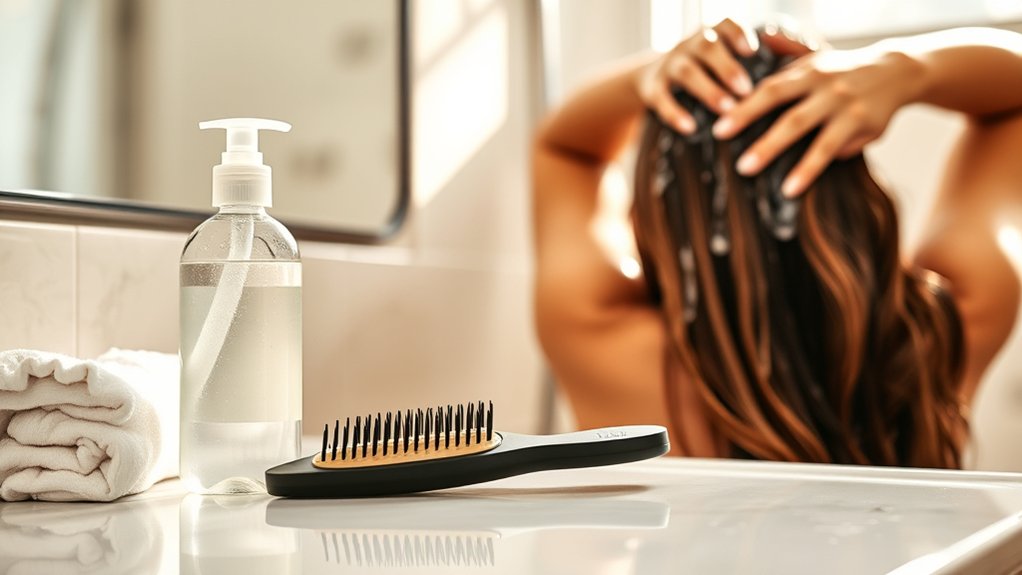
When you want to refresh your hair without dulling its color, using a clarifying shampoo carefully is key.
First, pick a clarifying shampoo formulated for color-treated hair, free from sulfates and harsh chemicals. Wait at least three days after coloring so the dye sets properly.
Apply the shampoo mainly to areas with buildup, like your scalp, and let it sit for a few minutes to effectively remove buildup. Rinse thoroughly, then follow up with a hydrating deep conditioner to restore moisture and protect your color-treated hair from dryness.
Limit clarifying shampoo use to once a week to maintain your hair’s vibrancy.
This step-by-step approach helps you cleanse deeply while preserving your hair color beautifully. Easy, right? Just a little care goes a long way!
How to Protect Colored Hair After Clarifying Shampoo Use
After you use a clarifying shampoo, make sure to rinse your hair with cold water. This helps to seal the cuticle and keep your color looking vibrant.
You’ll also want to follow up with a moisturizing conditioner—it’s great for restoring hydration and stopping your hair from drying out.
Oh, and try to limit using clarifying shampoo to just once a week. That way, you can protect your color and keep your hair healthy.
Moisturizing Post-Wash Care
Since clarifying shampoos strip away buildup and residue, they can leave your colored hair feeling dry and vulnerable.
To protect and restore your hair, follow these moisturizing post-wash care steps:
- Apply a moisturizing conditioner immediately after shampooing to replenish hydration and soothe your color-treated hair.
- Use a weekly deep conditioning treatment to strengthen strands and counteract any dryness caused by clarifying shampoo.
- Consider a leave-in conditioner for extra moisture and protection throughout the day, especially if your hair tends to dry out quickly.
Always choose products formulated specifically for color-treated hair to maintain vibrancy while nourishing your strands.
This routine helps keep your hair healthy, hydrated, and vibrant after using clarifying shampoo.
Cold Water Rinse
Although clarifying shampoos effectively remove buildup, you’ll want to finish your wash with a cold water rinse to protect your colored hair. Cold water helps seal the hair cuticle, locking in moisture and enhancing shine.
This step is essential after using clarifying shampoo, which can strip natural oils from color-treated hair. By rinsing with cold water, you reduce the chance of color molecules escaping, preserving vibrancy longer.
Plus, cold water smooths the hair’s surface, minimizing frizz and promoting a sleeker look. After the cold rinse, just apply a moisturizing conditioner to replenish hydration and maintain hair health.
Adding a cold water rinse into your routine guarantees your color-treated hair stays vibrant, healthy, and less prone to damage after clarifying shampoo use. It’s a simple step that really makes a difference!
Limit Clarifying Frequency
You should limit how often you use clarifying shampoo on colored hair to prevent premature fading and dryness.
Maintaining a proper clarifying frequency helps preserve your color-treated hair’s vibrancy while effectively removing buildup.
Here’s how to protect your hair after using clarifying shampoo:
- Limit clarifying shampoo use to once a week or less, depending on buildup and hair condition.
- Choose a clarifying shampoo formulated specifically for color-treated hair to minimize color loss.
- Follow up with a hydrating deep conditioner and rinse with cold water to seal the cuticle and retain moisture.
Warning Signs of Overusing Clarifying Shampoo on Color-Treated Hair
When you overuse clarifying shampoo on color-treated hair, you’ll notice several warning signs that signal damage and fading. Overusing clarifying shampoo strips not only buildup but also your hair dye, especially vibrant colors, leading to significant color fading.
Your hair may feel excessively dry, brittle, and lose its natural shine, resulting in a dull, lifeless appearance. You might also find your hair harder to style or feeling heavy and sticky after washing.
Both are warning signs that product buildup has worsened due to frequent clarifying. To protect your color-treated hair, limit clarifying shampoo use to once or twice a month.
Always follow with a deep conditioning treatment to restore moisture and prevent further dryness. This helps maintain your hair’s health and color vibrancy. It’s a simple step that makes a big difference!
Alternatives to Clarifying Shampoo for Maintaining Color and Scalp Health
While clarifying shampoos do a great job removing buildup, using alternatives can actually help keep your color-treated hair looking vibrant and your scalp feeling healthy.
Going for gentler options helps preserve your color and maintains a balanced scalp.
Here are three alternatives to consider:
- Sulfate-Free Shampoos: These clean without harsh surfactants. They protect your color while gently removing dirt and oils from the scalp.
- Co-Washing: Washing with a moisturizing conditioner keeps your hair hydrated while cleansing. It reduces how often you need clarifying shampoos and supports scalp health.
- Hair Masks: Using a weekly hair mask nourishes and hydrates your strands. This boosts color vibrancy and helps shield hair from environmental damage.
Adding these into your routine will help your color last longer and keep your scalp feeling fresh and healthy.
Can Clarifying Shampoo Remove Unwanted Semi-Permanent Color?
Though gentler alternatives help maintain color, there are times you might want to remove unwanted semi-permanent dye quickly and effectively. Clarifying shampoo works well here because its strong cleansing properties act like an exfoliant, targeting and dissolving dye particles without harsh chemicals. This makes it a safer choice for color-treated hair compared to traditional removers.
However, because clarifying shampoos can cause dryness, you should always follow up with a deep conditioner to restore moisture and prevent damage.
Keep in mind that results vary depending on your hair’s condition and the dye type, with some colors fading more easily. Use clarifying shampoo sparingly to avoid compromising your hair’s health while successfully removing unwanted semi-permanent color.
Frequently Asked Questions
Can Clarifying Shampoo Help With Product Buildup on Colored Hair?
Yes, clarifying shampoo can effectively remove product residue from your colored hair, restoring scalp balance and improving hair texture.
By eliminating buildup, it enhances color longevity and keeps your hair vibrant.
However, you should use it sparingly, no more than once a week, to avoid stripping essential oils and fading your color.
Choosing a sulfate-free, color-safe clarifying shampoo helps maintain your hair’s health while giving a thorough, gentle cleanse.
Is It Safe to Use Clarifying Shampoo on Chemically Treated Colored Hair?
Yes, you can safely use clarifying shampoo on chemically treated colored hair if you follow proper color preservation techniques.
Limit clarifying shampoo frequency to once a week to avoid stripping color. Always choose a color-safe formula and wait at least three days post-coloring before use.
After washing, focus on moisture restoration by applying a deep, hydrating conditioner.
Consistent post-wash conditioning helps maintain softness and keeps your color vibrant for longer. It’s all about balancing cleansing with care to protect your hair’s health and color.
Can Clarifying Shampoo Improve Scalp Health for Color-Treated Hair?
Absolutely, clarifying shampoo can gently refresh your scalp and offer exfoliation benefits that clear buildup without harshness.
By following clarifying frequency guidelines, usually once every one to two weeks, you can support color preservation techniques that keep your hue vibrant.
Pair it with hydrating treatments like deep conditioners to maintain moisture balance.
This combo promotes a healthier scalp environment and helps enhance the longevity and shine of your color-treated hair effectively.
Does Water Temperature Affect Color Fading When Using Clarifying Shampoo?
Yes, water temperature considerably affects color maintenance when using clarifying shampoo.
Lukewarm water opens your hair cuticle, which, combined with clarifying shampoo, can increase fading, especially if your hair has high porosity.
To help prevent fading, finish rinsing with cool water. This seals the cuticle and reduces the impact of water quality on your hair. It’s a simple step that makes a difference.
Adjusting water temperature helps preserve your hair’s vibrancy. Plus, it keeps color-treated hair healthier over time. So, it’s definitely worth paying attention to!
Can Clarifying Shampoo Be Used Before Applying Hair Color?
Wondering if clarifying shampoo can boost your pre-color preparation? Absolutely!
Using it before coloring removes buildup, ensuring better color retention and vibrant results. Just remember not to overdo clarifying frequency to protect your hair health.
Choose a gentle, sulfate-free formula, and always follow up with deep conditioning.
This approach preps your hair perfectly, allowing the color to adhere well while keeping your strands strong and moisturized. It’s a simple step that can make a big difference!
Conclusion
You might think clarifying shampoo is your go-to for a deep clean, but when it comes to colored hair, it’s a delicate balance. Use it too often or choose the wrong formula, and you risk fading your vibrant color faster than you expect.
So, before you reach for that bottle, ask yourself, are you protecting your color or unknowingly stripping it away? The right choices now will keep your color looking fresh and vibrant longer.