Do You Use Dry Shampoo Before Or After Styling – Expert Styling Tips
You can use dry shampoo both before and after styling to boost volume and absorb oil. Applying it before styling preps your hair, adds texture, and helps your style hold better.
After styling, it refreshes your look without washing and enhances texture or light hold. Just spray at your roots from 6-8 inches away, let it absorb, then brush through to avoid buildup.
Want to master flawless application and avoid common mistakes? Keep exploring expert techniques here.
Best Time to Use Dry Shampoo: Before or After Styling?
When’s the best time to use dry shampoo: before or after styling? The answer depends on your hair goals.
If you want a volume boost and texture, apply dry shampoo before styling. Timing matters here. Let it sit for a few minutes to absorb excess oil and avoid powdery residue.
This prep step enhances product layering, giving you a clean base for finishing products. It also helps your styles hold better.
On the other hand, using dry shampoo after styling helps absorb excess oil that builds up throughout the day. It keeps your hair looking fresh without disturbing your style.
Whether you choose before or after styling, applying dry shampoo correctly guarantees your hair stays voluminous, clean, and ready for any look.
How Dry Shampoo Gets Your Hair Ready for Styling
A well-applied dry shampoo prepares your hair by absorbing excess oil and adding essential volume and texture, creating the perfect foundation for styling. When you apply dry shampoo before styling, it soaks up the extra oil that can weigh your hair down, helping you achieve a fresh look.
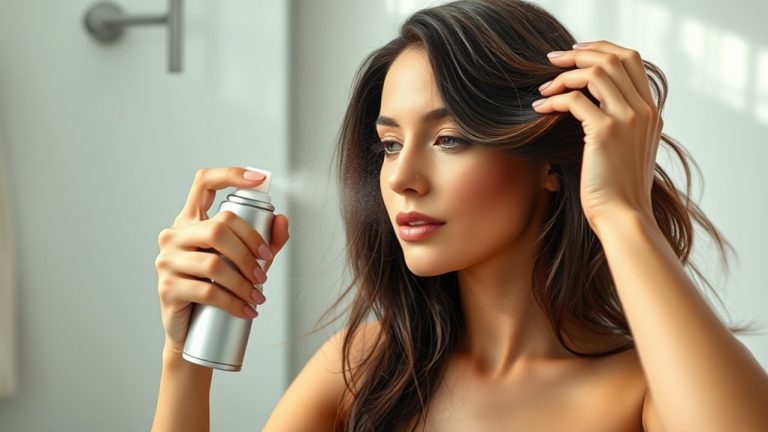
To get the best results, section your hair and spray dry shampoo 6-8 inches from your scalp. Then, let it settle for at least 30 seconds. This little wait adds volume and texture, making it easier to create styles like waves or updos.
Section hair, spray dry shampoo 6-8 inches away, then wait 30 seconds for added volume and texture.
Using a lightweight formula means your hair stays flexible and never feels heavy.
When applied properly, dry shampoo doesn’t just refresh your roots—it also boosts how long your style lasts and makes your hair easier to manage overall.
How to Apply Dry Shampoo Before Styling for Volume and Texture
Boost your hairstyle’s volume and texture by applying dry shampoo strategically before you start styling. To get the best results, follow these steps carefully.
First, section hair into 1-2 inch parts to guarantee even coverage.
Hold the canister 6-10 inches from your scalp, then apply dry shampoo focusing on oily roots. Allow it to sit for about 30 seconds to absorb excess oil effectively.
Next, massage the product into your scalp to distribute it evenly and activate its volumizing aid properties.
This method creates a clean base that enhances lift and texture, especially helpful for fine hair, without needing to wash.
- Section hair for targeted application
- Hold canister at proper distance
- Apply dry shampoo to oily roots
- Allow sit to absorb oil
- Massage to boost volume and texture
Which Hair Types Benefit Most From Applying Dry Shampoo Before Styling?
Which hair types gain the most from applying dry shampoo before styling? If you have fine hair, dry shampoo lifts flat strands, adding volume and texture. Thick hair benefits as it absorbs excess oil, easing manageability without heaviness.
Curly hair sees enhanced curl definition and body, boosting shape and bounce. Oily hair types find dry shampoo effective at targeting roots, creating a fresh base for styling products. Color-treated hair benefits by reducing frequent washing, preserving vibrancy and minimizing fade.
| Hair Type | Benefit of Applying Dry Shampoo Before Styling |
|---|---|
| Fine Hair | Adds volume and texture |
| Thick Hair | Absorbs oil, improves manageability |
| Curly Hair | Defines curls, adds body |
| Oily Hair | Controls oil, refreshes roots |
| Color-Treated Hair | Preserves color, reduces wash frequency |
Use these styling tips to maximize your look with dry shampoo.
What Are the Benefits and Drawbacks of Using Dry Shampoo After Styling?
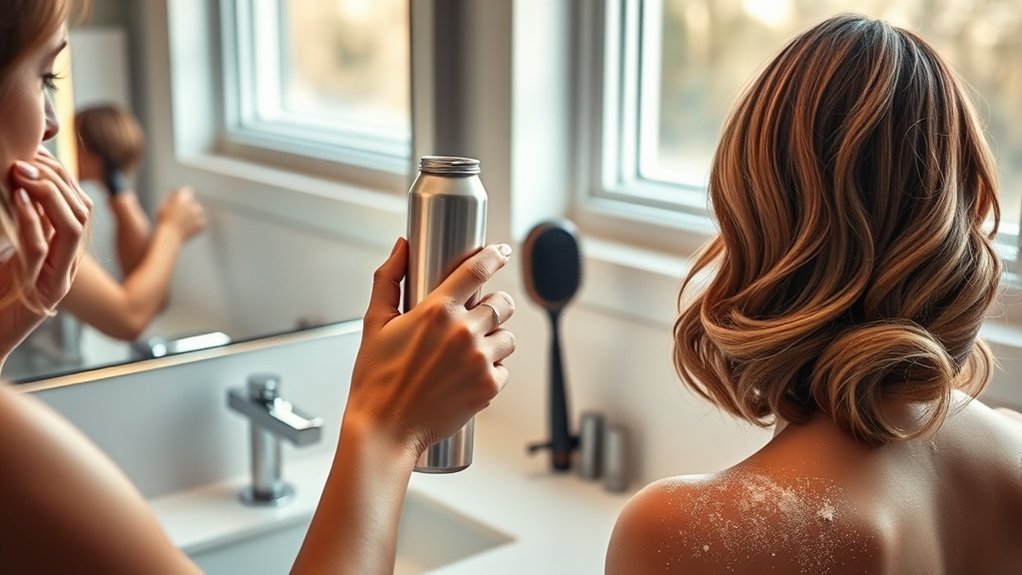
After styling your hair, applying dry shampoo can enhance texture and volume, giving your look added dimension and staying power.
Using dry shampoo after styling helps absorb excess oil that may develop, keeping your hair fresh throughout the day. It also adds light hold, which is perfect for maintaining styles like beachy waves.
Dry shampoo refreshes oily roots and provides gentle hold, ideal for keeping styles like beachy waves intact all day.
But be careful not to overuse it. Too much dry shampoo can cause product buildup, making your hair feel heavy and look dull.
To avoid this, let the dry shampoo sit for a few minutes to absorb properly and prevent that chalky residue.
So, use dry shampoo thoughtfully after styling to get the best results.
- Boosts texture and volume post-styling
- Absorbs excess oil for a fresh hair feel
- Provides light hold to support styles
- Excessive use leads to product buildup
- Requires a few minutes for best absorption
Refreshing Your Style With Dry Shampoo After Styling
You can totally boost volume and texture after styling by applying dry shampoo to your roots.
It’s great at managing oil buildup without messing up your look, so your hair stays fresh for longer. Just make sure to use a lightweight formula.
Then, give it a moment to settle before you massage it in for the best results.
Enhancing Volume Post-Styling
Although styling can create volume initially, applying dry shampoo afterward boosts it further by absorbing excess oil and adding texture without ruining your look.
When enhancing volume post-styling, dry shampoo is especially effective on fine hair, lifting roots and making your hair appear freshly styled.
To maximize results, apply dry shampoo directly to the roots from 6-8 inches away, let it sit for a few minutes, then massage it in. This technique refreshes flat areas and maintains your style’s shape throughout the day.
- Absorb excess oil to prevent limpness
- Add texture for a fuller appearance
- Lift roots to enhance volume on fine hair
- Maintain hairstyle without re-styling
- Avoid residue by shaking canister and brushing through
Use dry shampoo post-styling for lasting volume and freshness.
Managing Oil After Styling
When oil starts to build up post-styling, dry shampoo quickly refreshes your look by absorbing excess grease and restoring volume. To manage greasy roots effectively, start by sectioning the hair and applying dry shampoo 6-8 inches away for even coverage. This technique prevents product buildup and guarantees the formula targets oily areas without leaving behind residue.
After applying dry shampoo, let it sit for at least 30 seconds to fully absorb excess oil. Then, gently massage or brush it through your scalp to blend any powdery traces. This quick and easy method revitalizes your hairstyle, maintaining its bounce and sleekness throughout the day.
Using dry shampoo after styling is essential for a consistently fresh and polished appearance. It’s a simple step that really makes a difference when you want to keep your hair looking great without washing it again.
Give it a try next time your roots start feeling greasy!
Mistakes to Avoid When Using Dry Shampoo With Styling
Since dry shampoo plays an essential role in revitalizing your hair, using it incorrectly can undermine your styling efforts. To truly refresh your hair and extend the life of your style, it’s vital to get your dry shampoo routine right.
Use dry shampoo strategically to avoid common pitfalls that lead to product buildup and dullness. Avoid over-application and focus on the roots to prevent a chalky finish. Allow time for absorption; wait at least 30 seconds before styling.
Then, brush thoroughly after application to eliminate residue and clumps.
Don’t rely solely on dry shampoo because balance is key for scalp health. Use dry shampoo before styling for a clean, oil-free base that holds better.
Mastering these steps guarantees your hair stays fresh without compromising your style or scalp condition. It’s all about getting it right so your hair looks and feels great every day.
How to Avoid White Residue and Product Build-Up With Dry Shampoo
To avoid white residue, start by picking a dry shampoo that matches your hair color. Give the can a good shake before you spray to make sure the product spreads evenly.
When you apply it, aim for the oily roots and try sectioning your hair so you can target those areas better. Then, let it sit for a bit before you brush it through.
Now, to keep product build-up at bay, it’s a good idea to clarify your scalp regularly using a cleansing shampoo. This helps keep both your hair and scalp feeling fresh and healthy.
Preventing White Residue
Although dry shampoo is a quick fix for oily hair, you need to apply it carefully to avoid white residue and product buildup. To prevent visible powder, always shake the canister thoroughly before use.
Hold it 6-10 inches away from your scalp to guarantee an even mist rather than concentrated spots. Sectioning your hair helps you apply the product evenly, reducing residue risks.
After spraying, allow the dry shampoo to sit for at least 30 seconds so it can absorb excess oil effectively. If you have darker hair, choose formulas specifically formulated for dark tones to minimize white residue.
Shake the canister well before each use
Hold 6-10 inches from scalp during application
Section your hair for targeted spraying
Allow product to sit and absorb oil
Use dry shampoo formulated for dark tones
Managing Product Build-Up
Mastering dry shampoo application goes beyond preventing white residue. You also need to manage product build-up to keep your scalp healthy and hair looking fresh.
To avoid product buildup, always shake the dry shampoo canister well before you apply it. This helps with even formula distribution.
Spray mainly on roots and oily areas from 6-8 inches away so you don’t end up with concentrated patches.
Let it sit for at least 30 seconds to absorb oil effectively. Then, massage it into your scalp and brush through with a bristle brush or use a blow dryer to remove excess powder.
Try to limit how often you use dry shampoo and make sure to wash your hair regularly with a clarifying shampoo. This helps maintain scalp health.
Following these styling tips helps you balance oil absorption without compromising scalp cleanliness or your hair’s appearance.
Combining Dry Shampoo With Other Styling Products Effectively
When you apply dry shampoo before styling, it absorbs excess oil and creates a clean base that helps your styling products hold better. Using dry shampoo on dry hair prevents residue and guarantees a smooth layer for ideal results.
To combine dry shampoo with other styling products effectively, here are some tips:
Use a lightweight dry shampoo for fine hair to avoid weighing it down.
Allow dry shampoo to sit for a few minutes before applying mousse, gel, or spray.
Layer dry shampoo under volumizing products to boost lift and texture.
Avoid applying dry shampoo after styling products to maintain hold.
Choose formulations based on your hair type to maximize volume and control.
This approach guarantees your styling products work efficiently, enhancing hold and volume throughout the day.
Give it a try and see how your hair stays fresh and styled longer!
Expert Tips to Seamlessly Include Dry Shampoo in Your Styling Routine
Since dry shampoo can transform your styling routine, knowing how to use it effectively is crucial. Always apply dry shampoo before styling to add texture and act as a volumizing agent. Target oily roots by sectioning your hair and spraying directly to absorb excess oil.
Let it sit for at least 30 seconds to guarantee full absorption and avoid residue. Afterward, brush through to evenly distribute the product and remove excess. Incorpor’s dry shampoo this way enhances your style’s longevity and freshness.
| Step | Action |
|---|---|
| Apply | Spray dry shampoo on roots |
| Let It Sit | Wait 30+ seconds to absorb oil |
| Brush Through | Distribute product evenly |
| Style | Proceed with your styling |
Frequently Asked Questions
Can Dry Shampoo Replace Washing Hair Entirely?
No, dry shampoo can’t replace washing hair entirely. While it helps with hair cleanliness between washes, relying on it too often leads to product buildup and compromises scalp health.
Your hair texture and styling techniques affect how often you should use it. For moisture retention and maintaining scalp balance, limit dry shampoo frequency to 1-2 times weekly.
You might want to consider alternative products like scalp scrubs or gentle cleansers to support overall hair health. They can be a great addition to your routine!
Is Dry Shampoo Safe for Daily Use?
Coincidentally, while dry shampoo benefits your hair by revitalizing oil and adding texture, you shouldn’t use it daily.
Different dry shampoo types and brands vary, but frequent use risks product buildup and harms hair health.
The best application is 1-2 times a week, balancing styling techniques and fragrance options.
To keep your scalp healthy, rotate with regular washing.
Dry shampoo complements, not replaces, your hair care routine.
How Does Dry Shampoo Affect Hair Color or Dye?
Dry shampoo helps with color retention and fade prevention by reducing frequent washing.
To avoid product buildup that dulls color, use clarifying shampoos regularly. Applying dry shampoo before styling enhances texture, especially for color-treated hair, keeping it vibrant.
Choose the best brands formulated for your hair type and limit how often you use it to maintain shine and protect your dye.
Proper application techniques make sure you get even coverage without stripping color or causing damage. Just a little care goes a long way!
Can Dry Shampoo Cause Scalp Irritation or Allergies?
Of course, dry shampoo can cause scalp irritation or allergic reactions. Who wouldn’t want redness, itching, or flakiness?
If you have sensitive skin, watch out for harsh product ingredients like alcohol that can harm scalp health.
Keep your usage frequency low, do patch tests, and consider natural alternatives.
At the first sign of irritation symptoms, stop using it and seek advice from a dermatologist.
Protect your scalp—it deserves better than hidden irritants.
What Ingredients Should I Avoid in Dry Shampoo?
You should avoid ingredients like talc because of respiratory risks and parabens since they raise hormonal concerns.
Alcohol can dry out your hair, so it’s better to go for alcohol-free formulas.
Fragrance is another thing to watch out for. Synthetic scents might trigger allergies, so natural alternatives or fragrance-free options are usually a safer bet.
Sulfates also have a downside—they strip oils away, which can harm your hair’s hydration.
On top of that, think about the environment. Choosing eco-friendly and gentle ingredients is a smart move.
Steering clear of these ingredients helps keep your hair and scalp healthier overall.
Conclusion
Think of dry shampoo as your secret weapon, a light mist that breathes life into your hair, whether before or after styling. Using it before gives you that perfect lift and texture, like morning dew revitalizing petals.
Applying it after can tame oil without weighing you down. Just avoid overdoing it to prevent buildup.
Master this balance, and your hair will always look effortlessly fresh and full of life, no matter the style.