Does Dry Shampoo Help With Greasy Hair – Benefits And Results Explained
Yes, dry shampoo helps manage greasy hair by absorbing excess oil and sweat. It instantly reduces visible greasiness and boosts hair volume.
It’s especially effective for oily, fine, or color-treated hair. Plus, it offers a quick way to refresh your look without washing.
However, overusing it can cause buildup and scalp irritation. So, balancing dry shampoo use with regular cleansing is essential for scalp health.
Explore how to choose products and apply them properly for the best results.
How Dry Shampoo Tackles Greasy Hair
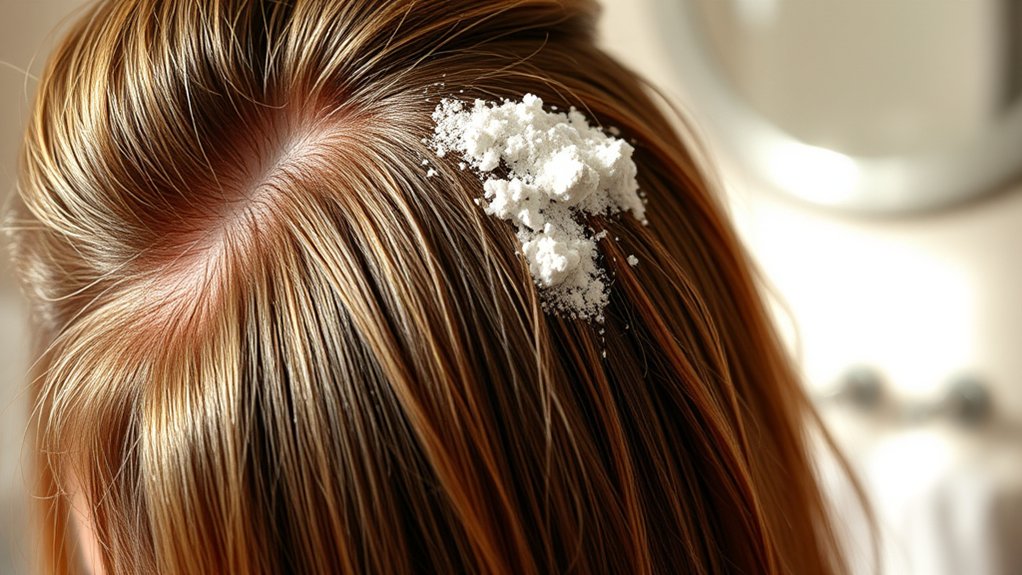
Dry shampoo tackles greasy hair by absorbing excess oil and sweat directly from your scalp, creating a cleaner and fresher appearance without the need for water. It contains absorbent ingredients like starch or bentonite clay that effectively target oily hair roots. These ingredients help soak up extra oils and reduce visible greasiness.
By removing oil buildup, dry shampoo can also boost hair volume and thickness. This helps counteract the limpness caused by oily hair.
But keep in mind, dry shampoo isn’t a replacement for regular washing. Maintaining scalp health means routine cleansing to prevent buildup and irritation. Overusing dry shampoo might throw off your scalp’s balance.
Key Benefits of Dry Shampoo for Controlling Oily Hair
Controlling oily hair becomes more manageable when you use products designed to absorb excess sebum and sweat quickly. Dry shampoo contains absorbent ingredients such as starch and bentonite clay that effectively reduce the greasy appearance of your hair.
This not only controls oil but also promotes scalp health by limiting dandruff-causing fungi. Plus, dry shampoo increases hair volume by removing the weight of excess oil, improving hair texture without washing.
It’s a practical, time-saving solution for maintaining a fresh look throughout busy days.
| Benefit | Description |
|---|---|
| Oil Absorption | Absorbent ingredients reduce oily, greasy buildup |
| Scalp Health | Controls dandruff and supports a balanced scalp |
| Hair Volume | Eliminates oil weight, enhancing thickness and lift |
Choosing the Right Dry Shampoo for Oily Hair Types
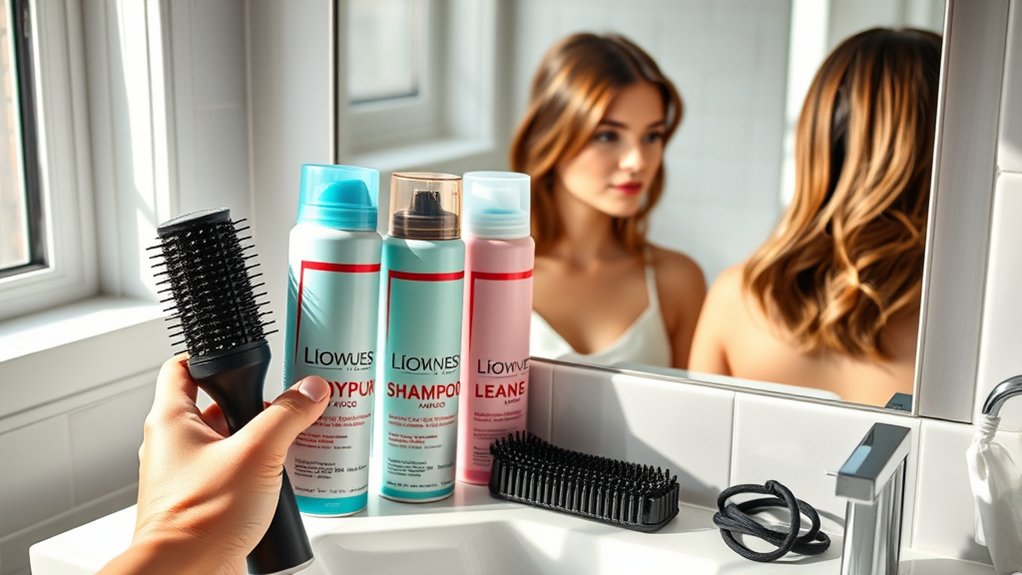
When you’re picking out a dry shampoo for oily hair, it’s a good idea to steer clear of ingredients like talc, phthalates, and parabens. These can sometimes cause scalp irritation and lead to buildup, which nobody wants.
Also, think about choosing products that match your hair color. For example, The Earthling Co. offers natural formulas in light and dark shades, so they blend right in without leaving that white residue.
And don’t forget to decide between natural and synthetic ingredients. The key is to go for absorbent, scalp-friendly components that work best for keeping your hair fresh and clean.
Ingredients To Avoid
Although it might seem convenient to pick any dry shampoo off the shelf, you should avoid products containing talc, phthalates, parabens, and alcohol. These ingredients can irritate your scalp and cause buildup that worsens oiliness.
To protect your scalp and maintain healthy hair, focus on these key points when selecting a dry shampoo:
- Avoid harmful ingredients like talc and alcohol, which can cause scalp irritation and make oiliness worse.
- Choose dry shampoos with natural absorbent ingredients, such as starch or bentonite clay. These help control oil without damaging your scalp.
- Opt for fragrance-free options to reduce the risk of allergic reactions, especially if you have sensitive skin.
Being mindful of these ingredients to avoid makes sure you pick a product that supports scalp health while managing greasy hair effectively.
Color-Matching Options
Choosing the right dry shampoo means picking a color-matching formula that blends well with your hair to avoid any visible residue. If you have oily hair, look for dry shampoos with starch or bentonite clay. These ingredients absorb oil effectively and also support scalp health.
Make sure to check ingredient labels carefully to avoid harmful additives. Brands like The Earthling Co. offer “light” and “dark” options that work for different hair colors. This helps enhance your overall look and keeps white residue to a minimum.
You might need to try a few different formulas to find the perfect match for your hair’s oiliness and color.
| Brand | Color Options | Key Ingredients |
|---|---|---|
| The Earthling Co. | Light, Dark | Natural starch |
| Brand B | Blonde, Brunette | Bentonite clay |
| Brand C | Transparent, Tinted | Oil-absorbing powders |
Natural Versus Synthetic
Since oily hair requires gentle care, selecting a powder-based dry shampoo often proves more effective and less irritating than alcohol-based alternatives.
When choosing between natural and synthetic dry shampoo, think about how the ingredients affect your scalp and oiliness. Natural options usually use absorbent ingredients like starch or bentonite clay, which help control oil while keeping your scalp healthy.
Synthetic products might contain harmful additives like talc and parabens. These can clog pores and make irritation worse, so it’s something to watch out for.
Here are some key points to keep in mind:
- Natural dry shampoos generally have simpler, safer ingredients and might even offer options that match your hair color.
- Synthetic formulas often include chemicals that can irritate your scalp.
- Absorbent ingredients are essential for managing oiliness without messing up your scalp’s natural balance.
Best Hair Types for Dry Shampoo on Greasy Hair
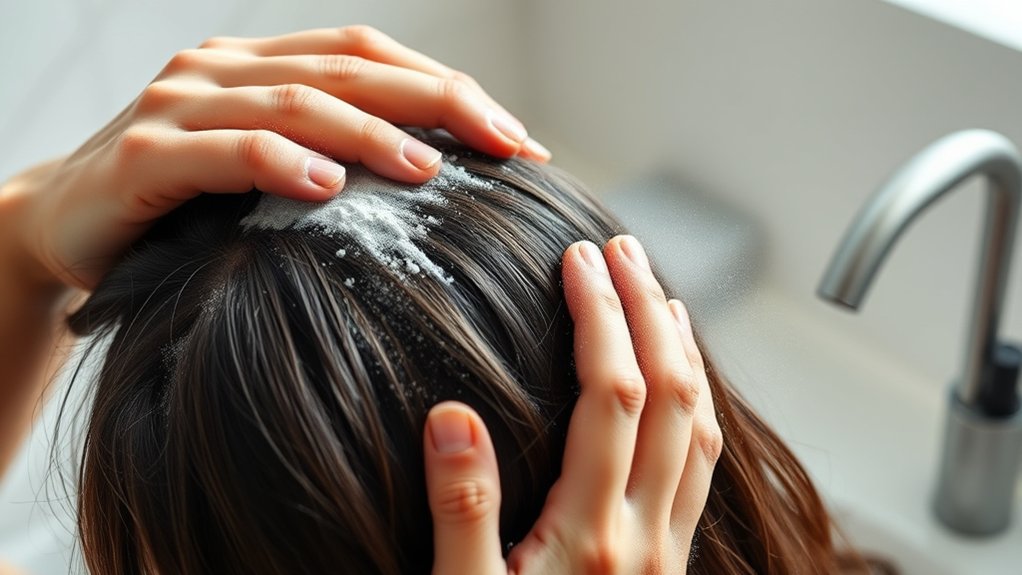
Three primary hair types benefit most from dry shampoo when managing greasy hair: oily, fine or straight, and color-treated hair.
If you have oily hair, dry shampoo effectively absorbs excess sebum, helping control oil production and reducing the greasy appearance without frequent washing.
For fine or straight hair types, dry shampoo not only removes excess oil but also adds volume by lifting hair strands weighed down by grease.
Color-treated hair benefits as dry shampoo extends time between washes, preserving color and minimizing pigment loss.
If you have scalp sensitivity, choose fragrance-free or gentle dry shampoo formulas to manage oiliness without irritation.
Understanding your hair type helps you select the right dry shampoo to optimize benefits while maintaining scalp health and hair appearance.
How Often Should You Use Dry Shampoo on Greasy Hair?
- Use dry shampoo sparingly between washes, not as a shampoo substitute. It’s great for quick fixes, but don’t rely on it all the time.
- Try to space out traditional shampooing every 2-3 days, depending on your hair type. This helps keep your scalp healthy and your hair fresh.
- Keep an eye on your scalp. If you notice irritation or itchiness, it’s a good idea to cut back on the dry shampoo.
Balancing dry shampoo use with regular washing is key.
Overusing dry shampoo on greasy hair can lead to some unwanted effects, so moderation really helps.
How to Apply Dry Shampoo Effectively
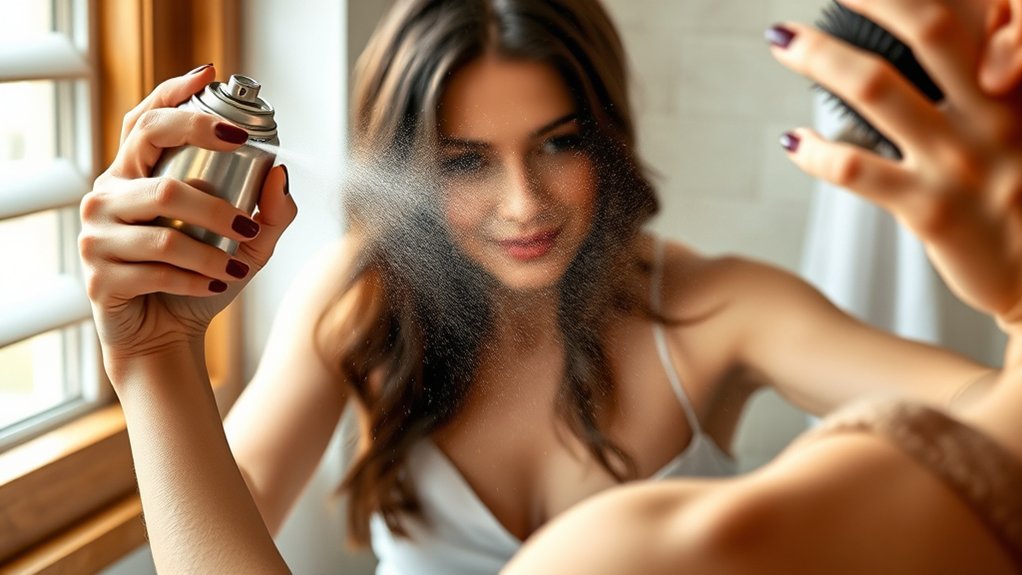
Hold the dry shampoo can about 6 inches from your scalp—that way, you get even coverage without overdoing it.
Try parting your hair into sections so you can really focus on those oily roots. Once you spray, massage the product into your scalp; this helps it absorb better and stops any residue from showing.
Then, let it sit for about 30 seconds. After that, just brush through your hair or use the cool air setting on your blow dryer to spread the product evenly and add some nice volume.
Easy, right?
Proper Application Distance
When applying dry shampoo, maintaining an approximate distance of 6 inches from your scalp guarantees even distribution and prevents product buildup that can weigh down your hair.
Proper application distance is essential to maximize absorption and effectively combat greasy hair.
Adjusting this distance makes certain the dry shampoo reaches oily areas without oversaturating your roots, which varies by hair type and oiliness level.
Follow these steps for ideal results:
- Hold the can about 6 inches away to allow a fine mist to cover your scalp evenly.
- Part your hair into sections to facilitate thorough and targeted application.
- After spraying, massage your scalp gently to distribute the product and enhance absorption.
This method ensures dry shampoo works efficiently to refresh greasy hair without residue or heaviness.
Give it a try—you’ll notice the difference!
Targeting Oily Areas
To effectively target oily areas with dry shampoo, focus your application directly on the roots where greasiness is most pronounced. Hold the can about 6 inches from your scalp to guarantee even distribution without saturating your hair.
After spraying, let the dry shampoo sit for approximately 30 seconds to absorb excess oil before gently massaging it into your scalp with your fingertips.
Using an old makeup brush can help distribute the product more precisely, reaching all oily areas without causing clumps. This targeted application enables the dry shampoo to absorb oil efficiently while adding volume and texture.
Proper distribution on the scalp is essential to maximize effectiveness, leaving your hair refreshed and less greasy throughout the day.
Post-Application Techniques
Shake the dry shampoo canister well before use and spray it evenly about six inches from your scalp, concentrating on oily sections.
Effective post-application techniques enhance oil absorption and improve volume. Follow these steps for ideal results:
First, part your hair into sections to target greasy areas and guarantee precise application.
Then, let the dry shampoo sit for 30 seconds to a minute to allow the formula to absorb oils from the scalp.
After that, use your fingers or a brush to distribute the product evenly, preventing residue buildup at the roots.
For added volume, consider using a cool blow dryer to fluff your roots after application.
This method guarantees thorough oil absorption, an even distribution of product, and a refreshed scalp appearance.
It’s an easy way to get your hair looking fresh and voluminous in no time.
Drawbacks of Using Dry Shampoo Too Often
Although dry shampoo offers a convenient solution for managing greasy hair, using it more than two days in a row can cause several scalp and hair issues. Overuse often leads to product buildup, which irritates the scalp and results in an itchy scalp. This buildup can clog pores, increasing the risk of pimples or rashes.
Moreover, excessive dry shampoo disrupts your scalp’s natural oil production, sometimes making your hair greasier over time. Relying heavily on dry shampoo without regular washing prevents the removal of accumulated residue, which is essential for maintaining scalp health and preventing conditions like seborrheic dermatitis.
In addition, frequent use weakens hair strands, particularly when combined with heat styling, increasing breakage risk.
To avoid these drawbacks, balance dry shampoo use with regular washing. It really helps keep your scalp and hair in better shape overall.
Preventing Scalp Irritation From Dry Shampoo
Excessive use of dry shampoo often leads to scalp irritation, presenting as itching, burning, and dryness due to product residue buildup.
To prevent scalp irritation and keep your scalp healthy, you should limit dry shampoo use to 1-2 times per week. This helps reduce the buildup of product residue that can cause problems.
When you apply dry shampoo, spray it directly onto the roots and let it sit for about 30 seconds. This allows it to absorb oils better and helps minimize irritation.
Also, try to choose a fragrance-free dry shampoo since added fragrances can make sensitivity and discomfort worse.
Keep an eye on how your scalp feels and stop using dry shampoo right away if you notice any irritation.
Following these simple steps can help you use dry shampoo effectively without harming your scalp or causing irritation.
How Dry Shampoo Extends Time Between Washes for Greasy Hair
When you apply dry shampoo to greasy hair, it soaks up excess oil and sweat from your scalp. This instantly reduces the greasy look and makes your hair appear cleaner without needing water.
Dry shampoo has absorbent ingredients like starch or bentonite clay that do a great job at soaking up that extra oil. This helps you stretch out the time between washes. Not only does it refresh how your hair looks, but it also adds volume, making it easier to style.
Dry shampoo absorbs excess oil, refreshes your hair, and adds volume for effortless styling between washes.
Plus, washing your hair less often means less chance of damage from overwashing. That’s great for keeping your scalp healthy.
Experts suggest using dry shampoo in moderation — ideally one to two times a week — to keep greasy hair under control while looking after your scalp.
Why Regular Washing Still Matters for Scalp Health
Even if dry shampoo helps manage oily hair between washes, regular washing remains essential for maintaining scalp health. You need to cleanse your scalp thoroughly to prevent buildup from dead skin cells, oil, and dry shampoo residue.
Neglecting regular washing can cause irritation, seborrheic dermatitis, and hair breakage. Experts suggest washing hair 2-3 times weekly for normal hair to maintain scalp health without disrupting natural oils.
Key reasons why regular washing matters:
- Removes buildup of oil, dead skin, and dry shampoo, promoting a healthy scalp environment.
- Prevents scalp conditions like irritation and dermatitis caused by residue accumulation.
- Reduces risk of hair shedding and breakage linked to clogged follicles and poor scalp hygiene.
Keep an eye on your scalp regularly and if irritation sticks around, it’s a good idea to see a dermatologist.
Frequently Asked Questions
Can Dry Shampoo Cause Hair Color to Fade?
Yes, dry shampoo can cause hair color to fade if you use formulas with harsh ingredients like alcohol that strip pigments.
Product buildup from frequent use may also harm scalp health and reduce color longevity.
To protect your hair maintenance routine, choose color-safe products with gentle absorbents.
Also, make sure to follow proper application techniques. Regular washing with a mild shampoo is essential to prevent dullness and keep your hair color vibrant.
Is Dry Shampoo Safe for Daily Use During Pregnancy?
Daily dry shampoo use during pregnancy isn’t generally recommended because of safety concerns.
You should keep an eye on the ingredients, as some chemicals and fragrances might cause skin reactions or allergies.
Experts suggest limiting how often you use it to avoid scalp buildup and irritation.
Instead, try gentle washing or natural products.
And hey, always check with your healthcare provider to make sure the dry shampoo you pick is safe for you and fits your pregnancy needs.
Does Dry Shampoo Affect Hair Growth or Cause Hair Loss?
Studies show up to 30% of dry shampoo users experience scalp irritation, which can impact hair health.
If you use dry shampoo too frequently, product buildup may suffocate follicles, hindering growth. Ingredients vary in safety, so choose wisely.
Limiting usage frequency to 1-2 times weekly helps prevent damage.
If irritation occurs, stop use and consult a dermatologist.
Consider alternative methods like regular washing to maintain scalp balance and support hair growth.
Can Dry Shampoo Be Used on Curly or Textured Hair?
Yes, you can use dry shampoo on curly hair, but proper product application is key. Focus on the roots to maximize texture absorption without disturbing your curl patterns.
Choose formulas that support moisture retention to prevent dryness.
Try styling techniques that avoid heavy buildup, so you can keep your scalp healthy. Evidence shows these practices refresh curls effectively while maintaining hair integrity. It’s all about balancing oil control with hydration.
How Does Dry Shampoo Interact With Other Hair Styling Products?
Dry shampoo effectiveness depends on proper application techniques and product compatibility with your styling products. You should apply dry shampoo first, letting it absorb oil for a few minutes before layering other products to maintain scalp health and avoid buildup.
Hair texture influences absorption rates, so adjust frequency of use accordingly. Overuse can lead to residue, which impacts styling and scalp condition.
Conclusion
Dry shampoo effectively reduces greasiness by absorbing excess oil, giving your hair a fresher look between washes. You might worry it causes buildup or scalp irritation, but using it properly and not too often keeps those risks low.
Just remember, dry shampoo isn’t a substitute for regular washing. It’s more like a handy tool to extend the time between washes.
Balancing its use with good scalp care helps keep your hair healthy without compromising cleanliness or scalp health. So, it’s all about finding the right routine that works for you!