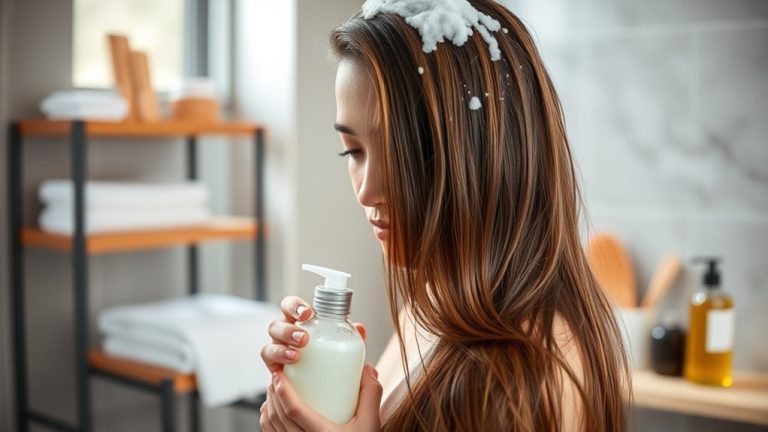
Do You Shampoo After Bleaching Before Toning – Proper Hair Care Steps
You shouldn’t shampoo immediately after bleaching. Instead, rinse your hair thoroughly with cool or lukewarm water to close the cuticle and remove any leftover chemicals. Then, apply a nourishing conditioner to restore moisture.
It’s best to wait 24 to 48 hours before shampooing. This helps reduce irritation and protects your strands from damage. When you do shampoo, make sure to use a gentle, sulfate-free formula designed for bleached hair.
This kind of shampoo helps preserve your color and keeps your hair hydrated. Following these steps will help your toner adhere evenly and keep your hair healthy. Plus, more detailed care tips can help you maintain vibrant, resilient hair over time.
Why You Should Shampoo Bleached Hair Before Toning
Why should you shampoo bleached hair before toning? Shampooing plays a vital role in your hair care routine by removing residual chemicals and product buildup left from bleaching. This guarantees a clean surface, allowing the toner to adhere evenly and deliver consistent color results.
When you wash your bleached hair prior to toning, the shampoo gently opens the hair cuticle, helping the toner penetrate deeply and deposit the desired tone more effectively. Using a gentle, sulfate-free shampoo is essential. It preserves moisture and minimizes additional damage to your fragile strands.
Proper shampooing also prevents uneven color absorption caused by oils or residues, which can interfere with toner adhesion.
Plus, waiting a short period after bleaching before shampooing helps reduce scalp irritation during toning. This makes the process more comfortable and effective.
When and How to Rinse Bleached Hair
Although rinsing bleached hair might seem straightforward, doing it correctly is essential to prevent the bleaching process and protect your strands. You need to rinse thoroughly right after bleaching, using cool or lukewarm water to remove all residual bleach and help close the hair cuticle.
Thoroughly rinsing bleached hair with cool water immediately after bleaching is key to protecting your strands.
Avoid shampooing immediately after rinsing; instead, apply a nourishing conditioner to restore moisture and balance the pH levels. This step prevents excessive dryness and damage.
Give your scalp at least 24 to 48 hours before shampooing to allow recovery and reduce irritation risk.
When you do shampoo, choose a gentle, sulfate-free product formulated specifically for bleached hair to preserve color and maintain strand health. Proper rinsing ensures your hair stays strong and ready for toning.
How to Choose the Right Shampoo for Bleached Hair
Selecting the right shampoo for bleached hair plays an essential role in maintaining its health and vibrancy. You want to choose sulfate-free shampoos to prevent accelerated color fading and minimize damage to fragile strands. Look for products formulated specifically for bleached or color-treated hair, as they cleanse gently without stripping moisture.
Shampoos containing purple pigments are ideal because they neutralize brassy tones and yellow hues, preserving your desired shade. Furthermore, pick shampoos enriched with nourishing ingredients like keratin, biotin, or natural oils; these strengthen and hydrate damaged hair.
Avoid harsh detergents and shampoos with high pH levels, as they increase porosity and weaken hair fibers. By selecting the right shampoo, you protect your bleached hair’s color and integrity effectively. It’s all about giving your hair the care it needs to stay vibrant and healthy.
Why You Should Condition Between Bleaching and Toning
You should definitely condition your hair between bleaching and toning because it helps even out the porosity. This means the toner can absorb more evenly, giving you better results.
Plus, conditioning creates a protective barrier that reduces damage and stops your hair from getting over-processed.
Porosity Evenness Benefits
Because bleaching can create uneven porosity by damaging certain areas of your hair more than others, conditioning between bleaching and toning becomes essential. Conditioning helps balance moisture and protein levels, evening out porosity so your hair absorbs toner uniformly.
This balanced porosity dramatically improves toner adhesion, resulting in longer-lasting, more vibrant color. Moreover, conditioning seals the cuticle, preventing color bleed and promoting a smoother, polished finish.
By maintaining consistent porosity, conditioning supports ideal processing during toning and enhances overall hair health. Skipping this step risks uneven color and dull results because porous or damaged sections absorb toner inconsistently.
Damage Prevention Role
How exactly does conditioning between bleaching and toning protect your hair from damage? Conditioning plays a pivotal role in damage prevention by restoring moisture and reducing porosity after the harsh chemical processing of bleaching.
When you condition, you strengthen hair strands, improving elasticity and minimizing brittleness and breakage. This protective step helps maintain your hair health by creating a barrier that shields against further damage during toning.
Plus, conditioning balances your hair’s pH and porosity, which is essential for even toner absorption and longevity. Skipping this step leaves your hair vulnerable and weak, making it prone to damage from subsequent chemical treatments.
Enhancing Toner Effectiveness
Conditioning between bleaching and toning not only protects your hair but also considerably enhances the effectiveness of the toner application. When you condition after bleaching, you even out hair porosity, allowing the toner to absorb uniformly and preventing patchy results.
Conditioning creates a protective barrier that stabilizes your hair’s pH balance, which leads to more predictable and vibrant toner outcomes. Well-conditioned hair retains moisture better, so it won’t over-absorb the toner, reducing damage during toning.
This step supports overall hair health, making your strands more resilient to chemical treatments and helping the toner last longer.
How Shampooing Affects Your Toner and Color
Although shampooing might seem like a straightforward step, it plays a crucial role in how your toner and color develop after bleaching. Shampooing immediately after bleaching can strip natural oils, making your hair more porous and causing uneven toner absorption.
However, washing your hair before toning removes residual bleach and buildup, allowing the toner to adhere evenly. Using a shampoo formulated for bleached hair helps neutralize brassy tones and prepares your strands for better pigment deposit.
At the same time, delaying shampooing protects your scalp’s natural oils, reducing irritation during toner application. Proper shampooing and conditioning before toning ensure vibrant, longer-lasting color results by balancing your hair’s porosity and optimizing toner effectiveness.
Step-by-Step Shampooing Routine for Bleached Hair
You’ll want to wait at least 24 to 48 hours before shampooing your bleached hair. This gives your scalp time to protect its natural oils and helps prevent any extra damage.
When it’s time to wash, go for a gentle, sulfate-free shampoo that’s made especially for processed hair.
This kind of formula helps keep your hair moisturized and preserves the color.
Timing Before Shampoo
How long should you wait before shampooing bleached hair? The ideal timing is at least 24 to 48 hours after bleaching. This waiting period allows your scalp to recover and reduces the risk of irritation.
Shampooing too soon can strip essential oils, which only dries out and weakens your hair. Post-treatment care benefits a lot from this timing because it lets your hair’s porosity stabilize. That way, you get an even toner application and longer-lasting results.
When you do shampoo, avoid hot water. Lukewarm water is better since it helps maintain the hair cuticle’s integrity.
Proper timing before shampooing is really important for keeping your hair healthy after bleaching. It promotes balanced moisture and protects your investment in color and care.
Choosing Gentle Formulas
Why choose gentle formulas when shampooing bleached hair? Bleached hair is fragile and prone to dryness, so using a sulfate-free, gentle shampoo is essential. These formulas cleanse without stripping moisture or damaging the hair cuticle, which protects your strands from breakage.
When shampooing, be thorough but gentle. Avoid aggressive scrubbing to prevent irritation and additional stress. Rinse with cool or lukewarm water to help close the cuticle and lock in hydration.
After shampooing, always follow up with conditioning products designed for bleached hair to restore moisture and strengthen your hair. This careful approach to hair care ensures your bleached strands remain healthy, vibrant, and resilient.
Gentle shampoo and proper conditioning are key steps in your routine.
Protect Hair Moisture During Post-Bleach Shampooing
When caring for bleached hair, maintaining moisture during shampooing is essential to prevent dryness and damage. Use a sulfate-free, gentle shampoo designed specifically for bleached hair to avoid stripping essential moisture. Shampoo only after thoroughly rinsing out the bleach to remove residue without over-drying your strands.
Try to limit shampooing to one or two times per week to preserve the natural oils that protect your hair. Immediately follow shampooing with a rich conditioner to restore moisture and reinforce the protective barrier.
For added hydration, you can incorporate a weekly deep conditioning treatment or hair mask to further nourish and protect your bleached hair. These steps help maintain your hair’s moisture balance, ensuring it stays healthy and resilient after bleaching.
Nurturing Bleached Hair Health After Toning
Although toning helps achieve the perfect shade, maintaining your bleached hair’s health afterward requires specific care. To keep the vibrancy of your purple toner, use a purple shampoo and mask like Brilliant Blonde Purple Shampoo & Mask. These products help neutralize yellow tones effectively.
Maintain your purple toner’s vibrancy with purple shampoo and mask to effectively neutralize unwanted yellow tones.
It’s important to prioritize deep conditioning treatments such as Bond Protect Mask. This helps restore hydration, reduce porosity, and strengthen your hair’s structure.
Also, choose sulfate-free, low pH conditioners designed for processed hair to prevent damage and preserve the toner effects.
You might want to include antioxidant treatments like Wella SP Post Save Treatment as well. These seal the cuticles and protect your hair against environmental stressors.
And finally, keep your hair care routine gentle. Avoid excessive heat styling and over-washing to prolong hydration, strength, and the life of your toned color.
Frequently Asked Questions
Can I Use Dry Shampoo Instead of Washing After Bleaching?
You shouldn’t use dry shampoo instead of washing after bleaching. Dry shampoo alternatives don’t properly cleanse your scalp or remove bleach residue, which is essential for post bleach maintenance.
For healthy hair, stick to gentle shampooing with sulfate-free, color-safe products. If you need quick refresh methods, consider a light rinse or conditioning spray instead.
Prioritize thorough hair cleansing to protect your color and scalp health after bleaching. It really makes a difference in keeping your hair looking and feeling its best.
How Long Should I Wait to Style My Hair Post-Toning?
You should wait at least 24 to 48 hours before styling your hair post-toning. This helps the hair dye fully set, especially if your hair texture is fragile or your hair porosity is high.
Styling too soon can cause color fading or uneven tone.
Since bleaching often causes hair damage, this waiting period lets your strands recover and keeps the toner vibrant longer.
Always tailor timing based on your stylist’s advice and your hair’s condition. It really depends on what your hair needs, so listen to your pro!
Are There Any Natural Alternatives to Commercial Shampoos for Bleached Hair?
Yes, you can use natural alternatives like herbal rinses with chamomile or rosemary to gently cleanse and add shine.
Co-wash options using aloe vera gel or natural conditioners help clean without stripping moisture.
Apple cider vinegar rinses balance scalp pH and remove residue effectively.
Baking soda treatments work as gentle clarifiers but use them sparingly to avoid dryness.
These options nourish bleached hair while minimizing harsh chemicals.
Give them a try and see how your hair responds!
Does Water Temperature Affect Bleached Hair Recovery?
Yes, water temperature considerably affects bleached hair recovery. You should avoid hot water since it disrupts pH balance, strips natural oils, and damages hydration strategies essential for healing.
Instead, use cool or lukewarm water to protect the hair cuticle, minimize mineral effects that cause buildup, and enhance heat protection.
This approach helps maintain moisture, seals the cuticle, and supports overall strength.
Doing this makes your bleached hair healthier and more resilient. It’s a simple change that really makes a difference!
Can Scalp Treatments Be Applied Between Bleaching and Toning?
You can apply scalp treatments between bleaching and toning, but only if you pay close attention to scalp sensitivity and treatment compatibility. About 60% of people experience increased scalp sensitivity after bleaching, so timing your application is vital.
Wait 24-48 hours to let your scalp recover.
Choose treatments with safe, gentle ingredients. Avoid acids or exfoliants that could interfere with the process. Always test new products first to confirm ingredient safety and prevent irritation.
Conclusion
Now that you know the art of shampooing after bleaching and before toning, you’re well on your way to achieving flawless color results. Treat this step as a gentle reset for your hair, washing away any lingering impurities without stripping its natural charm.
With the right shampoo and a bit of TLC, your locks will stay vibrant and healthy, ready to embrace the toner’s magic. Keep nurturing your hair, and it will thank you with radiant shine and softness.