What’s The Difference Between Shampoo And Conditioner – Key Hair Care Differences
You use shampoo to thoroughly cleanse your scalp and hair, removing oils, dirt, and buildup with surfactants that create lather for effective cleaning. Conditioner, on the other hand, replenishes moisture, smooths strands, and seals the hair cuticle to reduce frizz and improve manageability.
While shampoo prepares your hair by cleaning, conditioner restores and protects it afterward. Understanding these distinct roles helps you maintain healthier, shinier hair and avoid common care mistakes.
Exploring these details will definitely enhance your hair routine.
How Shampoo Cleans Your Hair
Have you ever wondered how shampoo actually cleans your hair? Shampoo contains surfactants, which are specialized cleansing agents that emulsify oils, dirt, and buildup on your scalp and hair surface. When you apply shampoo and add water, these surfactants create foam or lather, which helps lift away impurities effectively.
Shampoo’s surfactants emulsify oils and dirt, creating foam that lifts away impurities for a deep clean.
This cleansing action removes excess oils and pollutants, promoting a healthier scalp environment. By clearing away dirt and product buildup, shampoo prepares your hair for subsequent care steps.
Different shampoo formulas target specific scalp or hair concerns, such as oiliness or dandruff, ensuring tailored cleansing.
Understanding how shampoo cleans allows you to choose products that best maintain scalp health and keep your hair feeling fresh and clean. It’s pretty cool how something as simple as shampoo can do so much, right?
What Conditioner Does for Your Hair
Although shampoo removes dirt and oils, conditioner plays an essential role in restoring moisture and sealing the hair cuticle after cleansing. It hydrates your hair, replenishing the moisture lost during shampooing while smoothing the cuticle to reduce frizz and tangles.
This sealing action improves manageability, making your hair easier to style and maintain.
Conditioners also restore the natural protective lipid barrier, shielding your hair from dryness and damage. Infused with nourishing ingredients like oils, proteins, and silicones, conditioner enhances softness, shine, and strength.
By regularly conditioning, you support your overall hair health, maintaining a silky, lustrous appearance.
Using conditioner guarantees your hair stays resilient, smooth, and vibrant, complementing the cleansing effect of shampoo for balanced hair care. So, think of conditioner as your hair’s best friend after shampoo — it helps keep everything in check and looking great!
Shampoo vs Conditioner: What’s the Difference?
How do shampoo and conditioner differ in their roles within your hair care routine? Shampoo primarily focuses on cleansing. It contains surfactants that remove dirt, oil, and product buildup from your scalp and hair. This step is essential for maintaining scalp health and preparing your hair for treatment.
Conditioner, on the other hand, centers on moisturizing and smoothing. It delivers hydrating agents and silicones that enhance softness, reduce frizz, and improve hair texture.
While shampoo can be harsher due to ingredients like sulfates, conditioner nourishes and protects your strands.
Depending on your hair types and needs, integrating both products appropriately ensures a balanced hair routine that supports healthy, manageable hair through effective cleansing and moisturizing. It’s all about finding the right combo that works for you.
Why You Need Both Shampoo and Conditioner
Because shampoo removes dirt and buildup from your scalp and hair, using conditioner afterward is crucial to restore moisture and smooth the strands. Shampoo cleanses your hair and scalp, eliminating product buildup and impurities that can weigh hair down.
Without conditioner, your hair shaft remains dry and vulnerable, leading to frizz and breakage. Incorporating both into your hair care routine ensures you not only cleanse but also nourish your hair effectively.
Conditioner seals in moisture and improves texture, adapting to your specific hair type for ideal hair health. Together, shampoo and conditioner work synergistically to maintain clean, hydrated, and manageable hair.
They protect it from damage while enhancing shine and softness. Skipping either disrupts this balance and compromises your hair’s overall energy.
How to Choose the Right Shampoo for Your Hair Type
Selecting the right shampoo starts with understanding your hair type and its unique needs.
Choosing the perfect shampoo begins with knowing your hair type and what it truly needs.
If you have fine hair, choose volumizing formulas, while dry hair benefits from moisturizing or hydrating shampoos.
For color-treated hair, opt for sulfate-free options to protect color and maintain scalp health.
Oily hair requires a clarifying shampoo that removes excess oil without stripping moisture.
Curly or coily hair thrives with sulfate-free shampoos that provide frizz control and preserve hydration.
Always consider specific hair concerns like dandruff or sensitivity.
Medicated or gentle shampoos can address these effectively.
Tailoring your shampoo to your hair type and concerns guarantees a balanced hair care routine that promotes healthy, manageable hair every wash.
It really makes a difference when you pick the right product for you.
How to Choose the Right Conditioner for Your Hair Type
Finding the right conditioner for your hair type hinges on understanding the specific needs of your strands and scalp. Choose a conditioner tailored to your hair type. Lightweight formulas suit fine hair, while rich, nourishing formulas benefit dry or damaged hair.
For color-treated hair, opt for sulfate-free, color-safe conditioners to maintain vibrancy and prevent fading. If your scalp is oily but ends are dry, select a balancing conditioner that hydrates without weighing roots down.
Look for ingredients like proteins and humectants to boost moisture retention and strengthen chemically treated or curly hair. Incorporating conditioners with natural oils or botanical extracts supports scalp health and enhances overall hair well-being.
Matching your conditioner to your hair needs is essential for effective, targeted hair care.
How to Use Shampoo and Conditioner Correctly
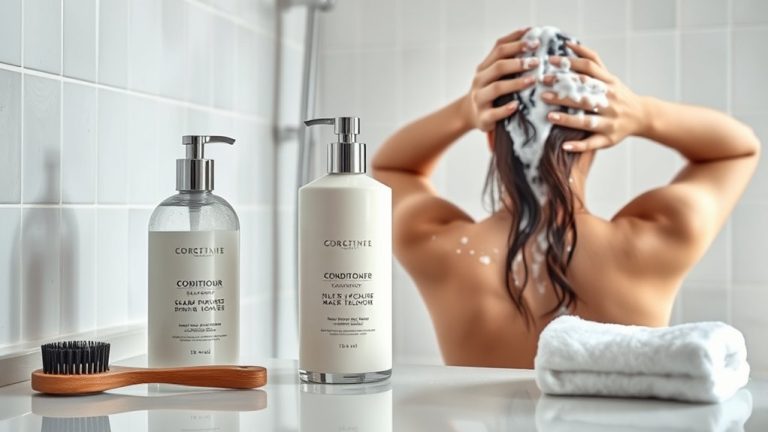
You’ll want to start by applying shampoo to wet hair. Focus on your scalp and massage it thoroughly before rinsing.
Then, move on to the conditioner. Apply it to the mid-lengths and ends of your damp hair, and leave it in for a few minutes.
After that, rinse it out with lukewarm water.
Following this order and rinsing method helps keep your hair clean, nourished, and free from product buildup.
Proper Application Steps
Although many people rush through their hair care routine, following proper application steps for shampoo and conditioner can really improve your hair’s health and appearance.
First, wet your hair thoroughly with warm water to open the cuticles. Then, apply a small amount of shampoo to your scalp and gently massage to create a lather, making sure to cleanse thoroughly.
Rinse completely to remove all product and impurities.
Next, squeeze excess water from your hair before applying conditioner mainly to the mid-lengths and ends. Avoid the scalp to prevent buildup.
Leave the conditioner in for 2-3 minutes to allow ideal hydration and smoothing of the cuticles.
Finally, rinse thoroughly with cool water to seal the hair shaft, locking in moisture and enhancing shine.
Using the right amount of product based on your hair length and thickness is really important.
Correct Product Order
When you wash your hair, always apply shampoo to wet hair first, concentrating on the scalp to remove dirt and excess oil effectively. The proper sequence in your hair care routine guarantees you cleanse hair thoroughly before hydrating it. After rinsing out shampoo completely, apply conditioner mainly to the mid-lengths and ends.
This product order helps seal the cuticle and lock in moisture, enhancing softness and shine. Rinse out both products well to avoid buildup. Reverse washing, applying conditioner before shampoo, is less common and suited for specific hair types.
Use the table below to determine order clearly:
| Step | Purpose |
|---|---|
| Apply shampoo | Cleanse scalp, remove oil |
| Rinse out shampoo | Remove residue, prepare hair |
| Apply conditioner | Hydrate mid-lengths and ends |
Optimal Rinsing Techniques
How thoroughly do you rinse your shampoo and conditioner? For the best results, always use warm water to rinse out shampoo. This helps remove residue and prevent buildup, keeping your scalp clean and healthy.
When you apply conditioner, focus on the mid-lengths to the ends of your hair. Then, rinse out the conditioner completely to seal the hair cuticle effectively.
After that, use cooler water for the final rinse. This step boosts your hair’s shine by closing the cuticle.
Try not to leave shampoo or conditioner in your hair longer than recommended, as this can cause dryness or buildup.
While rinsing, gently detangle your hair with a wide-tooth comb to avoid breakage.
Following these simple steps will leave your hair residue-free, nourished, and smooth with a shiny finish every time.
Common Mistakes to Avoid When Using Shampoo and Conditioner
Mistakes like applying conditioner directly to your scalp or using excessive amounts of shampoo and conditioner can quickly undermine your hair care routine. These common mistakes often lead to product buildup, scalp irritation, and volume loss. Proper use means applying conditioner mainly to hair lengths and ends, avoiding scalp heaviness.
Applying conditioner to lengths and ends, not scalp, prevents buildup, irritation, and maintains hair volume.
Overwashing with harsh shampoos can strip natural oils, causing hair damage, while insufficient rinsing leaves residue that irritates the scalp. Choosing the wrong product for your hair type can make dryness or oiliness worse.
Incorrect application, such as skipping conditioner after shampoo, especially damages curly or dry hair.
To maintain healthy hair, avoid overwashing, use suitable products, apply conditioner correctly, and rinse thoroughly. This approach minimizes scalp issues and preserves your hair’s natural energy and vitality. It’s really about finding the right balance and paying attention to what your hair needs.
Frequently Asked Questions
Can Shampoo and Conditioner Be Used on Colored Hair?
Yes, you can use shampoo and conditioner on color-treated hair, but you need products designed for dye compatibility and color protection. Color-safe shampoos help with pigment preservation and fade prevention by using gentle cleansers.
Conditioners enhance shine, lock in hair vibrancy, and support shade longevity.
For toning effects and maintaining your hair color’s brightness, always choose formulas specifically made to protect and enhance your hair color’s vibrancy.
It’s all about picking the right products that keep your color looking fresh and vibrant for longer.
How Often Should Children Use Shampoo and Conditioner?
How often should you shampoo and condition your child’s hair? Generally, gentle cleansing 2-3 times a week is enough to keep the scalp healthy without causing sensitivity or stripping hair moisture.
Use conditioner sparingly to avoid product buildup and hair breakage, especially if your child has a dry scalp or tangled hair.
If the scalp is oily, using less conditioner works better.
Always choose fragrance-free, mild products. This helps protect delicate hair shine and prevents irritation. It’s all about keeping things gentle and simple!
Are Natural or Organic Shampoos Better Than Regular Ones?
You’ll find natural or organic shampoos often better if you want gentler care, thanks to plant-based extracts and herbal formulations that avoid harsh synthetic additives.
Look for organic certification, non-GMO labels, and cruelty-free products to guarantee quality.
These shampoos usually have lower chemical content and come in eco-friendly packaging.
Mineral-based options also support scalp health.
Ultimately, they offer effective cleansing with reduced environmental impact compared to regular shampoos.
Can Conditioner Cause Scalp Acne or Irritation?
Yes, conditioner can cause scalp acne and irritation if it leads to product buildup or follicle clogging. Ingredients like heavy oils or certain silicones can act as acne triggers, making scalp sensitivity and skin inflammation worse.
Fragrances and preservatives might also provoke allergic reactions, which show up as irritation symptoms. To keep your scalp healthy, try not to apply conditioner too close to the scalp.
It’s a good idea to choose non-comedogenic formulas and rinse thoroughly. This way, you can prevent acne and irritation from forming on your scalp effectively.
Is It Harmful to Leave Conditioner in Overnight?
Ever wondered if leaving conditioner in overnight is a beauty boon or a bane? It can harm your scalp health and cause scalp irritation, product buildup, and even hair breakage or hair fall.
Unless it’s a deep conditioner made for overnight use, prolonged exposure often leads to hair damage, dryness, and dull hair color.
To maintain hair softness and shine, always rinse out regular conditioner as directed, preventing unwanted hair issues.
Conclusion
Understanding the difference between shampoo and conditioner is essential for healthy hair. Did you know that 75% of people use shampoo incorrectly? This can lead to dryness or buildup.
Shampoo cleanses your scalp and hair, while conditioner restores moisture and smoothness. Using both properly guarantees balanced, vibrant hair.
Choose products tailored to your hair type and avoid common mistakes like over-washing or skipping conditioner. With the right routine, you’ll see noticeable improvement in texture and shine.