How To Make Natural Shampoo – Simple DIY Recipe Guide
To make natural shampoo, combine distilled water, liquid Castile soap, and a light vegetable oil like jojoba or grapeseed for cleansing and moisture. Add herbal infusions and essential oils tailored to your hair needs, keeping pH balanced around 4.5 to 5.5 to protect your scalp and hair cuticle.
Store your mix in a cool, dark place and use within weeks. Adjust ingredients carefully for ideal results, and you’ll find effective tips for customization and troubleshooting ahead. Give it a try, and you’ll see how easy it is to make your own shampoo at home!
How To Make a Basic Natural Shampoo Recipe
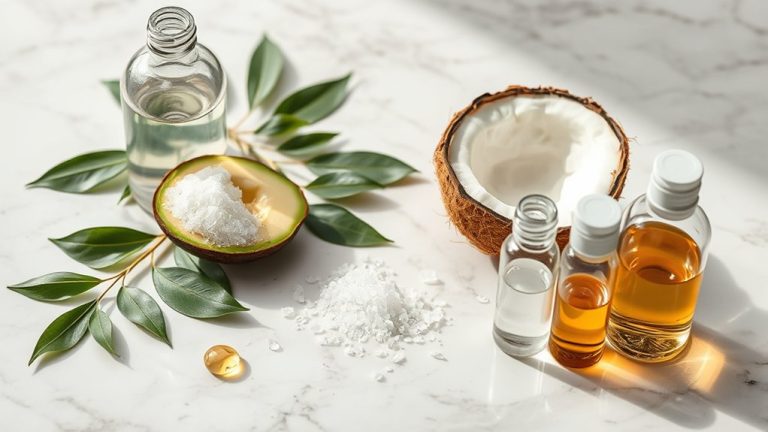
When making a basic natural shampoo, start by combining distilled water with liquid Castile soap and a light vegetable oil such as jojoba or grapeseed oil. This mixture forms a thin consistency yet produces significant lather, suitable for effective cleansing.
Use a flip cap or pump bottle for convenient dispensing and storage. Before each use, shake the natural shampoo thoroughly to guarantee the ingredients are evenly distributed, preventing separation.
Store the shampoo in a cool, dark container to preserve its integrity and freshness. Since there are no synthetic preservatives, try to use the shampoo within a few weeks to avoid spoilage.
Following these precise steps guarantees you create a functional, fresh natural shampoo with consistent performance every time.
It’s pretty simple once you get the hang of it!
How To Choose Ingredients for Natural Shampoo
You’ll want to pick vegetable oils like jojoba or grapeseed because they provide essential moisture and nourishment.
Then, think about adding herbal infusions such as chamomile or rosemary—they’re great for targeting specific scalp and hair concerns.
Plus, when you add essential oils, you’re not just boosting the scent; you’re also getting therapeutic benefits.
Essential Oils Benefits
Although essential oils are potent natural ingredients, selecting the right ones for your shampoo means understanding their specific benefits, scent profiles, and how they work with your hair type. Essential oils like tea tree, peppermint, and lavender offer antimicrobial effects that help promote scalp health.
You need to dilute essential oils properly to avoid irritation. Usually, just a few drops per ounce of shampoo will do the trick.
| Essential Oil | Key Benefit |
|---|---|
| Tea Tree | Antimicrobial, dandruff control |
| Peppermint | Invigorating sensation |
| Rosemary | Enhances shine |
| Lemon | Natural lightening |
Pick essential oils based on their therapeutic properties and what your hair needs. This way, you can create a natural shampoo formulation that really works for you.
Vegetable Oil Choices
How do you select the best vegetable oils for your natural shampoo formulation? Start by evaluating your hair type and the benefits you want.
Jojoba oil mimics natural sebum, making it ideal for moisturizing both hair and scalp.
If you want a lightweight option that won’t weigh hair down, grapeseed oil offers antioxidant properties and strengthens strands.
For enhancing shine and promoting healthy growth, sweet almond oil’s vitamins E and A are effective.
Avocado oil, rich in monounsaturated fats and nutrients, deeply nourishes dry or damaged hair.
Each vegetable oil provides distinct advantages, so choose based on whether you prioritize moisture, shine, or scalp stimulation.
Incorporating the right vegetable oil ensures your natural shampoo supports hair health efficiently and precisely.
It’s all about picking what works best for you and your hair’s needs.
Herbal Infusion Uses
When selecting herbal infusions for your natural shampoo, focus on the specific benefits each herb offers to address your hair’s needs. You can create a herbal infusion by steeping herbs like rosemary, chamomile, or lemongrass in hot water, extracting their active compounds.
For example, rosemary enhances scalp circulation, promoting hair growth, while chamomile provides lightening and soothing effects.
Incorporate these infusions into your shampoo base to improve shine and scalp health naturally. Be sure to strain the herbal infusion thoroughly to remove all plant particles, preventing residue buildup.
Using herbal infusions not only delivers therapeutic benefits but also adds natural fragrance, eliminating the need for synthetic scents.
Tailoring your herbal infusion to your hair concerns guarantees a targeted, effective natural shampoo formulation. It’s a simple way to make your hair care routine more personal and natural.
Give it a try and see how your hair responds!
How to Customize Natural Shampoo With Oils and Herbs
You’ll start by picking essential oils like peppermint or tea tree—they’re great for targeting specific scalp benefits and giving your shampoo a nice fragrance.
Then, you can add herbal infusions such as chamomile or lavender. These not only support scalp health but also bring extra functional properties to your mix.
Finally, adjust the amount of carrier oils depending on your hair type. This way, you’ll optimize hydration and nourishment perfectly for your hair.
Choosing Essential Oils
Why select essential oils for your natural shampoo? Essential oils provide targeted benefits, like peppermint for stimulating your scalp, tea tree for antimicrobial action, lavender to soothe, and rosemary to promote hair growth.
They also bring natural fragrances—vanilla, lemon, and lemongrass add invigorating scents without any synthetic chemicals.
When customizing your shampoo, make sure to dilute essential oils properly. Usually, 10-20 drops per cup of shampoo works well to avoid skin irritation.
And don’t forget to do a patch test before using the shampoo fully, just to check for allergic reactions or sensitivities.
Adding essential oils lets you tailor your shampoo’s therapeutic properties and aroma exactly how you want. This way, you can boost both scalp health and hair strength while keeping everything natural.
It’s a simple, effective way to personalize your hair care routine.
Selecting Herbal Infusions
Beyond essential oils, herbal infusions offer another way to customize your natural shampoo by extracting the active compounds of plants like chamomile, rosemary, and lemongrass. To prepare, steep the herbs in hot water to release their beneficial properties, then strain thoroughly to remove all plant particles. This helps prevent residue buildup in your shampoo.
You can tailor herbal infusions to your hair needs. Chamomile aids in lightening, rosemary enhances shine, and lemongrass revitalizes the scalp.
For added moisturizing and nourishing effects, consider blending oils such as jojoba, coconut, or almond with your infusions.
Use freshly prepared herbal infusions in your shampoo recipe to maintain potency and maximize hair health benefits. This precise approach guarantees your natural shampoo performs effectively with targeted herbal support.
Adjusting Oil Quantities
When adjusting oil quantities in your natural shampoo, consider your hair’s specific needs. Dry hair benefits from increased amounts of nourishing oils like jojoba or almond. Oily hair needs less oil to prevent heaviness and residue.
Carefully measure vegetable oils to keep the balance right. Too much oil can make lathering and rinsing harder. You want your shampoo to feel just right.
Try adding herbal infusions like rosemary or chamomile by steeping them well before blending. This step enhances both the effectiveness and customization of your shampoo.
Use essential oils like peppermint or tea tree at about 1-2% concentration. They boost the scent and therapeutic benefits without overpowering the formula.
Feel free to experiment with combinations. Coconut oil adds moisture, while lemon essential oil can improve shine. That way, you can tailor your shampoo exactly to your hair’s needs.
Always test small batches first. This helps you find the perfect oil quantities and makes sure your shampoo works well for your hair type.
Why PH Balance Matters for Your Hair and Scalp
Because your hair and scalp thrive within a specific pH range of 4.5 to 5.5, maintaining this balance is crucial for preserving the cuticle’s integrity and overall hair health.
When you use alkaline substances like traditional castile soap, with a pH around 8.9, you raise your hair’s pH, causing the cuticle to lift. This disruption leads to roughness, frizz, dryness, and increased vulnerability to damage and breakage.
Keeping the pH balance stable supports a smooth, closed cuticle that reflects light and retains moisture.
Plus, a balanced pH prevents scalp irritation, dandruff, and excessive oil production.
Incorporating acidic rinses, such as vinegar, helps restore your hair’s natural acidity after cleansing. This ensures the ideal pH balance and promotes shinier, healthier hair.
How To Use and Store Homemade Shampoo Safely
Although homemade shampoos offer natural benefits, you must handle and store them properly to keep them effective and safe. Always store your shampoo in dark, cool bottles to minimize ingredient degradation from light and heat.
Make sure to shake well before each use to evenly distribute the components, especially if your shampoo contains herbal infusions or thickeners. It’s a good idea to test a small amount on your hair tips first to prevent any irritation or dryness.
If your shampoo has fresh herbs or aloe vera, try to use it within three days. Or, you can refrigerate it to extend its shelf life. After applying, rinse your hair thoroughly to avoid any residue buildup.
| Action | Recommendation |
|---|---|
| Storage | Dark, cool bottles or refrigerator |
| Usage | Shake well before each use |
| Shelf Life | Use within 3 days (perishables) |
| Patch Test | Test small amount on hair tips first |
How To Troubleshoot Common Homemade Shampoo Issues
If your homemade shampoo isn’t performing as expected, identifying the root cause is essential for effective troubleshooting. Common issues like residue, dryness, or poor lather often stem from ingredient imbalances or improper mixing. Address these problems with precise adjustments.
For example, reduce residue by lowering natural thickeners such as xanthan gum or salt to avoid stickiness. It’s a simple fix that can make a big difference.
To prevent dryness or damage, check the pH levels. You can use vinegar rinses to restore your hair’s natural acidity and counteract alkaline ingredients like castile soap.
If you want better lather and cleaning, make sure you don’t over-dilute the soap or add too much water during mixing. Also, rinse thoroughly to avoid greasy buildup.
These small tweaks usually help your shampoo work just right.
Natural Shampoo Variations for Dry, Oily, and Sensitive Hair
When tailoring natural shampoo for specific hair types, selecting the right ingredients guarantees the best results.
For dry hair, add moisturizing components like aloe vera gel and avocado oil. These help hydrate and reduce brittleness effectively.
Oily hair benefits from clarifying herbs such as rosemary or tea tree oil. They regulate sebum production and minimize scalp oiliness.
If you have sensitive hair, use gentle, calming ingredients like chamomile tea and lavender oil. These soothe the scalp and prevent irritation.
Make sure your DIY natural shampoo maintains a pH between 4.5 and 5.5 to support scalp health. This helps avoid excessive dryness or oiliness.
Customizing your shampoo with targeted oils and herbs optimizes hair care. It provides balanced cleansing tailored precisely to dry, oily, or sensitive hair needs.
How To Make and Sell Your Own Natural Shampoo
Launching your own natural shampoo line means making sure your formulas stay stable and shelf-ready without using harmful preservatives. When you whip up your DIY recipe, go for natural alternatives like vitamin E or essential oils to keep the shampoo fresh.
Create stable, preservative-free natural shampoos using vitamin E and essential oils to keep your formulas fresh and safe.
You’ll want to tailor each batch to specific hair types, like a shampoo that’s perfect for dry ends. Then, let it sit and test it out to make sure it works well.
Follow this ultimate guide to get ready for selling:
- Conduct small batch testing to check consistency, scent, and how it performs.
- Use eco-friendly packaging and clear labeling to attract environmentally conscious buyers.
- Get the certifications you need to build credibility and trust with your customers.
Frequently Asked Questions
Can Natural Shampoo Cause Allergic Reactions?
Yes, natural shampoo can cause allergic reactions because of allergy risks linked to plant extracts and essential oils like tea tree, lavender, or citrus oils.
Even ingredients that seem gentle, such as aloe vera or chamomile, might trigger sensitivities.
It’s a good idea to do a patch test before using it fully to spot any potential allergens.
Just remember, not having synthetic chemicals doesn’t mean you’re in the clear.
People’s sensitivities to natural ingredients can vary a lot.
How Long Does Homemade Shampoo Last Without Preservatives?
You’d think homemade shampoo without preservatives would last forever, but its shelf life is shockingly short. It typically only lasts 3 to 7 days in the fridge.
Without preservatives, bacterial and mold growth speed up, especially if you use fresh herbs or oils.
To keep it safe and effective, make small batches and store them in airtight, dark containers.
If it smells off or shows mold, toss it immediately. You don’t want to take any chances with your health.
Is Natural Shampoo Safe for Color-Treated Hair?
Yes, natural shampoo can offer excellent color compatibility if you choose formulas carefully. You’ll want pH-balanced options (around 4.5–5.5) to maintain your hair’s cuticle and prolong color vibrancy.
Avoid harsh surfactants like sodium lauryl sulfate, which can strip color.
Ingredients like chamomile or rosemary enhance color retention. However, watch out for certain essential oils that might cause fading.
Can I Use Natural Shampoo on Pets?
You shouldn’t use natural shampoo meant for humans on your pets due to pet safety concerns. Their skin pH differs, and some natural ingredients can irritate or even be toxic to them.
Essential oils like tea tree or peppermint are especially risky.
Always choose shampoos formulated specifically for pets to guarantee their skin and coat health.
For added safety, consult your veterinarian before trying any homemade or natural shampoo on your pet. It’s better to be safe than sorry when it comes to your furry friend’s care.
What Are the Environmental Benefits of Natural Shampoo?
You’ll find natural shampoo eco friendly because it reduces plastic waste through biodegradable or reusable packaging. It uses organic, sustainably sourced ingredients that protect ecosystems and minimize chemical runoff. Manufacturing natural shampoo emits fewer synthetic toxins, lowering water pollution.
Plus, plant-based ingredients break down easily in the environment, cutting long-term pollution.
Conclusion
Now that you know how to make and customize natural shampoo, you can create a formula tailored to your hair’s needs. For example, Sarah, who struggled with dry scalp, added chamomile and jojoba oil to soothe and hydrate effectively.
By understanding pH balance and ingredient properties, you’ll avoid common pitfalls and keep your shampoo safe and effective. Start experimenting confidently, and you might even develop a product to share or sell with others seeking natural hair care solutions.