How To Use Conditioner And Shampoo – Proper Hair Routine
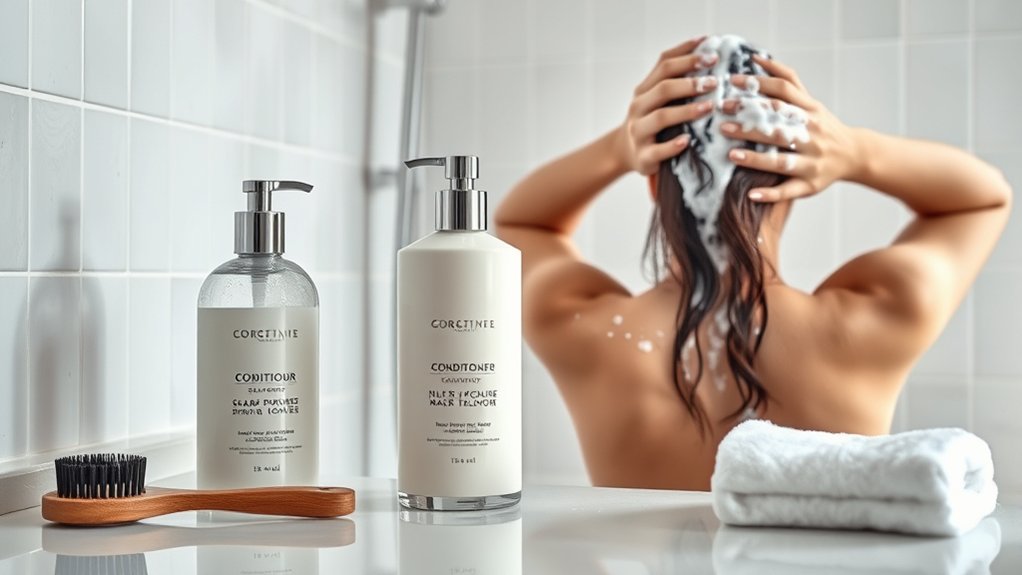
To use shampoo and conditioner properly, start by wetting your hair with warm water. Then apply shampoo to your scalp and massage gently to cleanse. Rinse thoroughly with warm water, avoiding excess shampoo to prevent dryness.
Next, apply conditioner to mid-lengths and ends. Comb it through, and leave it on for 3-5 minutes before rinsing with cool water to seal cuticles and reduce frizz.
Tailor your routine to your hair type for best results. You’ll find even more tips to enhance your hair care.
What’s the Difference Between Shampoo and Conditioner
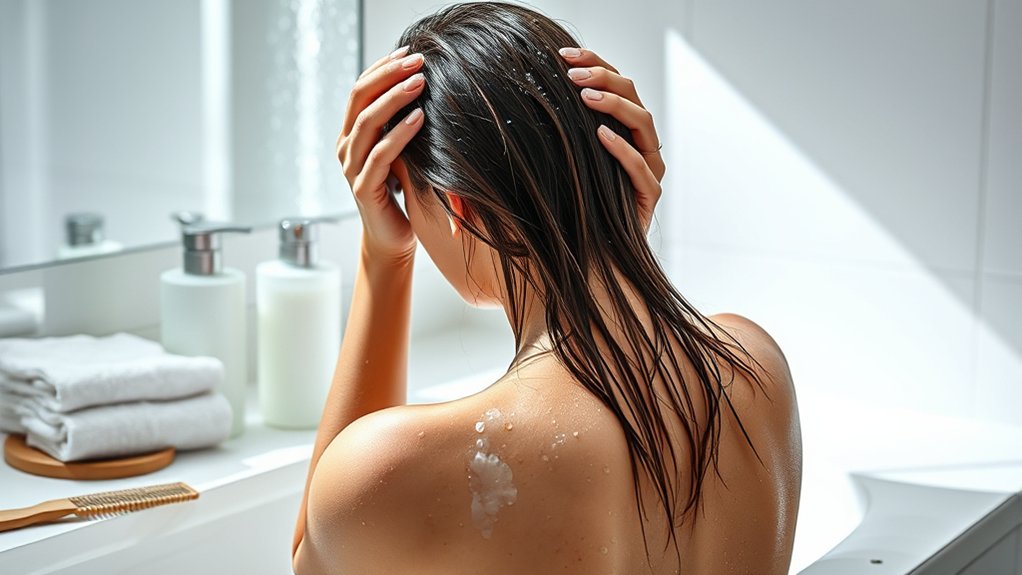
Understanding the difference between shampoo and conditioner is key to maintaining healthy hair. Shampoo contains surfactants and foaming agents that cleanse your scalp and hair, removing oil, dirt, and product buildup effectively.
Knowing how shampoo cleanses with surfactants is essential for keeping your scalp and hair fresh and healthy.
Conditioner, on the other hand, is enriched with natural oils and proteins designed to hydrate, soften, and detangle your hair after washing.
While shampoo is applied first to clean, conditioner follows to restore moisture and protect each strand. Both products serve distinct purposes, and using them according to your specific hair type guarantees ideal results.
Although some shampoos include mild conditioning agents, conditioners focus solely on nourishment without cleansing.
Recognizing these differences helps you maintain a balanced routine that supports your hair’s health and appearance.
It’s all about knowing what your hair needs and giving it the right care in the right order. That way, you keep your hair looking and feeling its best every day.
How to Choose the Right Shampoo and Conditioner for Your Hair
How do you find the ideal shampoo and conditioner for your hair? Start by identifying your hair type: oily, dry, fine, or coarse. This helps guide your selection of hair products.
Choose formulations free from harsh ingredients like sulfates and parabens. These protect your hair’s natural balance and keep it healthy.
Think about your hair goals too. If your hair is dry, go for moisturizing shampoos. For fine strands, volumizing options work great, and strengthening formulas help damaged hair.
Look for products that combine science-backed ingredients with natural oils and botanical extracts. This mix nourishes your hair effectively.
When shampooing, use gentle techniques to avoid irritation.
Don’t forget to use a conditioner suited to your hair’s needs. It helps maintain moisture and manageability.
Keep in mind, your hair or environment might change over time. So, regularly reassess your choices and update your routine for the best results.
When and How Often to Wash and Condition Hair
You should wash your hair depending on how oily it gets. If it tends to be oily, you might need to wash it more often.
But if your hair is on the dry side, washing less frequently helps keep those natural oils intact.
And don’t forget about conditioner—it’s a good idea to use it every time you wash your hair. This helps keep your hair moisturized and improves its texture.
The key is to tailor your shampoo and conditioner routine to your specific hair type.
That way, you’ll get the best results for both cleanliness and hydration.
Washing Frequency Guidelines
Although washing frequency depends largely on your scalp’s oiliness, tailoring your routine to your hair type can greatly improve its health and appearance.
Follow washing frequency guidelines by washing oily hair daily, fine hair every 2-3 days, dry hair 1-2 times weekly, and curly or textured hair once a week or less. This prevents stripping natural oils or causing buildup.
Remember to condition your hair every time you wash it to replenish moisture and maintain health. Use a mild or sulfate-free shampoo, especially if your hair is color-treated or damaged.
Always follow the proper order: shampoo first to cleanse, then conditioner to hydrate.
Adjusting this routine based on your hair’s needs guarantees ideal results without compromising its natural balance. It’s all about finding what works best for you and sticking with it!
Conditioning Every Wash
Maintaining moisture levels during every wash plays a key role in preserving your hair’s health and appearance. When you wash your hair, using a conditioner each time helps seal the cuticles and prevent dryness caused by shampooing.
Apply conditioner after shampooing, concentrating on mid-lengths and ends, and leave it on for about three minutes. This step replenishes moisture lost during cleansing and enhances manageability and shine.
While all hair types benefit from conditioning every wash, finer hair may require lighter conditioner formulations to avoid weighing hair down. Consistently incorporating conditioner into your hair care routine supports healthier strands, reduces breakage, and improves overall texture.
To maintain peak hair health, make conditioning a regular part of how often you wash your hair. It really makes a difference!
Matching Routine To Hair
Because hair types vary considerably, tailoring your washing and conditioning routine to your specific needs guarantees ideal scalp health and hair appearance.
For oily hair, you may need to wash daily, adjusting the amount of shampoo to avoid stripping natural oils.
Dry or damaged hair benefits from less frequent washing but should use a conditioner every time to restore moisture lost during shampooing.
Fine hair requires lighter conditioners to prevent heaviness, while limp or flat hair can benefit from applying conditioner before shampooing.
Adapt your hair washing method seasonally: wash more in humid weather and condition more during dry winters.
Always rinse thoroughly after using shampoo and conditioner to prevent buildup, which can cause scalp irritation and dullness.
Tailoring your routine this way assures balanced, healthy hair.
It’s all about finding what works best for you and sticking with it!
Step-by-Step Guide to Shampooing Your Hair
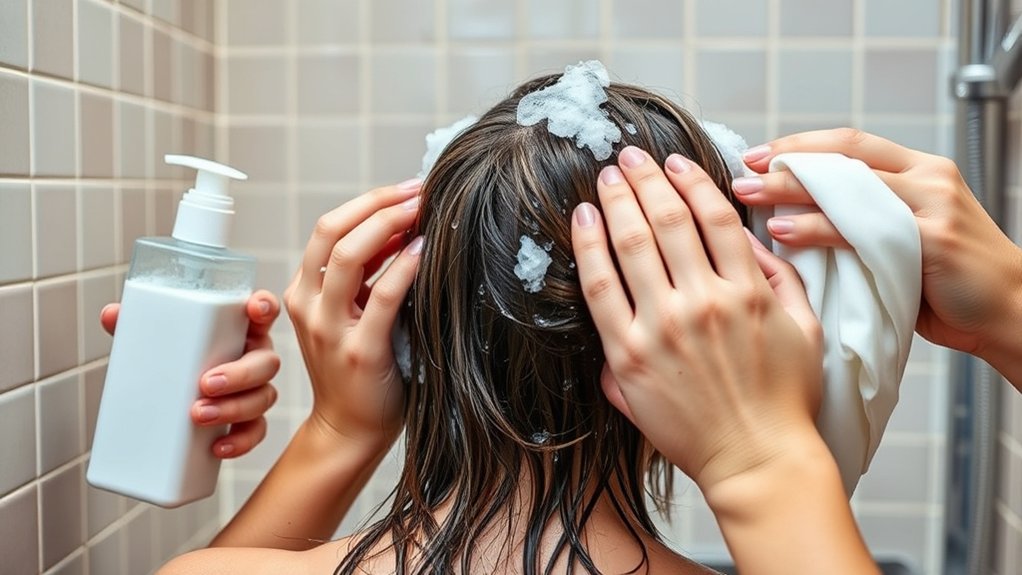
To shampoo your hair effectively, start by thoroughly saturating it with warm water. This helps open the cuticles and gets your scalp ready for cleansing.
Next, apply a small amount of shampoo to your hair, focusing on the scalp. Gently massage until you create a rich lather. This helps remove oil and product buildup. Avoid piling your hair on top of your head to prevent tangling.
Once your hair feels clean, rinse thoroughly to get rid of all shampoo residue. This step is important to avoid dryness and irritation.
After rinsing, apply conditioner mainly to the mid-lengths and ends. Try to steer clear of the scalp to prevent greasiness. Leave it on for about three minutes before rinsing with cool water. This seals the cuticles and adds shine.
Following this simple routine will leave you with a clean, healthy scalp and nourished hair.
How to Apply Conditioner for Best Results
Applying conditioner correctly can make a significant difference in your hair’s health and appearance. After you apply shampoo and rinse thoroughly, focus on applying conditioner to the mid-lengths and ends of your hair, where moisture is most needed. Avoid the scalp to prevent greasiness.
Use the right amount of conditioner, usually a quarter-sized dollop, and spread it evenly. Applying conditioner with a wide-tooth comb helps distribute it thoroughly for ideal coverage. Leave it on for 3 to 5 minutes to guarantee deep hydration.
When rinsing, use cool water to seal the cuticles. This enhances shine and reduces frizz.
Following these steps guarantees that your hair remains healthy, manageable, and vibrant after every wash.
Should You Use Conditioner Before Shampoo?
Why might you consider using conditioner before shampoo? This technique, known as reverse shampooing, can be especially helpful if you have limp, flat, or oily hair. By using conditioner first, you let it create a protective layer that stops your hair from feeling weighed down or greasy.
Reverse shampooing helps protect limp, flat, or oily hair by creating a barrier before cleansing.
Applying conditioner before shampoo and letting it sit briefly helps the shampoo spread evenly. This way, it cleans gently without stripping your natural oils. It’s a great method if you have dry, damaged, or fine hair.
While regular shampooing is still important, trying reverse shampooing once a week can add moisture and protect your hair’s health.
Knowing the right order to use shampoo and conditioner helps you customize your routine for your hair’s unique needs. That way, your hair looks and feels its best.
How to Rinse Shampoo and Conditioner Thoroughly
You want to make sure you rinse shampoo and conditioner thoroughly to avoid any leftover residue that might irritate your scalp or make your hair look dull.
It’s a good idea to use warm water when rinsing out shampoo because it helps wash away all the product.
Then, switch to cool water for your conditioner. This not only removes the conditioner but also helps seal the hair cuticles, leaving your hair smoother and shinier.
Take your time with rinsing—if you need to, rinse in sections to be thorough.
Using your fingers or a wide-tooth comb can really help to evenly wash and detangle your hair. This way, you’ll make sure everything is rinsed out properly and your hair feels great afterward.
Importance Of Complete Rinsing
Although rinsing might seem like a simple step, thoroughly washing out shampoo and conditioner is crucial to maintaining healthy hair and scalp. The importance of complete rinsing lies in preventing product buildup, which can cause dryness, irritation, and weaken hair over time. You need to verify all shampoo and conditioner are thoroughly washed out to avoid residue that weighs hair down and dulls its appearance.
Rinsing shampoo removes cleansing agents, while rinsing conditioner properly helps seal cuticles, resulting in smoother strands.
Use lukewarm or cool water to rinse, as hot water can open cuticles excessively and increase frizz. By prioritizing a complete rinse, you promote healthier, more manageable hair with enhanced shine and liveliness.
Effects Of Product Residue
Proper rinsing doesn’t just remove shampoo and conditioner; it prevents the buildup of product residue that can negatively affect your scalp and hair health.
If you don’t rinse thoroughly, leftover product residue can cause dryness and irritation, leading to an uncomfortable scalp environment. This residue also weighs down your hair, making it look dull and lifeless.
To avoid these effects on your scalp and hair, use lukewarm or cool water and rinse until the water runs clear. Sometimes you may need to rinse persistently to eliminate all traces of shampoo and conditioner.
Incorporating a wide-tooth comb during rinsing helps distribute products evenly and detangle hair, which improves manageability.
Clean rinsing not only protects your scalp but also enhances your hair’s health and shine. So, take your time rinsing and your hair will thank you!
Tips For Thorough Washing
Three key steps guarantee you rinse shampoo and conditioner thoroughly for peak scalp and hair health.
First, saturate your hair with warm water before you use shampoo and conditioner. This helps with even distribution and makes cleansing more effective.
Next, apply a small amount of shampoo focusing on the scalp. Massage gently until it lathers, then rinse thoroughly to remove all residue that can cause dryness and irritation.
Finally, use conditioner on mid-lengths and ends only, avoiding the scalp. Leave it in for 3 minutes. Rinse out the conditioner with cool water to seal cuticles, enhance shine, and reduce frizz.
Following this proper order and washing technique guarantees you wash away buildup without stripping natural oils.
This way, you maintain a healthy scalp and vibrant hair.
How Water Temperature Affects Your Haircare Routine
When you adjust the water temperature during your haircare routine, you can greatly improve both cleansing and conditioning outcomes. Proper water temperature plays an essential role in shampooing before conditioning and guarantees your hair stays healthy and vibrant.
Use lukewarm water to shampoo before conditioning; it cleanses effectively without stripping natural oils. Avoid hot water as it can dry out your scalp and hair, causing irritation and frizz.
Lukewarm water cleanses hair gently, preserving natural oils, while hot water can lead to dryness and frizz.
Apply conditioner and finish with a cooler rinse to seal hair cuticles, boosting shine and smoothness. A cooler rinse helps maintain color vibrancy in dyed hair and increases volume by closing cuticles.
Balancing warm water for cleansing and cool water for rinsing optimizes moisture retention and overall hair health.
It’s a simple change that can make a big difference in how your hair looks and feels.
Common Shampoo and Conditioner Mistakes to Avoid
Although shampooing and conditioning seem straightforward, many people unknowingly make mistakes that can harm their hair’s health and appearance. One common error is overusing shampoo. This strips natural oils and causes dryness and irritation. So, it’s a good idea to adjust how often you shampoo based on how oily your scalp gets.
Another mistake isn’t rinsing thoroughly. When you leave excess product in your hair, it can build up and make your hair look dull.
Applying conditioner incorrectly is also a problem. Try to avoid the scalp and focus on the mid-lengths and ends instead for the best results.
Make sure you get the order right: shampoo first, then conditioner. Leave the conditioner on for about three minutes to hydrate your hair without causing buildup.
And one more thing—avoid using hot water when rinsing. Hot water can damage your hair, so use lukewarm or cold water instead. It helps seal the cuticles and reduce frizz effectively.
Customizing Your Hair Routine Based on Hair Type
Anyone looking to improve their hair care routine should start by understanding their hair type. This knowledge helps you tailor shampooing and conditioning to meet your specific needs.
Customizing your routine guarantees better results and healthier hair.
Fine hair benefits from lightweight conditioners and less frequent shampooing. This way, you avoid weighing it down.
Thick or curly hair needs heavier conditioners and more moisture retention. Spending more time conditioning really helps.
Oily hair types might need to shampoo more often. On the other hand, dry hair does better with less frequent washing and richer conditioners.
For oily or flat hair, try applying conditioner before shampoo. This can prevent excess oil and give your hair more volume.
Picking shampoos and conditioners based on your hair type makes a big difference. It maximizes effectiveness and addresses your unique scalp and strand concerns.
Frequently Asked Questions
Can Conditioner Help With Dandruff or Scalp Issues?
Yes, conditioner can help with dandruff and scalp issues by promoting scalp hydration, which reduces dryness and irritation.
To boost dandruff prevention, choose conditioners with ingredients like tea tree oil, aloe vera, or salicylic acid. These ingredients are effective in soothing the scalp.
While conditioners don’t directly treat dandruff, using them after medicated shampoos helps balance moisture levels.
It also maintains overall scalp health, which minimizes flakes and discomfort.
Is It Necessary to Use Both Shampoo and Conditioner Every Wash?
You don’t always have to use both shampoo and conditioner every wash; it depends on your shampoo frequency, hair porosity, and conditioner types.
If you wash often, gentler shampoos and lightweight conditioners work best.
For dry or porous hair, using conditioner every time helps retain moisture.
Low-porosity hair might need less frequent conditioning to avoid buildup.
Just pay attention to how your hair feels and responds.
Adjust your routine based on these factors for ideal hair health.
It’s all about finding what works best for you!
How Do Travel-Sized Shampoos and Conditioners Affect Hair Health?
Travel-sized shampoos and conditioners provide travel convenience without compromising hair hydration. Their compact product formulation often mirrors full-sized versions, ensuring effective cleansing and conditioning on the move.
You’ll appreciate how these smaller solutions support consistent routines, helping prevent buildup and maintain moisture. Just check ingredient lists carefully to avoid sulfates or parabens that might irritate sensitive strands.
Using travel-sized products smartly keeps your hair healthy and hydrated wherever you go. It’s all about finding the right products that work for you, even when you’re on the move.
Can Shampoo or Conditioner Cause Allergic Reactions?
Yes, shampoo or conditioner can cause allergic reactions because of ingredients like fragrances, sulfates, and preservatives.
These ingredients can sometimes trigger skin issues.
To avoid reactions like itching, redness, or swelling, try doing a sensitivity test first. Just apply a small amount on your skin before using the product fully. If you notice any irritation, stop using it right away and talk to a healthcare professional.
Also, choosing hypoallergenic, sulfate-free, and fragrance-free products can help lower your risk.
It’s always better to be safe when it comes to your skin!
Are Natural or DIY Conditioners Effective Compared to Store-Bought Ones?
Natural or DIY conditioners can be effective, but their success depends on your hair texture, homemade ingredients, and application techniques. If you choose rich oils like coconut or avocado and apply them evenly, you’ll see moisture and nourishment benefits.
That said, store-bought conditioners often contain targeted proteins and silicones, which offer consistent strengthening and smoothing. You might need to experiment with DIY recipes a bit to really match your hair’s needs.
On the other hand, commercial options provide more reliability and usually have a longer shelf life, which can be a big plus.
Conclusion
By mastering the art of shampooing and conditioning, you’re giving your hair the care it deserves, like watering a delicate plant to help it thrive.
Remember, choosing the right products, washing at the right frequency, and applying each with precision makes all the difference. Avoid common mistakes, and tailor your routine to your hair type.
This way, you keep your locks healthy, shiny, and strong every day. Your hair’s best days are ahead!