Can Dr Bronners Be Used As Shampoo – Hair Care Tips And Facts
You can use Dr. Bronner’s soap as shampoo by diluting about ½ tablespoon in ½ cup water for gentle cleansing. Its alkaline nature lifts hair cuticles, which may cause dryness or buildup if used undiluted, especially on dry or treated hair.
Follow with an acidic rinse like diluted apple cider vinegar to restore pH and manage frizz. Adjust wash frequency and water quality for best results.
Explore further to uncover detailed care tips and solutions.
How Dr. Bronner’s Soap Cleanses and Affects Hair
Although Dr. Bronner’s shampoo offers effective cleansing through its plant-based, biodegradable ingredients, you should be aware of its alkaline pH balance. This high pH can lift hair cuticles, increasing porosity and causing dryness or tangling, especially if you have color-treated or dry hair.
To maintain ideal hair care, it’s essential to restore your scalp’s natural pH after washing. An acidic rinse, such as diluted apple cider vinegar or lemon juice, helps tamp down cuticles and reestablish the proper pH balance.
Avoid using Dr. Bronner’s soap undiluted on dry hair, as it may cause buildup and greasiness. Proper dilution and thorough rinsing ensure effective cleansing without compromising hair health or scalp moisture.
Moving to this shampoo requires patience during the adjustment phase. Just give your hair some time to get used to it, and you should be good to go.
How to Properly Dilute and Apply Dr. Bronner’s Soap for Hair
To get the most out of Dr. Bronner’s soap, you need to properly dilute it before application. Mix about ½ tablespoon of liquid castile soap with ½ cup of water for an even consistency.
Always apply this diluted solution to thoroughly wet hair, ensuring your scalp and strands are fully soaked to facilitate gentle cleansing.
Pre-diluting the soap in a bottle or bowl makes it easier to apply and helps spread the product evenly.
Focus on massaging the scalp with a light lather, and try to avoid putting the soap directly on dry hair to prevent irritation.
After cleansing, rinse your hair thoroughly with water, especially if you live in an area with hard water.
This helps remove all residue and keeps your hair from feeling greasy.
Following these steps will give you effective, balanced hair care with Dr. Bronner’s soap.
How to Choose the Best Dr. Bronner’s Soap for Your Hair Type and Condition
First, it helps to get familiar with the different Dr. Bronner’s soap options. For example, the Pure-Castile liquid is super versatile, while the Organic Sugar Soap gives you that extra hydration boost.
Next, think about your hair type and condition—whether it’s dry, oily, or damaged—and pick the soap that matches best. This way, you’ll give your hair the care it needs without causing buildup.
Oh, and don’t forget to dilute the soap properly. A good rule of thumb is about half a tablespoon of soap mixed into half a cup of water. This makes it easier to apply evenly and helps prevent your hair from drying out.
Soap Varieties Overview
When selecting the best Dr. Bronner’s soap for hair washing, understanding the varieties is essential. Dr Bronner’s Pure-Castile liquid soap offers versatility, effectively cleansing most hair types without stripping moisture.
If you prefer bar soap, options enriched with hemp and jojoba oils deliver enhanced hydration and reduce residue, especially in hard water areas.
The Organic Sugar Soap variety incorporates organic sucrose and grape juice, providing superior hydration suited for dry or damaged hair.
For very dry scalp conditions, the Organic Shaving Soap maximizes moisture but may overwhelm oily or fine hair.
Your choice between liquid soap and bar soap should consider your hair’s moisture needs, scalp condition, and water hardness.
Selecting the appropriate Dr Bronner’s soap guarantees the best cleansing and nourishment tailored to your hair’s unique requirements.
Matching Soap To Hair
Although selecting the right soap may seem straightforward, matching Dr. Bronners shampoo to your hair type and condition requires careful consideration.
For normal to oily hair types, liquid Pure-Castile Soaps like Almond or Lemongrass Lime offer versatility and effective cleansing.
If you face hard water challenges or need enhanced conditioning, bar soaps enriched with hemp and jojoba oils help prevent residue buildup while providing moisture.
Organic Sugar Soap suits all hair types, delivering extra hydration through organic sucrose and grape juice.
For very dry or damaged hair, Organic Shaving Soap ensures maximum hydration.
Always practice dilution before application; this balances cleansing efficacy and minimizes scalp or hair dryness.
Application And Dosage
Since proper application and dosage directly impact the effectiveness of Dr. Bronner’s soap for hair care, you should tailor usage to your hair type and condition.
For liquid soap, use about ½ tablespoon, either directly or diluted in ½ cup water to guarantee even distribution.
Bar soaps require direct application to the scalp or lathering in your hands before massaging into hair.
One pump of Organic Sugar Soap or a nickel-sized amount of Organic Shaving Soap generally suffices for most hair types.
Diluting the soap controls the amount applied, preventing overuse and promoting uniform coverage.
Adjust the dosage according to hair length and thickness.
Use more for thick hair and less for fine hair to optimize cleansing without stripping natural oils.
How to Manage the Transition to Natural Soap Washing
You’ll probably notice a 2-4 week transition period where your hair might feel greasier or even drier than usual as it gets used to Dr. Bronner’s soap.
To help with this, try diluting the soap and using acidic rinses—they can balance your hair’s pH and cut down on buildup during this time.
Also, paying attention to your water quality and adjusting how often you wash your hair can really make a difference in helping your hair adapt smoothly.
Transition Period Expectations
When switching to natural soap washing with Dr. Bronner’s, expect a changeover period of 2-4 weeks. Your hair feels different. Sometimes it’s greasier or drier as the scalp adjusts.
Diluting the soap and rinsing thoroughly are critical to avoid residue buildup, especially if you have hard water. You can also try an acidic rinse, like diluted apple cider vinegar, to stabilize pH and reduce cuticle swelling.
Making routine adjustments, like washing less frequently, helps ease this phase. Just be patient during this time—it ensures a smoother adaptation to natural soap washing.
| Challenge | Solution |
|---|---|
| Greasy or dry hair | Dilute soap, rinse thoroughly |
| Residue and tangling | Use acidic rinse |
| Water hardness effects | Adjust routine, consider water filter |
Managing Hair Adjustments
Although switching to natural soap washing can initially challenge your hair’s balance, managing adjustments well makes the process smoother. Start by diluting Dr. Bronner’s soap before applying it. This helps with even distribution and reduces buildup or dryness during the transition.
Keep an eye on how your hair responds. It’s common to experience greasiness or dryness within the first 2 to 4 weeks. Try adding an acidic rinse, like diluted apple cider vinegar, to help reduce cuticle swelling and improve your hair’s texture.
If you live in a hard water area, consider using a water softener or distilled water. This prevents residue buildup that can make the switch harder.
You might also want to adjust your routine by washing less often or adding deep conditioning treatments. These little changes support healthy adaptation and keep your scalp and hair in great shape.
How to Use Acidic Rinses After Washing With Dr. Bronner’s
Since Dr. Bronner’s is a castile soap, it leaves hair alkaline, which can cause cuticles to lift and frizz. To restore hair pH balance, apply an acidic rinse as a post-wash treatment. Use diluted apple cider vinegar — 1 to 2 tablespoons mixed in a cup of water — to gently close hair cuticles, enhancing softness and shine.
This acidic rinse also removes residual soap buildup, especially important if you have hard water. It helps prevent waxy or greasy buildup. After applying the acidic solution, thoroughly rinse with water to eliminate lingering acidity that could dry or damage your scalp.
Regularly incorporating this step improves hair manageability and scalp health. It’s an essential complement to washing with Dr. Bronner’s. Give it a try and notice the difference!
Fixing Common Hair Problems: Greasy, Dry, and Waxy Hair
If you notice greasy, dry, or waxy hair after using Dr. Bronner’s, it’s often linked to the soap’s alkaline pH disrupting your scalp’s natural balance. Greasy hair can happen because this alkalinity triggers excess oil production, especially if you’re in a hard water area.
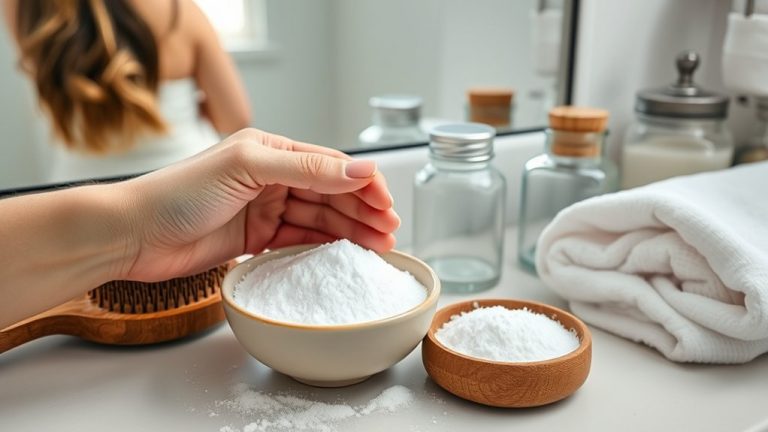
To tackle waxy build-up, try applying a baking soda paste to break down residues. Then follow up with an acidic rinse like diluted apple cider vinegar to help restore your scalp’s pH balance.
If your hair feels dry, adding deep conditioning treatments and oils between washes can really help. This replenishes moisture and improves the texture.
Make sure to rinse thoroughly with warm water to get rid of any build-up.
Also, cutting back on how often you wash or switching to moisturizing bar soaps can prevent these problems.
Balancing your scalp’s oils and hydration is key to keeping your hair healthy when using Dr. Bronner’s.
Tips for Managing Hard Water When Using Dr. Bronner’s Soap
Managing hair issues like waxy buildup or greasiness often involves addressing the water quality used during washing, especially when using Dr. Bronner’s soap. Hard water contains minerals that react with the soap, causing mineral deposits and reducing lather.
To counter this, try using soft water through a water softening shower head or rinse thoroughly with distilled water. Adding an acidic rinse, like diluted apple cider vinegar, helps dissolve mineral deposits and restores your hair’s pH balance.
You can also use baking soda rinses to clarify buildup effectively.
| Strategy | Benefit |
|---|---|
| Soft water | Improves soap lather and rinsing |
| Acidic rinse | Breaks down mineral deposits |
| Baking soda rinse | Dissolves buildup from hard water |
How to Build a Complete Hair Care Routine With Dr. Bronner’s
When building a complete hair care routine with Dr. Bronner’s, start by diluting the soap to guarantee gentle, effective cleansing. Apply the diluted solution evenly to wet hair, focusing on thorough cleansing without stripping natural oils.
Begin your hair care routine with diluted Dr. Bronner’s soap for gentle, effective cleansing that preserves natural oils.
Next, follow up with an acidic rinse. Diluted apple cider vinegar or lemon juice works well to smooth cuticles and enhance shine.
Incorporate conditioning by regularly using deep treatments or natural oils like coconut oil to maintain scalp health and combat dryness. Adjust your washing frequency based on your hair type and water quality.
You might even want to experiment with water-only rinses or alternative methods if necessary.
This balanced approach, combining cleansing, acidic rinse, and conditioning, leverages Dr. Bronner’s natural formulation to support a healthy, resilient hair care routine.
Frequently Asked Questions
Can Dr. Bronner’s Soap Help With Scalp Dandruff or Itching?
Yes, Dr. Bronner’s soap can offer dandruff relief and help with scalp irritation thanks to its natural remedies and herbal ingredients. Its gentle scalp cleansing removes impurities without harsh chemicals, soothing an itchy scalp.
However, because it’s alkaline, you should dilute it properly and consider an acidic rinse to maintain scalp pH balance.
This careful use supports scalp health while minimizing irritation, making it a viable option for mild dandruff management.
Is Dr. Bronner’s Soap Safe for Color-Treated or Chemically Processed Hair?
Dr. Bronner’s soap isn’t ideal for color-treated or chemically processed hair because of its alkaline pH. This can affect your hair color and cause it to fade faster.
That said, it does offer natural cleansing with organic ingredients and is an eco-friendly product.
But using it too often might get in the way of restoring your hair’s health.
If you want to use it, try to use it sparingly. Follow up with an acidic rinse to help keep your hair strong and protect your vibrant color.
How Does Dr. Bronner’s Soap Compare to Conventional Shampoos in Environmental Impact?
When you choose Dr. Bronner’s, you embrace a gentler footprint on our planet. Its biodegradable formula and eco-friendly ingredients considerably reduce environmental sustainability concerns compared to conventional shampoos.
You’ll minimize packaging waste thanks to its concentrated nature.
Plus, renewable sourcing supports fair trade and sustainable agriculture. This thoughtful approach leads to notable carbon footprint reduction.
Can Dr. Bronner’s Soap Be Used on Pets for Their Fur?
Yes, you can use Dr. Bronner’s soap on pet fur, but you should dilute it properly to protect skin sensitivity. Its natural ingredients make it an excellent choice for your pet’s grooming routine, offering gentle cleansing without harsh chemicals.
While it’s eco-friendly and safe, it’s not specifically formulated for flea prevention. Always rinse thoroughly and perform a patch test to avoid irritation.
If your pet has allergies or skin issues, it’s a good idea to consult your vet before using it. Better safe than sorry, right?
Are There Any Allergies or Sensitivities Associated With Dr. Bronner’s Soap Ingredients?
Yes, you may experience allergic reactions or skin irritation from Dr. Bronner’s soap if you have sensitive skin or chemical sensitivities. Some natural ingredients, like essential oils and plant extracts, can trigger allergy symptoms in susceptible individuals.
To guarantee ingredient safety, it’s vital to perform a patch test before full use. Monitoring for any skin irritation helps you identify potential allergies early and avoid adverse reactions linked to specific soap components.
It’s always better to be cautious, especially if you know your skin tends to react easily. A little testing beforehand can save you from a lot of discomfort later on.
Conclusion
You might worry that Dr. Bronner’s soap is too harsh for your hair, but when properly diluted and paired with an acidic rinse, it cleanses effectively without stripping natural oils.
By choosing the right formula for your hair type and managing water hardness, you can maintain healthy, balanced hair.
With careful application and consistent use, Dr. Bronner’s can be a versatile, natural alternative to conventional shampoos. It supports a complete, science-backed hair care routine.